
The Wordle Phenomenon: Decoding the Past, Present, and Future of the World’s Favorite Word Game

In the digital age, few trends manage to capture the collective attention of the global population without the use of flashy graphics, high-octane gameplay, or aggressive monetization. Yet, Wordle, a simple browser-based puzzle consisting of nothing more than a five-by-six grid and a monochromatic color scheme, achieved exactly that. Since its meteoric rise in late 2021, the game has transitioned from a private gift between partners to a cornerstone of the New York Times Games portfolio.
As of 2024, the fascination with Wordle remains high, particularly regarding the finite nature of its solution list. With a predetermined script of answers scheduled years into the future, players and data scientists alike have scrutinized the game’s "hidden" vocabulary to understand which words have been retired, which remain, and how the curation process has evolved under corporate ownership.
Main Facts: The Mechanics of a Global Ritual
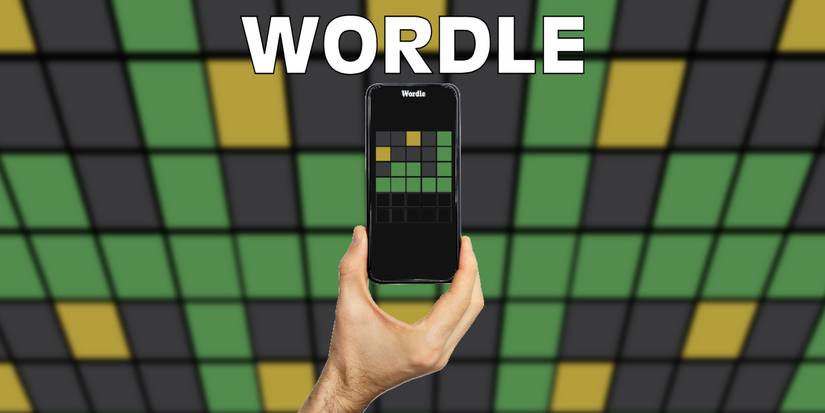
At its core, Wordle is a masterclass in minimalist design. Players have six attempts to guess a secret five-letter word. Feedback is provided via colored tiles: green for a correct letter in the correct spot, yellow for a correct letter in the wrong spot, and gray for letters not present in the word at all.
The Original Word Bank
When the game was first launched to the public by creator Josh Wardle, it operated on two distinct lists of words. The first was a "dictionary" of approximately 13,000 five-letter English words that the game would accept as valid guesses. The second was a much smaller, curated list of 2,315 words designated as potential solutions. This curation was essential; without it, players would be frustrated by obscure technical terms, archaic English, or pluralized nouns that felt "cheap" as daily answers.
The New York Times Acquisition
In January 2022, The New York Times (NYT) purchased Wordle from Josh Wardle for a price "in the low seven figures." While the core mechanics remained untouched, the NYT began a process of editorial curation. This included the removal of words deemed offensive, insensitive, or overly obscure. As of recent audits, the remaining pool of unused words is meticulously managed by a dedicated editor to ensure the game remains challenging yet accessible.
Chronology: From Private Gift to Multi-Million Dollar Asset
The history of Wordle is a rare "feel-good" story in the tech world, rooted in personal connection rather than market research.
2013–2020: The Prototype Phase
Josh Wardle, a software engineer known for creating experimental social projects like "The Button" and "Place" for Reddit, initially created a prototype of Wordle in 2013. However, it failed to gain traction among his friends and was shelved for nearly a decade.
2021: The Pandemic Revival
During the COVID-19 lockdowns, Wardle and his partner, Palak Shah, became obsessed with The New York Times Spelling Bee and daily crosswords. Recalling his old prototype, Wardle refined the game as a gift for Shah. After seeing her enjoyment, he shared it with his family via WhatsApp. On June 19, 2021, Wardle decided to release the game to the public on a simple, ad-free website.
Late 2021: Going Viral
In October 2021, the game had only 90 daily players. However, after Wardle implemented a "share" feature that allowed players to post their results as a grid of emoji squares without spoiling the word, the game exploded on Twitter (now X). By the end of December 2021, the player base had grown to over 300,000.
2022–Present: The NYT Era
By January 2022, millions were playing daily. On January 31, the NYT announced its acquisition of the game. In late 2022, the publication appointed Tracy Bennett as the first dedicated Wordle editor, moving the game from a static, pre-programmed script to a more dynamically curated experience.
Supporting Data: The Linguistic Science of Wordle
The strategy behind Wordle is deeply rooted in linguistics and information theory. To master the game, players often rely on data regarding letter frequency and word structure.
Letter Frequency and Starting Words
Statistically, the most common letters in the Wordle solution set are E, A, R, O, T, L, and S. This has led to the rise of "optimal" starting words. While "ADIEU" remains a fan favorite for its four vowels, many mathematicians argue that "CRANE," "SLATE," or "TRACE" are superior because they utilize high-frequency consonants that narrow down the possibilities more effectively.
The "Removed" Words
Upon taking over the game, the NYT famously removed six words from the original solution list:
- Agora (too obscure)
- Pupal (too obscure/technical)
- Lynch (insensitive/offensive)
- Slave (insensitive/offensive)
- Wench (insensitive/offensive)
- Fibre (British spelling; the NYT standardized the list to American English, favoring "Fiber")
The Script and Future Solutions
Because Wordle is a client-side game, the entire list of future answers was originally embedded in the website’s source code. This allowed enthusiasts to "mine" the script and discover every word scheduled to appear through October 2027. While the NYT has since altered the way words are served to prevent easy spoilers, the fundamental list of roughly 2,300 words remains the primary roadmap for the game’s longevity.
Official Responses: Editorial Philosophy and Sensitivity
The transition from a solo-developer project to a corporate-owned entity brought about a shift in how the game’s content is managed. The New York Times has been vocal about its desire to keep Wordle a "safe" and "unified" experience.
Editorial Curation
Tracy Bennett, the Wordle editor, has explained that her role involves more than just picking words. She must ensure that the daily solution does not inadvertently coincide with tragic global events in a way that appears insensitive. For example, the NYT famously scrambled to change the word "FETUS" in May 2022 after a leak of a Supreme Court decision regarding abortion rights, fearing the word would be interpreted as a political statement.

Maintaining the "Soul" of the Game
In various interviews, the NYT Games team has emphasized that they have no intention of adding ads or "pay-to-win" mechanics to Wordle. They recognize that the game’s appeal lies in its scarcity—the fact that there is only one word per day and everyone in the world is solving the same puzzle. This "watercooler effect" is what the publication seeks to preserve.
Implications: The Future of Digital Puzzles and Cognitive Health
The success of Wordle has had a profound impact on the landscape of casual gaming and digital media.
The Rise of the "Wordle-like"
The game’s open-source-style simplicity inspired a wave of clones and variations. Quordle (four words at once), Octordle (eight words), Worldle (geography-based), and Heardle (music-based) all utilize the same "six guesses" feedback loop. This has created a new sub-genre of "daily micro-games" that respect the player’s time rather than demanding hours of engagement.
Cognitive Benefits and Social Connection
Psychologists have noted that Wordle provides a healthy "dopamine hit" through its "Aha!" moment. Unlike social media scrolling, which can be passive and draining, Wordle requires active cognitive engagement. Furthermore, the ability to share results has fostered a sense of digital community, particularly among families and friends who use their daily scores as a way to stay in touch.
The "Finite" Problem
A looming question for the NYT is what happens when the 2,315 words run out. While 2027 seems far away, the list is depleting. The publication will eventually have to decide whether to recycle the original list for a new generation of players, expand the list to include more complex vocabulary, or introduce new gameplay modes (such as six-letter words) to keep the format fresh.
Conclusion: A Lasting Legacy
Wordle proved that in an era of complex metaverses and high-definition graphics, there is still a massive appetite for simple, elegant puzzles. By leveraging the universal appeal of language and the human desire for shared experience, Wordle has secured its place not just as a passing trend, but as a permanent fixture of the modern morning routine. As the remaining unused words continue to be revealed day by day, the game stands as a testament to the power of a good idea, a gift for a loved one, and the enduring allure of the written word.


Leave a Comment