
Unearthing the Unthinkable: E.B. Hudspeth’s The Resurrectionist Challenges the Boundaries of Science and Myth
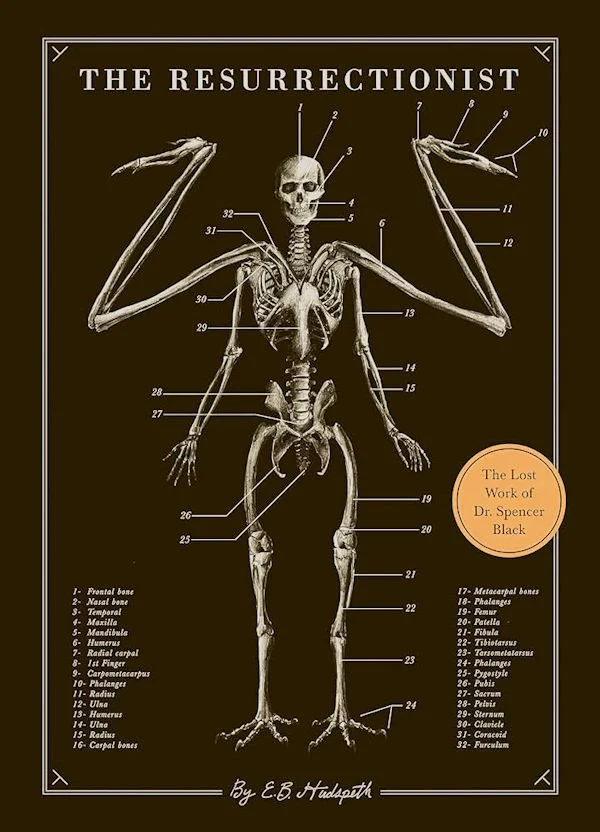
Philadelphia, Late 1870s – A city steeped in the burgeoning advancements of the Gilded Age, yet still clinging to the gaslit shadows of its past. Cobblestone streets echo with the clip-clop of horse-drawn carriages, and the intellectual ferment of scientific inquiry clashes with deeply ingrained societal norms. It is within this crucible that the controversial figure of Dr. Spencer Black emerges, a man whose radical theories would redefine the very boundaries between legend and biological reality. A surgeon of undeniable talent, Black, the progeny of a grave robber, embarks on a journey through Philadelphia’s esteemed Academy of Medicine, only to diverge onto a path so unconventional, so profoundly unsettling, that it would ultimately consume him. His audacious hypothesis: What if the world’s most celebrated mythological beasts – mermaids, minotaurs, satyrs, sphinxes, sirens, and centaurs – were not mere figments of ancient imagination, but rather the evolutionary ancestors of humankind, their existence meticulously documented within a hidden biological lineage?
This audacious premise forms the backbone of E.B. Hudspeth’s The Resurrectionist, a literary creation that transcends conventional genre definitions, carving out a unique space within the realm of "fictional non-fiction." The book, a masterful blend of biographical narrative and pseudo-scientific illustration, has captivated readers with its meticulously crafted verisimilitude and its chilling exploration of genius veering into obsession. It is a work that not only tells a story but constructs an entire fabricated reality, inviting readers to suspend disbelief and peer into a world where the fantastical might just be rooted in forgotten truth.
Main Facts: A Dual Narrative of Obsession and Anatomical Artistry
The Resurrectionist by E.B. Hudspeth stands as a singular achievement in contemporary literature, a book designed to mimic a long-lost academic treatise. At its core, it presents the purported life and work of Dr. Spencer Black, a fictional 19th-century surgeon whose radical theories concerning the evolutionary lineage of humanity challenge conventional biology. The book is lauded for its ingenious construction, divided into two distinct yet intrinsically linked halves.
The first section unfolds as the detailed biography of Dr. Black, chronicling his early life, his formative years at Philadelphia’s Academy of Medicine, and the gradual, inexorable development of his groundbreaking—and ultimately destabilizing—hypothesis. This narrative delves into the psychological descent of a brilliant mind, tracing his trajectory from respected academic to ostracized eccentric, driven by an unwavering conviction in his extraordinary claims. It paints a portrait of a man consumed by an idea, meticulously documenting his research, his struggles against the scientific establishment, and his eventual withdrawal from conventional society.
The second, equally compelling, half of the book is The Codex Extinct Animalia. This section is presented as Dr. Black’s magnum opus, a comprehensive anatomical atlas featuring stunningly detailed illustrations of various mythological creatures. Rendered with the clinical precision and aesthetic sensibility of genuine 19th-century medical textbooks, these plates depict the skeletal, muscular, and organ systems of beings like the Griffin, the Hydra, the Chimera, and countless others. Each illustration is accompanied by meticulously crafted Latin nomenclature and brief, scientific descriptions, lending an astonishing air of authenticity to the fantastical subject matter.
The genius of The Resurrectionist lies in the symbiotic relationship between these two components. While The Codex Extinct Animalia is undeniably a work of breathtaking artistic and imaginative skill on its own, its true power is unlocked only when viewed through the lens of Dr. Black’s biography. The narrative transforms the anatomical drawings from mere curiosities into a poignant, disturbing testament to a brilliant mind’s unraveling. It becomes a visual diary of an intellect pushed to its limits, a document of obsession made manifest in ink and paper. The book’s success is measured not just in its engaging story or beautiful art, but in its ability to convince the reader, however fleetingly, that they are holding a genuine piece of forbidden history.
The Genesis of a Grand Delusion: A Chronology of Dr. Spencer Black’s Unraveling
The biographical segment of The Resurrectionist masterfully constructs the illusion of a documented life, detailing the pivotal stages of Dr. Spencer Black’s descent into his radical hypothesis and its consuming aftermath.
Early Life and Influences: The Grave Robber’s Son
Spencer Black’s origins were far from conventional for a budding academic of the late 19th century. Born the son of a grave robber, his early exposure to the human anatomy was not through sterile dissection labs but through illicit nocturnal excavations. This unconventional upbringing, while providing an early, albeit macabre, education in bone and sinew, undoubtedly instilled in him a disregard for societal norms and an insatiable curiosity about the hidden mechanisms of life and death. This clandestine apprenticeship might have also fostered a unique observational skill, an ability to see beyond superficial appearances, setting the stage for his later, profoundly unconventional insights. Despite his humble and illicit beginnings, Black possessed an innate intellectual brilliance that earned him a coveted spot at Philadelphia’s esteemed Academy of Medicine, a testament to his sheer academic prowess. Here, amidst the hallowed halls of traditional medical science, his formidable intellect would be sharpened, even as his unique perspective began to diverge from the orthodoxy.
The Incubation of a Hypothesis: Seeds of the Unthinkable
During his studies and early career as a respected surgeon, Dr. Black distinguished himself through his innovative surgical techniques and keen analytical mind. However, beneath this veneer of conventional success, a radical idea began to germinate. Fueled by his peculiar upbringing and perhaps by overlooked anomalies in his anatomical studies, he started to question the accepted tenets of evolutionary theory. He delved into ancient texts, folklore, and mythological accounts, not as fanciful tales, but as potential historical records. He meticulously cross-referenced descriptions of mythical creatures – the powerful musculature of a Minotaur, the aquatic adaptations of a Mermaid, the avian skeletal structure of a Griffin – with known biological principles. His hypothesis posited that these beings were not supernatural entities but highly specialized, perhaps now extinct, species that represented branches of an alternate, parallel evolutionary tree, one that intimately intersected with humanity’s own. He began to theorize that humanity’s common ancestors were not simple primates, but a far more diverse, even monstrous, collection of organisms, whose remnants persisted in legend.
Escalation and Isolation: The Path to Ostracization
As Dr. Black’s research progressed, his findings grew increasingly bizarre, pushing him further from the scientific mainstream. His presentations to academic societies, initially met with polite skepticism, quickly devolved into outright ridicule and condemnation. His peers, bound by the rigid empiricism of their era, viewed his work as the ravings of a madman, an affront to rational thought and established science. Funding for his unconventional research dried up, and his professional standing eroded. He found himself increasingly isolated, his colleagues shunning him, his once-promising career in ruins. Yet, rather than deterring him, this ostracization only intensified his resolve. Convinced that he was on the cusp of a revolutionary discovery, Black retreated into his private laboratory, dedicating every waking hour to the study and anatomical reconstruction of his "extinct animalia." His meticulous dissections of anomalous specimens (some rumored to be illicitly obtained, echoing his father’s trade) and his relentless pursuit of anatomical consistency for his mythological subjects became his sole purpose, eclipsing all other aspects of his life.
The Carnival and Beyond: A Descent into Obscurity
The final stages of Dr. Black’s professional life saw him take a dramatic and tragic turn. Unable to gain acceptance within the scientific community, and driven by a desperate need to fund his continued research and share his "truths," he resorted to exhibiting his findings in less conventional venues. He transformed from a revered surgeon into a carnival showman, displaying his detailed anatomical models and illustrations of mythological beings to curious, often horrified, audiences. These "exhibitions" were not mere spectacles for him; they were attempts, however misguided, to educate and convince a public less bound by academic dogma. This public display, however, only solidified his reputation as an eccentric charlatan among his former peers. The narrative hints at his ultimate fate, suggesting a complete withdrawal from society, a final retreat into the solitary perfection of his Codex. The "whatever he became at the end" implies a profound dissolution of his former self, a total surrender to his consuming obsession, leaving behind only the enigmatic legacy of his incredible, disturbing work.
Supporting Data: The Verisimilitude of The Codex Extinct Animalia
The second half of The Resurrectionist, The Codex Extinct Animalia, is not merely an appendix but a cornerstone of the book’s immersive experience. It represents the tangible output of Dr. Black’s life’s work, a testament to his unparalleled, if misguided, dedication.
A Masterpiece of Fabricated Science: Meticulous Detail
The anatomical plates within the Codex are astonishing in their detail and commitment to scientific accuracy, despite their fantastical subject matter. Each illustration is rendered with the dry, precise hand of a genuine medical illustrator from the late 19th century. From the intricate musculature that would allow a Centaur to gallop with power and grace, to the complex circulatory system required to sustain a multi-headed Hydra, every element is considered. Skeletal structures are meticulously drawn, showcasing how bone and cartilage might adapt to support wings, tails, or multiple limbs. Internal organs are depicted with convincing biological logic, adapted for the unique physiologies of these mythical creatures – a Mermaid’s specialized respiratory and circulatory systems for aquatic life, a Minotaur’s robust digestive tract for a herbivorous (or perhaps omnivorous) diet. The use of faux-Latin scientific names for each creature and its anatomical components further enhances the illusion, grounding the fantastical in a veneer of academic rigor. These aren’t just drawings; they are blueprints for creatures that could exist, given the right evolutionary pressures.
The Artistry of the Unnatural: Convincing the Skeptic
Beyond their scientific "accuracy," the illustrations are artistic masterpieces. Hudspeth (or rather, the fictional Dr. Black) demonstrates an extraordinary talent for rendering the unnatural in a way that feels utterly plausible. The cross-hatching, shading, and anatomical labels are all perfectly in keeping with the conventions of the era, evoking the works of real anatomical pioneers. The commitment to "the bit" is absolute; there is no hint of irony or whimsy. Instead, a solemn, scientific earnestness pervades every page, inviting the reader to believe, even for a moment, that they are studying genuine biological specimens. This unwavering dedication to authenticity is what elevates the Codex from a collection of interesting drawings to a profoundly unsettling document. It forces the reader to confront the possibility that these creatures, long relegated to myth, might indeed have walked (or swum, or flown) the Earth.
The Symbiotic Relationship of Text and Image: Meaning from Madness
Crucially, the power of The Codex Extinct Animalia is amplified immeasurably by its preceding biographical narrative. Without Dr. Black’s story, the Codex would remain a beautiful curiosity, a fascinating artistic endeavor. With it, however, every plate transforms into a profound, often disturbing, document of a brilliant mind’s descent into obsession and eventual madness. The detailed anatomical studies of a Satyr or a Siren are no longer just intricate drawings; they become evidence of Black’s unwavering conviction, his intellectual sacrifice, and his profound psychological unraveling. The reader understands that these aren’t merely imaginative exercises but the culmination of years of tireless, isolating research by a man who genuinely believed in the biological reality of these creatures. The biography provides the pathos, the human element, and the tragic context that imbues the scientific illustrations with a chilling emotional resonance, making the reader ponder the thin, often permeable, line between genius and insanity.
Official Responses and Critical Reception: The Allure of Fabricated Reality
While The Resurrectionist does not elicit "official responses" in the governmental sense, its reception within literary circles and among readers constitutes a significant critical dialogue regarding its unique genre and thematic depth.
Critical Acclaim and Niche Appeal: A Cult Classic in the Making
The Resurrectionist has been widely praised by critics and readers for its originality, stunning artistry, and immersive storytelling. It has garnered a reputation as a distinctive literary artifact, often recommended for those seeking narratives that defy easy categorization. Its blend of historical fiction, horror, fantasy, and pseudo-scholarship has cemented its status as a cult classic, appealing to a specific demographic that cherishes intellectual puzzles and aesthetic brilliance. Reviewers often highlight its impeccable attention to detail, both in its narrative voice and its visual presentation, noting how it successfully creates a believable alternate history.
The Allure of Fictional Non-Fiction: A Genre Defined
The book is a prime example of the "fictional non-fiction" subgenre, a category that includes works presented as lost manuscripts, forgotten diaries, or fabricated academic texts. This genre holds a particular fascination for readers who enjoy the intellectual exercise of blurring the lines between fact and fiction. It taps into a primal human desire for hidden knowledge, for secret histories that challenge established paradigms. The Resurrectionist satisfies this craving by offering a meticulously constructed "found document" that feels tantalizingly real. It invites readers to engage in a unique form of literary play, where the boundaries of reality are fluid and the imagination is given free rein within a framework of rigorous academic mimicry. This genre offers an escape into speculative intellectualism, making readers feel as if they are uncovering a profound, albeit fabricated, truth.
Addressing the Reviewer’s Critique: A Matter of Depth
While overwhelmingly positive, some critiques, like the one referenced, point to a desire for even greater depth in Dr. Black’s biographical unravelling. The reviewer expressed a longing to "feel each step of that unravelling in more detail, not just watch it happen at a distance." This observation speaks to the powerful impact of the book’s premise and the character of Dr. Black; his journey is so compelling that readers crave an even more intimate, granular exploration of his psychological descent. This critique, however, does not diminish the book’s overall power but rather highlights its ability to create such a compelling character and narrative that readers are left wanting more—a testament to its enduring appeal and the richness of its world. It suggests that while the book excels at crafting a convincing external narrative, a deeper dive into Black’s internal world could further elevate an already exceptional work.
Implications: The Enduring Legacy of The Resurrectionist
The profound impact of The Resurrectionist extends beyond its immediate narrative, resonating with readers on intellectual, philosophical, and artistic levels, cementing its place as a significant contribution to speculative fiction.
Challenging Perceptions of Reality: Myth as Science
At its core, the book challenges conventional perceptions of reality by positing that ancient myths are not mere fables but echoes of a forgotten biological past. This audacious premise forces readers to reconsider the origins of folklore and the boundaries of scientific possibility. It encourages a critical examination of how knowledge is constructed and validated, and how easily extraordinary truths might be dismissed as fantasy. The Resurrectionist acts as a potent reminder that the history of science is replete with theories once deemed heretical that later proved revolutionary. By blurring the lines between accepted scientific fact and long-held mythological belief, the book invites a deeper contemplation of what constitutes "truth" and how our understanding of the world is shaped by cultural narratives.
The Nature of Genius and Madness: A Fine Line
One of the most compelling themes explored in the book is the intricate and often terrifying relationship between genius and madness. Dr. Spencer Black embodies the archetypal figure of the brilliant mind pushed to its limits, driven by an unconventional vision that isolates him from his peers. His story serves as a cautionary tale, illustrating how unwavering conviction, when unsupported by conventional validation, can lead to ostracization and psychological deterioration. The book masterfully navigates this terrain, allowing readers to witness the transformation of a gifted surgeon into an obsessive, almost tragic, figure. It prompts reflection on historical figures who similarly defied orthodoxy, some to be vindicated, others to be forgotten as eccentrics. Black’s journey underscores the fragility of the human mind when confronted with ideas too radical for its time, and the profound cost of pursuing an unpopular truth.
Contribution to Speculative Fiction: A Genre Redefined
The Resurrectionist stands as a benchmark in speculative fiction, demonstrating the genre’s capacity for innovation in both form and content. Its unique structure – the intertwining of fictional biography and pseudo-scientific atlas – pushes the boundaries of storytelling, creating an immersive experience unlike typical narratives. It has inspired other works seeking to blend art, history, and imaginative conjecture. The book’s success lies in its ability to create an entirely new, believable reality, complete with its own scientific principles and historical context, thereby expanding the very definition of what speculative fiction can achieve. It proves that compelling narratives can be delivered not just through traditional prose, but through a multi-modal approach that leverages visual artistry and academic mimicry.
A Call to the Curious: An Unforgettable Experience
Ultimately, The Resurrectionist is an essential read for those who appreciate literary works that defy easy categorization and challenge conventional thought. It speaks to readers who relish the intellectual thrill of "fictional non-fiction," those captivated by scholarly characters driven to the brink, and anyone seeking a reading experience that is genuinely singular. Its fusion of historical setting, scientific inquiry, mythological wonder, and psychological drama creates a tapestry that is both unsettling and profoundly thought-provoking. For the discerning reader, it promises an unforgettable journey into a meticulously crafted world where the monstrous and the magnificent converge, leaving an indelible mark on the imagination long after the final page is turned.



Leave a Comment