Unpacking Homer’s Odyssey: A Comprehensive Guide for Anticipating Christopher Nolan’s Epic Vision
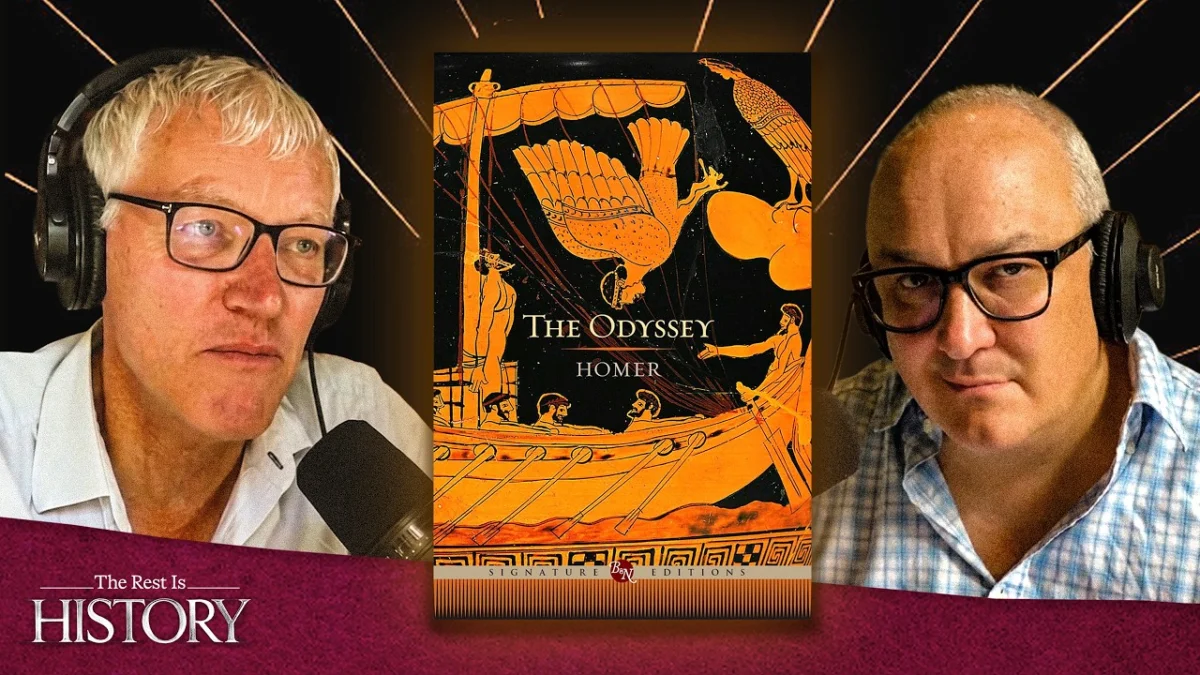
As the cinematic world eagerly anticipates Christopher Nolan’s highly anticipated adaptation of Homer’s Odyssey, a critical question emerges for many: how to best engage with this foundational work of Western literature? For those who haven’t delved into the epic poem recently, or perhaps never had the chance, the prospect of approaching such a monumental text can feel daunting. Fortunately, a valuable resource has emerged to bridge this gap: a compelling discussion hosted by Tom Holland and Dominic Sandbrook, the insightful minds behind the popular "The Rest Is History" podcast. This illuminating segment, embedded above, serves as an accessible and engaging primer, dissecting the major plotlines and exploring the profound literary and historical significance of Odysseus’s arduous journey home.
This article aims to expand upon the insights provided by Holland and Sandbrook, offering a comprehensive exploration of Homer’s Odyssey in anticipation of Nolan’s cinematic interpretation. We will delve into the core narrative, trace the epic’s historical context, examine its enduring thematic relevance, and consider the potential impact of a Nolan-helmed adaptation.
The Core Narrative: A Hero’s Perilous Return
At its heart, Homer’s Odyssey chronicles the ten-year struggle of the Greek hero Odysseus, King of Ithaca, to return home after the Trojan War. The epic poem, traditionally attributed to the ancient Greek poet Homer, is a cornerstone of Western literature, celebrated for its intricate storytelling, rich character development, and exploration of universal themes.
The narrative picks up a decade after the fall of Troy, with Odysseus and his men long overdue. While his wife, Penelope, steadfastly fends off a throng of persistent suitors vying for her hand and Odysseus’s throne, their son, Telemachus, embarks on his own journey to seek news of his father. This dual quest—Odysseus’s physical voyage and Telemachus’s coming-of-age odyssey—forms the central pillars of the story.
Odysseus’s journey is anything but straightforward. Beset by divine wrath, particularly from the sea god Poseidon, he encounters a series of fantastical and perilous obstacles. These include:
- The Land of the Lotus-Eaters: Where consuming a magical fruit induces forgetfulness and a desire to remain, tempting Odysseus’s crew to abandon their quest.
- The Cyclops Polyphemus: A monstrous, one-eyed giant whose cave Odysseus and his men are trapped in. Odysseus’s cunning in blinding Polyphemus earns him Poseidon’s eternal enmity.
- Aeolus, King of the Winds: Who gifts Odysseus a bag containing all the winds, except the one that would carry them home. Greed and suspicion among his men lead to the winds being unleashed, driving them back to Aeolus, who refuses further aid.
- The Laestrygonians: A race of cannibalistic giants who destroy most of Odysseus’s fleet.
- Circe, the Sorceress: Who transforms Odysseus’s men into pigs. Odysseus, aided by the god Hermes, resists her enchantments and spends a year with her, eventually gaining her counsel on how to proceed.
- The Underworld (Nekyia): Where Odysseus consults the prophet Tiresias, who foretells his future and advises him on his return. He also encounters the shades of fallen heroes and his own mother.
- The Sirens: Creatures whose enchanting songs lure sailors to their deaths. Odysseus has his men bind him to the mast to hear their song without succumbing.
- Scylla and Charybdis: Two terrifying sea monsters, one a multi-headed beast and the other a deadly whirlpool, between which Odysseus must navigate.
- The Cattle of Helios: Despite strict warnings, Odysseus’s starving men slaughter and eat the sacred cattle of the sun god, leading to divine retribution and the loss of his remaining crew.
Finally, after years of wandering and divine intervention, Odysseus washes ashore on the island of Calypso, a nymph who holds him captive for seven years, offering him immortality. It is only through the intervention of the gods, particularly Athena, that Calypso releases him, allowing him to finally reach Ithaca.
Upon his arrival, disguised as a beggar, Odysseus must prove his identity and reclaim his kingdom from the insolent suitors. His reunion with Telemachus and Penelope, and the ensuing bloody battle to restore order, form the epic’s dramatic conclusion.
Chronological Context: The Dawn of Western Literature
The Odyssey is believed to have been composed in the late 8th or early 7th century BCE, placing it among the earliest works of Western literature. Its creation marks a pivotal moment in the development of narrative and poetic tradition.
Oral Tradition and the Homeric Question
The composition of the Odyssey, like its companion epic the Iliad, is thought to have emerged from a rich tradition of oral storytelling. Bards would have recited these lengthy narratives, likely composed in dactylic hexameter, from memory. This oral origin has led to the enduring "Homeric Question," a scholarly debate concerning the authorship of both epics. While traditionally attributed to a single poet named Homer, many scholars now believe these poems to be the product of a long tradition, potentially shaped and refined by multiple individuals over time.
The Bronze Age and the Trojan War
The events described in the Odyssey are set against the backdrop of the Bronze Age Aegean civilization, a period of advanced metallurgy, complex social structures, and extensive maritime trade. The Trojan War, the backdrop to Odysseus’s absence, is a legendary conflict that has captivated imaginations for millennia. While its historical veracity remains debated, the war is a crucial element of the Greek mythological landscape, shaping the identities and destinies of countless heroes. The Odyssey itself offers glimpses into the societal norms, religious beliefs, and political structures of this ancient world, providing invaluable insights into the lives and values of early Greek peoples.
Supporting Data: Thematic Resonance and Literary Significance
The enduring power of the Odyssey lies not only in its thrilling narrative but also in its profound exploration of timeless themes. Holland and Sandbrook rightly highlight the literary and historical meaning embedded within its tales, which continue to resonate with audiences today.
Key Themes Explored:
- Nostos (Homecoming): The central theme of the Odyssey is the yearning for home and the arduous journey to achieve it. Odysseus’s return is not merely a physical relocation but a spiritual and psychological reintegration into his rightful place.
- Xenia (Hospitality): The concept of hospitality is paramount in ancient Greek society, and the Odyssey extensively explores its importance, both its observance and its violation. The mistreatment of guests and hosts by characters like Polyphemus and the suitors serves as a stark warning.
- Identity and Disguise: Odysseus’s reliance on disguise and cunning is a recurring motif. His ability to adapt and conceal his true identity is essential for his survival and eventual triumph. This theme prompts reflection on the nature of self and the masks we wear.
- Loyalty and Betrayal: The epic contrasts the unwavering loyalty of Penelope and Telemachus with the disloyalty and treachery of the suitors and some of Odysseus’s own men.
- Divine Intervention and Fate: The gods play a significant role in the Odyssey, influencing events and guiding the actions of mortals. The interplay between divine will and human agency is a constant source of tension.
- The Nature of Heroism: Odysseus is not presented as a flawless warrior like Achilles in the Iliad. Instead, his heroism is characterized by intelligence, resilience, endurance, and resourcefulness in the face of overwhelming adversity.
Literary Techniques and Influence:
Homer’s use of literary techniques, such as epithets, similes, and vivid imagery, has profoundly influenced subsequent Western literature. The epic’s structure, with its use of in medias res (starting in the middle of the action) and flashbacks, was innovative for its time and continues to be employed by storytellers. The Odyssey has served as a template for countless narratives of journeys, quests, and the struggle for home, shaping genres from adventure epics to modern novels.
Official Responses and Scholarly Interpretations
The Odyssey has been a subject of continuous study and interpretation by scholars, critics, and philosophers for over two millennia. Its canonical status within Western education has ensured its place in curricula worldwide.
Ancient Interpretations:
Even in antiquity, the Odyssey was subject to various interpretations. Philosophers like Plato engaged with its moral and political implications, while later Hellenistic scholars focused on its textual details and linguistic nuances. The poem’s allegorical potential was also explored, with some viewing Odysseus’s journey as a metaphor for the soul’s quest for knowledge or spiritual enlightenment.
Modern Scholarly Discourse:
Contemporary scholarship on the Odyssey is vast and multifaceted. It encompasses literary criticism, historical and archaeological research, linguistic analysis, and philosophical inquiry. Scholars continue to debate aspects of its composition, its cultural context, and its enduring relevance. The work of scholars such as Milman Parry and Albert Lord in the early 20th century revolutionized our understanding of oral tradition and its role in the formation of epics like the Odyssey. Archaeological discoveries, such as those related to the Bronze Age and the potential sites of ancient Troy, continue to inform our understanding of the world Homer depicted.
Implications for Christopher Nolan’s Adaptation
The impending cinematic adaptation of the Odyssey by Christopher Nolan carries significant implications, both for the legacy of the epic and for the future of filmmaking. Nolan, renowned for his intricate narratives, ambitious visual storytelling, and thematic depth, is a director uniquely positioned to tackle such a monumental work.
Potential Cinematic Approaches:
- Visual Spectacle and Scale: Nolan’s mastery of large-scale filmmaking suggests an adaptation that will be visually breathtaking, capturing the fantastical landscapes and terrifying encounters of Odysseus’s journey with unparalleled realism. We can anticipate stunning depictions of mythical creatures, divine interventions, and the vastness of the ancient Mediterranean.
- Psychological Depth: Beyond the spectacle, Nolan is known for delving into the psychological complexities of his characters. His Odyssey could offer a profound exploration of Odysseus’s trauma, his longing for home, his moral compromises, and the psychological toll of his protracted absence.
- Thematic Relevance: Nolan’s adaptations often engage with contemporary issues. It will be fascinating to see how he translates the timeless themes of the Odyssey—homecoming, identity, loyalty, the nature of heroism—to resonate with a modern audience. Will he draw parallels to contemporary struggles for belonging or the challenges of navigating a complex and often hostile world?
- Narrative Innovation: Given Nolan’s penchant for non-linear storytelling and intricate plot structures, his Odyssey might eschew a straightforward chronological approach. He could employ flashbacks, multiple perspectives, or other narrative devices to enhance the epic’s thematic resonance and intellectual engagement.
Anticipated Impact:
A successful adaptation by a director of Nolan’s caliber has the potential to reintroduce the Odyssey to a global audience, sparking renewed interest in Homeric literature and its foundational role in Western culture. It could inspire a new generation of readers and scholars to engage with the epic poem, fostering a deeper appreciation for its literary and historical significance. Furthermore, it could set a new benchmark for epic filmmaking, demonstrating the power of cinema to translate ancient masterpieces into compelling and relevant contemporary experiences.
The anticipation surrounding Christopher Nolan’s Odyssey serves as a powerful reminder of the enduring power of Homer’s epic. For those seeking to deepen their understanding or embark on this literary journey for the first time, resources like the "The Rest Is History" podcast provide an invaluable starting point. As we await Nolan’s cinematic interpretation, the rich tapestry of the Odyssey—its thrilling adventures, profound themes, and enduring characters—continues to offer a timeless exploration of the human condition, the quest for home, and the indomitable spirit of a hero.