Unlocking Profound Well-being: Day 7 of the Gratitude and Authenticity Journey
[City, State] – [Date] – In an increasingly complex world, the quest for genuine connection and inner peace has led many to explore practices that foster profound well-being. Among these, the "7 Days of Gratitude" initiative stands out, offering a structured journey designed to cultivate a deeper appreciation for life and a stronger sense of self. As participants arrive at Day 7, the program culminates with a powerful emphasis on the intertwined virtues of gratitude and authenticity, promising not just a fleeting positive experience, but a transformative shift in perspective.
The Core Philosophy: A Week That Can Change Your Life
The "7 Days of Gratitude" program, spearheaded by well-being advocates, is built on the premise that intentional practice can rewire our minds for greater happiness and resilience. It guides individuals through daily exercises aimed at cultivating an appreciative mindset. Day 7, titled "Gratitude & Authenticity," serves as the apex, challenging participants to embrace both altruism and profound self-reflection, offering a potent blend of outward giving and inward discovery. The overarching message is clear: this week is not merely about learning new habits, but about embarking on a journey towards a more fulfilling and authentically lived life.
Day 7: Acts of Giving and Deep Introspection
The final day of the program presents participants with a two-pronged approach to experiential learning, designed to solidify the week’s teachings:
The Power of Anonymous and Intentional Giving
The first challenge encourages participants to "Give an anonymous gift to someone. Leave a gift for someone where they will find it, with their name on it. Discover how good that feels!" This exercise delves into the psychology of altruism, emphasizing the inherent reward in giving without expectation. Anonymous acts of kindness, often referred to as "random acts of kindness," tap into a primal human need for connection and contribution. Studies have shown that giving, especially anonymously, activates the brain’s reward centers, releasing neurotransmitters like dopamine and oxytocin, which are associated with pleasure and bonding. This "giver’s glow" is not merely a transient feeling but can contribute to sustained happiness and a sense of purpose.
Leaving a named gift, on the other hand, adds a layer of intentional recognition. It’s an affirmation of another person’s value, a deliberate act of making someone feel seen and appreciated. In a world often characterized by fleeting interactions, such gestures can forge deeper bonds and reinforce the idea that every individual matters. The joy derived from witnessing or imagining the recipient’s delight reinforces the positive feedback loop of giving, solidifying the understanding that generosity is a path to personal fulfillment.
The Daily Gratitude Inquiry: A Continuous Practice
Beyond specific acts of giving, Day 7 reinforces the cornerstone of the entire program: the daily inquiry into gratitude. Participants are prompted to "Ask yourself, ‘What am I grateful for right now?’ Throughout the day, continue to ask yourself, ‘What am I grateful for right now?’" This seemingly simple question is a powerful mindfulness tool. It trains the mind to actively seek out and acknowledge positive aspects of one’s experience, even amidst challenges. By consistently redirecting focus from what is lacking to what is abundant, individuals can gradually shift their cognitive patterns, reducing rumination on negative thoughts and fostering a more optimistic outlook. Journaling these discoveries further enhances the experience, allowing for deeper reflection and a tangible record of evolving perceptions.
The Ten-Minute Meditation: Cultivating Inner Gratitude
To deepen the daily inquiry, the program suggests a structured Ten-Minute Meditation. This guided practice invites participants to:
- Make themselves comfortable, take 3 deep breaths, feel their body, and invite themselves to relax with each exhalation. This initial step grounds the individual, bringing them into the present moment and calming the nervous system. Deep breathing is a scientifically proven method for reducing stress and activating the parasympathetic nervous system, promoting relaxation.
- Find just one thing they are genuinely grateful for right now and write down what they are feeling in their journal. This focused attention on a single source of gratitude allows for a deeper immersion into the emotion, moving beyond a superficial acknowledgment to a visceral experience.
- Find a second thing they are genuinely grateful for right now. Notice the feelings of gratitude in their body. Write down what they are feeling in their journal. By expanding the focus to a second item, participants begin to build momentum, recognizing that gratitude is not an isolated event but a discoverable state.
- Find a third thing they are genuinely grateful for right now. If you can find one thing, you can find two. If you can find two things, you can find three. If you can find three things, you can find ten thousand. This progressive realization underscores the abundance mindset, illustrating that gratitude is an infinite resource. The more one seeks it, the more readily it is found, revealing the myriad blessings that often go unnoticed in daily life.
- Bring curiosity to their current experience as they notice the frequency and vibrations of gratitude moving through their whole being. Write down what they notice as they continue to feel gratitude. Keep noticing all the things they are grateful for. This final step encourages a holistic experience of gratitude, inviting participants to perceive its subtle energetic presence within their physical and emotional landscape. It transforms gratitude from a mental exercise into a full-body, vibrational experience, fostering a profound sense of interconnectedness and well-being.
The Intrinsic Link: Gratitude and Authenticity
The core philosophical insight of Day 7 lies in the profound connection between gratitude and authenticity. The program delves into a personal reflection that resonates with many: the historical tendency to prioritize conformity over genuine self-expression.
The reflection highlights the numerous instances in life "when it seemed wise to not be authentic, many times when it seemed wise to get along and not rock the boat." This speaks to the universal human experience of societal conditioning. From childhood, individuals are often taught to prioritize external approval, to suppress inconvenient emotions, and to conform to prescribed roles to avoid conflict or rejection. This conditioning manifests as: "keep it on the down low, keep your head down, don’t make eye contact, keep your thoughts to yourself, keep your hands to yourself, find out what is wanted and conform to that." Such patterns, while offering a semblance of safety or acceptance, come at a significant cost: a disconnection from one’s true self. Living inauthentically can lead to chronic stress, anxiety, feelings of emptiness, and a pervasive sense of not being truly seen or understood.
The critical question then arises: "What does that have to do with gratitude?" The answer is profound. To truly feel gratitude, one must be deeply connected to what they genuinely value, what they like, and what brings them joy. This requires self-awareness and an honest assessment of one’s inner landscape – the very essence of authenticity. If one is constantly trying to be someone they are not, their expressions of gratitude may be superficial, disconnected from genuine feeling.
Furthermore, authenticity demands vulnerability. As the text states, it means being "willing to be vulnerable to not just the joy of having or being, but the pain of losing, the grief of losing something." Authentic gratitude is not naive optimism; it is an acknowledgment of the preciousness of life and its experiences, understanding that beauty and loss are often two sides of the same coin. This expansive emotional capacity allows gratitude to become an "invitation to be open to feeling what’s here and available to feel. Even if it’s sad, or mad, or anything it turns out." By embracing the full spectrum of human emotions, including the challenging ones, one cultivates a more robust and resilient gratitude, one that appreciates life in its entirety, not just its pleasant moments.

The journey of "inquiry and inquiry" mentioned in the article refers to the continuous process of self-exploration and shedding these layers of conditioning. It’s a courageous act of deconstruction, dismantling ingrained patterns of thought and behavior that no longer serve one’s authentic self. Through this process, individuals can uncover moments of "deep and powerful gratitude to just be here, how I am, without trying to do it any different inside or outside." This represents a state of radical self-acceptance, a profound peace that comes from aligning one’s internal experience with external expression.
The ultimate "greatest treasure" is the ability to "just be myself." This realization is described as "What a gift. What a great starting place. What a great baseline." It signifies liberation from the burden of pretense and the embrace of one’s inherent worth. When one is truly authentic, gratitude flows effortlessly, for they are grateful for the gift of their own existence, exactly as it is.
Supporting Data: The Science Behind Gratitude and Authenticity
The principles explored in the "7 Days of Gratitude" program are firmly supported by extensive research in positive psychology and neuroscience.
On Gratitude:
- Psychological Benefits: Pioneering researchers like Dr. Robert Emmons and Dr. Michael McCullough have demonstrated through numerous studies that practicing gratitude significantly increases happiness and reduces depression. Grateful individuals report higher levels of positive emotions, alertness, enthusiasm, and determination. They are also less likely to experience negative emotions like envy, resentment, greed, and bitterness.
- Physical Health Benefits: Gratitude has been linked to improved physical health, including stronger immune systems, fewer aches and pains, and better sleep quality. Grateful people are also more likely to engage in healthy behaviors and seek medical help when needed.
- Social Benefits: Practicing gratitude strengthens relationships by fostering empathy, reducing feelings of isolation, and making individuals more likely to offer support to others. It enhances feelings of connection and belonging.
- Neuroscientific Basis: Functional MRI studies show that gratitude activates brain regions associated with moral cognition, reward, and social bonding, such as the medial prefrontal cortex. Regular gratitude practices can effectively "rewire" the brain, creating new neural pathways that promote positive emotional responses and resilience.
On Authenticity:
- Enhanced Well-being: Research consistently links authenticity to higher levels of psychological well-being, including greater self-esteem, life satisfaction, and vitality. When individuals live in alignment with their values, they experience a deeper sense of meaning and purpose.
- Stronger Relationships: Authentic individuals are more likely to form deep, meaningful relationships based on trust and genuine connection. By being real, they attract others who appreciate them for who they truly are.
- Reduced Stress and Anxiety: The effort required to maintain an inauthentic facade can be incredibly taxing. Living authentically reduces cognitive dissonance and the mental load of constantly monitoring one’s behavior, leading to lower stress levels and reduced anxiety.
- Greater Resilience: Authentic individuals tend to be more resilient in the face of adversity because they have a stronger sense of self and are better equipped to navigate challenges in a way that aligns with their core values.
Expert Perspectives and Broader Implications
Leading figures in mental health and wellness consistently advocate for the cultivation of gratitude and authenticity. Dr. Brené Brown, a renowned research professor, extensively discusses the power of vulnerability and authenticity in fostering connection and wholehearted living. Her work underscores that true belonging doesn’t require us to change who we are, but to be who we are. Similarly, mindfulness practitioners and psychologists like Jon Kabat-Zinn highlight gratitude as a fundamental aspect of mindfulness, enabling individuals to appreciate the richness of the present moment.
Organizations dedicated to mental health and personal development, such as the Greater Good Science Center at UC Berkeley, actively promote gratitude practices through research, articles, and programs, recognizing their crucial role in individual and societal flourishing. They echo the sentiment that a grateful and authentic life is not only personally rewarding but also contributes to a more compassionate and connected global community.
The implications of embracing gratitude and authenticity extend far beyond individual well-being. A society comprised of more grateful and authentic individuals would likely see:
- Increased Empathy and Compassion: As people connect more deeply with their own values and feelings, they become more attuned to the experiences of others.
- Stronger Social Fabric: Authentic relationships built on trust and mutual respect would lead to more cohesive and supportive communities.
- Greater Resilience to Adversity: A collective mindset of gratitude, even amidst challenges, fosters adaptability and collective problem-solving.
- Reduced Societal Pressures: As authenticity becomes more valued, the pressure to conform to unrealistic ideals may diminish, leading to a more inclusive and accepting culture.
Sustaining the Journey: Beyond the Seven Days
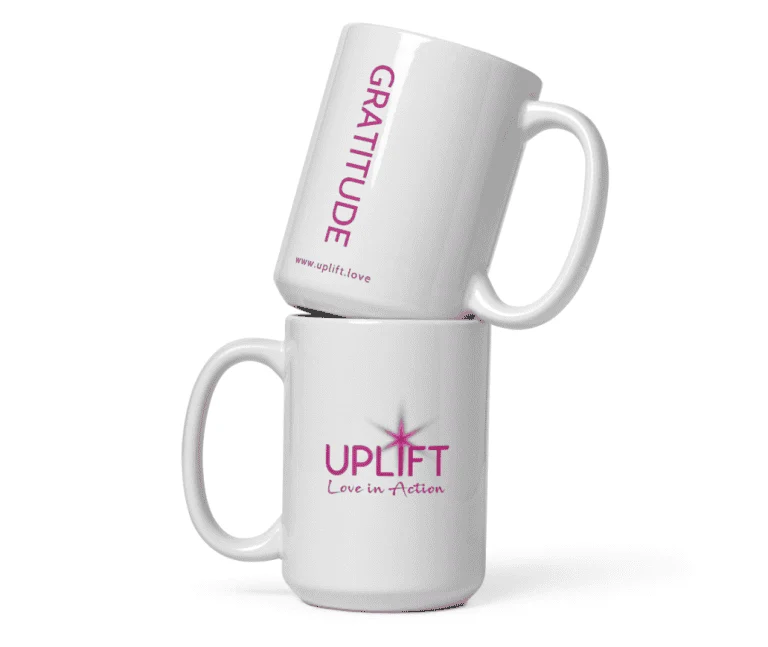
The "7 Days of Gratitude" program is designed as a catalyst, but the journey towards profound well-being is ongoing. To support participants in sustaining these practices, resources like the "UPLIFT Gratitude Mug" serve as tangible reminders of their commitment to appreciation and self-acceptance. Offering incentives like "20% OFF on any 2 or more MUGS* & FREE SHIPPING" encourages continued engagement with the philosophy, making the practice a part of daily rituals.
Further calls to action, such as "Take 5 Deep Breaths," "Financial Contribution" to support "Love in Action projects," and "Send a Blessing," reinforce the holistic nature of the program. These actions encourage not only self-care but also community engagement and altruism, extending the ripple effect of gratitude and authenticity into the wider world.
In conclusion, Day 7 of the "7 Days of Gratitude" program encapsulates a profound truth: that genuine well-being is found at the intersection of appreciation and self-acceptance. By embracing acts of giving, cultivating daily gratitude, and courageously living authentically, individuals can unlock a transformative power that not only enriches their own lives but also positively impacts the world around them. It is a powerful reminder that the greatest treasure lies in the simple, yet profound, act of just being oneself.