Unlocking the Cosmos: "City of Six Moons" Challenges Players with an Alien Language Rulebook
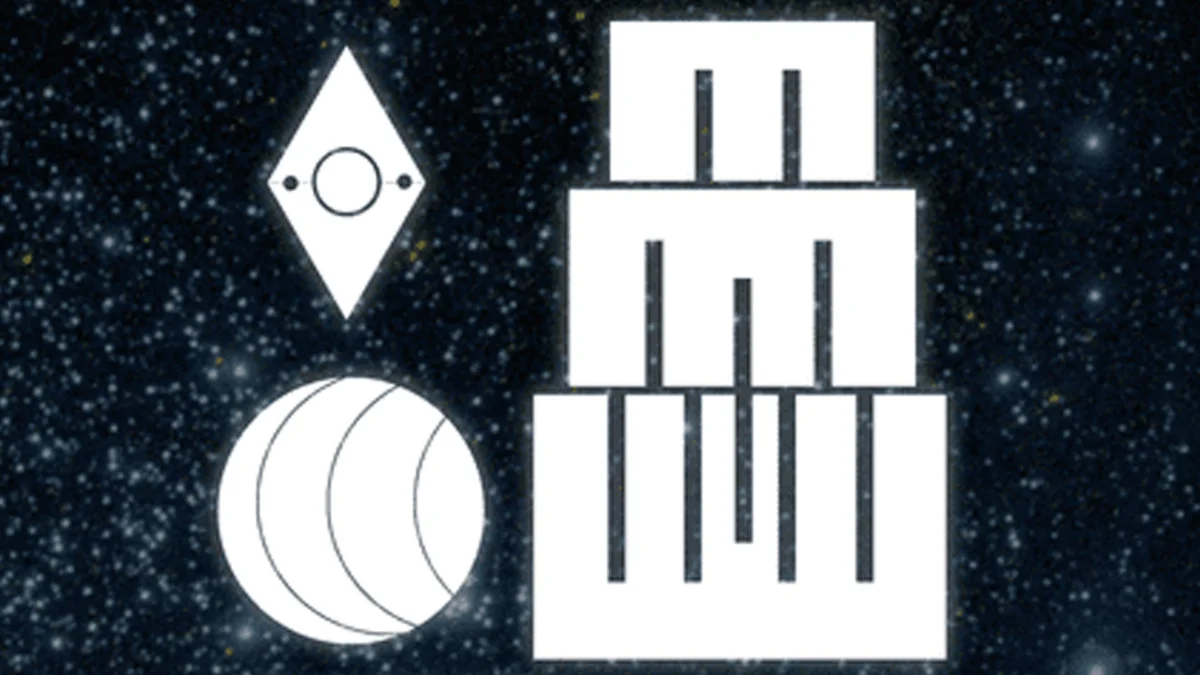
A groundbreaking new board game, "City of Six Moons," is poised to redefine the player experience by presenting its entire rulebook in an undeciphered alien language. Designed by Amabel Holland and published by Hollandspiele, this solo experience thrusts players into the role of linguistic archaeologists, demanding they translate a complex system of glyphs and symbols before even beginning to understand the game’s mechanics. The audacious twist? The designer explicitly states that players will never definitively know if their translation is correct, and will offer no clarifications on the rules, fostering an unprecedented level of immersion and intellectual challenge.
This innovative approach transcends traditional game design, transforming the act of learning the rules into the primary puzzle itself. Set to release next month, "City of Six Moons" is not merely a game about an alien civilization, but a game crafted as if it originated from one, pushing the boundaries of what a board game can be.
Main Facts
"City of Six Moons" is an upcoming single-player board game conceived by designer Amabel Holland, to be published under the Hollandspiele label, co-owned by Holland and Mary Holland. The game’s central, most striking feature is its rulebook, which is entirely composed of an alien language utilizing unique icons, glyphs, and symbols. Players are tasked with the formidable challenge of deciphering this language as a prerequisite to learning and playing the game itself. This foundational puzzle introduces a profound layer of uncertainty: players are explicitly informed that they will never receive confirmation on the accuracy of their translations. Adding to this deliberate ambiguity, Amabel Holland has confirmed her refusal to answer any questions regarding the game’s rules, solidifying the game’s premise as a self-contained, self-referential enigma.
The thematic core of "City of Six Moons" involves guiding the destiny of an extraterrestrial civilization. However, the game’s design philosophy extends beyond mere thematic representation; it aims to embody the very essence of an alien creation. To successfully navigate its linguistic labyrinth, players must engage deeply with their own cultural preconceptions while simultaneously acknowledging and adapting to the inherent differences of the fictional alien culture that supposedly authored the game.
Although specific gameplay details remain shrouded in mystery due to the nature of its rulebook, it is understood to be a solitaire experience, supplied with a set of components that are presumably either language-agnostic or marked with the same cryptic alien script. The game’s cover artwork has been revealed, potentially offering the very first visual clues to aid in the daunting task of decoding. Amabel Holland has assured prospective players via Bluesky that "City of Six Moons" is indeed a "functional, replayable game" once its rules are successfully (or sufficiently) deciphered. However, she provocatively suggests that the experience may become "lesser" after the initial code-breaking journey, embracing this sense of "loss" as an intentional part of the player’s overall journey, designed to "linger."
Chronology
The genesis of "City of Six Moons" can be traced back to a design philosophy that champions unconventional player engagement and intellectual curiosity. While the exact date of its initial conceptualization by Amabel Holland is not publicly detailed, the announcement of its imminent release, "next month," signals the culmination of a deliberate and thoughtful development process. Hollandspiele, the publishing house behind this title, has cultivated a reputation for releasing games that often challenge conventional notions of gameplay, historical simulation, and player interaction. This background provides a crucial context for understanding the bold artistic statement that "City of Six Moons" represents.
Hollandspiele’s Legacy of Innovation:
Founded by Amabel and Mary Holland, Hollandspiele has consistently distinguished itself by publishing niche, thought-provoking, and often mechanically unique games. Their catalog frequently features titles that explore complex historical scenarios, offer deep strategic challenges, or present novel game structures. This publishing ethos suggests a fertile ground for a game as experimental as "City of Six Moons." Their commitment to designer vision, even when it pushes against mainstream expectations, has likely provided Amabel Holland with the freedom to pursue such an ambitious project. The company’s prior releases indicate a willingness to prioritize artistic integrity and intellectual stimulation over mass-market appeal, making them the ideal platform for a game designed to confound and intrigue in equal measure.
The Public Unveiling and Anticipation:
The existence of "City of Six Moons" and its unique premise came to wider public attention through mentions on platforms like BoardGameGeek, a prominent hub for board game enthusiasts. The article notes BoardGameGeek’s early spotting of the concept, indicating that the game’s unusual nature quickly garnered discussion within the community. Amabel Holland’s subsequent confirmation and elaboration on Bluesky further cemented the game’s identity, providing key insights into her design intentions, particularly concerning the replayability and the deliberate "loss" felt post-decipherment.
This slow reveal, starting with an intriguing premise and gradually fleshed out by designer commentary, has built a unique anticipation. Unlike games that showcase intricate mechanics or stunning components upfront, "City of Six Moons" has primarily marketed its intellectual challenge and philosophical underpinnings. The "next month" release window positions it as an immediate and tangible enigma for players eager to delve into its secrets. The chronological progression from concept to impending release has been less about revealing gameplay and more about establishing the audacious artistic vision that underpins the entire project.
Supporting Data
The premise of "City of Six Moons" delves into fascinating areas of linguistics, cognitive science, and the philosophy of art. Its alien language rulebook is more than a mere gimmick; it’s a meticulously crafted barrier designed to reshape the player’s interaction with the game itself.
The Conceptual Framework: Deconstructing the Alien Language
The core of "City of Six Moons" lies in its alien language rulebook. This isn’t just a coded message; it’s presented as a system born from an entirely different cultural and intellectual paradigm. To decode it, players aren’t merely matching symbols to known concepts; they are engaging in a process akin to anthropological linguistics.
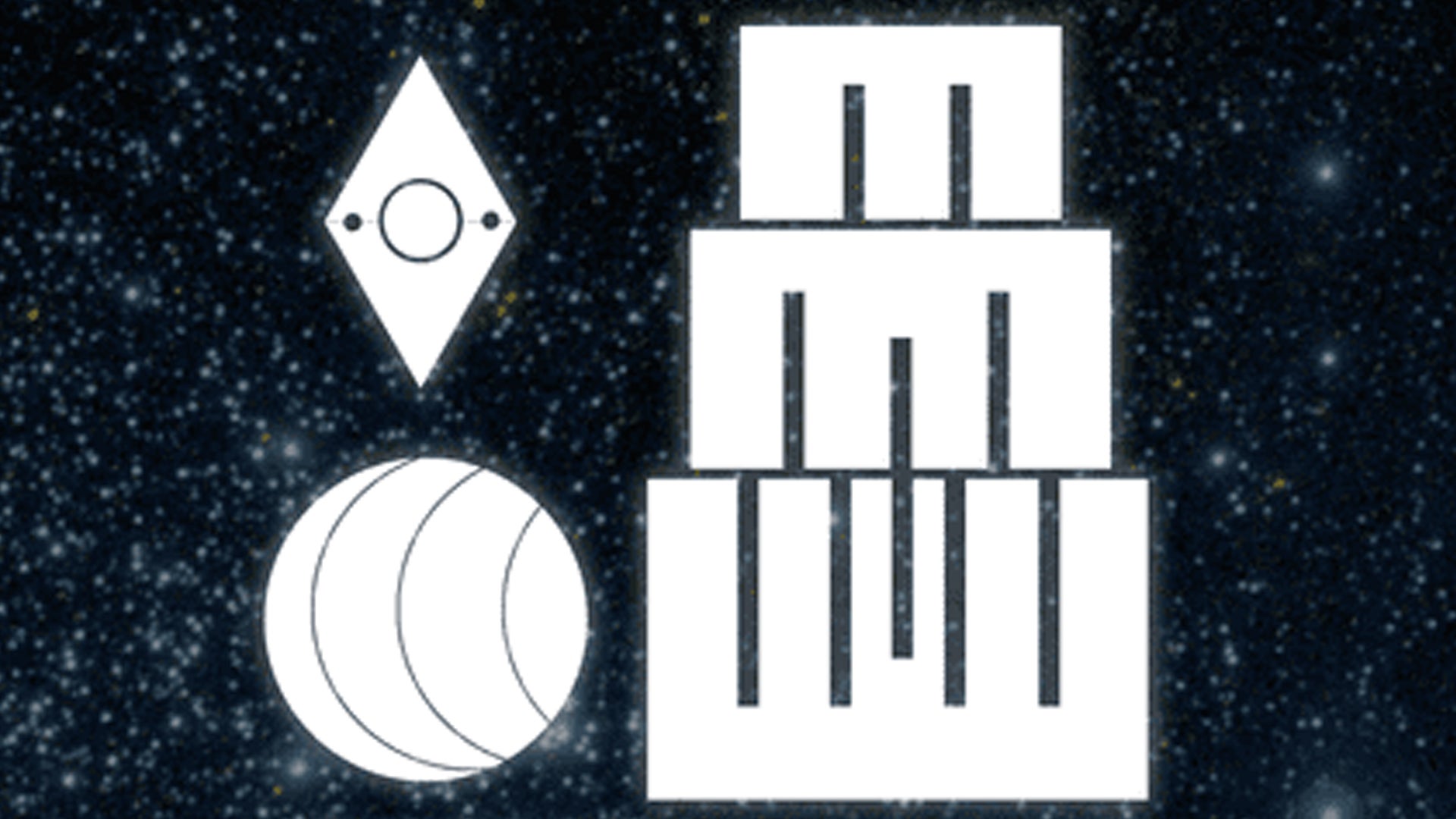
- Semiotics and Interpretation: The rulebook, composed of "icons, glyphs, and symbols," forces players to become semioticians. Semiotics is the study of signs and symbols and their interpretation. In "City of Six Moons," players must first infer the meaning of individual signs, then understand how these signs combine to form concepts, and finally how these concepts structure rules. This process is inherently subjective, especially without a "Rosetta Stone" equivalent. The designer’s refusal to answer questions amplifies this subjectivity, pushing players into an active, interpretive role rather than a passive one.
- Linguistic Archaeology: The challenge echoes real-world historical feats of decipherment, such as the cracking of ancient Egyptian hieroglyphs or Linear B. These historical successes relied on bilingual texts, internal consistency, and educated guesses informed by archaeological context. "City of Six Moons" offers only the internal consistency of its alien script and whatever contextual clues might be gleaned from the game’s artwork or components. Players become linguistic archaeologists, piecing together meaning from fragmented, unknown data.
- Cultural Assumptions and Cognitive Biases: Amabel Holland’s statement that players will need to draw on "existing cultural assumptions" while also accepting that the alien culture is "very different to humanity" highlights a fascinating cognitive challenge. Humans naturally project their own cultural frameworks onto unknown systems. The game forces players to confront these biases, to recognize where their assumptions might lead them astray when dealing with a truly alien logic. This metacognitive exercise—thinking about how one thinks—is a profound layer of the game. It taps into the human desire to find patterns and impose order, even where such order might be fundamentally different from our own.
The Solitaire Experience: A Deep Dive into Self-Reliance
The choice of a single-player format for "City of Six Moons" is not coincidental; it is intrinsically linked to the game’s central puzzle.
- Amplified Challenge and Introspection: In a multiplayer game, the burden of decipherment could be shared, potentially diluting the individual intellectual struggle. As a solitaire experience, the player is solely responsible for cracking the code. This intensifies the personal journey of discovery, making the triumph (or frustration) entirely their own. It encourages deep introspection, sustained focus, and a direct, unmediated confrontation with the unknown.
- The Appeal of Solo Board Games: The broader trend of solo board gaming, highlighted by the referenced YouTube video "7 best solo board games 2024," underscores a growing demand for immersive, self-contained experiences. Solo games often appeal to players seeking a challenge they can tackle at their own pace, without scheduling conflicts or social pressures. "City of Six Moons" leverages this appeal by offering a solo experience that is not just about strategic play, but about an intellectual quest for understanding. It transforms the solitary act of playing into a solitary act of discovery.
- Uninterrupted Immersion: Without other players, the individual can fully immerse themselves in the alien world and its language. There are no distractions, no alternative interpretations to immediately discuss (though online communities will undoubtedly form). This allows for a deeper, more personal connection to the decipherment process, making the player feel truly isolated in their alien encounter.
Hollandspiele’s Ethos: A Legacy of Innovation
Hollandspiele, as a publisher, has consistently demonstrated a commitment to artistic integrity and challenging conventional game design. This is evident in their catalogue, which often features titles that are strategically dense, thematically unique, or mechanically experimental.
- Designer-Driven Publishing: Hollandspiele operates on a model that empowers designers to pursue their visions, even if those visions are niche or unconventional. This environment is crucial for a game like "City of Six Moons," which, by its very nature, eschews traditional accessibility for a profound, unique experience.
- Beyond Entertainment: Games as Art: Many of Hollandspiele’s titles can be viewed as art pieces as much as games, designed to provoke thought, explore complex ideas, or simulate intricate systems. "City of Six Moons" fits perfectly within this framework, positioning itself as an interactive piece of conceptual art where the act of understanding is the art. This distinguishes it from games primarily focused on competitive play or narrative storytelling, emphasizing intellectual engagement above all else.
- Pushing Boundaries: The publisher’s willingness to release a game with an undecipherable rulebook underscores a dedication to pushing the boundaries of what board games can be. It’s a bold statement about the medium’s capacity for intellectual exploration and artistic expression, signaling to the board gaming community that innovation remains a core value.
The "Lesser" Experience: Post-Decipherment
Amabel Holland’s provocative statement about the game becoming a "lesser" experience after its secrets are known is a critical aspect of its design philosophy.
- The Thrill of Discovery: This concept highlights the human psychology of discovery. The initial act of deciphering an unknown language, grappling with its alien logic, and slowly making sense of chaos is often the most engaging and rewarding part of such a puzzle. Once the code is cracked, that specific challenge is gone.
- Games as Ephemeral Experiences: Holland’s intent for the "loss to linger" suggests a game that prioritizes a unique, transient experience over infinite replayability based on mechanical mastery. Many puzzle games, escape rooms, or narrative adventures share this characteristic: once the puzzle is solved or the story revealed, the initial magic cannot be fully recaptured.
- A Shift in Focus: After decipherment, the game transitions from a linguistic puzzle to a strategic challenge of guiding an alien civilization. While still a "functional, replayable game," the primary intellectual engagement shifts. The player moves from being a decipherer to a ruler, a distinct psychological shift that Holland believes diminishes the initial, profound experience of pure discovery. It’s a commentary on how the journey often outweighs the destination in intellectual pursuits.
Official Responses
The official communications surrounding "City of Six Moons" have been carefully curated by Amabel Holland, reflecting a deliberate artistic intent rather than a conventional marketing strategy. Her statements are less about revealing gameplay and more about articulating the philosophical underpinnings of the game.
Amabel Holland’s Vision: An Artist’s Statement
Amabel Holland’s pronouncements regarding "City of Six Moons" are integral to understanding the game itself. Her refusal to clarify rules or confirm translations isn’t an oversight; it’s a fundamental design choice.
- The Designer as an Absent God: Holland’s stance positions her as an almost mythical figure in relation to her creation. By declining to intervene in the player’s struggle with the alien language, she grants the game a self-contained existence, independent of creator validation. This mirrors the concept of an absent god in certain philosophical traditions, where the universe (or in this case, the game) operates according to its own inherent, discoverable (but never fully confirmed) laws. This approach forces players to rely solely on their intellect and interpretation, fostering a profound sense of autonomy and responsibility in their decipherment journey.
- Challenging Player Conventions: Holland actively challenges the prevalent convention in board gaming where designers and publishers provide extensive support, FAQs, and errata to ensure rule clarity. "City of Six Moons" explicitly rejects this, forcing players to accept ambiguity and personal interpretation as core elements of the experience. This is a bold artistic statement about the nature of engagement and the boundaries of a designer’s responsibility.
- Philosophical Exploration: Her comments on Bluesky, describing the game as "functional, replayable" but also acknowledging the "loss" of the initial decipherment experience, reveal a deep philosophical undercurrent. She intends for players to "feel" and for that "loss… to linger." This isn’t just about playing a game; it’s about experiencing a designed emotional and intellectual arc. It suggests a meta-narrative where the player’s journey with the rulebook is as important as, if not more important than, the game that emerges from it. This elevates "City of Six Moons" from a mere product to a work of interactive art that explores themes of discovery, understanding, and the transient nature of unique experiences.
Community Reaction: Anticipation and Speculation
While the article only briefly mentions BoardGameGeek spotting the news, the unique premise of "City of Six Moons" is almost guaranteed to generate significant discussion within the board gaming community.
- Excitement and Skepticism: The initial reaction is likely to be a blend of excitement from players who relish intellectual challenges and experimental design, and skepticism from those who prioritize clear rules and immediate accessibility. Many will be intrigued by the audacity, while others might view it as an unnecessary hurdle.
- Collaborative Deciphering Efforts: Given the inherent difficulty and the designer’s hands-off approach, it is highly probable that online communities (e.g., BoardGameGeek forums, Reddit’s r/boardgames, Discord servers) will become hubs for collaborative deciphering. Players will share theories, potential translations, and strategies for understanding the alien language. This collective intelligence aspect could become a significant part of the game’s meta-experience, fostering a sense of shared community challenge that contrasts with the solitary in-game experience.
- Debate over "Correctness": The designer’s explicit statement that players will never know if they’ve "perfectly cracked the code" will undoubtedly fuel intense debates. Discussions will revolve around what constitutes a "sufficient" translation, whether a universally accepted interpretation will emerge, and how different interpretations might lead to vastly different gameplay experiences. This ambiguity is a feature, not a bug, and will likely ensure "City of Six Moons" remains a talking point for a long time.
- Early Reviews and Impressions: Reviewers and content creators will face a unique challenge in evaluating the game. How does one review a game whose rules are intentionally obscure? The focus of initial impressions will likely shift from gameplay mechanics to the decipherment experience itself, and the philosophical implications of its design.
Implications
"City of Six Moons" stands as a bold declaration in the landscape of board game design, carrying significant implications for how we perceive rules, player engagement, and the very nature of interactive entertainment.
Redefining "Rulebook": A Paradigm Shift?
The most immediate implication of "City of Six Moons" is its radical redefinition of the rulebook. Traditionally, a rulebook’s primary function is to provide clear, unambiguous instructions, serving as a gateway to the game. "City of Six Moons" transforms this gateway into a formidable, multi-layered puzzle.
- Beyond Instruction: Rulebooks as Puzzles: This game suggests that a rulebook can be an integral part of the game’s core challenge, rather than just a dry manual. It elevates the act of learning into a fundamental gameplay mechanic. This could inspire other designers to experiment with non-traditional rule delivery, albeit perhaps in less extreme forms.
- Challenging Accessibility Norms: While undeniably innovative, this approach also raises questions about accessibility. For some, the linguistic barrier will be an insurmountable obstacle, potentially alienating players who seek a more straightforward gaming experience. However, for a niche audience, this very barrier is the allure. It forces the industry to consider what kind of "accessibility" it truly champions: ease of entry, or depth of intellectual engagement?
- The Future of Onboarding: If successful, "City of Six Moons" might spark a trend where the "onboarding" process of a game becomes increasingly integrated into the game itself, blurring the lines between setup, learning, and play.
The Player as Archaeologist/Linguist
"City of Six Moons" casts the player in a role far more active and intellectually demanding than that of a mere strategist or storyteller.
- Active Interpretation, Not Passive Reception: Players are no longer passive recipients of information but active interpreters, analysts, and synthesizers. They must employ skills typically associated with linguistics, cryptography, and anthropology. This intellectual rigor demands a different kind of player engagement, one that rewards patience, logical deduction, and creative problem-solving.
- Unique Skillset Required: The game doesn’t just test strategic thinking or tactical prowess; it tests linguistic intelligence, pattern recognition, and cultural empathy. This makes it a unique offering that appeals to a specific subset of players who enjoy deep cognitive challenges outside of traditional game mechanics.
- A New Form of Immersion: The immersion isn’t just thematic (guiding an alien civilization); it’s procedural. The player becomes the scholar trying to understand an alien culture, first by deciphering its most fundamental communication. This creates a deeply personal and intellectually resonant form of immersion.
The Future of Experiential Gaming
"City of Six Moons" can be seen as part of a broader trend in gaming that prioritizes unique, transformative experiences over traditional notions of replayability or competitive balance.
- Games as Artistic Statements: Like avant-garde art, "City of Six Moons" pushes boundaries and forces introspection, even if it might not appeal to everyone. Its intent is not solely entertainment in the conventional sense, but to provoke, challenge, and offer a singular intellectual journey. This reinforces the idea of board games as a legitimate artistic medium capable of profound statements.
- Beyond Mechanics: The Experience is the Game: For "City of Six Moons," the initial experience of struggling with and ultimately deciphering the rulebook is the game, perhaps more so than the subsequent gameplay. This highlights a shift towards valuing the unique, unrepeatable journey a game offers, even if that journey has a distinct endpoint or changes dramatically upon completion.
- A Catalyst for Design Innovation: Regardless of its commercial success, "City of Six Moons" is likely to be a significant talking point and a case study for future game designers. It demonstrates the potential for radical experimentation within the medium, encouraging others to challenge conventions and explore uncharted territories in game design. It forces a re-evaluation of fundamental components like rulebooks, ultimately enriching the discourse around what a board game can truly be.
As "City of Six Moons" prepares for its release next month, it promises not just a game, but an odyssey – a linguistic, cultural, and intellectual adventure unlike any other. For those brave enough to tackle its cryptic puzzle, the journey to understand its alien tongue will undoubtedly be a profoundly memorable, and perhaps even transformative, experience.