
Unmasking the "Bear" of Insurance Fraud: A California Scheme Goes Awry
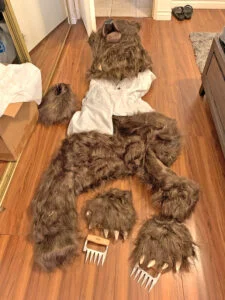
A bizarre case of staged bear attacks on luxury vehicles in Lake Arrowhead has unraveled a sophisticated insurance fraud ring, leaving authorities to question the lengths some will go to for financial gain.
By Debbie Burke
The image of a bear mauling a vehicle, while unsettling, is a scenario many drivers have been warned about by their auto insurance providers. While damage from wildlife is a genuine concern, a recent high-profile case in California has revealed a far more audacious and, frankly, peculiar twist on this threat: insurance fraud orchestrated by humans donning a bear suit. What initially appeared to be a series of unfortunate encounters with wildlife has been exposed as a meticulously planned deception, leading to significant financial payouts and subsequent legal repercussions.
The Initial Alarm and the Unlikely Coincidence
The peculiar saga began to unfold when multiple insurance companies received claims for damage to three distinct high-end vehicles. The reported incidents, all occurring on the same night in January 2024, and within the same picturesque Lake Arrowhead community, painted a picture of an unusually aggressive bear population. The vehicles in question were a 2010 Rolls Royce, a 2015 Mercedes G63 AMG, and a 2022 Mercedes E350. The claims, supported by security camera footage, alleged interior damage inflicted by a bear.
However, the sheer improbability of three separate, significant bear attacks on vehicles in the same location on the same night quickly raised eyebrows among insurance investigators. This uncanny coincidence served as the catalyst for a deeper probe, prompting a closer examination of the submitted evidence. The California Department of Insurance, alerted to the suspicious circumstances, launched a comprehensive investigation that would ultimately expose the elaborate charade.
The Unraveling of the "Bear" Narrative: A Human in Disguise
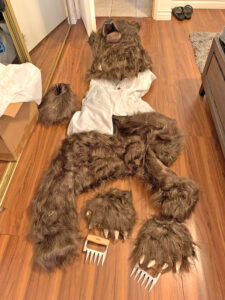
The investigation took a dramatic turn when the California Department of Fish and Wildlife was brought in to assess the wildlife aspect of the claims. Their expert analysis, coupled with a meticulous review of the security footage, led to a definitive conclusion: the "bear" responsible for the alleged damage was, in fact, a human being concealed within a meticulously crafted bear costume. The physical evidence recovered from the suspects’ residences further corroborated this finding, including the discovery of the furry costume and, surprisingly, metal claws that investigators identified as common barbecue tools used for shredding meat.
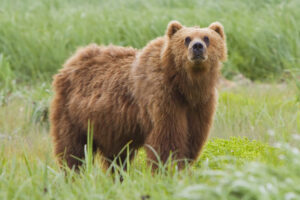
The nature of the damage itself also provided crucial clues. Investigators noted that the scratch marks on the vehicles were unusually neat and evenly spaced, a characteristic inconsistent with the frenzied, unpredictable damage typically inflicted by a wild animal. Real bears, driven by instinct and desperation for food or defense, are unlikely to exhibit such precision in their destructive actions. This subtle yet significant detail became a key piece of evidence in dismantling the fabricated bear attack narrative.
A Chronology of Deception and Discovery
The events leading to the exposure of this elaborate fraud can be pieced together through the investigation’s findings:
- January 2024: The alleged bear attacks on the three luxury vehicles occur in Lake Arrowhead. Security camera footage is captured, purportedly showing the incidents.
- Following January 2024: Claims are filed with multiple insurance companies for interior damage to the Rolls Royce, Mercedes G63 AMG, and Mercedes E350. The security footage is submitted as evidence to support these claims.
- Early 2026: Insurance investigators, noticing the highly improbable confluence of events (three attacks on the same night, same location), begin to suspect foul play.
- April 2026: The California Department of Insurance issues a press release detailing the ongoing investigation and the preliminary findings. The press release explicitly states that "The defendants used a person in a bear suit to stage fake attacks on high-end vehicles, then submitted fraudulent claims seeking payouts from insurance companies."
- Following April 2026: Investigators from the California Department of Fish and Wildlife confirm that the "bear" was a human in costume. The costume and associated tools are recovered.
- Ongoing Investigations: Further legal proceedings are initiated against the individuals involved in the scheme.
Supporting Data and the Financial Motive
The financial implications of this elaborate deception were substantial. According to the California Department of Insurance, multiple insurance companies collectively paid out over $140,000 based on the fraudulent claims. This figure represents a significant loss for the insurers and, by extension, for policyholders through potentially increased premiums.
The press release from the California Department of Insurance provides further insight into the mechanics of the fraud:
"The defendants used a person in a bear suit to stage fake attacks on high-end vehicles, then submitted fraudulent claims seeking payouts from insurance companies."
This statement confirms that the core of the scheme involved staging the "attacks" and then leveraging fabricated evidence, including the seemingly damning security footage, to secure payouts. The choice of high-end vehicles likely aimed to maximize the potential claim amounts, as the cost of repairing or replacing such luxury vehicles would be considerably higher.
Official Responses and Legal Ramifications
The California Department of Insurance has been at the forefront of addressing this sophisticated fraud. Their press release not only revealed the details of the case but also highlighted the collaborative efforts involved in its resolution. The involvement of the California Department of Fish and Wildlife underscores the interagency cooperation often required in complex investigations.
The legal consequences for those involved have been swift and severe. Three individuals have already pleaded no contest to the charges:
- Alfiya Zuckerman, 39, of Valley Village: Sentenced to 180 days in jail (weekend jail time), two years of supervised probation, and ordered to pay restitution.
- Ruben Tamrazian, 26, of Glendale: Sentenced to 180 days in jail (weekend jail time), two years of supervised probation, and ordered to pay restitution.
- Vahe Muradkhanyan, 32, of Glendale: Sentenced to 180 days in jail (weekend jail time), two years of supervised probation, and ordered to pay restitution.
A fourth suspect, Ararat Chirkinian, 39, of Glendale, is currently awaiting a preliminary hearing scheduled for September 2026, indicating that the legal process for all parties involved is still ongoing. The imposition of jail time, probation, and restitution signifies the seriousness with which the authorities are treating insurance fraud, particularly when it involves elaborate schemes and significant financial losses.
Broader Implications and the Future of Insurance Fraud
This "bear suit" insurance fraud case serves as a stark reminder of the evolving nature of criminal activity. As technology advances and opportunities for deception emerge, fraudsters are becoming increasingly creative in their methods. The case highlights several critical implications:
- The Sophistication of Fraud: This incident demonstrates that insurance fraud is not limited to simple misrepresentations. It can involve intricate planning, the use of props, and the fabrication of evidence to create a believable false narrative.
- The Importance of Due Diligence: The success of this investigation underscores the critical role of thorough investigation and due diligence by insurance companies and regulatory bodies. The initial suspicion and subsequent probing by investigators were instrumental in uncovering the truth.
- The Interplay of Real and Fabricated Threats: The case cleverly exploited a genuine concern – damage from wildlife – and twisted it into a tool for criminal gain. This highlights the need for insurers to remain vigilant not only against genuine threats but also against attempts to exploit them.
- The Impact on Honest Policyholders: Insurance fraud ultimately impacts everyone. The financial losses incurred by insurers due to fraudulent claims can lead to increased premiums for honest policyholders, making insurance more expensive for all.
- Technological Scrutiny: The use of security camera footage, while intended to support the fraudulent claims, ultimately became a crucial piece of evidence in their undoing. This suggests that while technology can be used to perpetrate fraud, it can also be a powerful tool for its detection and prosecution.
As the legal proceedings continue, the "bear suit" case will likely serve as a cautionary tale within the insurance industry and among law enforcement agencies. It underscores the persistent ingenuity of fraudsters and the unwavering commitment of authorities to unmasking deception, no matter how outlandish the disguise. The public is reminded that while encountering wildlife can be a concern, the most cunning "predators" in some instances might just be humans, clad in fur, with a motive far more terrestrial than survival. The question remains: what other "wild" schemes might be lurking just beneath the surface of everyday life, waiting to be exposed?



Leave a Comment