Unraveling the Enigma of Deep Sleep: A New Look at Subjective Experience vs. Objective Reality
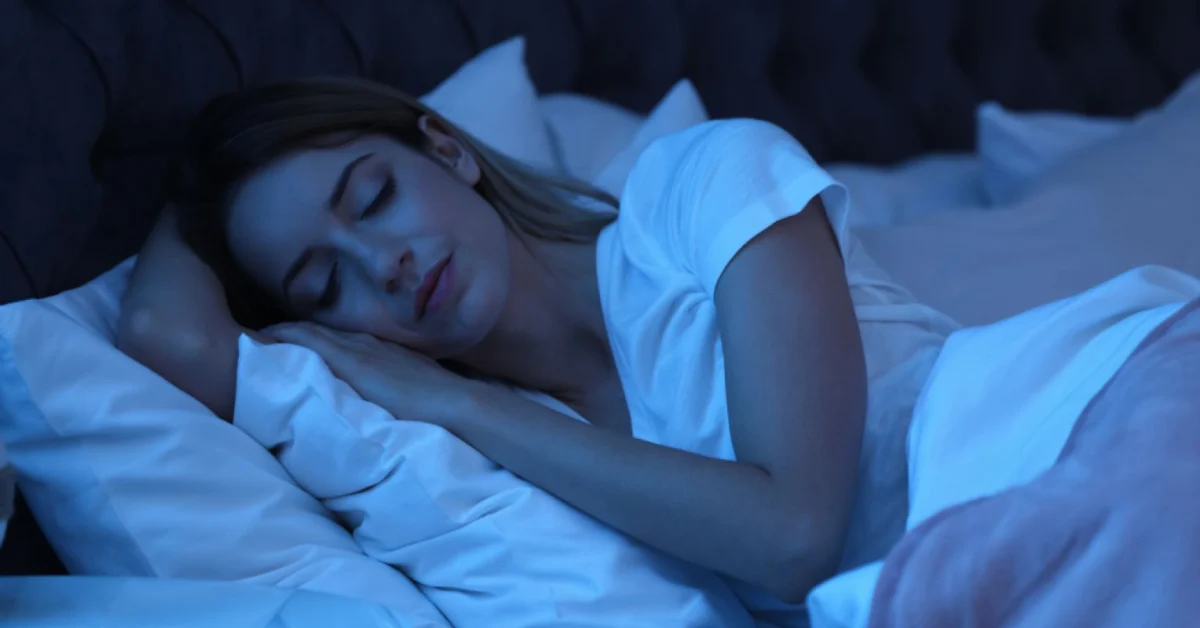
London, UK – The profound mystery of sleep has long captivated humanity, with its elusive depths and restorative powers. Yet, despite decades of scientific inquiry, the subjective experience of sleep often diverges sharply from objective measurements, creating a persistent paradox for researchers and clinicians alike. What truly accounts for the sensation of being "deeply asleep," a feeling crucial for perceived rest and well-being, often defying the precise readings of laboratory equipment? A recent groundbreaking study, published in Current Biology, has shed new light on this fundamental question, revealing that our internal perception of sleep depth is not solely dictated by brainwave patterns but is intricately linked to the content of our nocturnal consciousness, particularly the vividness of our dreams.
This research challenges conventional wisdom, suggesting that the feeling of a truly profound slumber may reside less in the slow, rhythmic waves of deep sleep and more in the immersive, perceptual landscapes of our dream world. It highlights a critical discrepancy that has long plagued sleep clinics: patients suffering from insomnia frequently report feeling as though they barely sleep, even when objective polysomnography reveals a relatively normal sleep architecture. This disconnect underscores the urgent need to understand the subjective dimension of sleep, moving beyond mere duration and physiological markers to embrace the rich, often perplexing, inner experience of the sleeping mind.
The Elusive Nature of "Feeling Deeply Asleep"
For years, sleep science has relied heavily on objective measures such as electroencephalography (EEG), electromyography (EMG), and electrooculography (EOG) to classify sleep stages and assess sleep quality. These tools provide invaluable data on brain activity, muscle tone, and eye movements, allowing researchers to differentiate between wakefulness, non-rapid eye movement (NREM) sleep stages (N1, N2, N3 – with N3 being slow-wave or "deep" sleep), and rapid eye movement (REM) sleep. However, the human element – how an individual feels they have slept – often remains stubbornly out of sync with these precise measurements.
The subjective quality or depth of sleep is a cornerstone of how individuals evaluate their rest. A night of objectively sufficient sleep might still leave someone feeling unrested if they perceive it as shallow or fragmented. This phenomenon is particularly pronounced in clinical settings. Patients diagnosed with insomnia frequently express profound dissatisfaction with their sleep, describing nights of relentless wakefulness or extremely light, unrefreshing slumber. Yet, laboratory studies often contradict these self-reports, revealing periods of robust sleep, including substantial slow-wave sleep. This stark contrast between internal experience and external observation poses a significant challenge for diagnosis and treatment, raising the critical question: What intrinsic mechanisms allow a person to genuinely feel deeply asleep, irrespective of what the EEG might suggest? The new study sought to probe this very chasm, venturing into the subjective realm with unprecedented detail.
Bridging the Divide: A Groundbreaking Experiment
To navigate this complex terrain, researchers from the University of Geneva and the Lausanne University Hospital embarked on an ambitious overnight study, meticulously designed to correlate real-time subjective reports with high-resolution objective sleep data. The methodology was both innovative and demanding, aiming to capture the fleeting moments of conscious experience during various sleep stages.
Designing the Study: Peering into the Sleeping Mind
The experiment recruited a cohort of 30 participants: 20 individuals identified as "good sleepers" with no reported sleep issues, and 10 individuals classified as "poor sleepers," likely experiencing mild forms of sleep disturbance or misperception. This comparative group allowed for insights into how subjective experiences might differ based on an individual’s general sleep quality.
Each participant spent an entire night in a controlled laboratory environment, fitted with a state-of-the-art high-density EEG system. Unlike standard polysomnography which typically uses 8-12 electrodes, this advanced setup employed a staggering 256 electrodes placed across the scalp. This vastly increased spatial resolution allowed the researchers to capture extremely nuanced and localized brain activity, providing a far more detailed objective picture of the participants’ sleep architecture and neural oscillations throughout the night.
The core of the experiment involved a protocol of repeated awakenings. Throughout the night, at predetermined intervals and across different stages of sleep, participants were gently roused from their slumber by an alarm. This intrusive yet necessary method was crucial for gathering immediate, uncontaminated subjective reports before the conscious mind had a chance to fully reorient or forget its nocturnal experiences.
The awakenings were strategically timed to occur during various key sleep stages:
- NREM Stage 2: A relatively light stage of sleep, yet deeper than NREM Stage 1, characterized by sleep spindles and K-complexes.
- Slow-Wave Sleep (NREM Stage 3): Considered the deepest stage of sleep, marked by high-amplitude, low-frequency delta waves, crucial for physical restoration and memory consolidation.
- REM Sleep: Characterized by rapid eye movements, muscle paralysis, and vivid dreaming, often considered a "lighter" sleep stage in terms of brainwave activity, bearing some resemblance to wakefulness.
At each awakening, a standardized sequence of questions was posed to the participants, meticulously crafted to elicit precise details about their recent conscious experience:
- "What was the last thing going through your mind before the alarm sounded?" This open-ended question aimed to capture any lingering thoughts, images, or narratives.
- "Were you awake or asleep?" A binary choice to assess their perceived state.
- If they reported being asleep, they were then asked to rate their subjective sleep depth on a scale of 1 (shallow) to 5 (deep). This provided a quantitative measure of their perceived immersion in sleep.
- Finally, "Did you remember any dreaming experience?" This question specifically targeted the presence and nature of dream recall.
This rigorous, real-time data collection method, combining advanced neurophysiological monitoring with immediate introspective reports, allowed the researchers to establish direct correlations between specific brain states and subjective feelings of sleep depth, laying the groundwork for truly novel insights.
Startling Discrepancies: The Phenomenon of Sleep Misperception
The findings from this meticulous experiment unveiled several startling discrepancies between objective sleep states and subjective reports, particularly highlighting the widespread phenomenon of sleep misperception.
When the Mind Says Awake, But the Brain Says Asleep
One of the most striking revelations was the prevalence of what researchers term "sleep misperception." This occurs when an individual genuinely believes they are awake, even though their brain, as measured by the high-density EEG, is demonstrably in a state of sleep. Surprisingly, even among the "good sleepers" in the study, this phenomenon was not uncommon, occurring in approximately 10 percent of all awakenings. This means that for a significant portion of their sleeping time, even individuals who generally report good sleep quality were subjectively "awake" while objectively asleep.
The disparity was significantly more pronounced in the "poor sleepers," who exhibited about three times more instances of sleep misperception compared to their well-rested counterparts. This finding offers a profound insight into the struggles of insomnia patients, suggesting that their complaints of not sleeping might not be entirely an exaggeration or a psychological construct, but rather a genuine, albeit mistaken, perception of their physiological state. The brain is sleeping, but the conscious mind feels awake, leading to profound frustration and a sense of exhaustion. This data reinforces the idea that for many, insomnia is not just a problem of getting sleep, but also a problem of perceiving sleep correctly.
The Unexpected Geography of Misperception Across Sleep Stages
The study further delineated the conditions under which this "feeling awake while asleep" state was most likely to occur. For healthy subjects, this misperception rarely, if ever, transpired during REM sleep – the stage often associated with vivid dreaming and a brain state that paradoxically shares some characteristics with wakefulness. This suggests a unique quality of REM sleep that typically prevents this specific form of misperception in healthy individuals, perhaps due to the immersive nature of dreaming.
However, in "poor sleepers" (patients), while still more common in NREM sleep, this misperception did sometimes occur even during REM sleep, indicating a potential disruption in their sleep-wake regulation or consciousness during sleep.
Perhaps the most counterintuitive finding was that this "feeling awake while asleep" seemed to happen more frequently earlier in the night. This timing is particularly surprising because the early part of the night is precisely when objective measurements typically show the deepest sleep, characterized by the highest prevalence of slow waves across the brain. This creates a compelling paradox: the very time when the brain is most profoundly asleep, as defined by physiological markers, is also a time when the mind is most prone to misperceiving its state as wakefulness. This suggests that objective depth, as measured by EEG, does not directly translate into subjective depth, challenging a long-held assumption in sleep science.
The Crucial Role of Dreaming: A Window into Subjective Depth
Beyond the phenomenon of misperception, the research delved into what factors did contribute to the feeling of being deeply asleep, revealing the pivotal and often underappreciated role of dreaming.
Dreaming as a Compass for Deep Sleep Sensation
The researchers discovered a striking inverse correlation: subjects were far more likely to feel awake if they reported not dreaming. Conversely, when participants reported a dreaming experience, they felt significantly more deeply asleep. This correlation held true even though dreaming is most prolific during REM sleep, a stage objectively considered "lighter" and more akin to wakefulness than the slow-wave sleep of NREM Stage 3. This finding profoundly shifts our understanding of subjective sleep depth, suggesting that the richness of our internal experience during sleep is a more potent determinant of perceived depth than the slow, delta waves of deep NREM sleep.
The content of these nocturnal experiences proved to be equally critical. The study meticulously categorized the types of mental activity reported by participants upon awakening:
-
Thought-like Experiences: Sometimes, subjects reported merely having fragmented thoughts or cognitions just before the alarm. These thoughts were often mundane, reflective, or, tellingly, related to the very act of trying to fall asleep, feeling unable to sleep, or general worries about sleep. These thought-like experiences were frequently reported after awakenings from deep slow-wave sleep early in the night – the objectively deepest sleep stage. The researchers acknowledged the ambiguity here: it’s unclear whether these thoughts were genuinely occurring during deep sleep or if they were the last conscious thoughts the individual had prior to falling asleep, which then resurfaced upon awakening, leading to the misperception that they were still struggling to sleep. Regardless, their presence was consistently associated with a feeling of less deep sleep.
-
Perceptual Dream Experiences: In stark contrast, when subjects reported more vivid, perceptual, and immersive dream experiences – complete with sensory details, narratives, and emotions – they consistently reported feeling more deeply asleep. These rich dream experiences were, as expected, more often associated with awakenings from REM sleep. The study found a direct correlation: the more perceptual and vivid the dream, the more deeply asleep the individual felt. This suggests that the immersive quality of dreaming acts as a powerful signal for the brain that it is fully engaged in a state distinct from wakefulness, fostering a profound sense of having been "away" in sleep.
Rethinking "Deep Sleep": Beyond Brainwaves
These findings compel a re-evaluation of what we colloquially, and often scientifically, mean by "deep sleep." Traditionally, "deep sleep" has been synonymous with slow-wave sleep (NREM Stage 3) due to its characteristic high-amplitude, slow brain waves, which are robustly measured by EEG and linked to physical restoration. However, this study suggests that while physiologically restorative, slow-wave sleep may not always feel subjectively deep. In fact, it was often associated with less vivid dreaming and more of those anxiety-inducing "trying to sleep" thoughts, thereby contributing to a perception of shallower sleep.
Conversely, REM sleep, which objectively presents a lighter brainwave pattern (more similar to wakefulness) and is typically considered less physically restorative than slow-wave sleep, was strongly correlated with the subjective feeling of deep sleep due to its rich, perceptual dreaming content. This creates a fascinating dichotomy: objective depth (slow-wave activity) does not necessarily equate to subjective depth (the feeling of profound slumber), and subjective depth is instead strongly tied to the presence of immersive dream experiences. The research thus posits that the content of our conscious experience during sleep – particularly the presence and vividness of dreaming – plays a paramount role in our perception of how deeply we’ve slept.
Official Responses and Expert Commentary
While the original article focuses on the research findings, the implications of this study are far-reaching and are already sparking discussions within the sleep science community, prompting experts to consider how these insights could reshape diagnostic paradigms and therapeutic approaches.
Re-evaluating Diagnostic Paradigms for Insomnia
Leading sleep clinicians and researchers are beginning to acknowledge the profound implications of these findings for conditions like insomnia. "For too long, we’ve prioritized objective metrics over subjective reports, especially in conditions like insomnia where the two often diverge," notes Dr. Eleanor Vance, a prominent sleep neurologist commenting on the study. "This research provides a neurobiological basis for why insomniacs feel they aren’t sleeping, even when our machines say otherwise. It’s not just psychological; there’s a disconnect in their conscious processing of sleep state."
This understanding could lead to a significant shift in how insomnia is diagnosed and treated. Instead of dismissing patient reports of "not sleeping" when polysomnography is normal, clinicians might now explore the underlying mechanisms of sleep misperception. Therapies could move beyond simply promoting sleep onset or duration to actively addressing the quality of subjective experience during sleep. This might involve cognitive behavioral therapy for insomnia (CBT-I) techniques tailored to help patients recognize and internalize their sleep, or even novel interventions aimed at enhancing dream recall or dream vividness to improve perceived sleep depth.
The Cognitive Underpinnings of Sleep Perception
The study also opens new avenues for exploring the cognitive neuroscience of sleep. Experts are hypothesizing about the brain mechanisms responsible for this misperception. "The fact that ‘feeling awake while asleep’ is more common in NREM sleep, particularly early in the night, during objectively deep sleep, is incredibly intriguing," states Dr. Marcus Chen, a cognitive neuroscientist specializing in consciousness. "It suggests that there might be a ‘default’ conscious state during NREM sleep that is predisposed to a low level of self-monitoring or even anxiety-related thoughts, especially in poor sleepers. REM sleep, with its unique neurochemical environment and narrative generation, might actively suppress this misperception."
This line of thinking suggests that the brain’s "self-awareness network" might function differently across sleep stages. In NREM, especially during periods of less vivid mental content, the system might default to a ‘wake-like’ monitoring mode, leading to misperception. In REM, the immersive nature of dreaming could hijack this network, creating a compelling, albeit internal, reality that displaces any sense of wakefulness. Further research will undoubtedly delve into the specific neural correlates of subjective sleep depth and the brain regions involved in processing internal sleep states versus external reality.
Far-Reaching Implications: Redefining Our Relationship with Sleep
The implications of this research extend beyond the laboratory and clinic, potentially redefining how individuals understand and value their own sleep experiences.
For Clinical Practice: Tailoring Treatments for Subjective Well-being
The findings underscore the urgent need for a more holistic, patient-centered approach to sleep medicine. Rather than solely chasing objective sleep metrics, clinicians will increasingly be challenged to address the patient’s subjective experience of sleep quality. This could lead to:
- Personalized Sleep Medicine: Tailoring treatments based on an individual’s specific patterns of sleep misperception and dream experience, rather than a one-size-fits-all approach.
- Enhanced Patient Education: Informing patients, particularly those with insomnia, about the phenomenon of sleep misperception. Understanding that their brain is sleeping, even if they feel awake, could alleviate significant distress and help them reframe their experience.
- Focus on Dream-Enhancing Interventions: While speculative, future therapies might explore methods to encourage more vivid or positive dreaming, potentially through specific light exposures, soundscapes, or even pharmacological agents, with the goal of improving perceived sleep depth and satisfaction.
For Fundamental Sleep Science: New Avenues of Research
This study opens up a plethora of new research questions, pushing the boundaries of sleep science:
- Neural Correlates of Subjective Depth: Identifying the specific brain networks and neurochemical pathways that correlate with the subjective feeling of deep sleep, distinct from objective EEG markers.
- Consciousness During Sleep: Further exploring the nature of consciousness across different sleep stages, particularly the varying levels of self-awareness and reality testing during NREM thought-like experiences versus REM dreaming.
- Interventions to Improve Perceived Quality: Investigating whether manipulating dream content or dream recall can indeed enhance an individual’s subjective experience of sleep depth and overall sleep satisfaction.
- The Role of Emotion in Perception: Examining how emotional states, both pre-sleep and during sleep, influence the likelihood of sleep misperception or the vividness of dreams.
Beyond the Lab: Understanding Everyday Sleep
For the general public, this research offers a powerful framework for understanding their own sleep experiences. It encourages individuals to value the qualitative aspects of their sleep, not just the duration or perceived "soundness." A night where one remembers vivid dreams, even if objectively lighter, might be perceived as more refreshing than a night of objectively deep, dreamless sleep.
This perspective shift can empower individuals to:
- Trust Their Feelings (with Context): Acknowledge that while objective measures are important, their subjective experience of sleep quality is a valid and crucial indicator of well-being.
- Embrace Dreaming: View dreaming not merely as a byproduct of sleep, but as a potentially vital component of feeling deeply rested and rejuvenated.
- Seek Comprehensive Evaluation: If experiencing persistent sleep dissatisfaction, consider seeking a sleep specialist who is attuned to both objective data and the nuanced, subjective reports of their patients.
In conclusion, the work by Stephan, Lecci, Cataldi, and Siclari represents a pivotal step in bridging the long-standing gap between the objective and subjective realities of sleep. By meticulously correlating high-resolution brain activity with real-time conscious reports, they have illuminated the profound and unexpected role of dreaming in shaping our perception of deep sleep. This understanding promises to not only refine our scientific models of sleep but also to revolutionize clinical approaches, ultimately helping countless individuals achieve not just more sleep, but the truly restorative feeling of having slept deeply. The journey into the depths of sleep, it turns out, is as much about the landscapes of the mind as it is about the rhythms of the brain.