Unrefined: David Singerman’s Deep Dive into Sugar’s Sweet and Bitter Legacy on Capitalism
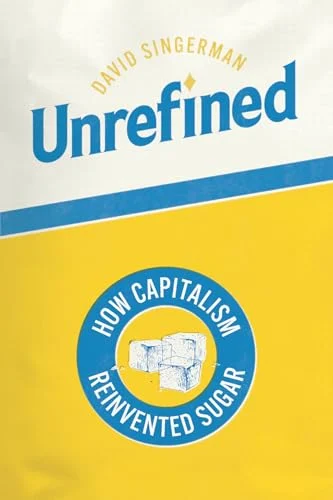
New York, NY – In an era increasingly scrutinizing the origins and mechanisms of global capitalism, a forthcoming book promises to reshape our understanding of one of its most foundational commodities: sugar. David Singerman, Assistant Professor of History and American Studies at the University of Virginia, is set to release "Unrefined: How Capitalism Reinvented Sugar (Synthesis)" in 2025 through the University of Chicago Press. This meticulous 352-page work offers a profound examination of how sugar, far from being a mere sweetener, acted as a central, often brutal, architect of modern economic systems, imperialism, and even the very fabric of societal organization.
Singerman’s "Unrefined" is poised to be a seminal text for historians, academics, and scholars, presenting a deeply researched and unapologetically dense exploration of sugar’s history. It asserts that the substance not only fueled empires and drove industrialization but also inextricably linked science, bureaucracy, slavery, and corruption in the development of what Singerman terms "sugar capitalism." The book challenges readers to reconsider how seemingly innocuous commodities can profoundly shape power structures, labor practices, and even legal frameworks across continents.
Main Facts: Unearthing the Bitter Roots of Sweetness
David Singerman’s "Unrefined: How Capitalism Reinvented Sugar" is an ambitious academic undertaking, charting the complex trajectory of sugar from a luxury item to a global staple and, in doing so, exposing its pivotal role in the evolution of capitalism. The book’s central thesis posits that the mechanisms of imperialism and nascent capitalist systems were not merely influenced by sugar but were, in many ways, actively constructed around its production, trade, and consumption. Singerman delves into an expansive array of themes, demonstrating how sugar’s history is interwoven with the domination of nature, the exploitation of human labor, the crafting of intricate legal codes, and the relentless pursuit of standardization.
The book is structured into three parts and eleven chapters, each designed to illuminate a distinct facet of sugar’s transformative power. From the physical construction of plantations to the intricate dance of global monopolies and the subtle insidious creep of corruption, Singerman paints a comprehensive picture. The narrative is richly supported by contemporary photographs and ephemera, offering readers visual anchors to the historical realities being detailed. This approach ensures that while the language remains academically rigorous, the historical context is vividly brought to life.
Singerman, a specialist in science, technology, and capitalism, brings a unique interdisciplinary lens to his subject. His prior doctoral research focused on sugar, underscoring the deep expertise and dedication poured into "Unrefined." The book is explicitly aimed at a professional audience – historians, academics, and scholars – who possess a familiarity with dense historical texts. It eschews simplification, instead embracing the intricate chemistry, advanced machinery, and complex political and economic processes that characterized the global sugar industry. By doing so, "Unrefined" positions itself as an essential resource for anyone seeking a nuanced understanding of how a single commodity could orchestrate such monumental shifts in global history.
A Chronology of "Sugar Capitalism": From Cane Field to Global Commodity
Singerman’s work meticulously chronicles the chronological development of "sugar capitalism," illustrating how each stage of sugar’s journey — from cultivation to consumption — left an indelible mark on global economic and social structures.
The Plantation’s Dawn: Industrialization and Enslaved Labor
The first part of "Unrefined" plunges into the brutal genesis of the sugar industry: the industrialization of the plantation. This was not a gradual evolution but a rapid, often violent, transformation driven by the insatiable demand for sugar in European markets. Singerman highlights how the very architecture of these vast agricultural enterprises, particularly in the Caribbean, was designed for maximum output, laying the groundwork for future industrial models.
Crucially, Singerman foregrounds the indispensable role of enslaved workers in making this "industrialization" possible. These individuals, forcibly transported from Africa, were not merely brute labor; they possessed critical, often specialized, skills in cultivation, processing, and machinery operation that their European overseers and planters frequently lacked or failed to discern. Their expertise was the engine of the sugar revolution, powering the complex machinery and sophisticated agricultural techniques required for large-scale production. This section powerfully reminds readers that the foundations of industrial capitalism are deeply intertwined with the systematic exploitation and dehumanization of enslaved populations, whose forced ingenuity and labor built immense wealth and profoundly shaped the global economy. The Caribbean plantations, in particular, serve as a stark reminder of how the quest for sweetness was underpinned by unimaginable suffering and coercion, establishing a model of labor extraction that would echo through various industries for centuries.
Refining Power: The Rise of Monopolies and Regulatory Battles
As sugar production scaled up, the focus shifted from the cane fields to the bustling refineries and trade networks that processed and distributed the commodity. Singerman takes readers to the cutting-edge refineries of New York and the advanced workshops of Glasgow, which boasted top-of-the-line machinery. These centers became crucial nodes in the global sugar trade, transforming raw cane into refined products.
However, this era also saw the federalization of the sugar trade, with governments attempting to regulate its flow through tariffs and specific laws. These measures were ostensibly designed to control markets, generate revenue, and perhaps even protect domestic interests. Singerman, however, reveals the inherent vulnerability of such systems to manipulation. Powerful companies, driven by the immense profits to be garnered from sugar, quickly learned to bypass or exploit these regulations. This period marked the aggressive emergence of monopolies, as large corporations consolidated control over every aspect of the sugar supply chain, from sourcing raw materials to refining and distribution. This unchecked consolidation of power allowed these entities to dictate prices, stifle competition, and exert undue influence over political processes, effectively cementing what Singerman refers to as "sugar capitalism." This form of capitalism, characterized by concentrated wealth, political lobbying, and the circumvention of regulatory oversight, bears striking resemblances to modern corporate power dynamics.
The Illusion of Purity: Standardization and Societal Hierarchies
The third and final part of "Unrefined" delves into the intriguing, and often deceptive, process of sugar standardization. Singerman meticulously details how sugar, once a varied product, became subject to strict criteria for quality and appearance. This drive for uniformity, a hallmark of industrial capitalism, aimed to streamline trade, ensure consistency, and enhance market value.
However, Singerman masterfully exposes the "finicky—and perhaps false—nature" of this standardization. The most coveted sugar was, perhaps unsurprisingly, the whitest. This arbitrary hierarchy, where lighter hues were deemed "purer" and therefore more valuable, while darker sugars were relegated to a lower status, was not merely a matter of chemical composition. It was a powerful reflection of deeply ingrained societal prejudices and the era’s obsession with categorization based on color. Western sugar was frequently deemed the purest and most desirable, subtly reinforcing notions of Western superiority and cleanliness, while "foreign" sugars, often produced in the very colonies exploited for their raw materials, were deemed inferior. This seemingly innocuous commodity, through its imposed hierarchy, became a mirror reflecting the broader racial, colonial, and social stratifications of the time. Singerman argues that this obsession with categorization and standardization, a core tenet of capitalism, inadvertently created fertile ground for conspiracies and corruption, as those in power could manipulate these very standards to their advantage, altering the "rules" of quality and value to serve their own economic interests.
Supporting Data and Analytical Depth: The Interwoven Threads of "Unrefined"
Singerman’s "Unrefined" is not merely a historical narrative; it is a profound analytical work that unpacks the complex interplay of various forces that shaped "sugar capitalism." The book’s strength lies in its ability to synthesize diverse fields of inquiry, offering a holistic understanding of sugar’s impact.

Science, Technology, and the Reinvention of a Commodity
At the heart of sugar’s transformation was an ongoing revolution in science and technology. Singerman explores the sophisticated chemical processes developed to refine sugar, moving beyond simple crystallization to advanced techniques that yielded whiter, purer, and more shelf-stable products. He also details the evolution of machinery, from the crushing mills of the plantations to the intricate apparatuses of the refineries. These technological advancements were not isolated scientific endeavors; they were deeply intertwined with economic imperatives and political ambitions. Innovations in machinery promised greater efficiency and output, directly translating into increased profits for planters and refiners. The scientific pursuit of purity and standardization, while seemingly objective, was often driven by market demands and the desire to create a more valuable, easily tradable commodity. Singerman effectively demonstrates how the scientific method and technological progress were harnessed as tools of capitalist expansion, perpetually reinventing sugar to meet evolving consumer tastes and industrial capabilities.
Bureaucracy, Law, and the Architecture of Control
Beyond the fields and factories, sugar’s journey was meticulously managed through complex bureaucratic and legal frameworks. Singerman highlights how governments, both colonial and national, established tariffs, trade agreements, and specific laws designed to control the flow of sugar. These legal architectures were not neutral; they often reflected the vested interests of powerful sugar producers, merchants, and colonial powers. The book illustrates how these systems, ostensibly created to regulate trade and ensure fairness, became instruments of control and profit extraction. Legal loopholes were exploited, regulations were lobbied against or modified, and the very structure of the law was often bent to serve the burgeoning sugar industry. This created a highly centralized and often opaque system where bureaucratic processes facilitated the accumulation of immense wealth for a select few, while simultaneously legitimizing exploitative labor practices and monopolistic behaviors.
Corruption and the Dark Side of Standardization
One of the most compelling arguments in "Unrefined" concerns the insidious relationship between standardization and corruption. Singerman posits that the capitalist obsession with categorization, measurement, and standardization – hallmarks of efficient mass production and trade – inadvertently created fertile ground for illicit practices. When quality and value become defined by arbitrary metrics, such as the whiteness of sugar, the door opens for manipulation. Those with power and influence could alter the standards, introduce false measurements, or conspire to misrepresent products, all for financial gain. The concept of "purity" in sugar, often tied to its color, became a powerful tool for market control and discrimination. This section of the book is a critical examination of how the very systems designed to bring order and transparency to markets can be subverted, revealing that "whoever has the power can change the rules." This insight has profound implications for understanding corruption not as an anomaly, but as a potential byproduct of capitalist systems that prioritize control and profit over ethical conduct.
Visual Narratives: Bridging Text and Reality
Singerman’s academic rigor is complemented by a rich visual tapestry. The inclusion of contemporary photographs and ephemera throughout "Unrefined" is not merely illustrative; it is integral to the book’s narrative power. These visual elements – images of plantations, machinery, advertisements, and historical documents – serve to contextualize the detailed historical accounts, allowing readers to visualize the environments and objects being discussed. They provide a tangible connection to the past, making the complex processes of sugar production and trade more immediate and comprehensible. This thoughtful integration of visual data enhances the reader’s engagement, transforming a dense historical text into a more immersive experience and reinforcing the palpable realities of "sugar capitalism."
Official Responses and Academic Reception
While "Unrefined" is yet to be officially released, its subject matter and the reputation of its author, David Singerman, suggest it will be met with considerable interest and discussion within academic circles. Given its publication by the esteemed University of Chicago Press, the book is poised to become a significant contribution to several fields, including economic history, American studies, the history of science and technology, and postcolonial studies.
Academics are likely to welcome Singerman’s interdisciplinary approach, which transcends traditional disciplinary boundaries to offer a more integrated understanding of historical processes. His detailed examination of the interplay between science, technology, labor, and capital within the sugar industry will undoubtedly spark new research and debates. The book’s meticulous archival work and its willingness to delve into the complex, often uncomfortable, truths about capitalism’s origins, particularly its reliance on slavery and corruption, will resonate with scholars seeking to deconstruct prevailing narratives.
"Unrefined" is expected to challenge existing scholarship that might have viewed sugar’s role more superficially or in isolation. By presenting sugar as a central force, rather than a mere commodity, Singerman provides a fresh lens through which to re-evaluate the foundational elements of global economic systems. Its academic reception will likely position it as a critical text for graduate seminars and advanced undergraduate courses, serving as a benchmark for how to conduct rigorous, multi-faceted historical analysis. The book’s insights into standardization, bureaucracy, and monopoly formation will also likely attract attention from economists and political scientists interested in the historical roots of contemporary market failures and regulatory challenges. In essence, "Unrefined" is anticipated to be a catalyst for renewed scholarly inquiry into the intricate, often dark, origins of modern global systems.
Implications: Lessons from "Sugar Capitalism" for the Modern World
Singerman’s "Unrefined" transcends its historical focus to offer profound implications for understanding the contemporary global landscape. The historical examination of "sugar capitalism" serves as a powerful mirror reflecting many of the systemic issues that continue to challenge modern societies and economies.
Echoes of the Past in Present-Day Capitalism
One of the most striking implications of "Unrefined" is the undeniable parallel between the mechanisms of "sugar capitalism" and the realities of today’s global economy. Singerman elucidates how the historical struggle between human labor and the increasing reliance on machinery in sugar production directly prefigures modern debates about automation, job displacement, and the gig economy. The drive to extract maximum power and efficiency from the labor force, whether through physical coercion or technological substitution, remains a persistent feature of capitalist enterprises.
Furthermore, the book’s deep dive into the formation of monopolies in the sugar trade and their ability to bypass or influence regulatory frameworks offers a chilling historical precedent for the dominance of tech giants, pharmaceutical conglomerates, and other powerful corporations today. The ease with which corruption infiltrated the booming sugar industry serves as a cautionary tale, suggesting that rapid economic expansion, coupled with lax oversight, inherently creates opportunities for unethical practices. From corporate lobbying to financial scandals, the echoes of "sugar capitalism’s" corruptions resonate loudly in the headlines of the 21st century.
Perhaps most subtly, yet profoundly, Singerman’s analysis of sugar being judged and hierarchized based on its color – the whitest being most coveted – reflects a persistent societal desire to compartmentalize and categorize based on superficial attributes. This historical prejudice, where "Western sugar was deemed the purest, whereas foreign sugar was not," mirrors contemporary biases in product marketing, cultural valuation, and even social hierarchies. It underscores how the capitalist impulse to standardize and categorize, while appearing benign, can be deeply entwined with existing prejudices and power imbalances.
A Call for Critical Historical Understanding
Ultimately, "Unrefined" is more than a historical account; it is a compelling call for a critical re-evaluation of how we understand the foundational elements of our economic world. By demonstrating that seemingly simple commodities like sugar possess hidden histories that reveal profound truths about power, exploitation, and societal construction, Singerman urges readers to look beyond the surface of everyday goods.
The book’s relevance extends to policymakers, economists, and general readers alike. For policymakers, it offers historical insights into the challenges of regulating powerful industries and the potential for corruption when economic growth outpaces ethical governance. For economists, it provides a rich case study of how market forces, technological innovation, and social structures intertwine to create complex economic systems. For the general reader, "Unrefined" serves as an accessible yet rigorous invitation to engage with the often-unseen forces that have shaped our present. It encourages a deeper, more nuanced understanding of capitalism, reminding us that its "sweet" benefits have often been built upon a "bitter" foundation of exploitation, inequality, and systemic manipulation. Singerman’s work thus stands as a vital contribution, prompting us to continuously question the origins of our comforts and the true costs of our desires.