Echoes of the Divine: Unpacking the Sumerian Hymn "Enlil in the E-Kur"
Nippur, Mesopotamia – Circa 2000 BCE – In the annals of ancient literature, few texts offer as profound a glimpse into the cosmic worldview and religious fervor of a civilization as the Sumerian hymn, Enlil in the E-Kur. Dating back to approximately 2000 BCE, this monumental poetic work stands as a testament to the enduring power of faith, lavishly praising Enlil, the formidable Sumerian sky god, his awe-inspiring temple-ziggurat in the sacred city of Nippur, and his revered consort, Ninlil. More than just a devotional piece, Enlil in the E-Kur casts Enlil as a primordial creator deity, shaping the very fabric of existence. Its significance resonates not only as a cornerstone of Mesopotamian literature but also for its striking thematic and linguistic parallels that scholars believe profoundly influenced later foundational texts, including books of the Bible, most notably the Psalms.
Main Facts: A Divine Overture from Ancient Sumer
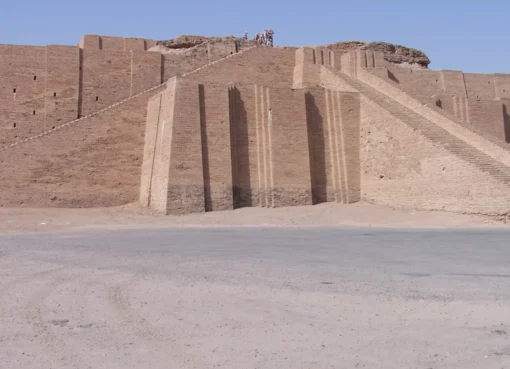
At its heart, Enlil in the E-Kur (also known by titles such as Enlil A, Hymn to Enlil, or Hymn to the E-kur) is a meticulously crafted panegyric. Its primary objective was to extol the virtues, power, and benevolence of Enlil, portraying him as the supreme deity responsible for universal order and creation. The hymn meticulously describes his temple, the E-Kur (meaning "Mountain House"), located in Nippur, as a sacred nexus – the "bond between heaven and earth" – a place of unparalleled splendor and divine presence. Ninlil, Enlil’s consort, is similarly depicted in glowing terms, sharing in his authority and wisdom.
The hymn’s composition around 2000 BCE places it squarely within a period of significant cultural and political development in Sumer, particularly during the Ur III period, which saw a resurgence of Sumerian language and religious traditions. Its widespread popularity is attested by the numerous copies discovered, indicating its central role in both public religious festivals and the rigorous academic curriculum of the edubba, the Mesopotamian scribal schools. Students, particularly those in advanced studies, would meticulously copy and analyze this text, ensuring its transmission across generations.
Beyond its immediate religious context, Enlil in the E-Kur holds immense value for modern scholarship. It provides invaluable insights into Sumerian theology, the architectural grandeur of temple complexes, and the sophisticated literary techniques employed by ancient scribes. Perhaps most compelling is the scholarly discourse surrounding its potential influence on biblical literature. The hymn’s portrayal of Enlil as a "faithful shepherd" and "prince of heaven," alongside its emphasis on divine justice and creation, presents intriguing parallels with concepts found in the Old Testament, suggesting a rich tapestry of shared cultural and religious motifs across the ancient Near East.
Chronology: From Cultic Origins to Modern Rediscovery
The journey of Enlil in the E-Kur spans millennia, from its genesis in the cradle of civilization to its re-emergence in modern scholarship.
The Dawn of Enlil’s Cult: Nippur’s Enduring Sanctity
Nippur’s status as a holy city predates the hymn itself, extending back to the Early Dynastic period in Mesopotamia (circa 2900 to circa 2350/2334 BCE). Unlike politically ambitious city-states such as Ur or Uruk, Nippur maintained a unique, almost neutral, religious significance. It was not typically the seat of a powerful dynasty but rather the universally acknowledged cultic center for Enlil, revered across Sumer as the Lord of the Air and later, the King of the Gods. This distinction made Nippur a priority for successive rulers who sought to legitimize their authority by demonstrating piety and securing the favor of Enlil. Kings from the Early Dynastic, Akkadian (2350/2334-2154 BCE), and Ur III periods (circa 2112 to circa 2004 BCE), and even later monarchs, invested heavily in the E-Kur, undertaking extensive building, renovation, and restoration projects to ensure its opulence and functionality. The very act of maintaining Enlil’s temple was a declaration of divine mandate.
Royal Patronage and the Ur III Renaissance: A Hymn’s Birth
The specific composition of Enlil in the E-Kur is generally attributed to the Ur III period, a golden age of Sumerian culture and literature. This era saw a concerted effort by kings like Ur-Nammu (reign circa 2112-2094 BCE) and his son Shulgi (reign 2094 to circa 2046 BCE) to revive and glorify Sumerian traditions after the interlude of the Akkadian Empire. Both monarchs paid exceptional attention to Nippur, explicitly claiming their right to rule as divinely sanctioned by Enlil and Ninlil. Shulgi, a prolific patron of literature and a skilled poet in his own right, is often cited as the likely architect or inspiration behind the hymn. Similar works, such as Shulgi and Ninlil’s Barge, also date from his reign, underscoring a deliberate royal strategy to elevate the prestige of Enlil and, by extension, the kings who served him. The hymn would have been a central feature of the numerous festivals held in honor of Enlil, reinforcing royal legitimacy and communal devotion.
Scribal Education and Preservation: The Edubba Curriculum
The enduring popularity and textual integrity of Enlil in the E-Kur are largely due to its inclusion in the curriculum of the edubba, the Mesopotamian scribal school. These "Houses of Tablets" were the intellectual powerhouses of ancient Sumer, training generations of scribes, administrators, and priests. As part of the advanced course of study known as the Decad, students nearing the completion of their formal education would engage with complex literary works like Enlil in the E-Kur. This rigorous pedagogical approach involved copying, memorizing, and analyzing the text, ensuring its widespread dissemination and careful preservation. The numerous fragments discovered across Mesopotamia bear witness to this systematic educational process, highlighting the hymn’s canonical status within Sumerian literary tradition.
Modern Rediscovery and Scholarship: Piecing Together the Past
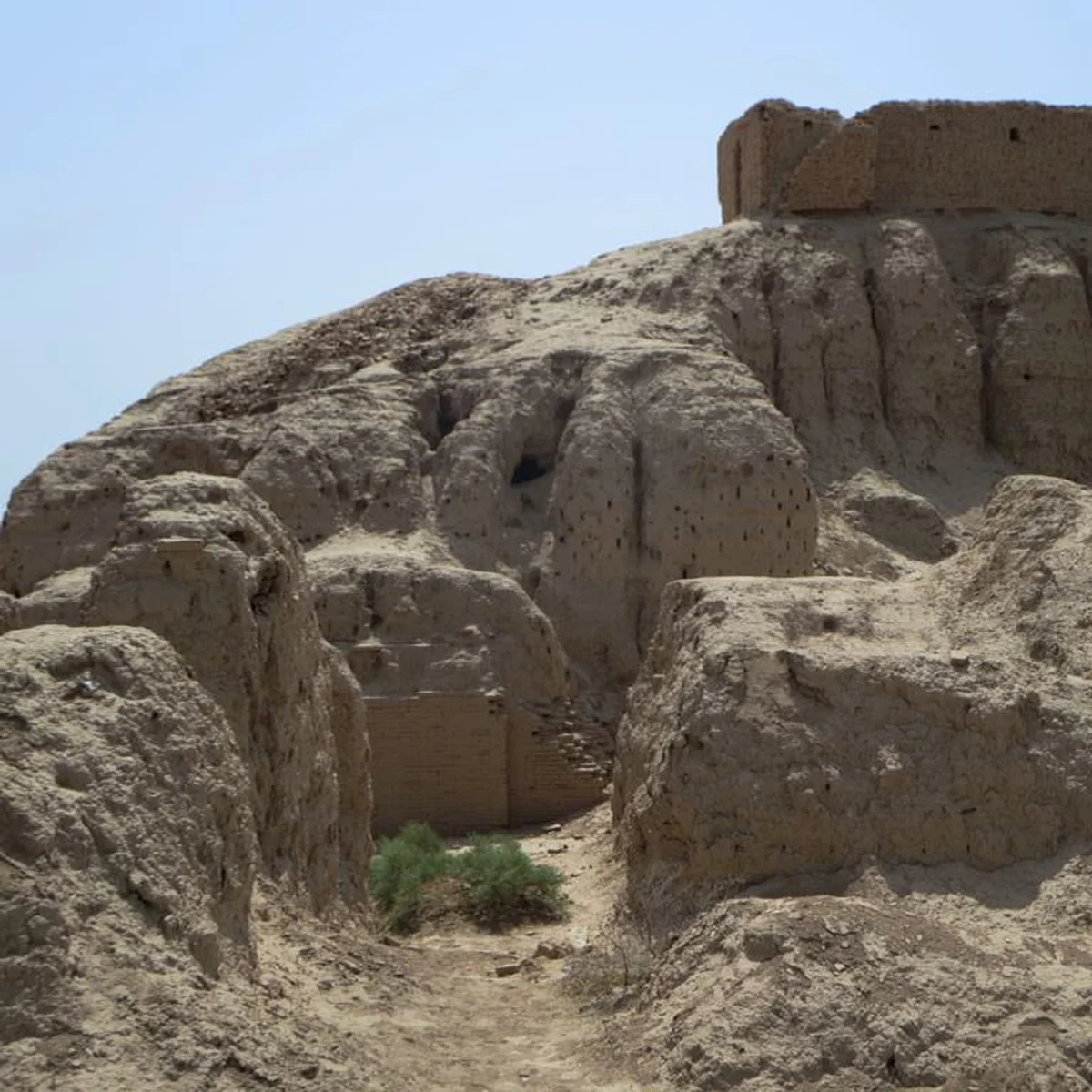
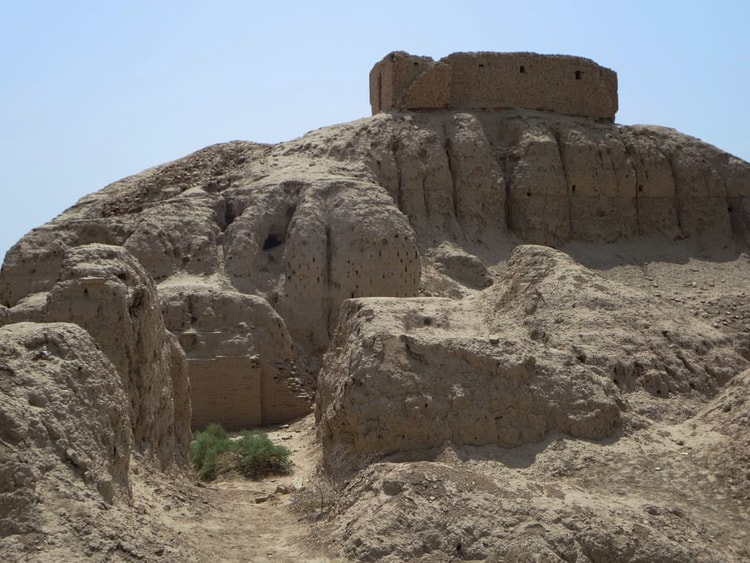
The existence of Enlil in the E-Kur remained hidden for millennia, buried beneath the sands of ancient Mesopotamia. It was only in the early 20th century that archaeological excavations, particularly at Nippur, began to unearth thousands of cuneiform tablets and fragments. These fragmented pieces, like shards of a grand mosaic, were meticulously collected and studied by pioneering Assyriologists. The arduous task of deciphering the cuneiform script and piecing together the fragmented lines led to the first translations and publications of the work between 1918 and 1928. Scholars like Jeremy Black et al., whose translations are widely referenced today, have brought this ancient masterpiece to life, making it accessible to a global audience. Today, Enlil in the E-Kur continues to be a focal point for researchers, valued for its detailed description of the E-Kur, its comprehensive depiction of Enlil as the fount of all creation, and its profound implications for understanding the interconnectedness of ancient religious thought.
Supporting Data: A Deep Dive into Divine Majesty and Literary Brilliance
The richness of Enlil in the E-Kur lies in its intricate portrayal of a supreme deity, its vivid description of a sacred architectural marvel, and its sophisticated poetic structure.

The Deity Enlil: A Cosmic Architect and Supreme Authority
Enlil’s journey within the Mesopotamian pantheon is one of ascendance. Originally conceived as the Sumerian god of the air, son of An (Anu), the Lord of the Heavens, he gradually supplanted his father to become the undisputed king of the gods. He eventually formed a formidable divine triad with Anu and Enki, the god of wisdom and freshwater. While some myths occasionally depict Enlil in a subordinate role to Anu or Enki, or even his consort Ninlil, the overwhelming consensus, especially within Enlil in the E-Kur, presents him as the preeminent and most powerful deity. He was the keeper of the Tablets of Destiny, which contained the very fates of both gods and humans, and was revered as the ultimate creator and preserver of universal order. His worship spanned an extraordinary period, from approximately 2900 BCE to around 141 BCE, underscoring his enduring importance in the religious landscape of the ancient Near East.
The hymn itself directly addresses this vision of an all-powerful god. Lines 1-9 immediately establish Enlil’s unparalleled authority: "Enlil’s commands are by far the loftiest, his words are holy, his utterances are immutable! The fate he decides is everlasting…" He is Nunamnir, the "Great Mountain," whose very glance makes the mountains anxious. The Anuna gods themselves bow before him, faithfully obeying his instructions. This depiction firmly entrenches Enlil as the ultimate arbiter of destiny and the source of all cosmic laws.
Nippur and the E-Kur: The Earthly Seat of Divine Power
Nippur, or Nibru as it is called in the hymn, was not merely a city; it was a sanctuary, a living symbol of divine presence. The E-Kur, Enlil’s temple complex, was designed to reflect his cosmic importance. Described as the "Dur-an-ki," the "meeting place of heaven and earth," it was the literal and metaphorical center of the Sumerian universe. The hymn paints a vivid picture of its grandeur and sacredness: "He has taken up residence in Nibru, the lofty bond (?) between heaven and earth. The front of the city is laden with terrible fearsomeness and radiance, its back is such that even the mightiest god does not dare to attack…"
The temple was a place of profound purity and moral order. Lines 18-25 explicitly state the abominations not tolerated within its sacred precincts: "evil word… deception, inimical speech, hostility, impropriety, ill-treatment, wickedness, wrongdoing, looking askance (?), violence, slandering, arrogance, licentious speech (?), egotism and boasting…" This reflects the ideal societal values that Enlil, through his temple, was believed to uphold. The E-Kur’s opulence is further emphasized, with its "brickwork is red gold, its foundation is lapis lazuli," making it "glisten on high in Sumer as if it were the horns of a wild bull." This architectural marvel was not just a building; it was a direct manifestation of divine glory, a place where the human and divine realms intersected.
Literary Craftsmanship and Thematic Depth: A Poetic Masterpiece
Enlil in the E-Kur is a sophisticated work of literature, demonstrating a mastery of poetic form and thematic development. Scholar Jeremy Black observes its alternating structure between third-person descriptions (lines 1-64, 100-130) and direct addresses to the deity (lines 65-99, 131-171). This dynamic approach engages the audience, first by establishing Enlil’s objective greatness and then by drawing them into a direct, devotional relationship with the god.
Dominant themes woven throughout the poem include righteousness (lines 18-25), festivity (lines 44-55), visual brilliance (lines 65-73), awesomeness (lines 74-83), fatefulness (lines 100-108), and justice (lines 139-155). The hymn employs rich imagery and powerful epithets, elevating Enlil to a transcendent status.
One of the most extraordinary passages, lines 109-130, contemplates a world devoid of Enlil: "Without the Great Mountain Enlil, no city would be built, no settlement would be founded; no cow-pen would be built, no sheepfold would be established… no king would be elevated, no lord would be given birth…" The poet concludes that without Enlil, absolutely nothing would exist – no agriculture, no wildlife, no human society, no birth, no life itself. This section profoundly underscores Enlil’s role as the ultimate sustainer and source of all existence, an imaginative feat that highlights the Sumerian understanding of cosmic dependency on divine will.
Biblical Echoes: From Sumerian Hymns to Hebrew Psalms
Perhaps one of the most intriguing aspects of Enlil in the E-Kur is its striking resonance with later biblical texts. Scholars have long noted the thematic and linguistic parallels between ancient Near Eastern literature and the Hebrew Bible, and this hymn provides compelling evidence for such connections.
Enlil is referenced in the hymn as a "faithful shepherd" (line 93) and the "prince of heaven" (line 100). These epithets, coupled with his role as a just judge, creator, and sustainer of life, have led many scholars to cite the work as a significant precursor to the Psalms of the Bible. The famous Psalm 23, which begins "The Lord is my shepherd; I shall not want," finds a compelling thematic antecedent in Enlil’s depiction. Both texts evoke a powerful, benevolent deity who guides, protects, and provides for his followers.
Beyond Psalm 23, the hymn’s portrayal of Enlil’s cosmic power and his role in creation echoes passages in books like Isaiah, which speaks of God’s sovereignty over creation and destiny. The awe-inspiring descriptions of the E-Kur and Enlil’s divine presence also bear resemblances to the majestic imagery found in the Gospels and the apocalyptic visions of the Book of Revelation, which often depict a divine throne room and a powerful deity at the center of cosmic events. While direct textual borrowing is difficult to prove definitively, the thematic parallels suggest a shared cultural and religious vocabulary, where concepts of divine authority, creation, justice, and pastoral care for humanity were articulated in remarkably similar ways across different ancient traditions.
The hymn also explicitly praises Ninlil, "the holy consort, whose words are of the heart, her of noble countenance… the trustworthy lady of your choice." Her counsel with Enlil, deciding "the fates together at the place facing the sunrise," underscores a shared divine authority, a concept of complementary power within the pantheon that can be seen in various forms in other religious traditions.
Official Responses: Scholarly Interpretations and Enduring Legacy
The academic community universally recognizes Enlil in the E-Kur as a pivotal document for understanding ancient Mesopotamian civilization. Its detailed descriptions of religious practices, temple architecture, divine attributes, and societal values offer a rich tapestry for historical, archaeological, and theological inquiry.
Academic Consensus on Significance
Scholars view the hymn as crucial for several reasons. Linguistically, it provides a valuable corpus for studying Sumerian, a language whose intricacies continue to challenge and fascinate researchers. Historically, it illuminates the political and religious strategies of Ur III kings, particularly their efforts to centralize authority through divine legitimation. Religiously, it offers a window into the evolution of the Mesopotamian pantheon and the sophisticated theological concepts developed by Sumerian priests and thinkers. The literary quality of the hymn, with its complex structure, vivid imagery, and profound philosophical inquiry (such as the "world without Enlil" passage), positions it as a masterpiece of ancient poetry.
Moreover, the comparative religious aspect remains a vibrant area of study. The demonstrable parallels with biblical texts continue to fuel discussions about the transmission of religious ideas across cultures and time. This challenges simplistic notions of independent development, suggesting instead a complex web of cultural exchange and influence that shaped the religious landscapes of the ancient Near East.
The Enduring Legacy
The legacy of Enlil in the E-Kur is multifaceted. It informs our understanding of the Sumerian worldview, where the divine permeated every aspect of existence, from cosmic order to daily agricultural yields. It showcases the architectural ambition of ancient civilizations, demonstrating how grand structures like the E-Kur were designed not just for worship but also as tangible symbols of divine power and human piety. Furthermore, it highlights the importance of education and scribal culture in preserving and transmitting these foundational texts, allowing them to bridge millennia and continue to speak to us today. The hymn’s enduring presence in academic curricula underscores its value as a primary source for exploring the intellectual and spiritual foundations of one of humanity’s earliest complex societies.
Implications: A Window into Ancient Piety and Future Scholarship
The study of Enlil in the E-Kur carries profound implications, extending beyond the confines of Mesopotamian history to broader questions about human spirituality, the development of religious thought, and the interconnectedness of ancient cultures.
A Window into Ancient Piety
The hymn serves as an unparalleled window into ancient Sumerian piety. It reveals a deep sense of dependence on the gods for all aspects of life – from the bounty of the harvest to the stability of kingship. The meticulous descriptions of temple rites, the emphasis on moral conduct within the sacred city, and the fervent praise of Enlil and Ninlil all speak to a highly structured and deeply felt religious practice. The hymn was not merely a passive text; it was a performative piece, almost certainly sung at festivals, designed to evoke awe, inspire devotion, and reinforce communal identity under the watchful eye of the divine. Its verses would have reminded the populace that, regardless of their daily struggles, a powerful and benevolent god was ultimately in control, guiding and sustaining them. This sense of divine order provided comfort, meaning, and stability in a world often marked by uncertainty.
The Power of Poetic Expression
Beyond its religious function, Enlil in the E-Kur exemplifies the power of poetic expression to shape and reinforce cultural values. The hymn’s rich metaphors, intricate structure, and evocative language would have profoundly impacted its ancient audience. It not only articulated complex theological ideas but also embedded them within a memorable and emotionally resonant artistic form. This artistic dimension ensured the hymn’s popularity and longevity, making it an effective tool for social cohesion and the transmission of shared beliefs. It demonstrates how literature, even in its earliest forms, served as a crucial medium for philosophical inquiry, ethical instruction, and spiritual guidance.
Challenges and Opportunities for Future Research
Despite significant progress in translating and analyzing Enlil in the E-Kur, challenges remain. The fragmented nature of many cuneiform tablets means that certain lines or sections are still incomplete or open to multiple interpretations. Ongoing archaeological discoveries at sites like Nippur could potentially unearth new fragments, filling in textual gaps and refining our understanding. Further linguistic analysis, drawing on advancements in Sumerian philology, may also yield new insights into nuances of meaning and rhetorical devices.
Moreover, continued comparative studies with other ancient Near Eastern literatures, including Egyptian, Hittite, and Ugaritic texts, can further illuminate the shared intellectual and spiritual landscape of the ancient world. Exploring how themes of divine creation, justice, and the role of rulers were articulated across these diverse cultures, with Enlil in the E-Kur as a central reference point, promises to enrich our understanding of humanity’s earliest attempts to comprehend its place in the cosmos. The hymn remains a vibrant subject for scholarship, a timeless voice from antiquity that continues to offer profound lessons on faith, power, and the enduring human quest for meaning.