
Unveiling Ancient Lives: The Enduring Legacy of Mesopotamia’s Cylinder Seals
BAGHDAD, IRAQ – In the vast tapestry of human history, where grand monuments and towering statues often capture our collective imagination, some of the most profound insights into ancient civilizations emerge from objects of seemingly modest scale. Among these, the cylinder seals of ancient Mesopotamia stand as miniature masterpieces, offering an unparalleled window into the daily lives, beliefs, and complex administrative systems of one of humanity’s earliest and most influential cultures. Though often dwarfed by their more imposing counterparts in museum exhibits worldwide, these small, intricately carved cylinders were not mere trinkets; they were indispensable tools, personal identifiers, and potent symbols, woven inextricably into the fabric of Mesopotamian society for millennia.
Main Facts: A Signature of Civilization
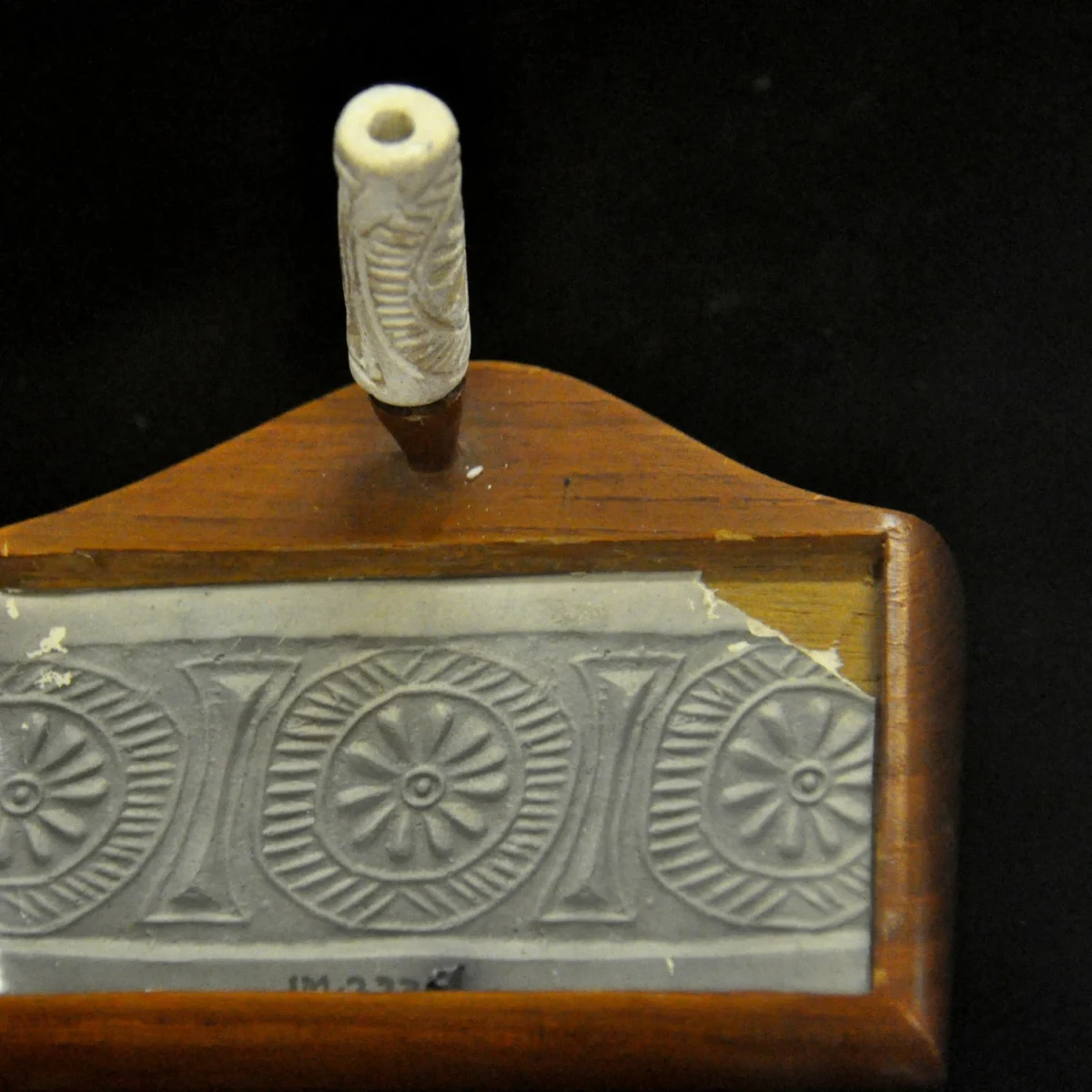
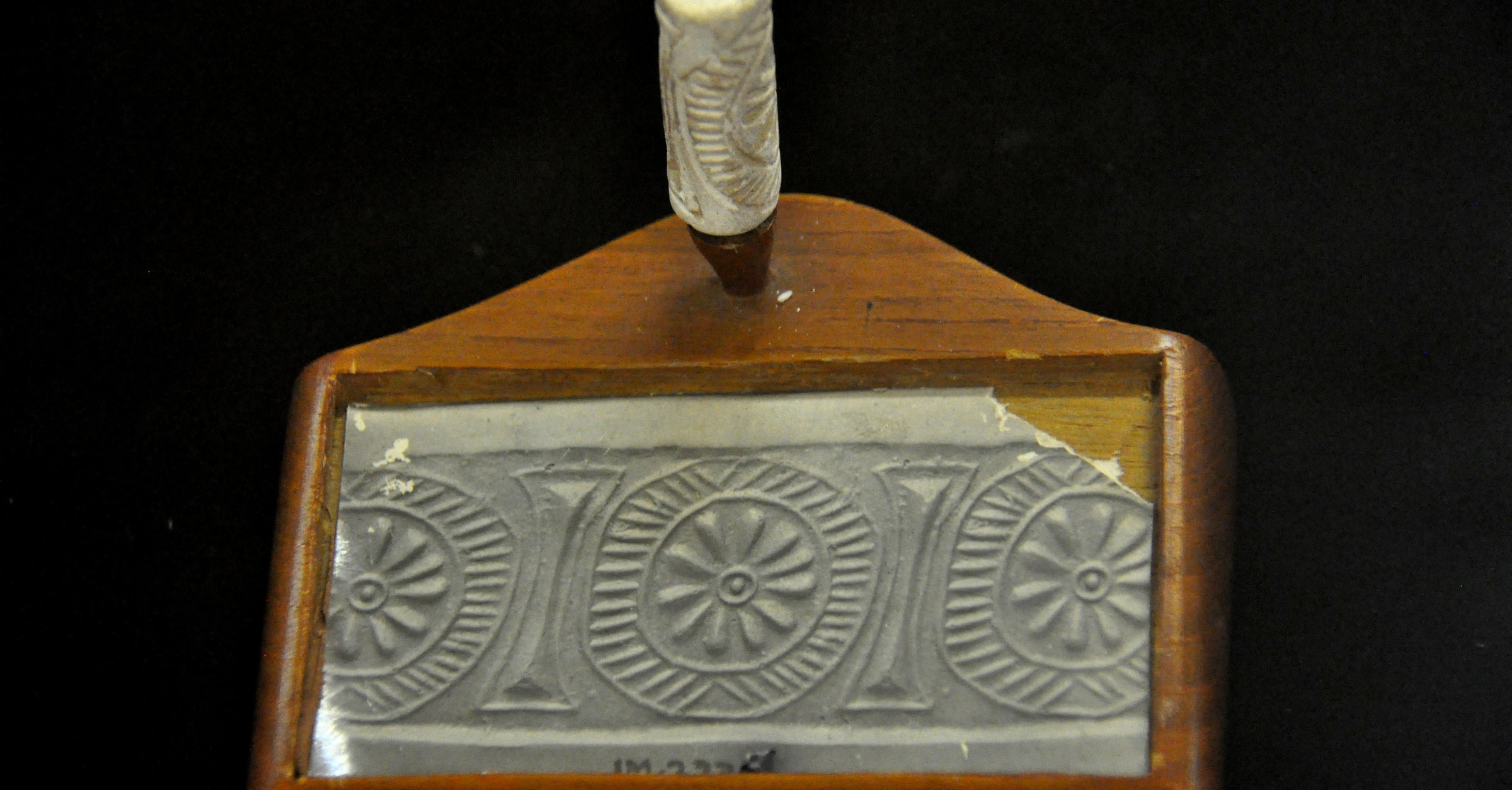
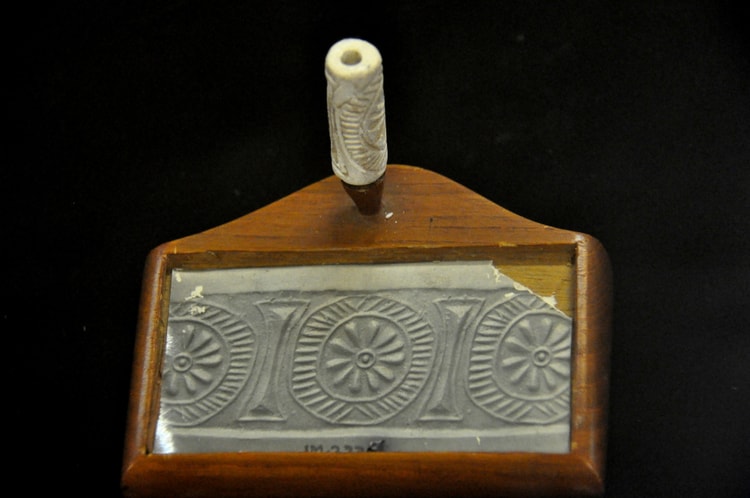
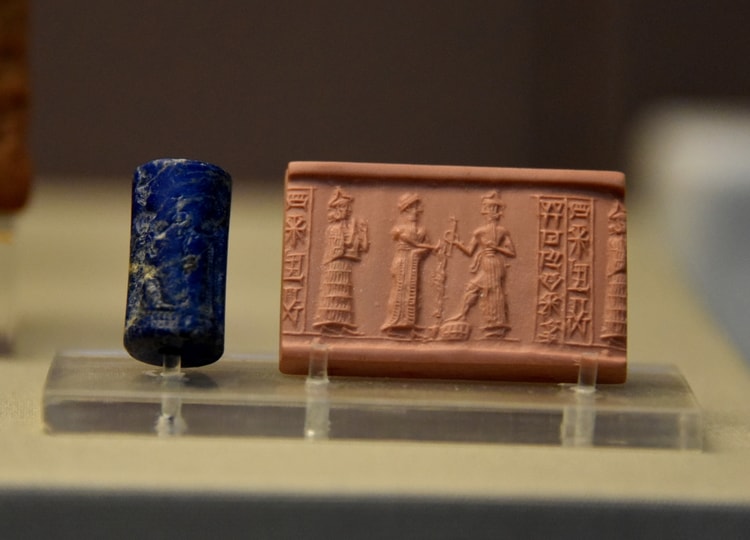
Cylinder seals, known as kishib in Sumerian and kunukku in Akkadian, were essentially impression stamps, meticulously crafted from a variety of materials. Ranging typically from three to four inches (7-10 cm) in length, these cylindrical objects were engraved with designs that, when rolled across wet clay, produced a continuous, raised image—a unique signature. Their ubiquity across Mesopotamia, from the marshlands of Sumer to the northern plains of Assyria, speaks volumes about their fundamental role.
These seals served as the primary means of authenticating documents, legitimizing transactions, and securing goods in an age before widespread literacy and standardized identification. Every individual, from the highest-ranking monarch to the lowliest slave, possessed a personal seal, reflecting their status, profession, and even their spiritual leanings. Fashioned from semiprecious stones such as marble, obsidian, amethyst, and the prized lapis lazuli, or occasionally from precious metals like gold and silver, these seals were not just functional; they were cherished possessions, worn as necklaces, bracelets, or pinned to garments, constantly at hand for the myriad daily interactions that demanded their imprint.
Chronology: From Stamp to Cylinder and Beyond
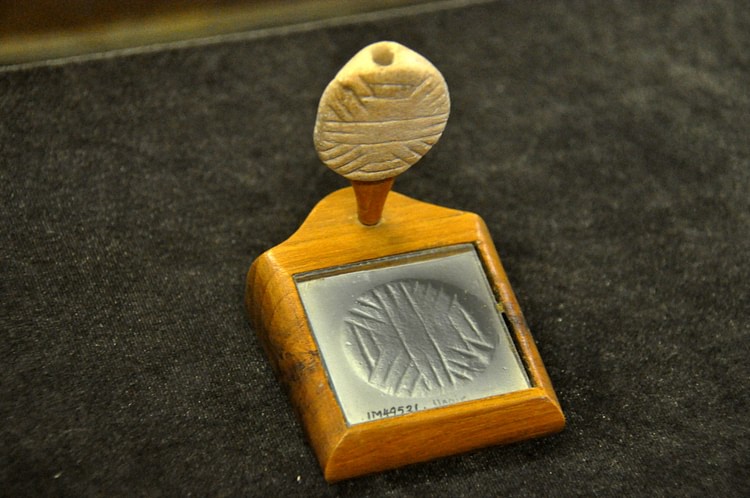
The origins of sealing practices in Mesopotamia trace back to the Late Neolithic Period, circa 7600-6000 BCE. While some scholars point to the region of modern-day Syria as the birthplace of these early seals, others contend that Sumer, in modern Iraq, saw their later, more refined development. Initially, simple stamp seals—small, flat objects less than an inch (2 cm) in diameter, akin to later signet rings—were prevalent. These were straightforward and effective for securing small clay envelopes or marking ownership.
However, the advent of the cylinder seal marks a significant evolutionary leap. The prevailing academic debate revolves around whether cylinder seals entirely replaced stamp seals or if they coexisted, each serving distinct regional or functional needs. While some scholars, like Dr. Stephen Bertman, suggest the stamp seal logically preceded the cylinder seal as a less refined method, others, including Dr. Gwendolyn Leick and Dr. Senta Green, argue for their contemporaneous use.
One compelling theory posits that cylinder seals emerged out of a specific bureaucratic necessity: the sealing of bullae. These hollow, spherical clay containers held tokens representing quantities of goods involved in a transaction (e.g., pebbles for sheep). A rolling seal would have been more efficient for marking the curved surface of a bulla than a flat stamp. However, archaeological findings complicate this neat progression, revealing instances of cylinder seals on flat envelopes and stamp seals on bullae, suggesting a more fluid and less linear adoption.
The cylinder seal truly came into its own during the 4th millennium BCE, particularly during the Middle and Late Uruk Periods. This era witnessed a dramatic increase in urbanism and administrative complexity in southern Mesopotamia, necessitating a more sophisticated and secure method of identification and authentication. The expanded surface area of the cylinder offered artists a much larger "canvas" for intricate, narrative designs, allowing for a greater degree of individuality and detail crucial for distinguishing numerous officials within a burgeoning bureaucracy. This development cemented the cylinder seal’s status as the dominant form of sealing in the southern regions, even as stamp seals maintained their popularity in the north, especially in areas corresponding to modern Syria and Turkey.
Supporting Data: Craftsmanship, Bureaucracy, and Belief
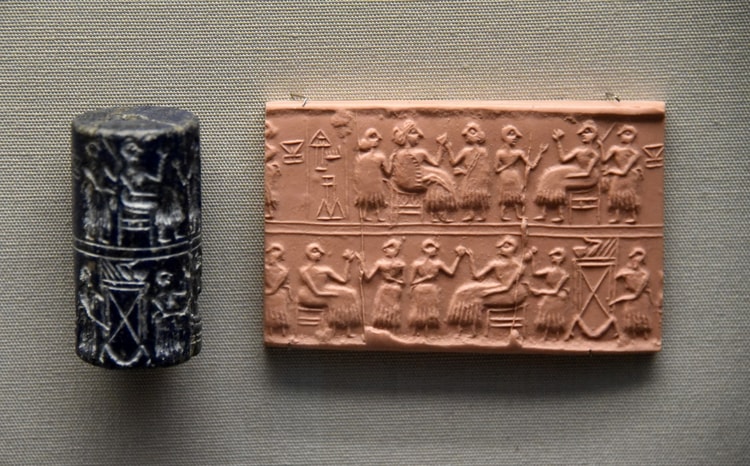
The intricacy of cylinder seals was not merely aesthetic; it was a testament to sophisticated craftsmanship and a reflection of the societal demands they fulfilled. Each seal was a meticulously carved artifact, often depicting scenes from mythology, religious rituals, daily life, or stylized representations of animals and human figures. These motifs were far more than decorative; they conveyed crucial information about the seal’s owner.
The Artisans Behind the Seals:
The creation of these miniature marvels was the work of highly skilled professionals. Known as burgul in Sumerian and purkullu in Akkadian, seal-cutters underwent rigorous apprenticeships, typically lasting at least four years, before establishing their own workshops. Archaeological discoveries, such as a seal-cutter’s toolkit found in the ancient Syrian city of Ugarit, provide tangible evidence of their trade. This toolkit included essential instruments like a small copper chisel, pointed copper gravers for fine detail, a whetstone for sharpening, and a borer for drilling holes, alongside unfinished seals, offering a glimpse into their manufacturing process. Bronze and flint engraving tools, as well as various drills and blades, were also part of their repertoire.
It is believed that the process might have involved two specialized artisans: one group responsible for quarrying and shaping the raw stone into blank cylinders, and another, the burgul, who undertook the intricate engraving and personalization for individual clients. Holes were invariably drilled through the cylinder, allowing it to be strung on leather or fabric and worn. The opulence of these attachments varied with social standing; Queen Puabi of Ur, for example, had a magnificent gold-capped cylinder seal, fastened with bitumen, found resting on her skeletal chest in her royal grave. Less affluent individuals would have used simpler materials.
The carving technique, known as intaglio, involved incising the design into the surface of the stone, so that when rolled, it produced a raised image in relief. This demanded exceptional skill, as the artist had to mentally reverse the image, carving in negative to achieve the desired positive impression. Such expertise commanded high compensation, making seal-cutters respected and well-paid members of society. The sheer volume of surviving seals—over 2,000 recovered, with estimates suggesting hundreds of thousands still buried from the Uruk period alone—underscores the constant demand for their craft.
Styles and Their Meanings:
Scholars Megan Lewis and Marian Feldman identify two primary artistic styles of cylinder seals:
-
Uruk-style seals: Characterized by exceptional naturalism in depicting animals and figures, aiming for expressive clarity. Motifs often include ritual narratives involving temples, boats, and offerings to gods, as well as hierarchical arrangements of the natural world. These seals are skillfully cut, detailed, and aesthetically balanced. As archaeologist Hans Nissen suggests, Uruk-style seals were likely the property of elite individuals, designed to be visually distinct and authorize complex transactions, reflecting their position at the apex of the administrative hierarchy.
-
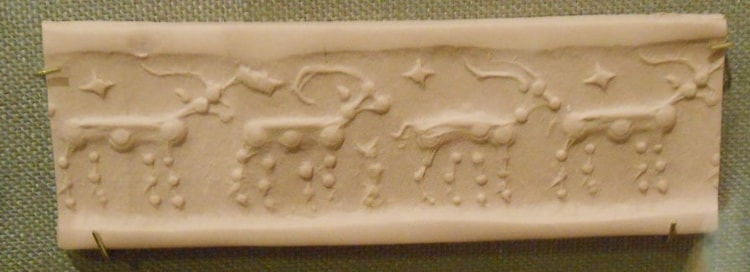
Jemdet Nasr-style seals: Less detailed, employing heavy use of drills and cutting discs, resulting in characteristic round and linear marks. Common motifs include women with pigtails engaged in domestic labor and herds of animals in front of temples. Nissen posits that these seals often identified a "legal person" or institution rather than a private individual, explaining their more repetitive motifs, where individual distinction was less critical. While named after the Jemdet Nasr period (3100-2900 BCE), examples of this style have also been found in Late Uruk contexts, indicating stylistic overlap.
Beyond Practicality: The Amuletic Power:
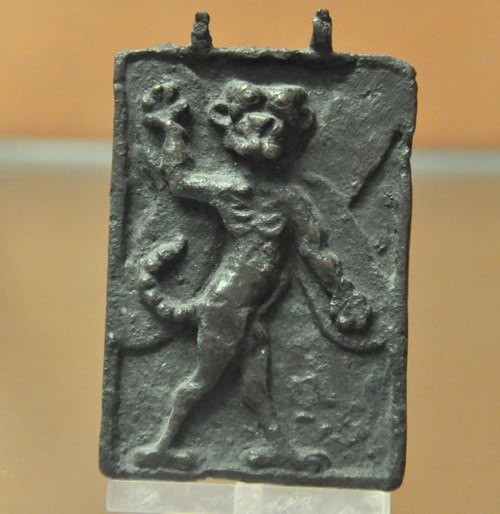
Lewis and Feldman also highlight the "amuletic" function of cylinder seals. Beyond their practical use as signatures, seals were imbued with spiritual significance, believed to ward off evil spirits, protect the wearer from harm, and attract good fortune and prosperity. A seal might depict a specific deity, a scene from an epic myth, or even a protective demon. For instance, the formidable-looking demon Pazuzu, often misunderstood today due to modern portrayals, was revered in Mesopotamia as a protector of pregnant women and children. Amulets bearing his image were thought to divert malevolent forces and even clear cities of foul odors, demonstrating the complex and often benevolent role of such figures in the ancient worldview.
Official Responses: Academic Consensus and Interpretations
The study of cylinder seals has generated significant academic discourse, contributing to a deeper understanding of Mesopotamian social structures, economic systems, and cultural practices. Scholars have largely converged on several key interpretations:
Regional Specialization and Bureaucratic Needs:
Clemens Reichel, as cited in Joshua Engelhardt’s Agency in Ancient Writing, offers a compelling resolution to the "which came first" debate, attributing the divergence in seal types to regional needs. Reichel notes that the more extensive and complex bureaucracy of southern Mesopotamian cities like Uruk demanded a sealing mechanism capable of conveying nuanced information and identifying numerous individual agents within its system. The larger "canvas" of the cylinder seal, with its capacity for elaborate, narrative depictions, perfectly suited this requirement. In contrast, the relatively less complex administrative structures in the north continued to find the simpler stamp seals sufficient. This theory elegantly explains why Sumer developed the cylinder seal while ancient Syria favored the stamp seal, each responding to their respective societal demands.
A Compendium of Iconography:
Dr. Senta Green emphasizes the immense value of cylinder seals to modern scholarship, describing each seal as a "small time capsule" reflecting the artistic styles and popular motifs of its era and region. More importantly, she highlights their ability to reveal the owner’s social rank and, occasionally, their name. While similar iconography can be found on stelae, plaques, reliefs, and paintings, the vast quantity of surviving seals provides the most complete and comprehensive compendium of ancient Mesopotamian visual culture. This allows historians to "meet" individuals who lived millennia ago, gaining insights into their personal identities and societal roles through the symbols they chose to carry.
The Meaning of Imagery:
Lewis and Feldman categorize the meaning conveyed by seal imagery into three critical areas:
- Social and Political Status: The complexity of the design, the material used, and the depicted scenes often indicated the owner’s position within the social hierarchy, from royalty to scribes, merchants, or temple officials.
- Religious and Ritual Beliefs: Many seals illustrate mythological narratives, cultic practices, or depict deities and protective spirits, reflecting the owner’s spiritual affiliations and the prevailing religious doctrines of the time.
- Economic and Administrative Functions: Scenes related to agriculture, animal husbandry, trade, or specific administrative tasks could signify the owner’s profession or sphere of influence within the Mesopotamian economy.
Implications: Identity, Permanence, and Enduring Fascination
The significance of cylinder seals extended far beyond their functional utility. They were deeply personal objects, embodying an individual’s identity and status in a tangible form. The loss of a seal was, therefore, a grave matter, comparable to the loss of modern-day identification documents or credit cards. Bertman recounts that a former owner would officially record the date and time of loss to invalidate any subsequent transactions made with the missing seal, a clear ancient precedent for protecting oneself against identity theft.
Even after the invention of cuneiform writing around 3600/3500 BCE, cylinder seals retained their vital role. Mesopotamian legal documents, meticulously recorded on clay tablets, consistently included the phrase "The seal of…" followed by the impression of the involved parties’ seals. The script on the seals themselves evolved, incorporating cuneiform to detail the owner’s name, their father’s name, title, occupation, and even the ruler or god they served. This continuity underscores their enduring importance as a symbol of personal authority and legal legitimacy.
Bertman offers a poignant explanation for the cylinder seal’s profound significance in Mesopotamian life: "The ancients were intimate with something that more and more has come to characterize our lives today: impermanence." In a world prone to devastating floods, where entire cities could vanish, and where the fragile nature of life was a constant reality (as exemplified by the epic of Gilgamesh and his quest for eternal life), the stone cylinder seal stood as a powerful symbol of permanence and security. It was a badge of honor, a tangible representation of self in an ever-shifting world.
Today, cylinder seals continue to captivate archaeologists, historians, and museum-goers alike. They are not merely ancient artifacts; they are intimate portraits of a bygone era, offering direct access to the lives, aspirations, and beliefs of individuals who shaped the dawn of civilization. Each roll of a cylinder seal on a museum display brings forth a story, connecting us across millennia to the people of Mesopotamia—people who, in their daily routines, their commerce, their spiritual lives, and their profound need for identity and permanence, were perhaps not so different from us after all.



Leave a Comment