Unveiling Origin Story: Stonemaier Games Crafts a New Chapter in Heroic Beginnings
December 2025 – The superhero genre, a seemingly omnipresent force in modern entertainment, has long captivated audiences with tales of caped crusaders and formidable villains. From blockbuster films to comic book sagas and an ever-growing library of video games, the narrative often centers on established figures wielding incredible powers in epic battles. However, a new contender from the acclaimed publisher Stonemaier Games is set to challenge this paradigm, inviting players not to inhabit a pre-existing legend, but to forge one from its very genesis.
Origin Story, a highly anticipated release slated for late 2025, promises a fresh, introspective take on the heroic journey. Far from dropping players into the midst of cosmic conflicts or pre-ordained destinies, this innovative board game plunges them into the nascent stages of a character’s evolution. Here, the focus shifts from raw power and explosive confrontations to the meticulous, often chaotic, process of self-discovery, character building, and the pivotal moments that define a hero – or indeed, a supervillain.
Developed by the renowned Stonemaier Games, a publisher celebrated for its meticulously crafted and strategically rich titles such as Wingspan, Scythe, and Viticulture, Origin Story enters the market with a strong pedigree. Its unique blend of trick-taking mechanics and tableau-building offers an accessible yet deeply strategic experience for 1 to 5 players, aged 14 and up, with an estimated playing time of just 45 minutes. This article delves into the core tenets of Origin Story, exploring its innovative gameplay, artistic vision, and its potential to redefine how players engage with the superhero narrative.
The Genesis of Greatness: Deconstructing Origin Story‘s Core Concept
In a landscape saturated with games featuring iconic heroes and their legendary exploits, Origin Story distinguishes itself by embracing the unknown. The game’s central premise is beautifully simple yet profoundly engaging: players are not established heroes; they are nascent figures, piecing together their identities and taking their very first super-steps. This fundamental shift in perspective allows for an unprecedented level of player agency and narrative immersion, making each playthrough a unique saga of emergence.
Beyond the Cape: Crafting a Hero from the Ground Up
The core of Origin Story lies in its emphasis on character development rather than immediate power deployment. Unlike many superhero-themed games that throw players directly into combat scenarios, Origin Story asks players to build their hero (or villain) organically. This involves a multi-faceted approach to character creation that goes far beyond simply selecting a set of powers.
Players are tasked with constructing a compelling backstory, a narrative framework that explains their character’s motivations, vulnerabilities, and nascent abilities. This could involve a tragic accident, a scientific experiment gone awry, a hidden lineage, or a sudden, inexplicable transformation. Each decision contributes to the evolving tapestry of their character, influencing strategic choices and opening up new possibilities.
Crucially, the game also emphasizes the formation of relationships and the acquisition of resources. Players will pick their allies – mentors, sidekicks, or even reluctant partners – who provide unique benefits and add depth to their developing persona. Concurrently, they will collect gadgets and tools, tangible manifestations of their ingenuity or the fruits of their connections. These might range from a versatile utility belt, advanced communication devices, or even a custom-built vehicle, each contributing to their burgeoning capabilities.

Perhaps most compellingly, Origin Story recognizes that no hero exists in a vacuum. A significant element of the game involves developing that antagonistic relationship with an archenemy. This isn’t about defeating them in a singular battle, but about the slow burn of rivalry, the escalating stakes, and the personal vendetta that often fuels a hero’s (or villain’s) trajectory. This nuanced approach to rivalry ensures that the narrative feels deeply personal and dynamic, evolving alongside the player’s character. By focusing on these foundational elements – backstory, allies, gadgets, and archenemies – Origin Story crafts a narrative experience that feels genuinely fresh and deeply personal, moving beyond the traditional superhero game’s reliance on power-fantasy combat.
The Narrative Canvas: Art and Lore in Origin Story
Adding another layer of depth and appeal to Origin Story is the exquisite artwork by Clémentine Campardou. Her distinctive style breathes life into the game’s original characters and settings, ensuring that every card and component contributes to the immersive experience. In a genre often dominated by established intellectual properties, the decision to use completely original characters is a bold yet rewarding one. It reinforces the game’s core premise: that players are truly creating their own origin story, unburdened by pre-existing lore or expectations.
Campardou’s art is not merely illustrative; it is integral to the narrative. Each Story Card, Event Card, and ultimately, the final Superhero Card, tells a visual tale that complements the mechanical gameplay. The vibrant designs and evocative imagery draw players into the world, making the process of piecing together a character’s journey feel authentic and visually rich. This artistic choice elevates Origin Story from a mere card game to a true narrative experience, where the aesthetics are as crucial to the storytelling as the gameplay itself. The originality of the characters ensures that every player starts on equal footing, fostering a sense of genuine discovery as their unique persona unfolds on the tabletop.
Mechanics of Metamorphosis: How Origin Story Plays
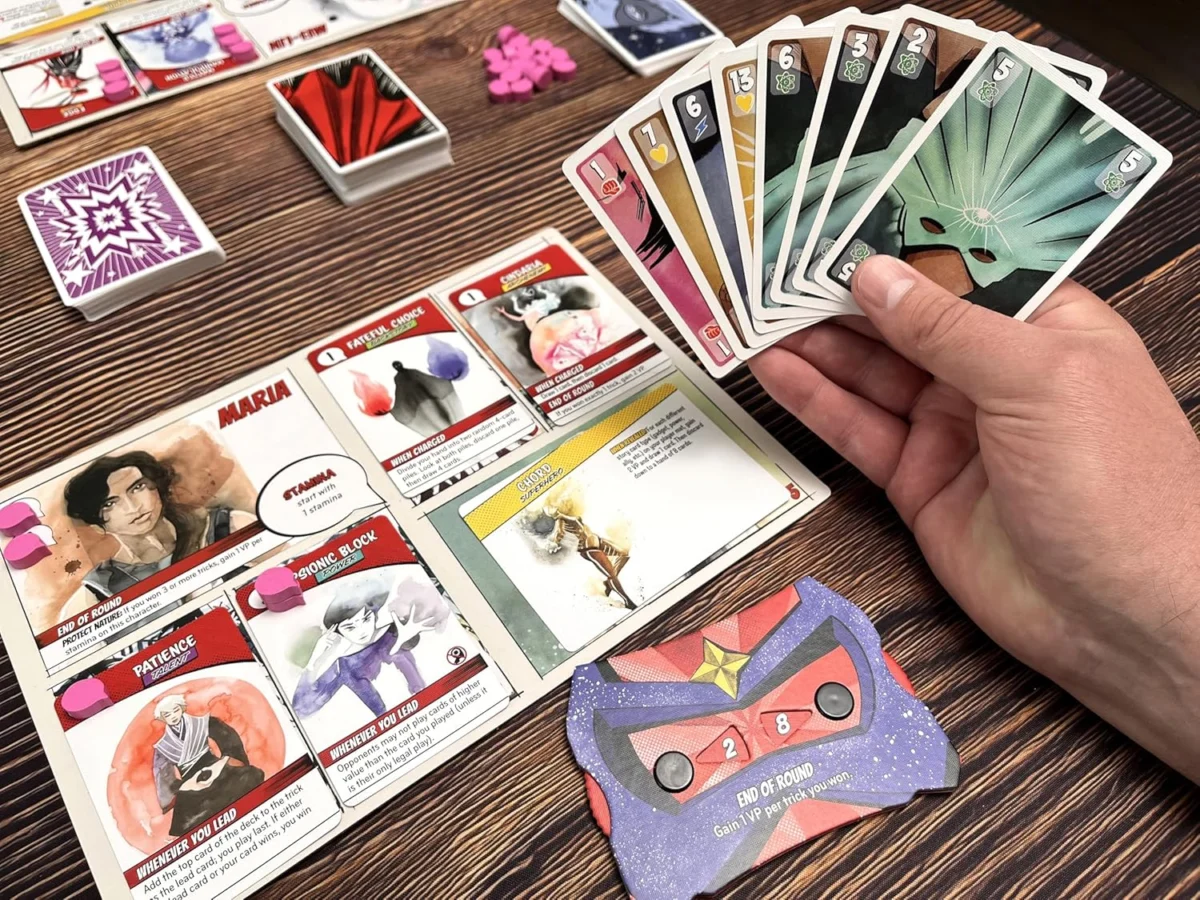
At its heart, Origin Story is a trick-taking tableau-building game, a clever amalgamation of classic card game mechanics with modern board game design principles. Over the course of five meticulously structured rounds, players will witness their character’s backstory, powers, and skills develop, culminating in the grand reveal of their fully-formed superhero or supervillain.
Trick-Taking with a Twist: Brains, Speed, Strength, and Love
For those unfamiliar with the term, trick-taking games are a venerable category of card games where players compete to win "tricks" – a set of cards played in a round. Classic examples include Hearts, Bridge, and Spades, games whose fundamental rules are often simple to grasp but offer immense strategic depth. Origin Story leverages this accessible foundation, making it easy for new players to learn while offering enough complexity to keep seasoned gamers engaged.
The trick-taking cards in Origin Story bear a resemblance to a standard deck, but with a thematic twist. Gone are the traditional suits of spades, hearts, diamonds, and clubs, replaced by attributes crucial to any emerging hero or villain: Brains, Speed, Strength, and Love. Instead of face cards, the deck primarily features numbered cards, simplifying the hierarchy while maintaining strategic play. In a particularly inspired thematic choice, Love is designated as the trump suit. This means that cards of the Love suit, when played, can often win a trick regardless of the other suits played, adding a powerful emotional dimension to the strategic calculus.
The choice of these thematic suits is not arbitrary; it ties directly into the character-building aspect of the game. Winning tricks with Brains cards might signify a strategic breakthrough or a clever deduction, while Speed cards could represent swift action or agility. Strength cards obviously denote raw power, and Love, as the trump, could symbolize the emotional core, the unwavering resolve, or the profound connections that ultimately define a character’s path. Players must carefully consider which suit to lead with or follow, not just to win a trick, but to strategically align with their character’s developing attributes and narrative arc.

Building Your Legend: Tableau and Card Interactions
The trick-taking component serves as the engine for the tableau-building aspect of Origin Story. Players are dealt several types of cards, each playing a crucial role in shaping their character:
- Story Cards: These are the building blocks of a character’s narrative. Played onto a personal placemat, they visually and thematically flesh out pieces of the origin story. These might represent key events, training montages, moments of revelation, or the acquisition of a crucial skill. Strategically acquiring and placing these cards is paramount to developing a coherent and powerful character.
- Event Cards: These cards introduce twists and turns, throwing a wrench into a character’s carefully planned trajectory. Event Cards can represent unexpected challenges, moral dilemmas, or unforeseen opportunities that force players to adapt their strategies and make difficult choices, mimicking the unpredictable nature of an origin story.
- Superhero Cards: Held until the very end, these cards represent the fully realized hero or villain that the player has meticulously crafted. They are the ultimate reveal, embodying the culmination of all the choices made throughout the game and often providing bonus points based on the completed tableau.
- Trick-Taking Cards: As described, these are the primary cards used for winning or losing tricks, which in turn allows players to acquire Story and Event Cards.
Throughout the five rounds, players engage in a delicate dance of strategic card play. They will add Story Cards to their character placemat, aiming to create synergistic combinations and fulfill specific narrative objectives. The clever twist is that winning every trick isn’t always the optimal strategy. Sometimes, players will purposefully try to lose a hand – perhaps to avoid an undesirable Event Card, to deny an opponent a crucial Story Card, or to position themselves for a better outcome in a future round. This dynamic tension between winning and losing tricks, always in service of the larger goal of building a compelling origin story and maximizing points, provides immense strategic depth. The careful management of one’s hand, anticipating opponents’ moves, and adapting to the evolving narrative on the placemat are all crucial elements of mastering Origin Story.
The Five-Round Saga: From Aspirant to Icon
The game unfolds over five distinct rounds, each contributing to the acceleration of the character’s development. In each round, players draw new cards, participate in trick-taking, and add to their tableau. As the rounds progress, the character’s backstory becomes richer, their powers begin to manifest, and their skills sharpen. The narrative arc builds steadily, creating a sense of progression and anticipation.
At the conclusion of the fifth round, the moment of truth arrives. Players reveal their newly minted superhero or villain, showcasing the culmination of their strategic decisions and narrative choices. Any bonuses earned through specific card combinations or completed objectives are tallied, and then all points are calculated. While every player will have successfully brought a character to life, only one can be crowned the "best" at the art of origin story construction, determined by the final score. This competitive element adds a layer of replayability, encouraging players to experiment with different character archetypes and strategic approaches in pursuit of victory.
A Legacy of Innovation: Stonemaier Games’ Role and Design Philosophy
The involvement of Stonemaier Games as the publisher for Origin Story immediately signals a certain level of quality and design excellence. This publisher has cultivated a sterling reputation in the board game industry, consistently delivering titles that are not only aesthetically pleasing but also mechanically innovative and deeply engaging.
Publisher Pedigree: The Mark of Stonemaier Games
Stonemaier Games, founded by Jamey Stegmaier, has become synonymous with premium board game experiences. Their catalog boasts critically acclaimed hits like Scythe, a 4X game renowned for its intricate engine-building and alternative history setting; Wingspan, a wildly popular engine-building game focused on bird collection and ecological themes; and Viticulture, a beloved worker-placement game centered on winemaking. These games share common threads: high-quality components, stunning artwork, elegant rule sets, and a focus on player engagement and strategic depth.
Origin Story appears to fit perfectly within this esteemed portfolio. It embodies Stonemaier’s commitment to unique themes, innovative mechanics, and a polished player experience. The choice to tackle the superhero genre in a fresh way aligns with their history of taking familiar concepts and imbuing them with novel gameplay loops. Furthermore, their reputation for clear rulebooks and engaging solo modes (a feature Origin Story supports for 1 player) suggests that the game will be accessible and enjoyable across various player counts. The very act of Stonemaier Games picking up Origin Story is, in itself, an endorsement of the game’s potential.

Echoes of Excellence: Comparisons and Context
The "Quick Guide" provided by the original article lists Wyrmspan, Tricktakers, and Rebel Princess as similar games, offering valuable context for potential players.
- Wyrmspan: Also published by Stonemaier Games, Wyrmspan is often seen as a spiritual successor or thematic cousin to Wingspan, featuring dragon collecting and tableau-building. The comparison suggests that Origin Story might share Wyrmspan‘s emphasis on building an efficient engine or tableau over time, as well as Stonemaier’s characteristic high production value and engaging card interactions. The "tableau-building" aspect is a direct link here.
- Tricktakers: This is more of a genre descriptor than a specific game, highlighting the core trick-taking mechanic. By listing this, the game signals its foundation in classic card play, reassuring players familiar with traditional card games while promising a modern twist.
- Rebel Princess: This comparison might point to a shared narrative focus, character development, or perhaps a similar strategic depth in managing resources and objectives. While less directly comparable mechanically than Wyrmspan or the trick-taking genre, it hints at a game that tells a story through gameplay choices.
However, Origin Story carves out its own niche by uniquely blending these elements with its compelling superhero theme. While Wyrmspan focuses on dragon habitats and Rebel Princess might lean into political intrigue or character arcs, Origin Story specifically directs its mechanics towards the creation of a heroic identity. It stands out by making the narrative of personal growth and transformation the central objective, rather than an incidental byproduct of other game goals. This focused thematic integration with core mechanics is a hallmark of strong game design and a common thread in Stonemaier’s successful titles.
Strategic Depth and Accessibility: Who is Origin Story For?
One of Origin Story‘s most compelling attributes, as highlighted by initial reviews, is its remarkable balance between simplicity and strategic depth. This makes it a versatile addition to almost any game collection, appealing to a broad spectrum of players.
Bridging the Gap: Appealing to All Gamers
The foundational trick-taking rules, drawing on familiar concepts from games like Hearts or Spades, ensure that Origin Story is not an intimidating learning experience. Newer players, or even younger gamers (given the 14+ age rating), will quickly grasp the basic mechanics of leading suits, following suit, and playing trump. This low barrier to entry is crucial for welcoming a wider audience into the world of strategic board games.
Yet, beneath this accessible surface lies a rich layer of strategic complexity. Experienced board gamers will find ample opportunities to exercise their tactical prowess. The decision to strategically win or lose tricks, the careful curation of Story Cards on their tableau, the management of Event Cards, and the anticipation of opponents’ moves all contribute to a nuanced gameplay experience. Players must weigh short-term gains (winning a specific trick) against long-term objectives (completing a powerful tableau or denying an opponent key resources). The delicate balance of points, bonuses, and sabotage ensures that every decision carries weight and impacts the ultimate outcome. This blend of approachable rules and profound strategic choices ensures that neither casual players nor hardcore strategists will find the game lacking.
Reinventing the Heroic Narrative: A Fresh Perspective
Beyond its mechanical elegance, Origin Story truly shines in its innovative approach to the superhero genre. As the reviewer aptly notes, most superhero games tend to focus on the climactic archenemy fights and the harnessing of fully developed powers. While these elements are undeniably exciting, they often overlook the rich, formative period that defines these characters.
Origin Story flips this script. It celebrates the journey of discovery, the evolution of identity, and the forging of a legend. Instead of commanding a hero, players are becoming one. This shifts the narrative focus from epic battles to personal growth, from predetermined powers to the organic development of abilities and skills. It allows players to explore the "why" behind the capes and masks, delving into the psychological and circumstantial factors that shape a character’s destiny. This fresh perspective revitalizes a genre that, despite its enduring popularity, can sometimes feel formulaic. By allowing players to shape their own narrative from the ground up, Origin Story delivers a deeply personal and creatively satisfying experience that resonates long after the final scores are tallied.

Implications and Future Outlook: The Impact of Origin Story
The release of Origin Story by Stonemaier Games is more than just another title; it represents a significant contribution to the evolving landscape of board game design, particularly within the thematic realm of superheroes. Its innovative approach carries several implications for the industry and the player base.
Redefining the Superhero Board Game Landscape
Origin Story stands poised to influence how future superhero-themed board games are conceived and designed. By successfully demonstrating that a compelling superhero game doesn’t need to prioritize combat or established IP, it opens the door for other designers to explore narrative depth, character development, and unconventional mechanics within the genre. This could lead to a diversification of superhero board games, moving beyond skirmish games and highly thematic but mechanically conventional titles. The game champions the idea that the most engaging stories are often found in the journey, not just the destination.
Furthermore, its success could bolster the trend of integrating strong narrative elements into Euro-style games. The combination of trick-taking (often found in abstract or traditional card games) with tableau-building and a rich, player-driven narrative is a sophisticated blend that highlights the versatility of modern board game design. Origin Story serves as a testament to the power of thematic integration, where every mechanical choice supports the overarching story, creating a cohesive and immersive experience.
A Must-Have for Game Nights?
The initial assessment from Bell of Lost Souls posits that Origin Story would be a "perfect addition to almost any game night," a claim supported by its design philosophy. Its relatively short playing time (45 minutes) makes it an ideal choice for a main event or a palate cleanser between longer games. The player count flexibility (1-5 players) ensures it can hit the table regardless of group size, and the accessibility for new players combined with strategic depth for veterans makes it a crowd-pleaser.
Moreover, the replayability of Origin Story appears to be incredibly high. Each game offers the opportunity to craft a completely unique hero or villain, with different backstories, allies, gadgets, and evolving rivalries. The dynamic nature of the trick-taking and event cards ensures that no two games will unfold in precisely the same way. This inherent variability, coupled with the joy of creative character building, guarantees that Origin Story will maintain its freshness and appeal over numerous play sessions, solidifying its place as a staple on game night tables.
Conclusion: Your Story Awaits
Origin Story emerges as a beacon of innovation in the often-trodden superhero genre. Stonemaier Games, with its reputation for quality and ingenuity, has delivered a title that transcends typical expectations, offering players a deeply personal and strategically engaging journey from nascent potential to legendary status. Through its clever blend of trick-taking and tableau-building, vibrant original art, and a profound focus on character development over combat, Origin Story invites players to truly immerse themselves in the genesis of greatness.
Whether you’re a seasoned board gamer seeking fresh strategic challenges, a superhero enthusiast craving a new perspective on heroic narratives, or simply looking for an engaging and accessible game for your next gathering, Origin Story promises an experience unlike any other. It’s a testament to the idea that the most compelling stories are often those we help to write ourselves, piece by painstaking piece. Your journey begins now.

Quick Guide
| Feature | Detail |
|---|---|
| Mechanics | Trick-Taking, Strategy, Tableau-Building |
| Players | 1-5 Players, Age 14+ |
| Playing Time | 45 Minutes |
| Similar Games | Wyrmspan, Tricktakers, Rebel Princess |
| Publisher | Stonemaier Games |
| Artist | Clémentine Campardou |

Writer, Former Cosplayer, Tabletop RPGer, Mom, ASL Student, & Coffee Addict. To find Meaghan elsewhere on the internet, check out her LinkTree at https://linktr.ee/habie_cosplays
Any emails regarding articles or potential game or accessory spotlights can be sent to [email protected].