Unveiling "Valhalla Burning": Author Michael Pogach on Crafting a Brutal Yet Beautiful Viking Saga
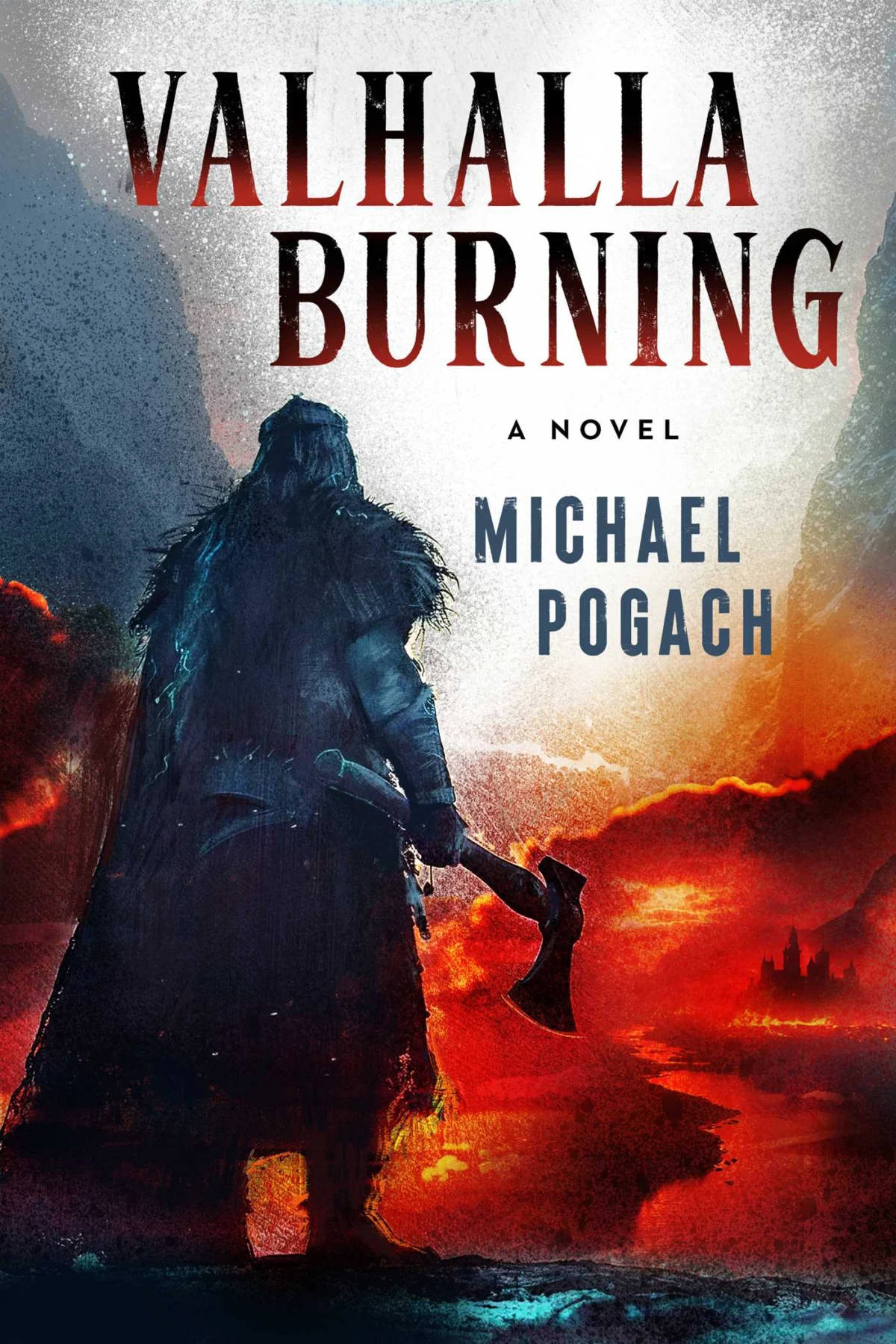
Philadelphia, PA – July 21, 2026 – In the burgeoning landscape of historical fiction, Michael Pogach’s latest novel, "Valhalla Burning," emerges as a visceral journey into the heart of 9th-century Norway and beyond. This dark Viking adventure, steeped in mythology and the raw realities of a bygone era, promises to immerse readers in a world of supernatural warriors, personal tragedy, and epic quests. Pogach, an established author known for his Gothic thrillers and dystopian series, sat down to discuss the inspirations, challenges, and profound lessons learned during the creation of this ambitious work.
The Genesis of a Saga: From Digital Worlds to Ancient Sagas
"Valhalla Burning" plunges readers into the turbulent life of Rúnr Njálsson, a warrior gifted with supernatural abilities as Odin’s chosen Berserkr. His invincibility on the battlefield is shattered when a rival clan’s raid claims the life of his daughter, Yrsa. Driven by an insatiable need for vengeance and a desperate hope to secure his daughter’s passage to Valhalla, Rúnr embarks on a perilous journey. Haunted by visions and the spectral presence of Yrsa, he seeks the guidance of a seeress, who directs him to a mysterious red temple where he must confront his daughter’s killer. This quest will lead him from the frigid forests of the Slavs and Rus to the opulent city of Constantinople, forging unlikely alliances with a band of hardened Viking raiders.
The genesis of "Valhalla Burning" is as modern as it is steeped in ancient lore. Pogach reveals that a significant spark of inspiration came from an unexpected source: video games.
The Unacknowledged Power of Interactive Storytelling
"There’s always some asshole out there gatekeeping books," Pogach states, referencing the often-rigid definitions of what constitutes legitimate storytelling. "Audiobooks aren’t reading, they spout. Or graphic novels don’t count. Or video games." Pogach, however, firmly believes that video games have been a powerful medium for narrative for decades.
"I grew up with the original NES," he recalls. "From the simple, endless fun of Super Mario Brothers to the expansive world and save features of The Legend of Zelda, even back then, video games were doing storytelling things." He points to the revelation in Metroid that the hero, Samus Aran, was a woman as an example of how games pushed narrative boundaries.
This appreciation for interactive storytelling evolved into a profound realization. "When I got all grown up and could afford a new gaming console, I shouldn’t have been surprised when I ran face-first into something like The Last of Us," Pogach explains. "Pause for…feelings. Don’t tell me that’s not legit storytelling."
The inspiration for "Valhalla Burning" itself directly stemmed from the release of Assassin’s Creed Valhalla. "I was between novels, directionless, certain I had no stories left to tell, and then Assassin’s Creed Valhalla dropped, and BOOM: inspiration. I started writing again." This experience cemented his belief that creativity should be nurtured through diverse mediums. "If you want to write, read. A lot. But also feed your creativity in every other way you can. Watch movies, go to museums, paint something, play video games, whatever. Just don’t listen to the gatekeepers. Love what you love."
Echoes of the Past: Translating "Beowulf"
Beyond digital realms, Pogach’s deep connection to literature and history played a pivotal role. As an English professor grappling with imposter syndrome, his admiration for the epic poem Beowulf runs deep. This admiration led him to undertake a personal translation of select passages, a "dumbest smart thing I’ve ever done," he admits.
"My favorite translations of Beowulf are by Edwin Morgan, Seamus Heaney, and Maria Dahvana Headley," Pogach notes, praising Headley’s translation as a "masterpiece." His endeavor to translate Old English, while challenging and at times frustrating, offered invaluable insights into the language and the very soul of the poem.
"Was it fun learning and translating Old English? Yes. And no," he reflects. "It was difficult. Frustrating. Recursive. Dull. Sometimes exciting." Despite the arduous nature of the task, he managed to render approximately 25 lines, focusing on Beowulf’s epic battles. The takeaway from this personal project extended beyond the linguistic exercise. "I did this thing that had no need to be done. Because I wanted to," Pogach states, drawing a parallel to his desire to write a Viking novel. "And I don’t regret any of it. So go do the thing you want to do."
The Architect of Narrative: Listening to the Creative Voice
The evolution of "Valhalla Burning" was not a linear path. Pogach emphasizes the crucial role of intuition and inner guidance in the creative process, a concept he likens to "listening to the voices in your head."
The Whispers of Inspiration
The initial title for the novel, "Of Vengeance and Valhalla," felt inadequate. "Every time I typed it out, I knew it wasn’t going to be THE title…because a little voice told me." This internal guidance extended to structural and narrative decisions. The first draft, written in the first person, began to falter at around 65,000 words. "I needed to start over in third person, a little voice told me."
Pogach acknowledges that this internal compass, whether termed a muse, intuition, or instinct, is a vital tool for creators. "That feeling that authors and artists and fabricators and knitters and chefs and architects know all too well. Our creative, narrative voices." While acknowledging the temptation to ignore these whispers, he advocates for heeding them. "More often than not we should probably just shut up and listen. That’s how we make our best art, by listening."

The Crucible of Creation: Patience and Perseverance
The journey from conception to publication is often a marathon, not a sprint, a reality Pogach knows all too well. His candid reflections on the protracted process of "making a novel" highlight the immense patience and resilience required.
The Unfolding Timeline of "Valhalla Burning"
The path to "Valhalla Burning" was far from swift. Pogach recounts the timeline with a mixture of exasperation and a touch of pride. Writing began in late 2020, during the COVID-19 pandemic. The manuscript was completed in the summer of 2023, following significant revisions, doubts, and even complete restarts.
"The answer is: I have no idea" how long it takes to "make a novel," Pogach admits, detailing the varied timelines of his previous works, ranging from 22 months to seven years. The querying process, which began in the spring of 2024, was particularly taxing. "Every day querying made me sad and angry and frustrated and hopeful and even a bit depressed. Every day with the book on sub felt like a decade."
The signing of an agent in spring 2024 marked a significant milestone, followed by intensive revisions. The search for a publisher commenced in June 2024. Pogach’s struggle with patience became acutely apparent during this period. "My 50th birthday approached in June 2025. I told myself that if no publisher wanted my book by then, it was time to throw in the creative towel and quit writing. My birthday arrived. Silence."
However, fate intervened. "The very next day, I got an email from my agent that a publisher was interested." This led to a series of emotionally charged stages: an agonizing week of waiting for a publisher meeting, a month of silence, an offer, negotiations, and a cascade of edits, including line edits, copyedits, cover design, and back cover copy. The entire process, from the first words to the published book, spanned five years and eight months. "Feels like twice that," Pogach confesses. "Some days alone felt like years."
This protracted journey underscores the often-unseen labor involved in bringing a book to the world. Pogach’s humorous self-deprecation about his impatience ("I suck at patience," he repeatedly states) serves as a relatable counterpoint to the immense dedication required.
The Nuances of the Norse: Beyond the Stereotypes
Pogach’s exploration of the Viking era in "Valhalla Burning" goes beyond the simplistic, often romanticized, portrayals. He delves into the complexities of Viking culture, urging readers to look beyond the familiar clichés.
Brutality and Beauty in the Viking Age
"Vikings. Saying that one word conjures all kinds of images and facts. Braided beards. Axes. Tattoos. Longships. Pillaging. Sagas." Pogach acknowledges these iconic elements but also seeks to nuance the popular understanding.
He clarifies the historical context of the term "Viking," noting that it primarily referred to the act of raiding (fara í víking) rather than an ethnic group. While the Viking era was undeniably brutal, marked by violence, disease, and hardship, Pogach emphasizes that the people of that time were far more than their warrior archetypes.
"The farmers and priests and hunters and slaves and settlers and children and shieldmaidens…were real people with real lives. They loved and struggled and made art and sang songs and developed such rich tapestries of ideals, beliefs, identities, and culture." He criticulates reducing this diverse culture to singular characteristics or actions. "The Vikings were diverse and beautiful, arrogant and oppressive, brutal and kind. Just like we are."
In "Valhalla Burning," Pogach aims to capture this multifaceted reality. "It’s about fatherhood and family, about friends and oaths and monsters, about trauma and humanity and faith, all in a time and in places where the Vikings were doing their thing, leaving their mark on a world that had a little more wonder left in it than, perhaps, does ours." The novel, therefore, seeks to present a Viking saga that is both thrillingly brutal and profoundly beautiful, reflecting the complex nature of its historical subjects and the universal themes of human experience.
The author’s journey in crafting "Valhalla Burning" serves as a testament to the power of diverse inspirations, the importance of heeding one’s creative voice, and the unwavering perseverance required to bring a story to life. As readers prepare to lift a horn of ale and taste the sweat and blood of Rúnr Njálsson’s saga, they are invited into a world that is as rich and brutal as it is thoughtfully rendered.