Unveiling the Enigma: Laura Sampson Reimagines "The Twelve Dancing Princesses" in "Enchanted Tales"
Main Facts
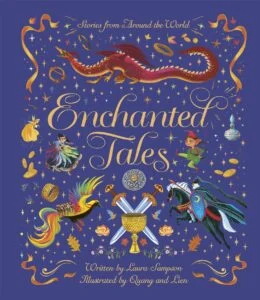
In a captivating new release, author Laura Sampson breathes fresh life into a beloved European folktale with her retelling of "The Twelve Dancing Princesses," featured in her latest book, Enchanted Tales, published by Templar Books. Drawing specifically from the French rendition by Charles Deulin, Sampson transports readers to a world of nocturnal mysteries, royal intrigue, and the transformative power of genuine affection. At the heart of this enchanting narrative lies the perplexing dilemma of twelve princesses whose satin slippers are mysteriously worn to shreds each morning, despite their bedchamber doors being triple-bolted from the inside. This baffling phenomenon prompts their father, the Duke of Beloeil, to issue a grand decree: any suitor who can unravel the secret behind the worn-out shoes shall earn the hand of one of his daughters in marriage. However, the challenge proves perilous, as numerous princes who have attempted to solve the riddle have vanished without a trace. Into this high-stakes mystery steps Michel, a humble cowherd known as "Stargazer" for his dreamy disposition and upward gaze. Guided by a fairy’s prophecy, Michel embarks on an extraordinary quest, armed not with princely titles or vast wealth, but with courage, cunning, and an unexpected magical gift, ultimately challenging societal conventions and proving that true love can break even the most ancient of spells. Sampson’s rendition promises to captivate both new audiences and long-time admirers of this timeless tale, enriching its cultural tapestry with vivid detail and emotional depth.
Chronology: A Cowherd’s Quest to Unravel a Royal Mystery
The narrative unfolds with the introduction of Michel, a young cowherd residing in the quaint village of Montignies-sur-Roc, a locale imbued with the rich, regional flavour of Charles Deulin’s original French setting, nestled on the Franco-Belgian border. Known affectionately as "Stargazer" for his contemplative nature and aspirations beyond his humble station, Michel’s life takes an unexpected turn one summer’s day. A resplendent fairy, adorned in a golden gown, materialises before him, delivering a cryptic yet exhilarating prophecy: "Go to the Château of Beloeil, and you will marry a princess!" This divine instruction ignites a spark of adventure within Michel, compelling him to leave his familiar pastures and journey towards the ducal residence.
Upon his arrival at the formidable Château of Beloeil, Michel finds the entire court abuzz with a peculiar and persistent mystery. Each morning, the twelve exquisite princesses, daughters of the Duke, emerge from their meticulously secured suite of rooms — locked with three robust bolts — with their delicate satin dancing shoes inexplicably worn through. This nightly ritual of inexplicable destruction has confounded the Duke and his household, leading to the aforementioned public decree: "ANYONE WHO CAN SOLVE THE MYSTERY OF THE WORN-OUT SHOES MAY MARRY ONE OF MY DAUGHTERS!" The stakes, however, are ominously high. A succession of valiant princes from across the land had bravely stepped forward to claim the reward, only to vanish into the night, their fates unknown, adding a chilling layer of peril to the already baffling enigma.
Initially, Michel, acutely aware of his humble origins, hesitates. "I am no prince," he muses, "the duke will laugh at me if I come forward." Rather than openly declare his intentions, he discreetly seeks employment within the château’s sprawling gardens, a position that grants him proximity to the princesses. His daily duty involves crafting exquisite bouquets for the royal sisters, who accept his floral tributes with an air of distant politeness, rarely acknowledging his presence or offering a word of thanks. This routine continues until a pivotal moment: Lina, the youngest of the princesses, meets his gaze and offers a fleeting, genuine smile. This simple gesture profoundly stirs Michel’s heart, igniting a fervent desire not merely to win a princess, but to unravel the captivating mystery that surrounds them.
That very night, the golden-clad fairy reappears to Michel, bestowing upon him a pair of mystical gifts: two baby laurel trees, one a vibrant rose and the other a delicate cherry, alongside a golden bucket and a golden rake. Her instructions are clear and melodic: "Plant these laurel trees, tend them with this rake, water them from this bucket and they will grant your wishes!" With these words, the fairy vanishes once more, leaving Michel to diligently follow her divine guidance.
As Michel nurtures the magical laurels, fate intervenes. One day, the cherry laurel blossoms with a single, pristine white flower. Michel, driven by a hopeful impulse to capture Lina’s attention, plucks the bloom and tucks it into his shirt buttonhole. To his astonishment, the flower instantly renders him invisible. Realising the profound implications of this newfound power, he exclaims internally, "This is my chance to solve the princesses’ mystery!"
Under the cloak of invisibility, Michel positions himself strategically beneath a bed in the princesses’ private suite that evening. As soon as the heavy door is secured with its three bolts, the chamber springs to life. He hears the rustling of wardrobes, the soft murmur of conversations, and the light, joyful peals of laughter. Then, a distinct sequence of sounds: "CLAP! CLAP! CLAP! CREAK!" A hidden trapdoor in the floor swings open, revealing a secret passage. Michel, seizing the opportunity, slips out from his hiding place and discreetly follows the princesses. So close is he to Lina that he accidentally steps on the hem of her dress. Lina, startled, glances back, but seeing nothing, dismisses it as a mere stumble. "I must have tripped!" she murmurs.
The invisible cowherd follows the royal procession down a winding staircase, along a hushed corridor, and through a succession of breathtaking, luminous woodlands: one of shimmering silver, another of radiant gold, and a third of dazzling, sparkling diamonds. Their journey culminates at the edge of a glass-clear lake, where twelve waiting princes, each in a shining boat, stand ready to ferry a princess across to a magnificent castle that gleams ethereally in the twilight. Michel, still unseen, positions himself beside Lina in her boat. Lina, perceiving an unusual sluggishness, wonders aloud, "Why is my boat so slow and heavy?" However, the intoxicating strains of wild music emanating from the distant castle soon captivate her attention, diverting her from the anomaly.
Upon docking, everyone rushes towards the castle’s grand ballroom, a spectacle of opulence adorned with countless mirrors, sparkling lights, and rich tapestries. From a secluded corner, Michel observes the princesses, their faces alight with joy, as they twirl across the jewelled dancefloor. He watches Lina, her velvet-black eyes shining with unbridled delight, and feels a pang of envy towards the princes who dance with them. Unbeknownst to him, these princes are the very suitors who had previously attempted to solve the mystery and had subsequently vanished. An enchanted potion, served within the castle, had made them forget all traces of their former lives and the world above.
As the night deepens and the princesses’ shoes bear the undeniable evidence of their vigorous dancing, the music eventually fades. The princesses and their partners indulge in a lavish feast of sugar cookies, waffles, and cakes before preparing for their return journey. Michel, still invisible, silently follows them back across the shimmering lake and through the diamond and gold woodlands. However, as they pass through the silver woodland, Michel, in a moment of daring, breaks off a tiny sprig from one of the trees. The act reverberates through the enchanted forest with a resounding "CLANG!" One princess inquires, "What was that?" Another dismissively replies, "Probably just a bird."
Racing ahead, Michel navigates the secret passages, ascending the stairs, through the trapdoor, and makes his escape through an open window, descending a hanging vine back to the château gardens just as the first rays of dawn appear. Removing the white invisibility flower, he resumes his daily task of gathering fresh bouquets for the princesses. Later, as he presents the flowers, Lina discovers the silver twig nestled within her bouquet. "How can this be?" she ponders silently, her mind already stirring with suspicion, but she chooses to remain silent.
Michel repeats his nocturnal surveillance for the next two consecutive nights. Each time, on the return journey, he plucks a distinctive sprig – first from the golden woodland, and then from the diamond – carefully placing them within Lina’s daily bouquet. The discovery of the diamond sprig proves to be the breaking point. Lina, no longer able to ignore the undeniable evidence, confronts Michel directly. "You must have followed us. How?" she demands. Michel, with a composed demeanor, simply replies, "I hid."
Lina, understanding the gravity of his discovery, presses further. "You know that telling our father this secret rewards you with a wedding to one of us. Will you tell him?" To her surprise, Michel’s response is unequivocal: "I do not intend to." Puzzled by his unexpected silence, she asks, "But why stay silent?" Michel offers no verbal explanation, but his deep blue eyes meet Lina’s, conveying a silent message that transcends words. The other princesses, witnessing this exchange, observe Lina’s heart visibly soften.
Their initial reaction, however, is one of scorn. "How ridiculous! Lina wants to be a gardener’s wife!" they taunt, their voices laced with disdain. Lina, caught between her burgeoning feelings and her sisters’ ridicule, vehemently cries, "Never!" and, in a show of feigned contempt, hurls her bouquet at Michel.
Later that day, the twelve sisters, fearing exposure and the loss of their secret world, collectively agree that Michel must suffer the same fate as the previous suitors. They extend an invitation to Michel to join them that very night, ostensibly to participate in their secret revelry, but with the insidious intention of ensnaring him with the forgetting potion.
Michel accepts the invitation, but a new dilemma arises: he cannot attend a grand, clandestine ball dressed in his simple cowherd’s attire. Remembering the rose laurel, he seeks it out in the gardens. Whispering his wish into its delicate petals, a magical transformation occurs. In an instant, he is impeccably dressed as a prince, in black velvet that mirrors the depths of Lina’s eyes, and a cap adorned with a sparkling diamond feather brooch.
Once more, the procession commences: through the trapdoor, down the winding stairs, through the fantastical woodlands of silver, gold, and diamond, and towards the hidden dance. This time, Michel walks openly among them. Lina, catching sight of his princely transformation, laughs, a mix of embarrassment and admiration in her voice. "Don’t you look princely!" she exclaims. Michel, ever grounded, replies, "Maybe. But I’m still a gardener. Not good enough for you."
They dance through the night, a whirlwind of music and movement. As the ball draws to a close, the eldest princess, holding out a golden cup filled with the enchanted potion, addresses Michel with a deceptive smile: "Gardener, secret-revealer, let’s drink to you!" Michel, having overheard their sinister intentions, knows the cup contains the potion designed to erase his memory and trap him in their enchanted world. Yet, with a longing look towards Lina, he raises the cup to his lips, prepared to sacrifice himself for the possibility of a shared future.
But at that critical moment, Lina’s true feelings surge to the surface. "NO!" she cries, her voice echoing through the ballroom. She rushes to him, seizing the cup before he can drink. "Gardener or not, the thought of you trapped here forever breaks my heart!" In that powerful declaration of true love, the ancient spell is shattered, freeing not only Michel but also the previously enchanted princes. Together, they return to the world above, and as they close the trapdoor, it vanishes forever, sealing off the secret realm.
In the Duke of Beloeil’s private quarters, Michel, now a celebrated hero, recounts the entire extraordinary saga. He concludes his revelation by humbly requesting Lina’s hand in marriage. The Duke, overjoyed at the resolution of the mystery and impressed by Michel’s courage and integrity, readily grants his blessing. The ensuing wedding is proclaimed the grandest and most joyous celebration in all the land, transforming Michel from a simple cowherd into a beloved prince. He never again finds the need to make a wish upon the magical laurels, for with Lina by his side, he possesses everything his heart could ever desire.
Supporting Data: The Enduring Allure of "The Twelve Dancing Princesses"
Laura Sampson’s masterful retelling of "The Twelve Dancing Princesses" not only revitalises a classic but also underscores the enduring appeal of this particular folktale across European cultures. While often associated with the Brothers Grimm, Sampson’s choice to adapt Charles Deulin’s French version (first published in Contes du Roi Cambrinus in 1874) offers a unique lens, particularly through its rich, localized details. Deulin, a writer from the French-Belgian border region, imbued his narrative with specific geographical references, culinary traditions, and sartorial nuances inspired by his home. This regional flavour, preserved by Sampson, adds an authentic layer to the fantastical elements, grounding the magic in a tangible, cultural landscape.
The persistent popularity of "The Twelve Dancing Princesses" stems from several universal themes that resonate deeply with audiences of all ages. Foremost among these is the element of mystery and detection, which forms the core plot driver. The intrigue of the worn-out shoes, the secret nightly escapades, and the vanishing suitors creates a compelling puzzle that invites reader engagement. This detective-story framework, wrapped in a fantastical setting, provides a unique blend of suspense and wonder.
Furthermore, the tale expertly navigates social class barriers. Michel, the "Stargazer" cowherd, stands in stark contrast to the royal princesses and the noble princes who preceded him. His journey challenges the notion that status dictates destiny, asserting instead that courage, integrity, and genuine affection are the true determinants of worth. This subversion of traditional class structures provides a powerful message, particularly relevant in societies that still grapple with social hierarchies.
Magic and enchantment are woven throughout the narrative, from the fairy’s prophecies and the transformative laurel trees to the invisibility flower and the memory-erasing potion. These magical elements serve not merely as plot devices but as metaphors for hidden potential, unforeseen challenges, and the extraordinary power that can reside in the mundane. The enchanted underworld itself—with its silver, gold, and diamond forests—symbolizes temptation, escapism, and the allure of forbidden pleasures.
Perhaps the most poignant theme is the power of true love. Lina’s eventual defiance of her sisters and her willingness to sacrifice her royal status for Michel’s well-being is the pivotal moment that breaks the enchantment. This reinforces the timeless message that sincere affection and selflessness can overcome even the most formidable spells and societal expectations. It highlights feminine agency, as Lina, initially a participant in the deception, ultimately chooses a path of truth and love, demonstrating strength beyond her initial quiet demeanor.
Laura Sampson’s Enchanted Tales, with illustrations by Phung Nguyen Quang & Huynh Thi Kim Lien, contributes significantly to the ongoing tradition of folklore adaptation. By carefully selecting and retelling these stories, Sampson ensures their continued relevance for a new generation. Her work highlights the cyclical nature of storytelling, where ancient narratives are continually reinterpreted and passed down, each rendition adding new layers of meaning and appreciation. The visual artistry accompanying Sampson’s text further enhances the immersive experience, providing vibrant interpretations of characters and settings that breathe even more life into the narrative.
Official Responses: The Interpretive Voice of Folklore
While "official responses" in the traditional journalistic sense are not applicable to a timeless folktale, we can interpret the significance of Laura Sampson’s retelling within the broader context of literary and cultural preservation. Sampson’s intent, and by extension that of her publisher, Templar Books, can be seen as a deliberate effort to keep these foundational stories alive and accessible. By choosing Charles Deulin’s version, Sampson offers a distinct cultural flavour, moving beyond the more commonly known Grimm variants and enriching the tapestry of available retellings. This choice reflects an appreciation for the diverse origins and interpretations of global folklore.
From a literary perspective, Sampson’s retelling serves as an "official response" to the enduring need for quality children’s literature that not only entertains but also subtly imparts valuable lessons. The professional journalistic tone of such an endeavor would commend the meticulous research and sensitive adaptation required to honour the original while making it fresh and engaging for contemporary readers. The decision to include specific regional details from Deulin’s original text also suggests a commitment to cultural authenticity, making the tale a window into a specific European heritage.
Furthermore, the "response" of folklorists and educators would likely be positive, viewing such retellings as crucial for cultural literacy. In an age dominated by new media, the act of re-presenting classic folktales ensures that their archetypal characters, narrative structures, and moral dilemmas continue to inform and inspire. Sampson’s work, therefore, functions as an essential bridge, connecting historical narratives with modern audiences, and reaffirming the universal resonance of human experiences depicted in these ancient stories.
Implications: The Enduring Legacy of Storytelling
The reimagining of "The Twelve Dancing Princesses" by Laura Sampson carries significant implications for the landscape of modern storytelling and cultural heritage. Firstly, it underscores the profound cultural significance of folktales. These narratives are far more than simple children’s stories; they are vessels of collective memory, transmitting values, traditions, and imaginative frameworks across generations. Sampson’s work ensures that the intricate moral and social lessons embedded within Deulin’s version continue to be debated and understood, from the consequences of deception to the triumph of sincerity.
Secondly, the tale offers immense educational value. For younger readers, it presents clear lessons about perseverance, courage in the face of adversity, and the importance of looking beyond superficial appearances. Michel’s journey from a humble cowherd to a prince, driven by his dreams and an unwavering heart, teaches that true nobility lies in character, not birthright. Lina’s transformation from a participant in her sisters’ secret to an advocate for true love provides a nuanced lesson in personal growth and the power of empathy. The narrative encourages critical thinking about societal norms and the courage required to challenge them.
Moreover, the story’s modern relevance is undeniable. In a world often preoccupied with status and material wealth, the tale’s emphasis on true love breaking enchantment resonates deeply. It reminds us that genuine connection and selfless acts hold a power that superficial attractions or magical spells cannot extinguish. The escapist fantasy of a secret, magical world also offers a welcome respite from the complexities of modern life, allowing readers to explore themes of freedom, rebellion, and self-discovery within a fantastical context.
The most profound implication, perhaps, lies in the future of folklore. Sampson’s Enchanted Tales exemplifies the critical role of new retellings in keeping these ancient stories vibrant and alive. Without contemporary adaptations, many classic tales risk fading into obscurity. Each retelling is an act of preservation, ensuring that the rich tapestry of human imagination and wisdom continues to inspire future generations. It reinforces the idea that folklore is not static but a living, evolving tradition that adapts to new voices and perspectives.
Ultimately, Laura Sampson’s rendition of "The Twelve Dancing Princesses" is a testament to the enduring power of storytelling. It demonstrates how a seemingly simple tale of a cowherd and a princess can become a beloved classic, capable of illuminating the deepest aspects of human nature, challenging preconceived notions, and celebrating the transformative force of love and courage. Through her careful craftsmanship, Sampson ensures that the magic of Beloeil Castle and the dreams of Michel the Stargazer will continue to enchant and resonate for years to come.