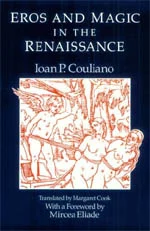
Unveiling the Lost Cosmos: Ioan P. Couliano’s "Eros and Magic in the Renaissance" Challenges Modernity’s Foundations
FOR IMMEDIATE RELEASE
[City, State] – [Date] – A profound intellectual journey into the heart of Western thought, Ioan P. Couliano’s seminal work, Eros and Magic in the Renaissance, continues to resonate, offering a radical re-evaluation of the historical trajectory that shaped our modern understanding of reality. Far from being a mere historical treatise, Couliano’s book acts as a critical mirror, reflecting the origins of our current, often taken-for-granted, mechanistic worldview and posing challenging questions about what we have lost in the process.
At its core, Eros and Magic in the Renaissance argues that the modern separation of imagination and desire from objective reality is a relatively recent and "ill-considered aberration." Through meticulous scholarship, Couliano demonstrates that the Renaissance mind perceived these faculties not as subjective whims but as potent forces capable of shaping the world and connecting the human psyche to the broader cosmos. This perspective, rich with animism and magical thinking, profoundly contrasts with the "flat, mechanistic" universe that emerged in its wake, profoundly influencing everything from science to psychology.
The author, Ioan P. Couliano (also spelled Culianu), was a figure of rare intellectual breadth—a historian of religions, a philosopher, and, notably, a scholar deeply informed by perspectives not typically embraced within mainstream academia. His work, often conducted in collaboration with the renowned Mircea Eliade, combined rigorous academic inquiry with an insider’s understanding of the subjects he explored, imbuing his scholarship with a unique vitality and freshness. This dual perspective allowed him to trace the complex transition from a world perceived as enchanted to one increasingly disenchanted, offering an unparalleled insight into the philosophical underpinnings of magic and its subsequent marginalization.
Main Facts: A Paradigm Shift Revisited
Eros and Magic in the Renaissance stands as a pivotal text for anyone seeking to understand the deep cultural and intellectual currents that shaped the modern world. Couliano’s central thesis posits that the triumph of the mechanistic worldview over the magical, animistic one was not a simple victory of reason over superstition, but rather the outcome of a complex interplay of cultural, religious, and political forces. He argues that this shift fundamentally altered humanity’s relationship with itself and the universe, diminishing the perceived power of the human imagination (vis phantastica) and desire (eros) as active agents in reality.
The book meticulously details how Renaissance magic, particularly as practiced and theorized by figures like Marsilio Ficino, Pico della Mirandola, and Giordano Bruno, was an elaborate system for understanding and influencing the cosmos. It was not mere trickery but a sophisticated intellectual endeavor, deeply intertwined with Neoplatonism, Hermeticism, and Kabbalah. Couliano highlights Bruno’s On Bonding in a General Sense as a cornerstone of this analysis, revealing it as a practical guide to the magical manipulation of affections and beliefs – a precursor to modern psychological influence.
Couliano then provocatively links the decline of this enchanted worldview to the Protestant Reformation. Far from being a solely liberalizing movement, he characterizes it as an "ultraconservative" force that sought to strip Christianity of its remaining animistic vestiges inherited from the medieval church. This puritanical impulse cast a long shadow of suspicion over any worldview that suggested an active, enchanted cosmos, paving the way for a new scientific paradigm. The subsequent victory of the proto-mechanists, who saw the world as a giant, soulless machine, over "natural magicians" like Paracelsus, was thus not primarily a rational triumph but a cultural and ideological one. This fundamental argument compels readers to re-examine the very foundations of scientific progress and the perceived objectivity of modern thought.
Chronology: From Enchantment to Disenchantment
The historical narrative presented in Eros and Magic in the Renaissance is a compelling chronology of how the Western mind gradually shed its belief in an animated cosmos, replacing it with a more austere, materialist framework.
The Renaissance Enchantment: A World Alive with Meaning
The late 15th and 16th centuries, the zenith of the Renaissance, witnessed a vibrant intellectual climate where magic, philosophy, and nascent science were not distinct disciplines but interwoven threads of a grand tapestry. Figures like Marsilio Ficino, the head of the Florentine Platonic Academy, played a crucial role in translating and interpreting the works of Plato and the Hermetic Corpus. Ficino’s philosophy posited a universe permeated by divine spirit, where human beings, through their imagination and desire, could attune themselves to cosmic harmonies and draw down celestial influences. His concept of amor divinus (divine love) was a powerful force that bound the universe together, and the human soul was seen as a microcosm reflecting the macrocosm.
Giovanni Pico della Mirandola, Ficino’s younger contemporary, further elaborated on this vision in his Oration on the Dignity of Man. Pico championed the idea of humanity as a magus, capable of shaping its own destiny and ascending through various levels of existence through the power of will and knowledge. He synthesized diverse traditions—Platonism, Aristotelianism, Kabbalah, and Islamic philosophy—to create a universal philosophy where magic was understood as the highest form of natural philosophy, enabling man to interact directly with the forces of the cosmos.
Perhaps the most radical proponent of this enchanted worldview was Giordano Bruno. His cosmic vision extended beyond traditional geocentric models, embracing an infinite universe teeming with life. Bruno’s work, particularly On Bonding in a General Sense (De Vinculis in Genere), delves deeply into the mechanics of psychological influence and persuasion. For Bruno, "bonding" was a magical act, a way of connecting with and manipulating the affections and imagination of others, understanding that desire (eros) was a primary conduit for such influence. His mnemonic systems, often seen as mere memory techniques, were in fact sophisticated magical arts designed to structure the mind in accordance with cosmic patterns, thereby granting access to powerful insights and the ability to affect reality. These thinkers, among others, saw imagination (vis phantastica) not as a passive faculty for fantasy, but as an active, creative power that bridged the human soul with the intelligible world, capable of both perception and projection onto reality.
The Protestant Reformation and the Great Disenchantment
Couliano presents the Protestant Reformation as a critical turning point, challenging the conventional narrative of it as a purely progressive or liberalizing force. Instead, he characterizes it as an "ultraconservative" movement driven by a fundamentalist desire to purify Christianity. This purification meant stripping away what reformers perceived as "animistic vestiges"—elements of folk belief, saint veneration, relics, and sacramental magic that had surreptitiously survived under the comparatively lax theological oversight of the medieval Catholic Church.
The reformers, particularly Calvin and his followers, promoted a starkly dualistic worldview. God was transcendent and utterly separate from the material world, which was seen as fallen and devoid of inherent spiritual agency. This theological stance effectively "emptied" the cosmos of its animating spirits, demons, and celestial intelligences, reducing it to inert matter. The human soul, while still possessing a spirit, was distinct from this material world, and its primary relationship was directly with a remote, all-powerful God, not with an immanent, enchanted nature. This intense scrutiny and condemnation of anything resembling magic, superstition, or even the more sophisticated forms of Renaissance natural magic, created an intellectual environment where an "enchanted view of the world" became increasingly untenable and dangerous. The pursuit of magical knowledge, once a respectable scholarly endeavor, was now demonized and driven underground.
The Rise of Mechanism: A Machine Without a Soul
In the wake of the Reformation’s theological cleansing, a new scientific paradigm began to solidify: mechanism. This worldview posited that the universe functioned like a giant machine, governed by immutable, mathematical laws, devoid of will, spirit, or inherent purpose. The qualities of consciousness, will, and spirit were increasingly confined solely to the human brain (or the immaterial human soul, in Cartesian dualism) and a distant, transcendent Christian spirit world.
Couliano contrasts this emerging mechanistic philosophy with the tradition of "natural magicians" like Paracelsus. Paracelsus and his followers believed in a living, interconnected cosmos where hidden sympathies and antipathies governed natural phenomena, and where the physician-magus could tap into these forces for healing and transformation. Their approach was empirical but also deeply spiritual and animistic.
However, the proto-mechanists, influenced by the new philosophical currents and the prevailing puritanical sentiments, began to gain ascendancy. Figures like Descartes, though not directly named by Couliano in this excerpt, represent the culmination of this intellectual trajectory, formalizing the radical separation of mind and matter, and reducing nature to quantifiable extension and motion. Couliano’s crucial insight is that the triumph of this mechanistic worldview was not solely, or even primarily, because it was inherently "better" or more "rational" in an objective sense. Instead, it "won the debate by being more congruous with the puritanical sentiments of the period." It offered a tidy, predictable universe, stripped of the unsettling ambiguities and spiritual agencies that the reformers found abhorrent. The debate, therefore, was not between reason and unreason, but between "two different and incompatible ways of perceiving and experiencing the world, two different mythologies, two different sets of premises."
Supporting Data: The Architecture of Enchantment and Disenchantment
Couliano’s work is not simply a narrative but a meticulously argued case, drawing upon a wealth of primary sources and interdisciplinary insights.
Couliano’s Methodology and Academic Rigor
The distinctive strength of Eros and Magic in the Renaissance lies in Couliano’s unique methodological approach. Having studied extensively with Mircea Eliade, a towering figure in the history of religions, Couliano inherited a profound appreciation for the symbolic and mythological dimensions of human experience. Eliade’s work focused on understanding sacred space, sacred time, and the manifestations of the sacred (hierophanies) across cultures. Couliano extended this by applying a rigorous historical and philosophical lens to seemingly irrational phenomena like magic. His genius was in treating magical practices and beliefs not as primitive superstitions but as coherent, albeit different, systems of thought with their own internal logic and cosmological assumptions.
Crucially, Couliano was not merely an academic observer. His personal background and intellectual curiosity allowed him to engage with the subject matter from perspectives often overlooked by conventional historians. This "informed perspective," as the reviewer notes, suggests an empathetic understanding, perhaps even an experiential familiarity, with the concepts of imagination and desire as active forces, allowing him to bridge the gap between abstract academic analysis and the lived experience of magical thinking. He demonstrated that the study of magic demands a departure from reductionist frameworks, requiring instead a deep immersion into the worldview of its practitioners. His work is thus a testament to interdisciplinary scholarship, blending history, philosophy, religious studies, and psychology to construct a holistic understanding of a complex historical shift.
The "Two Mythologies": Re-framing the History of Science
One of Couliano’s most radical and enduring contributions is his argument that the historical contest between magical and mechanistic worldviews was fundamentally a clash of "two different mythologies," not a simple battle between reason and unreason. This perspective directly challenges the triumphalist narrative of scientific progress, often referred to as "Whig history," which portrays the development of science as a linear march towards truth, with each new discovery inevitably replacing older, less rational beliefs.
Couliano forces us to consider that the mechanistic paradigm, which underpins much of modern science, is itself a cultural construct, a "mythology" with its own set of unexamined premises and values. Its victory was not solely due to empirical superiority but also its ideological congruence with the prevailing cultural and religious sentiments of the post-Reformation era. The puritanical impulse for order, control, and a desacralized nature found its intellectual ally in a science that reduced the cosmos to predictable, quantifiable gears. This insight is crucial for understanding why certain avenues of inquiry (like the study of consciousness, parapsychology, or even the broader implications of placebo effects) have historically struggled for mainstream scientific acceptance; they threaten the foundational "mythology" of mechanism. By reframing the debate, Couliano invites a more nuanced and critical examination of scientific progress, acknowledging the role of cultural values and political power in shaping what counts as "truth" and "rationality."
Official Responses: Academic Reception and Enduring Influence
While Eros and Magic in the Renaissance is not a news event in the traditional sense, the "official responses" to Couliano’s work have primarily manifested within academic circles, shaping subsequent scholarship and sparking intellectual debate.
Academic Reception and Critique
Upon its publication, Eros and Magic in the Renaissance was met with significant critical acclaim within the fields of history of religions, intellectual history, and the history of science. Scholars praised Couliano’s erudition, his ability to synthesize vast amounts of material, and his provocative reinterpretation of key historical periods. His work was seen as a groundbreaking challenge to established narratives, particularly the simplistic notion of the Renaissance as a straightforward precursor to Enlightenment rationalism.
However, like any groundbreaking work, it also faced scrutiny. Some historians of science, deeply entrenched in the mechanistic paradigm, might have found Couliano’s framing of scientific victory as culturally rather than purely rationally driven to be uncomfortable or even dismissive of scientific achievement. Others might have questioned the extent to which he blurred the lines between genuine scientific inquiry and what they considered "superstition." Yet, even these critiques often acknowledged the profound intellectual power of his arguments and the meticulousness of his historical research. Couliano’s willingness to engage with magic on its own terms, rather than dismissing it outright, opened new avenues for understanding the intellectual landscape of the Renaissance.
His analysis of the Protestant Reformation as an ultraconservative force also generated discussion, challenging the celebratory narratives often associated with it in certain historical traditions. By connecting theological shifts directly to the disenchantment of the world, Couliano offered a more complex and often darker view of the origins of modernity.
Legacy of Couliano’s Scholarship
Ioan P. Couliano’s tragic and untimely death in 1993, under mysterious circumstances, cemented his status as a brilliant but tragically lost intellectual figure. His work, however, continues to thrive and influence. Eros and Magic in the Renaissance has become a foundational text for scholars exploring the intersections of magic, religion, science, and the history of ideas. It has inspired new generations of researchers to reconsider the historical marginalization of certain forms of knowledge and to critically examine the cultural biases embedded in our understanding of progress.
His insights into the mechanisms of influence and persuasion, particularly through his analysis of Bruno’s On Bonding, have found resonance in diverse fields, from communication studies to the sociology of knowledge. Couliano’s work serves as a powerful reminder that the intellectual battles of the past are not merely historical curiosities but continue to shape the present, urging us to be mindful of the "mythologies" that underpin our own contemporary worldviews.
Implications: Re-evaluating Modernity and the Enduring Presence of Magic
The enduring relevance of Eros and Magic in the Renaissance extends far beyond academic debates, offering profound implications for how we understand our contemporary world.
Re-evaluating Modernity and the Power of the Psyche
Couliano’s work compels us to fundamentally re-evaluate the foundations of modern secularism, psychology, and science. If, as he argues, the imagination and desire were once considered active, reality-shaping forces, then their subsequent relegation to purely subjective, internal states represents a significant loss, a self-imposed limitation on human potential. Modern psychology, while ostensibly "scientific," often struggles to fully integrate the profound impact of belief, intention, and desire on human experience and even physiological outcomes (e.g., the placebo effect). Couliano’s historical analysis suggests that these phenomena are not anomalies but echoes of a time when the mind’s power was understood to be deeply interwoven with the fabric of reality itself.
His work encourages us to question whether the disenchantment of the world, while fostering technological advancement, might have simultaneously impoverished our understanding of consciousness and our connection to the broader environment. It challenges the assumption that a purely materialist science can fully account for the richness of human experience, including spiritual, aesthetic, and emotional dimensions.
The "Underground" Survival of Magic in the Modern Age
Perhaps one of Couliano’s most provocative and prescient observations is that magic did not disappear but merely "went underground," surviving today under different names. He identifies fields like "psychology," "marketing," "advertising," and "personal development" as modern manifestations of these ancient principles of influence, persuasion, and the manipulation of belief and desire.
Consider marketing and advertising: These industries are sophisticated machines designed to create and channel desire, to "bond" consumers to products and brands, often through emotional appeals, symbolic associations, and the creation of aspirational narratives. This mirrors Bruno’s On Bonding in a General Sense, which was essentially a manual for understanding and directing human affections. The power of branding, the cultivation of loyalty, and the psychological tactics used to sway public opinion are direct descendants of the Renaissance magus’s understanding of eros and vis phantastica.
Personal development and self-help movements, too, often leverage principles reminiscent of magical thinking. Techniques like visualization, positive affirmations, and "manifestation" are predicated on the idea that focused imagination and strong desire can influence personal reality and bring about desired outcomes. While stripped of explicit supernatural language, the underlying mechanism—the mind’s active role in shaping experience—bears a striking resemblance to the Renaissance belief in the active power of the imagination.
Even psychology, in its therapeutic applications, often deals with changing beliefs, reframing narratives, and harnessing the power of the unconscious mind—all areas where the Renaissance magus sought to exert influence. Couliano’s work suggests that rather than dismissing these modern phenomena as mere commercialism or pseudoscience, we might understand them as the secularized, fragmented heirs of a once holistic magical worldview.
Beyond the Mechanistic Paradigm: A Call for Re-Enchantment
In an era grappling with ecological crises, mental health epidemics, and a search for meaning in an increasingly fragmented world, Couliano’s critique of the mechanistic paradigm feels more relevant than ever. His work serves as an intellectual anchor for contemporary discussions about the "reenchantment of the world"—a desire to reconnect with a sense of wonder, purpose, and interconnectedness that the mechanistic worldview has largely eroded.
By demonstrating that our current worldview is a historical construct, not an immutable truth, Couliano opens the door for imagining alternative ways of perceiving and interacting with reality. He implicitly asks whether a more integrated understanding of imagination, desire, and the natural world, one that acknowledges their active roles, might offer pathways to more holistic and sustainable futures.
Eros and Magic in the Renaissance is more than a history book; it is a profound philosophical meditation on the origins of our modern consciousness. After engaging with Couliano’s masterful analysis, it becomes impossible to view magic, science, or even the everyday workings of human desire and imagination in the same way again. It is a powerful reminder that the stories we tell ourselves about how the world works are not neutral, but are deeply imbued with history, values, and power, shaping the very reality we inhabit.
To delve deeper into this transformative historical analysis, visit or purchase Eros and Magic in the Renaissance at Amazon.com.
Contact:
[Your Name/Organization Name]
[Your Email]
[Your Website/Social Media]