Ursula K. Le Guin’s Portland Home Achieves National Historic Landmark Status, Set to Become Writers’ Residency
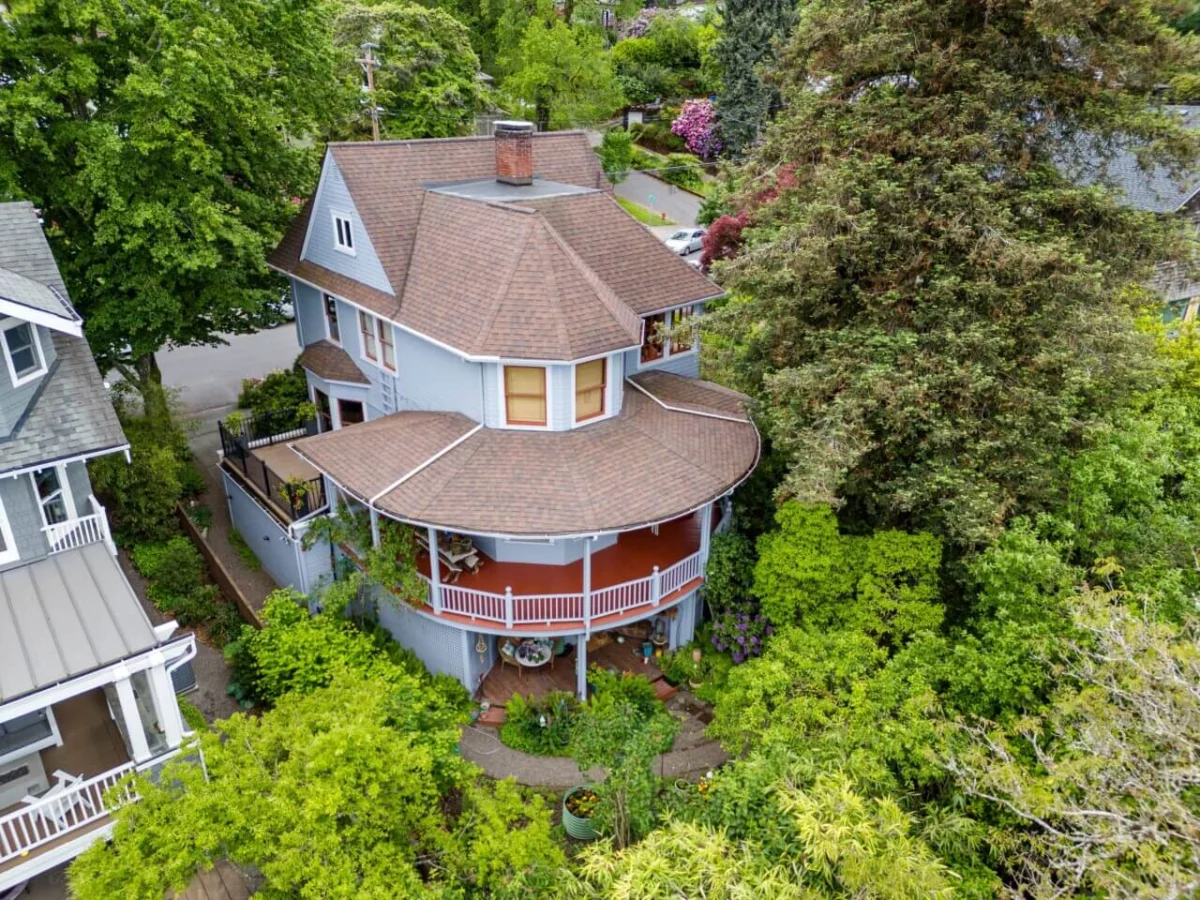
PORTLAND, OR – The distinguished Queen Anne-style residence where Ursula K. Le Guin, one of the 20th century’s most profound and influential literary voices, lived and worked for nearly six decades, has been officially added to the National Register of Historic Places. Located at 3321 NW Thurman Street in Portland, Oregon, the designation recognizes the property’s immense "significance to American literature and women’s history," marking a pivotal moment in the preservation of literary heritage and the ongoing celebration of Le Guin’s transformative legacy.
The announcement, which acknowledges the home as the crucible for many of Le Guin’s seminal works, comes as the property transitions into a vibrant new chapter. Following its donation by Le Guin’s estate in 2024 to the local non-profit Literary Arts, the house is currently being meticulously converted into the Ursula K. Le Guin Writers Residency, promising to nurture future generations of storytellers within the very walls that once hummed with her singular creative energy.
Main Facts: A Literary Nexus Preserved
The addition of Ursula K. Le Guin’s longtime Portland home to the National Register of Historic Places solidifies its status as a landmark of profound cultural and literary importance. For 58 years, from approximately 1960 until her passing in 2018, this unassuming yet stately house served as both sanctuary and workshop for a writer who fundamentally reshaped the landscape of speculative fiction and challenged conventional thought across genres.
Within these walls, Le Guin crafted a remarkable body of work that continues to resonate globally. It was here that she penned masterpieces such as A Wizard of Earthsea (1968), the foundational text of her beloved Earthsea cycle; The Left Hand of Darkness (1969), a groundbreaking exploration of gender and society; and The Dispossessed (1974), a thought-provoking anarchist utopia. These novels, among many others, earned her an unprecedented array of accolades, including five Hugo Awards, multiple Nebula Awards, a National Book Award, and a finalist position for the 1997 Pulitzer Prize, cementing her place in the literary canon.
The National Register listing specifically underscores the home’s dual significance. Firstly, its indelible connection to American literature is undeniable, representing a physical testament to the creative process behind some of the nation’s most enduring stories. Secondly, its recognition of "women’s history" acknowledges Le Guin’s pioneering role as a female author who not only excelled in a predominantly male-dominated genre but also used her platform to champion feminist ideals, explore complex social structures, and give voice to marginalized perspectives long before such themes gained widespread traction in mainstream discourse.
The future of the house is equally significant. In 2024, Le Guin’s estate made the generous decision to donate the property to Literary Arts, a respected Portland-based organization dedicated to supporting writers and fostering a vibrant literary community. The organization is now actively engaged in transforming the residence into the Ursula K. Le Guin Writers Residency, an initiative poised to provide a nurturing environment for emerging and established writers, ensuring that Le Guin’s spirit of inquiry, imagination, and social consciousness continues to inspire for generations to come. This transformation promises to imbue the historic structure with a renewed purpose, making it a living monument to literary creativity and intellectual freedom.
Chronology: A Life and Legacy Woven into the Fabric of a Home
The history of Ursula K. Le Guin’s home on NW Thurman Street is inextricably linked with her personal and professional journey, tracing the evolution of a writer who would become a global literary icon.
Early Years and Foundation (c. 1960s)
Ursula K. Le Guin, along with her husband Charles Le Guin and their children, moved into the Queen Anne-style house around 1960. This move marked a crucial period for the young family and a burgeoning writer. The domestic rhythms of home life, raising children, and engaging with the vibrant cultural landscape of Portland provided a fertile ground for her imagination. It was during these formative years in the house that Le Guin began to seriously develop the unique narrative voice and philosophical depth that would define her career. Early works like Rocannon’s World (1966) and City of Illusions (1967) were conceived here, laying the groundwork for the monumental achievements that would soon follow.
The Golden Age of Creation (1968-1974)
The late 1960s and early 1970s witnessed an astonishing burst of creativity from Le Guin, all centered within the Thurman Street residence.
- 1968: A Wizard of Earthsea – The launch of the Earthsea series, a profound fantasy epic that transcended the genre’s conventions, was a watershed moment. Written from her home, this novel introduced readers to Ged, a young wizard, and explored themes of balance, responsibility, and the true nature of power.
- 1969: The Left Hand of Darkness – This revolutionary science fiction novel, also written in the house, challenged societal norms by depicting a world where inhabitants are ambisexual. It earned her both the Nebula Award and the Hugo Award, catapulting her to international acclaim and cementing her reputation as a fearless innovator.
- 1971: The Lathe of Heaven – A powerful exploration of reality, dreams, and unintended consequences, set partly in Portland itself, showcasing Le Guin’s ability to blend speculative elements with deep psychological insight.
- 1972: The Farthest Shore – The third novel in the Earthsea cycle, continuing the exploration of life, death, and the delicate equilibrium of the world.
- 1974: The Dispossessed – A monumental work of science fiction, earning her another Nebula and Hugo Award. This novel, a dual narrative exploring an anarchist society on one planet and a capitalist one on another, was a direct product of her intellectual engagement with political theory and human societal structures, all filtered through the quiet contemplation of her home study.
Sustained Productivity and Evolving Themes (1975-2018)
Throughout the subsequent decades, the house remained Le Guin’s primary creative hub. She continued to publish prolifically, expanding the Earthsea universe with Tehanu (1990) and Tales from Earthsea (2001), and venturing into new literary territories with works like Always Coming Home (1985), a unique ethnography of a fictional future California, and numerous essays, poems, and children’s books. Her work consistently pushed boundaries, exploring themes of feminism, environmentalism, anthropology, Taoism, and the power of language. The quiet rooms of her Portland home were the laboratories where these complex ideas were distilled into compelling narratives. Even as her fame grew, attracting scholars, journalists, and admirers from around the world, the house remained her grounding force, a private space where the magic of creation unfolded.

Legacy and Transition (2018-Present)
- 2018: Ursula K. Le Guin passed away in her Portland home at the age of 88, leaving behind an unparalleled literary legacy. Her death marked the end of an era for the house as a private residence of one of literature’s giants.
- 2024: In a move that honors her dedication to the literary arts, Le Guin’s estate generously donated the house to Literary Arts. This decision ensured that the property would continue to serve a literary purpose, rather than being sold for private residential use.
- Current (2026): The house is undergoing transformation into the Ursula K. Le Guin Writers Residency. This initiative involves careful restoration and adaptation to create a functional yet inspiring space for visiting writers. Concurrently, the recent addition to the National Register of Historic Places officially recognizes its invaluable contribution to the nation’s cultural fabric.
This chronology underscores how the physical space of the Thurman Street home was not merely a dwelling but an integral partner in Le Guin’s creative process, witnessing the birth of stories that would reshape genres and challenge global thought.
Supporting Data: The Pillars of Significance
The decision to elevate Ursula K. Le Guin’s home to the National Register of Historic Places is supported by a rich tapestry of data, encompassing architectural merit, profound literary impact, and its symbolic weight in women’s history.
Architectural and Neighborhood Context
The house itself is a distinctive example of Queen Anne architecture, a popular style in the late 19th and early 20th centuries, characterized by asymmetrical facades, turrets, patterned shingles, and ornate detailing. Built in an era when Portland’s Northwest district was developing into a vibrant residential area, the home contributes to the historic character of the neighborhood. Its preservation helps maintain the architectural integrity of an area that has evolved significantly over time, offering a glimpse into the city’s past. While the primary significance is tied to its resident, the structure itself possesses inherent historical value, representing a period of architectural and urban development in Portland. The house’s sturdy, classic lines provided a stable and timeless backdrop for a writer whose work often contemplated the deep history and future of human civilization.
Unparalleled Literary Impact
Le Guin’s literary output from this address is staggering in both quantity and quality. Her works are not merely popular but are subjects of extensive academic study, taught in universities worldwide.
- Genre Redefinition: Le Guin shattered the perceived boundaries between "genre" and "literary" fiction. Her sophisticated prose, complex character development, and philosophical depth elevated science fiction and fantasy to new heights of critical respectability. The house on Thurman Street was where she demonstrated that spaceships and dragons could be vehicles for profound humanistic inquiry.
- Philosophical Depth: Her novels explored anarchism (The Dispossessed), Taoism (The Lathe of Heaven, Earthsea series), feminism (The Left Hand of Darkness, Tehanu), environmentalism (Always Coming Home), and anthropology, making her a crucial figure in intellectual discourse. Her ability to translate complex philosophical concepts into compelling narratives was honed within the quiet contemplation of her study.
- Influence on Writers: Le Guin’s influence on subsequent generations of writers across genres is immense. Authors like Neil Gaiman, Margaret Atwood, David Mitchell, and countless others have cited her as a primary inspiration. The house, therefore, is not just a monument to her work but also a beacon for the literary lineage she helped establish.
- Critical Acclaim: Beyond the aforementioned Hugo, Nebula, and National Book Awards, Le Guin received the National Book Foundation Medal for Distinguished Contribution to American Letters (2014) and was named a Living Legend by the Library of Congress. These accolades underscore the consensus among critics and peers regarding her towering stature in American letters, all cultivated from her Portland home.
A Beacon in Women’s History
Le Guin’s significance to women’s history is multifaceted and profound:
- Pioneering Female Voice: In an era when science fiction and fantasy were overwhelmingly dominated by male authors and perspectives, Le Guin broke through as an undeniable force. She demonstrated that women could not only compete but could lead, innovate, and redefine entire genres.
- Feminist Themes: Her work consistently challenged patriarchal structures, explored alternative gender roles, and critiqued societal norms from a feminist lens. The Left Hand of Darkness, in particular, became a foundational text in feminist literary criticism, showcasing a society devoid of fixed gender, prompting readers to reconsider their own biases. Her later Earthsea novels, especially Tehanu, explicitly addressed the limitations placed upon women, even within magical societies.
- Role Model and Mentor: Le Guin served as an intellectual and professional role model for countless women writers and scholars. Her public advocacy for literature, intellectual freedom, and social justice amplified her impact beyond her written words, inspiring women to pursue creative and academic endeavors. Her home was a place where she not only wrote these powerful stories but also corresponded with readers, fellow writers, and activists, extending her influence globally.
The National Register of Historic Places
The National Register is the official list of the Nation’s historic places worthy of preservation. Listing on the National Register helps to identify, evaluate, and protect historic places and is largely honorific, though it can provide access to federal tax credits and preservation grants. For a site to be listed, it must meet specific criteria, often related to its association with significant historical events, important persons, distinctive architecture, or its potential to yield historical information. Le Guin’s home clearly satisfies the criteria related to "important persons" and its direct association with pivotal events in American literary and women’s history, placing it alongside other revered literary sites like the homes of Mark Twain, Edgar Allan Poe, and Flannery O’Connor.
Official Responses: Voices of Recognition and Hope
The designation of Ursula K. Le Guin’s home as a national historic site and its transformation into a writers’ residency have elicited widespread positive responses from various stakeholders, reflecting the profound respect for her legacy and the exciting prospects for the future.
National Park Service and Preservation Community
Representatives from the National Park Service, which oversees the National Register of Historic Places, lauded the decision. "The Le Guin residence represents a unique confluence of architectural heritage and an unparalleled contribution to American intellectual life," stated a spokesperson for the National Register. "Its significance to both American literature and women’s history met our rigorous criteria, ensuring that a physical touchstone of her extraordinary output will be preserved for future generations. This listing underscores the importance of recognizing not just grand historical events, but also the intimate spaces where transformative ideas are born." Preservationists also highlighted the importance of protecting such sites, noting that "writers’ homes are often quiet, unassuming places, but they are vital to understanding the context and inspiration behind monumental works of art. This designation helps to ensure the integrity of that story."
Literary Arts: A Vision for the Future
Literary Arts, the nonprofit entrusted with the stewardship of the property, expressed immense gratitude and excitement. Andrew Proctor, Executive Director of Literary Arts, shared his organization’s vision: "We are incredibly honored and humbled to be entrusted with Ursula K. Le Guin’s home. This National Register designation is a testament to her enduring impact and the profound significance of this place. Our goal with the Ursula K. Le Guin Writers Residency is not merely to preserve a house, but to foster a living legacy. We envision a space where writers, much like Ursula herself, can find quiet inspiration, challenge conventional thinking, and craft stories that resonate deeply with the human experience. It will be a place of dialogue, creativity, and the kind of intellectual curiosity that Le Guin embodied."
Proctor emphasized the unique opportunity the residency presents. "Imagine a writer working in the same rooms where The Left Hand of Darkness or The Dispossessed were conceived. That connection to history, to genius, is immeasurable. This residency will be a beacon for imaginative literature, continuing Le Guin’s work of opening minds and exploring what it means to be human."

The Le Guin Estate and Family
While specific public statements from the Le Guin family are often private, their decision to donate the house to Literary Arts speaks volumes. The family’s intent was clearly to ensure the home’s future was tied to a literary purpose, honoring Ursula’s life work and her deep commitment to the literary community. Their actions reflect a desire for her creative spirit to continue to inspire, rather than for the home to become a mere private dwelling. This act of generosity is a powerful endorsement of Literary Arts’ vision and a profound gift to the global literary world.
Portland Civic and Cultural Leaders
Local officials in Portland have also welcomed the news, recognizing the added cultural weight it brings to the city. "Ursula K. Le Guin was a treasured daughter of Portland, and her home becoming a national historic site further cements our city’s status as a vital cultural and literary hub," commented a representative from the City of Portland’s Office of Arts and Culture. "This is a source of immense civic pride, and we look forward to the residency attracting writers and literary enthusiasts from around the world, further enriching Portland’s vibrant cultural tapestry." The city views the residency as an opportunity to enhance literary tourism and highlight Portland’s unique blend of natural beauty and intellectual ferment, a blend that so often informed Le Guin’s own writing.
Implications: Shaping the Future of Literature and Heritage
The dual events of Ursula K. Le Guin’s home being added to the National Register of Historic Places and its transformation into a writers’ residency carry far-reaching implications, impacting everything from local cultural identity to the broader landscape of literary preservation and the future of creative writing.
Elevating Portland’s Literary Profile
For Portland, the historic designation and the establishment of the residency solidify its position as a significant literary destination. Le Guin’s presence has long been a source of pride, and now, her physical home will serve as a tangible landmark. This will undoubtedly draw literary tourists, scholars, and aspiring writers to the city, fostering a deeper engagement with its cultural offerings. It places Portland alongside other cities renowned for their literary legacies, offering a unique opportunity to celebrate an author who championed imagination and critical thought in her hometown. The residency will also attract talent, bringing new voices and perspectives to the local literary scene, potentially leading to collaborations and increased visibility for Portland’s diverse writing community.
Further Legitimizing Speculative Fiction
The National Register’s recognition of a site primarily significant for its connection to a speculative fiction author marks a significant step in the ongoing legitimization of the genre. For decades, science fiction and fantasy struggled for critical acceptance in mainstream literary circles. Le Guin, through her masterful prose and profound thematic explorations, was instrumental in breaking down these barriers. Her home’s designation sends a clear message that works of imagination, especially those that engage with complex social and philosophical issues, are as vital to American literature as any other. This could pave the way for similar recognition of other genre authors’ contributions to the nation’s cultural heritage.
Inspiring Future Generations of Women Writers
The explicit mention of "women’s history" in the designation highlights Le Guin’s pioneering role and enduring inspiration for female authors. Her home will serve as a powerful symbol of what women can achieve in literature, particularly in fields historically dominated by men. The residency, in turn, offers a tangible space where women writers can find support, mentorship, and a sense of belonging, continuing Le Guin’s legacy of fostering diverse voices. It reinforces the idea that women’s stories, perspectives, and intellectual contributions are not only valuable but central to the American literary narrative.
A Model for Literary Preservation
The partnership between Le Guin’s estate and Literary Arts provides an exemplary model for the preservation of writers’ homes. It demonstrates a thoughtful approach that balances historical integrity with contemporary utility, ensuring that such sites remain dynamic centers of creativity rather than static museums. This innovative model could inspire other literary organizations and estates to explore similar avenues, transforming private residences into public resources that actively contribute to the ongoing creation of literature. It underscores the idea that preserving literary heritage is not just about looking backward, but about investing in the future of storytelling.
The Residency’s Enduring Impact
The Ursula K. Le Guin Writers Residency is poised to have a profound impact on the literary world. It will offer writers a dedicated space for focused work, free from daily distractions, allowing them to delve deeply into their projects. Beyond the physical space, the residency program will likely include opportunities for community engagement, workshops, and readings, fostering a vibrant intellectual environment. Residents will carry forward Le Guin’s spirit of inquiry, challenging norms, exploring new worlds, and crafting narratives that expand our understanding of ourselves and our place in the universe. In essence, the house will continue its life as a generator of stories, ensuring that Le Guin’s influence endures not just through her published works, but through the new creations born within her former home.
As the Ursula K. Le Guin Writers Residency prepares to welcome its first cohort, the historic house on NW Thurman Street stands as a powerful testament to a life dedicated to words, imagination, and social justice. Its new status ensures that Le Guin’s legacy will continue to inspire, provoke, and shape the literary landscape for generations to come, transforming a beloved author’s home into a perpetual spring of creativity.