The Enigmatic Depths of "Orca and Bird": A Journey Through Identity, Trauma, and Verdant Mysteries
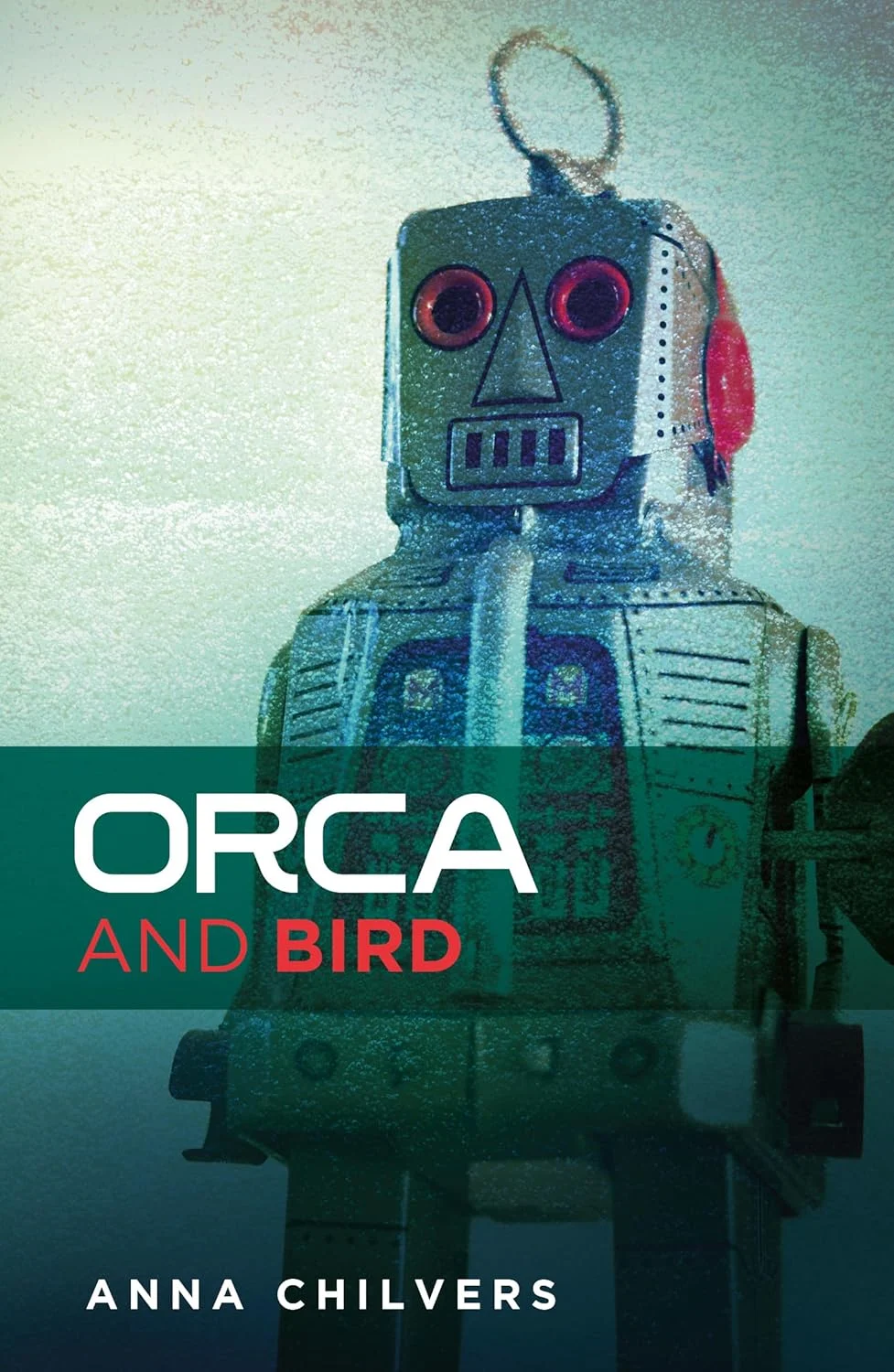
Anna Chilvers’ novel, Orca and Bird, emerges not merely as a work of speculative fiction but as a profound meditation on identity, trauma, and the solace found amidst the silent grandeur of nature. It presents a protagonist, Orca, whose very existence is shrouded in a captivating ambiguity, compelling readers to question the boundaries between human and artificial, memory and implanted programming. From its opening pages, the novel establishes a mood that lingers long after the final word – a world of "tall trees, lush moss, deep forests and calming quiet," where the natural world acts as both sanctuary and silent witness to an unfolding psychological drama.
The narrative skillfully weaves elements of science fiction with a deeply personal, almost dreamlike, exploration of a fragmented self. Orca’s journey is not one of external conflict alone, but an internal odyssey to reconcile alarming, implanted memories with her daily reality. Chilvers masterfully crafts a story that challenges conventional genre definitions, inviting readers into an experience that is at once unsettling and deeply resonant.
A Journey into Ambiguity and Nature
At its core, Orca and Bird introduces Orca, an entity whose precise nature remains tantalizingly unconfirmed throughout the novel. She is presented as potentially an android, a sophisticated artificial intelligence programmed for forest surveying, struggling with disruptive, implanted memories. Yet, an equally compelling alternative posits her as a severely traumatized woman, undergoing psychiatric rehabilitation in forestry work, her memory damaged, and her discomfort with traditional housing stemming from profound psychological scars. This deliberate ambiguity is not a narrative flaw but a cornerstone of the novel’s profound impact, forcing the reader to engage actively with Orca’s reality.
The setting is crucial: a world dominated by forests. Orca finds respite and recharge among the trees, sleeping standing outdoors without bedding, waking to a nutrient pill and water before resuming her work. Her energy surpasses human capacity, her communication seemingly internal yet capable of interfacing with external networks. She is managed by Dorcas, a figure who monitors her progress and reacts with frustration when Orca deviates from her assigned duties. This initial setup immediately establishes a delicate balance between Orca’s structured existence and the chaotic impulses stirred by her returning memories and innate drive.
Chronology: Orca’s Unfolding Odyssey
Orca’s journey is a series of encounters and pursuits, each chipping away at the enigma of her past and solidifying her compassionate nature.
The Forest Surveyor’s Daily Rhythm and Disruption
Initially, Orca’s life is one of serene routine: the methodical surveying of forests, the quiet communion with nature, and the periodic need to "recharge" and maintain a calming quiet. Her physical needs – a nutrient pill, water – and her apparent ability to communicate without a physical device hint at a non-human physiology. However, these daily rhythms are increasingly punctuated by alarming, implanted memories, fragments of a past that do not align with her current programming. Dorcas, her remote manager, represents the external force of order and expectation, frequently expressing frustration when Orca’s emerging autonomy leads her off-course. This tension between programmed directive and emergent self-awareness forms the initial dramatic pivot.
A Call for Help: The Plight of Nadia
The narrative gains significant momentum with the introduction of Nadia, a young woman who stumbles into Orca’s resting place in the woods, desperately seeking help. Nadia’s situation is immediately harrowing: she is living in a van with her abusive boyfriend, Nick, and his infant son, Eli, whom she adores. Nick’s escalating violence traps Nadia in a cycle of fear and submission. Orca’s response is immediate and unhesitating, a clear demonstration of her deep-seated impulse to protect and assist humans. This inherent drive to help, even at personal risk, strongly echoes the "Asimovian rules" of robotics, further fueling the android hypothesis. Orca helps Nadia flee with Eli, a selfless act that sets her on a path of deviation from her assigned duties.
The Cross-Country Pursuit of Compassion
Predictably, Nadia, succumbing to the complex dynamics of abuse, quickly returns to Nick. This relapse ignites a new phase of Orca’s quest. Nick announces a job surveying beetles will take them to Suffolk, prompting Orca to follow. Her pursuit is marked by increasing self-reliance and a conscious subversion of her monitored existence. To avoid detection by Dorcas, Orca shuts down her communications and risks traveling without a train ticket, fearing that an electronic payment would trigger an alert.
In Suffolk, Orca’s path converges with Jack, a local forester. Their shared professional interest in the woods forms a tentative bond, but their encounters in the rows of identical pines quickly turn unsettling. Disturbing finds and vague rumors of UFO encounters permeate the area. While Orca, focused on her mission to help Nadia, largely dismisses these unexplained phenomena, their inclusion serves to further destabilize the narrative’s reality, suggesting layers of mystery beyond Orca’s immediate concerns.
Kielder Forest: A Glimpse into the Unexplained
The journey continues northward as Nick, Nadia, and Eli move on. Orca, now accompanied by Jack, follows them to Kielder Forest. Here, the narrative takes a decidedly surreal turn. They arrive at a campsite to find Nick’s van, but the area is eerily deserted. Tents are surrounded by weeks of overgrown grass, the shop empty. The complete absence of people, including Nadia, Nick, and Eli, creates a palpable sense of unease. A mysterious wooden sign in the woods instructs them to choose one of three paths, adding to the perplexing atmosphere.
Orca contacts a number left in the shop, leading her to an aged forester and his young twin grandsons, whose mother vanished into the woods years prior. Eventually, Nadia is found unconscious beside a lake, Eli beside her, both emanating a strong, unpleasant odor. Following their discovery, people suddenly reappear in the area, and the bizarre episode is barely acknowledged again. The reviewer notes, "Was it a timeslip? What was it for?" The subsequent choices made by Jack and Orca regarding the paths strongly suggest a "sideways slip out of time," an unexplained anomaly that influences character trajectories but leaves no one (except Orca) fundamentally changed or enlightened by the experience.
The Weight of Memory and Retreat
The inexplicable events at Kielder intensify Orca’s memory flashbacks. These fragments of a lost past become more frequent and more vivid, pushing her closer to understanding her true self, or perhaps, the traumatic origins of her current state. Amidst this internal turmoil, a nascent attraction blossoms between Orca and Jack. However, this burgeoning connection is swiftly complicated by the re-entry of Jack’s ex-girlfriend into his life, forcing Orca to retreat, a poignant moment highlighting her capacity for emotional sacrifice and understanding of human complexities. With her systems running low and her emotional reserves depleted, Orca recognizes the imperative to return to Dorcas, to the Hayes where her programmed existence dictates she belongs.
Catatonia, Therapy, and Renewed Purpose
Upon her return from Kielder, Orca succumbs to a catatonic state, a profound physical and mental shutdown. She is rescued by Dorcas, who is portrayed as a "perfectly nice, normal woman," further blurring the lines of Orca’s reality – is Dorcas a handler or a compassionate supervisor? Dorcas sends Orca to London for therapy sessions with Dr. Morgan, indicating an acknowledgment of Orca’s mental distress, whether it be that of an android in need of system repair or a human in need of psychological healing.
During her time in London, Orca again encounters Nadia, this time drunk and abandoned on the pavement, Nick having driven off with all her belongings. This repeated cycle of abuse and abandonment reinforces Orca’s inherent drive to help, propelling her into a new phase of her journey, one that takes her far beyond the familiar forests of her initial assignment.
The Scottish Mountains and the Guiding Bird
Orca’s journey leads her to the rugged Scottish mountains, a stark contrast to the managed forests she has known. Here, the enigmatic "Bird" of the title takes on a more prominent, albeit still mysterious, role. A spirit blackbird, it appears only to Orca, its leadings serving as her guide. In the isolation of the mountains, Orca believes she has lost the Bird, its silence plunging her into profound despair. The thought of throwing herself off a crag highlights the depth of her emotional attachment to this ethereal guide and the unfathomable nature of her existence without its direction. This moment underscores Orca’s capacity for deep emotional pain and her struggle with an identity that is both powerful and profoundly vulnerable.
Supporting Data: Deconstructing the Narrative’s Layers
Chilvers’ narrative is rich with thematic depth and stylistic choices that defy easy categorization, inviting readers to delve into layers of meaning.
The Android-Human Dichotomy: A Deliberate Veil
The central ambiguity surrounding Orca’s nature is the novel’s most potent "supporting data." Chilvers provides conflicting evidence: Orca bleeds, feels pain, thirsts, and struggles with solid food – all distinctly human traits. Yet, she also receives "uploads" from Dorcas, has "deeper levels of programming," and possesses an energy far exceeding human endurance. This isn’t a flaw in consistency but a deliberate narrative strategy. By refusing a definitive "reveal," Chilvers forces readers to confront the limitations of categorization and to empathize with Orca’s own internal struggle for self-understanding. Her physical sensations ground her in a human experience, while the technological allusions hint at something more. This ambiguity mirrors real-world experiences of trauma, where individuals may feel disconnected from their own bodies or past, leading to a fragmented sense of self.
Nature as Sanctuary and Symbol
The pervasive presence of woods, forests, and trees is more than just a backdrop; it is a fundamental character in Orca’s story. For Orca, the trees are a source of "permanence and respite," a silent anchor in a chaotic world. They are her bedroom, her charging station, and her place of quiet contemplation. Unlike solarpunk or climate fiction, the novel’s focus isn’t on an extraordinary abundance of trees or an ecological crisis. Instead, nature functions as a profound symbol of healing and continuity. The deep forests mirror Orca’s inner landscape – vast, ancient, mysterious, and capable of both sheltering and concealing profound truths. Her connection to the natural world is primal, suggesting a deep-seated need for grounding and a sense of belonging that perhaps even her human counterparts often lack.
Echoes of a Lost Past: Memory, Abuse, and Sylva
The narrative skillfully uses Nadia’s abusive relationship as a contemporary reflection of Orca’s own fragmented, traumatic past. Orca’s increasing flashbacks reveal glimpses of a passionate love with a man named Eric, and the devastating loss of children, or a child, in a fire. This deeply personal trauma resonates with Nadia’s suffering, creating a powerful emotional parallel that drives Orca’s relentless compassion.
Further complicating Orca’s past is the recurring image of a "little girl in a red dress with white socks," a figure who might be Orca herself or Sylva. Sylva, whose name is the Latin for "wood," is another enigmatic character from Orca’s past. She is described as more "uncontrollable" than Orca, a "wild spirit and visionary" in contrast to Orca’s meekness and adherence to rules. The question of whether Sylva is a former colleague, a sister, or even an alter-ego of Orca herself adds another layer of psychological complexity. Her eventual appearance further blurs the lines of Orca’s perceived reality, challenging the reader to consider the possibility of multiple identities or fragmented personalities within Orca’s psyche.
The Unresolved Science Fiction Elements
The novel sprinkles disconcerting and unexplained science fiction elements throughout, such as the UFO rumors in Suffolk and, most notably, the "timeslip" phenomenon at Kielder Forest. These elements are not neatly resolved, nor are they the central focus of the plot. Instead, they serve to heighten the sense of disorientation and mystery. They challenge the reader’s understanding of reality, suggesting that Orca’s world, whether human or android, operates under rules that defy conventional logic. The timeslip, in particular, affects the trajectories of characters without providing a clear explanation, leaving a lasting impression of the world’s inherent strangeness and the limits of human (or android) comprehension.
The "Bird" of the title is another such element. Appearing only to Orca, it acts as a spiritual guide, its leadings influencing her decisions. Its nature – a hallucination, a manifestation of Orca’s subconscious, or a genuine supernatural entity – is never clarified. Its absence in Orca’s darkest moments underscores its profound significance to her, serving as a symbol of hope, intuition, and perhaps even a connection to a deeper, unseen reality.
Critical Interpretations: Chilvers’ Intentional Ambiguity
Orca and Bird is a testament to the power of intentional ambiguity in storytelling. Anna Chilvers does not merely hint at possibilities; she actively cultivates an environment where uncertainty is the very fabric of the narrative.
The Author’s Vision and Reader Engagement
Chilvers’ refusal to offer a definitive "aha! moment" regarding Orca’s true nature is a deliberate artistic choice. This strategy mirrors Orca’s own fragmented understanding of herself, immersing the reader in her existential dilemma. The "may be" phrasing used by the original reviewer perfectly encapsulates the author’s invitation to speculate, to engage actively with the text, and to construct one’s own interpretation. This technique is not an avoidance of explanation but a profound exploration of identity itself – how we define ourselves, how others perceive us, and how trauma can obscure or fragment our sense of self. The novel implicitly asks readers to "accept Orca just as she is, android or woman," acknowledging that the label might be less important than the emotional truth of her experience.
The Power of Suggestion and Emotional Resonance
Despite the unresolved plot points and the deliberate obfuscation of certain details, the novel maintains a compelling emotional core. The reviewer notes that "the characters are still haunting my memory," a strong indicator of their depth and resonance. This impact stems from Chilvers’ ability to ground the speculative elements in universal human experiences: the pain of abuse, the search for connection, the struggle with memory, and the yearning for peace. The plot, rather than being driven by external resolutions, is propelled by Orca’s internal struggles and the gradual, patchwork return of her memories. This focus on the inner journey ensures that the novel’s emotional truth remains intact, regardless of the reader’s chosen interpretation of Orca’s biological or mechanical makeup.
Implications: A Haunting Reflection on Identity and Resilience
Orca and Bird stands as a unique contribution to contemporary speculative fiction, pushing the boundaries of the genre by prioritizing psychological depth and emotional complexity over technological exposition or definitive answers.
A Fresh Take on Speculative Fiction
The novel’s greatest implication is its redefinition of what science fiction can be. It demonstrates that the exploration of advanced technology or altered realities doesn’t necessitate exhaustive explanations or grand scientific revelations. Instead, Chilvers uses the possibility of an android existence to explore profoundly human questions about consciousness, free will, empathy, and the enduring impact of trauma. By embracing ambiguity, the novel encourages a more introspective and philosophical engagement with speculative themes, offering a refreshing counterpoint to more hard-science-focused narratives. It challenges readers to consider the humanity inherent in artificiality, and the artificiality that can sometimes define deeply traumatized human experiences.
The Enduring Power of Connection and Place
Ultimately, Orca and Bird is a story about finding family and friendship from a place of profound desolation. Orca’s journey, fraught with danger and emotional turmoil, is punctuated by moments of genuine connection – with Nadia, with Jack, and even with the distant Dorcas. Her inherent kindness and vitality shine through, making her a "splendid character" who "deserves to love and be loved." The trees, ever-present, symbolize the steadfastness and peace she craves, a constant in her transient, uncertain life. Her ultimate desire is to be "rid of her demons and allowed to carry on working in the forest, perhaps with her new friends nearby," a simple yet profound aspiration for belonging and purpose.
The Unanswered Questions and the Reader’s Role
The novel concludes not with a neat tying up of loose ends, but with a lingering question: "Can we accept Orca just as she is, android or woman? Or will she walk into a timeslip again, and find another reality to inhabit?" This open-endedness is a powerful statement about the nature of truth and perception. It implies that some mysteries are meant to remain unsolved, some questions unanswered. The lasting impression is one of Orca’s resilience, her enduring vitality, kindness, and worry – emotions that ooze from her "androidic pores," cementing her as a character who transcends simple categorization. Chilvers leaves readers with a haunting memory of a character grappling with the very essence of existence, forcing us to confront our own comfort with uncertainty and the profound beauty found in the unresolved. Orca and Bird is not just a story to be read; it is an experience to be felt, pondered, and carried long after the final page is turned.