Decades Melt Away: PSIFA Reunion Celebrates Enduring Bonds of Early UK Science Fiction Fandom
By Jonathan Cowie, SF Concatenation
[DATELINE] Hertfordshire, UK – In an increasingly digital and fragmented world, the enduring power of shared passion continues to forge connections that defy the passage of time. This sentiment was palpable last week as a select group of first-generation members of the Polytechnic Science Fiction and Fantasy Association (PSIFA) convened for their third reunion this year. Gathering in a quaint town just north of St Albans, these pioneers of UK university fandom rekindled friendships and reminisced about a vibrant era that began nearly half a century ago.
PSIFA, founded in 1978 at Hatfield Polytechnic (now the University of Hertfordshire), holds a unique place in the annals of British science fiction fandom. It was a crucible for creative expression, intellectual discourse, and the kind of grassroots community building that characterized much of fannish activity in the late 1970s and early 1980s. The recent reunion, attended by key figures from PSIFA’s foundational years, served as a powerful testament to the lasting impact of such societies, where the years and decades, as one participant noted, simply "melt away."
The Genesis of a Fannish Legacy: PSIFA’s Founding in 1978
The late 1970s in Britain were a fertile ground for science fiction. The cultural impact of Star Wars (1977) had ignited a fresh wave of public interest, while established authors like Arthur C. Clarke, Ursula K. Le Guin, and Frank Herbert continued to push the boundaries of speculative fiction. Against this backdrop, university and polytechnic campuses across the UK became hubs for nascent fan groups, offering students a sanctuary for their shared enthusiasms.
Hatfield Polytechnic, a forward-thinking institution established in 1969 and granted university status in 1992, provided the perfect environment for PSIFA’s inception. Polytechnics, distinct from traditional universities, were often more vocationally oriented, fostering a diverse student body and a pragmatic approach to extracurricular activities. It was within this context that the Polytechnic Science Fiction and Fantasy Association was born in 1978.
The founding members of PSIFA were, by all accounts, a passionate and diverse group. They were drawn together by a common love for science fiction and fantasy across various media – literature, film, television, and even nascent tabletop gaming. Their initial meetings likely began with animated discussions about the latest releases, debates over classic authors, and the planning of ambitious projects that would soon put PSIFA on the wider fannish map. The association aimed to be a "broad church" SF group, welcoming all facets of speculative interest, a philosophy that stood in contrast to some more narrowly focused clubs. This inclusive approach was crucial to its early success and the vibrant community it fostered.
Cultivating Community: PSIFA’s Diverse Activities
PSIFA quickly established itself as a dynamic and influential student society. Its activities were wide-ranging, reflecting the diverse interests of its members and the creative energy of the era. Regular meetings featured engaging talks, often delivered by students themselves, exploring themes, authors, and the social implications of science fiction. These sessions were not merely academic exercises but lively forums for debate and discovery, honing critical thinking skills and fostering a deeper appreciation for the genre.
Beyond discussions, PSIFA also championed the cinematic side of science fiction. The group organized film screenings that, according to Cowie, "rivalled the college’s Film Appreciation Society." This commitment to visual storytelling provided members with opportunities to watch seminal SF films, from cult classics to blockbusters, often accompanied by lively post-screening analyses. In an age before widespread home video and streaming, such screenings were vital for experiencing and discussing these works collectively.
Perhaps one of PSIFA’s most pioneering endeavours was its involvement with Campus Radio. The group launched Radio Free Entropy, a dedicated science fiction show that may well have been the first fan-run radio program in the UK. This was a monumental undertaking, requiring not only a deep knowledge of the genre but also technical skill in broadcasting and program production. Radio Free Entropy provided a platform for members to share their insights, review new works, and engage with a wider campus audience, extending PSIFA’s reach beyond its core membership. The very act of running a student radio station in the UK in the late 70s was innovative, and dedicating a significant portion of its programming to science fiction was truly groundbreaking, highlighting PSIFA’s forward-thinking approach.
PSIFA also understood the importance of connecting with the broader science fiction community. The group organized field trips to major UK conventions such as Novacon and Eastercon, providing members with invaluable exposure to established authors, editors, and fellow fans. These trips were not just about attending panels; they were about networking, experiencing the vibrant subculture of fandom firsthand, and forging connections that often lasted a lifetime. In addition, trips to London’s specialist SF bookshops, like the legendary Dark They Were, and Golden-Eyed or Forbidden Planet, were regular pilgrimages, offering members access to a treasure trove of literature and merchandise that was not readily available in mainstream outlets. These excursions were vital for nurturing a comprehensive appreciation of the genre and its culture.

The "Shoestring" Spirit: Birth of a Convention
One of PSIFA’s most memorable contributions to UK fandom was its series of "Shoestringcon" science fiction conventions. The genesis of the very first Shoestringcon, dubbed "Polycon," is a tale that perfectly encapsulates the spontaneous, grassroots spirit of fandom. The story unfolds in 1979, during a period of end-of-term euphoria. A group of PSIFAns found themselves in a pub not far from St Albans rail station, mingling with members of the St Albans SF group, STAFFEN (St Albans Fen).
The air was abuzz with discussions about the then-forthcoming Worldcon, Seacon ’79, which was set to take place in Brighton. The sheer scale and ambition of a Worldcon, bringing together thousands of fans from across the globe, must have been inspiring, if not a little daunting, to the relatively young PSIFA members. Amidst the lively chatter and the clinking of glasses, a "foolish wag" – as Cowie recounts – playfully suggested that PSIFA should organize its own mini-convention. The idea, born of exuberance and perhaps a touch of youthful bravado, quickly took root.
The name "Shoestringcon" was deliberately chosen to signal its humble origins and tight budget, a knowing nod to the inevitable comparisons with the grandiosity of the Worldcon. The STAFFEN fans, enthusiastic about having a convention in the neighbouring town, offered their support, encouraging the PSIFAns in their audacious endeavour.
The question of who would chair this nascent convention then arose. In a moment of classic fannish impromptu decision-making, one PSIFAn, temporarily absent on a visit to the toilets to "make a watery offering to Bacchus," was duly volunteered in his absence. This charmingly irreverent selection process underscored the informal, community-driven nature of early fan conventions, where enthusiasm and availability often trumped formal electoral procedures. Upon his return, the newly appointed chairman, though perhaps initially surprised, embraced the challenge. The stage was set for Shoestringcon 1: Polycon.
Polycon: A Microcosm of Fandom’s Grandeur
Polycon, the inaugural Shoestringcon, took place at Hatfield Polytechnic’s Elephant House Student’s Union building. This venue was itself a quirky architectural marvel – an exact miniature of London Regent’s Park Zoo’s elephant house – providing a distinctive and memorable setting for the convention. The choice of such an unconventional space perfectly aligned with the "shoestring" ethos, transforming a functional student building into a temporary hub of speculative imagination.
Despite its modest budget and student-run nature, Polycon attracted significant guests. The convention proudly hosted two Guests of Honour: Ken Bulmer and Mat Irvine. Ken Bulmer (1921-2005) was a prolific and well-regarded British science fiction author, known for his vast output across various genres, including space opera, fantasy, and historical fiction. His presence would have lent considerable literary gravitas to the event, offering attendees insights from a seasoned professional. Mat Irvine, on the other hand, brought a different dimension. A renowned visual effects designer, particularly famous for his work on numerous BBC science fiction programmes, including Doctor Who, Irvine represented the visual and technological aspects of the genre. His insights into bringing fantastical worlds to life on screen would have been a major draw for many attendees, providing a fascinating counterpoint to Bulmer’s literary perspective.
The programme for Polycon, while operating on a tight budget, would have aimed to provide a comprehensive convention experience. This would have included panels and discussions featuring the Guests of Honour and other knowledgeable fans, addressing topics ranging from current trends in SF literature to the future of space exploration. There would likely have been film screenings, perhaps even a costume display or a fanzine room where attendees could browse and purchase amateur publications. The atmosphere would have been one of vibrant camaraderie, with attendees revelling in the shared enthusiasm for science fiction, forging new friendships, and deepening existing ones. Polycon was not just a series of events; it was a living, breathing testament to the power of fan-driven initiatives, proving that a convention’s success lies not in its budget, but in the passion and dedication of its organizers and attendees.
Echoes Across Decades: The Recent Reunion
Fast forward to the present day, and the spirit of PSIFA continues to resonate. The recent reunion, held in a town north of St Albans, brought together the very individuals who had shaped PSIFA’s early years, including the chairman of that original Shoestringcon. These gatherings, often informal and always infused with warmth, serve as vital anchors to a shared past.
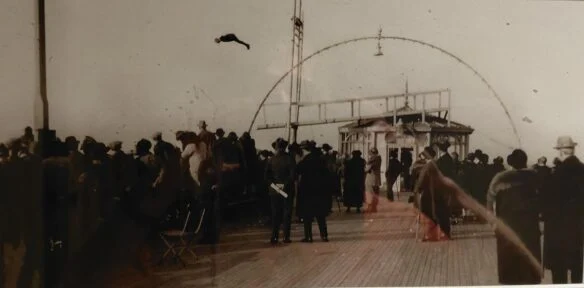
Jonathan Cowie’s account of the reunion highlights a particularly amusing anecdote that beautifully illustrates the enduring quirks and camaraderie of these long-standing fan groups. The very same individual who was "volunteered" to chair Shoestringcon 1 while in the toilets, once again found himself making an "offering to Bacchus" during the recent reunion. This time, however, he returned not with a new chairmanship, but with an excited report: the pub’s gents’ toilet featured an unexpected piece of art – a picture of a "flying Victorian and a stargate." This delightful discovery, a surreal blend of historical and science fictional imagery, resonated deeply with the assembled fans, proving that the genre’s magic can appear in the most unexpected of places, even after decades. It was a perfect, serendipitous moment, a small, shared laugh that encapsulated the unique bond between individuals who have spent a lifetime appreciating the fantastical.
These reunions are more than just social gatherings; they are living archives, where collective memories are refreshed and narratives of formative experiences are retold. The sense of familiarity, the easy banter, and the deep understanding that comes from shared history are palpable. As Cowie aptly puts it, "the years and decades simply melt away, it is as if we all last meet a week ago." This sentiment speaks to the profound and lasting nature of friendships forged in the passionate crucible of fandom.

Beyond the Official Record: The Organic Nature of Fandom
The story of PSIFA and Shoestringcon is a compelling illustration of the organic, grassroots nature of fan culture, particularly in the pre-internet era. Unlike official academic bodies or institutionally mandated events, fan groups like PSIFA thrived on the self-organizing energy of their members. There were no corporate sponsors or extensive marketing campaigns; rather, enthusiasm, word-of-mouth, and a shared love for science fiction were the primary drivers.
This informal structure allowed for a degree of flexibility and creativity that more formal organizations might struggle to achieve. Decisions, such as the spontaneous creation of a convention or the unique selection of its chairman, could be made quickly and implemented with collective will. The "shoestring" approach was not a limitation but a defining characteristic, fostering ingenuity and a strong sense of collective ownership.
In the broader context of UK fandom in the 1970s and 80s, PSIFA was one of many local and university-based groups that formed the backbone of the community. These groups were vital for nurturing new fans, providing spaces for discussion and creativity, and feeding into larger national conventions. They operated as crucial nodes in a decentralized network, connected by fanzines, postal correspondence, and the occasional cross-country trip. The success of PSIFA, culminating in its own convention, demonstrated the vibrant health and self-sustaining nature of this fan ecosystem. It was a testament to the power of individuals coming together over a shared passion, creating something meaningful and lasting without the need for extensive external support or official sanction.
The Shifting Sands of Fandom: PSIFA’s Evolution and Implications
While the first-generation PSIFAns celebrated their enduring connections, the current state of PSIFA offers a glimpse into the evolving landscape of student societies and fandom itself. The article notes that PSIFA is "still going today but has (we hope temporarily) lapsed – seduced by the dark side – from being broad church SF group to a table top gaming society."
This observation carries significant implications. On one hand, it reflects the immense growth and diversification of tabletop gaming as a legitimate and popular sub-genre within speculative fiction. Games like Dungeons & Dragons were gaining traction in the late 70s, and their subsequent explosion in popularity has created dedicated communities and societies. It’s natural for student groups to adapt to contemporary interests and for specific facets of fandom to become dominant.
However, the phrase "lapsed – seduced by the dark side" hints at a potential loss of the broader, inclusive vision that defined early PSIFA. A "broad church SF group" encompasses literature, film, art, and various other media, fostering a wide range of intellectual and creative engagement. A focus solely on tabletop gaming, while valuable in its own right, might narrow the scope of discussion and activities, potentially alienating students with different SF interests. This shift could be seen as a microcosm of a larger trend in modern fandom, where increasing specialization can sometimes lead to fragmentation, moving away from the more holistic, all-encompassing approach of earlier fan communities. The hope expressed that this is "temporarily" a tabletop gaming society suggests a desire among the original members for the group to eventually reclaim its wider remit.
The Indelible Mark: Implications of Enduring Fannish Bonds
The story of PSIFA, from its founding in 1978 to the recent reunion, is a profound testament to the enduring power of community forged through shared passion. The implications of these long-lasting bonds extend far beyond mere nostalgia.
Firstly, these reunions highlight the deep psychological and social benefits of belonging to a fan community during formative years. For many, university is a period of self-discovery and identity formation. Finding a group like PSIFA, where one’s "niche" interests are celebrated and understood, can provide a crucial sense of belonging and validation. The friendships forged in such an environment are often deeper and more resilient than those based on fleeting social connections.
Secondly, the legacy of PSIFA underscores the historical importance of grassroots fan organizations in shaping the broader cultural landscape of science fiction. These groups were not just passive consumers of media; they were active participants, critics, and creators, contributing to the discourse and evolution of the genre. PSIFA’s Radio Free Entropy and Shoestringcons were pioneering efforts that demonstrated the creative potential inherent within fan communities.
Finally, the phenomenon of these "decades melting away" at reunions speaks to the timeless nature of genuine human connection. Despite diverging life paths, careers, and personal changes, the shared experiences of early fandom create an indelible mark. These reunions serve as vital reminders of youthful idealism, intellectual curiosity, and the simple joy of connecting with kindred spirits. In an age where digital connections often lack the depth of face-to-face interaction, the enduring vitality of groups like PSIFA and their ongoing reunions offer a powerful affirmation of the lasting value of authentic community and the unique magic of science fiction fandom.