William Blake: The Unclassifiable Visionary Who Defied Categorization
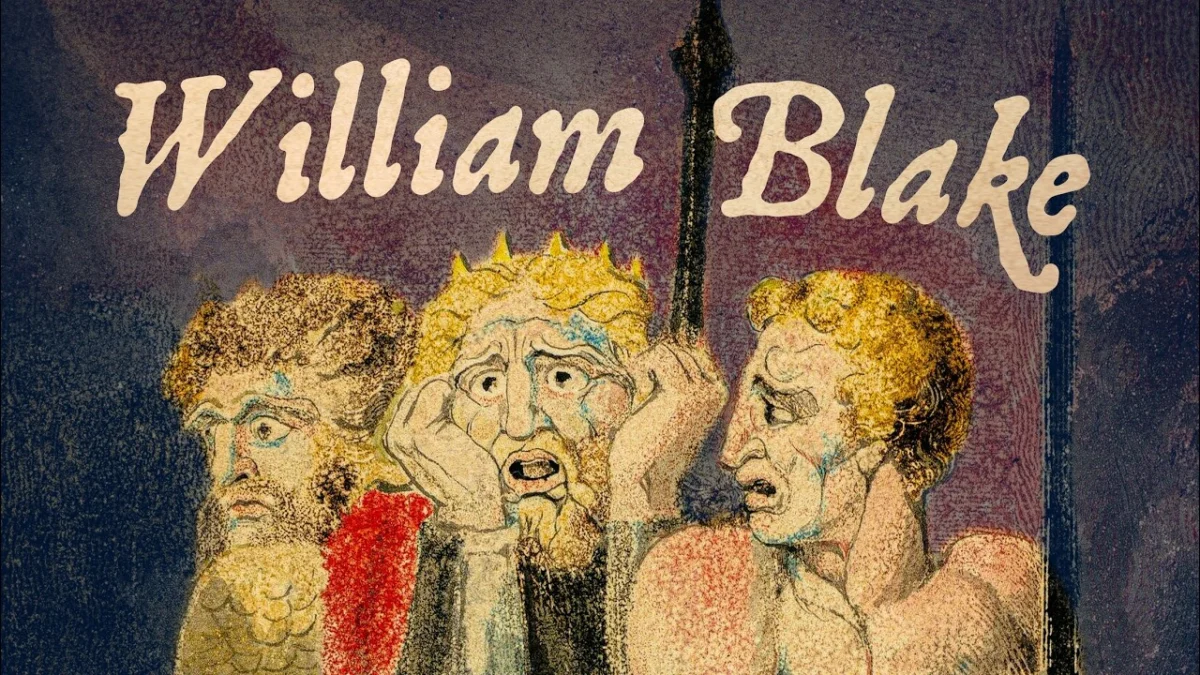
Introduction: A Legacy Beyond Labels
William Blake, a name that resonates through the annals of art and literature, remains an enigma. While commonly recognized as a poet, painter, and printmaker, such professional classifications fall woefully short of capturing the profound, unified nature of his artistic output. Blake was not merely a practitioner of distinct disciplines; he was a singular visionary whose ostensibly separate creative endeavors—poetry, painting, and printmaking—were inextricably interwoven, manifesting as facets of a cohesive, groundbreaking act of creation. This holistic approach gave rise to seminal works like Songs of Innocence and of Experience and his revolutionary "illuminated books," works so defiantly unique they defy easy categorization, earning him the moniker "the patron saint of unclassifiable artists."
This exploration delves into the radical, unclassifiable art of William Blake, drawing insights from contemporary analyses and examining the historical context that shaped his revolutionary vision. We will explore how Blake’s deliberate fusion of artistic forms challenged the prevailing aesthetic and intellectual norms of his era, and how his legacy continues to inspire artists and thinkers who dare to transcend conventional boundaries.
The Genesis of Unclassifiable Art: Blake’s Integrated Creative Process
Evan Puschak, known to millions as Nerdwriter, aptly encapsulates Blake’s essence in his illuminating video analysis. Blake’s genius lay in his absolute mastery and integration of the entire creative process for his books. He did not simply write poems; he designed, authored, etched, colored, and printed them himself, utilizing a unique, self-invented technique. This intimate, hands-on approach allowed him to meticulously control every element, ensuring that the visual and textual components of his work were in perfect, symbiotic dialogue.
The result was an output that inherently blurred disciplinary lines. Blake’s books were not traditional literary texts with accompanying illustrations, nor were they solely visual art pieces with appended captions. Instead, they were integrated wholes where words and images coalesced to create complex, multi-layered meanings. This synthesis of categories proved profoundly disorienting for the artistic establishment of the late 18th and early 19th centuries. His creations did not fit neatly into the existing boxes of literary or fine art, leaving critics and audiences alike struggling to comprehend their radical nature.
Historical Context: The Royal Academy and the Constraints of Specialization
The intellectual and artistic climate of Blake’s time was largely dominated by the rigid structures and pronouncements of institutions like the Royal Academy of Arts. Founded during Blake’s formative years, the Academy had established stringent aesthetic, generic, and formal standards that championed specialization and adherence to established hierarchies. Within this framework, Blake, officially recognized as an engraver—a craft often relegated to a subordinate status—found himself in a precarious position.
Despite this official categorization, Blake refused to be confined. He channeled his prodigious energies into realizing his intensely personal and idiosyncratic visions. His decision to merge poetry and painting within single, unified works was a direct challenge to the Academy’s emphasis on discrete artistic pursuits. He was not content to be merely a poet or merely a painter; he was a creator who understood the synergistic power of combining these disciplines. This cross-pollination of mediums was unprecedented, allowing him to express complex philosophical and spiritual ideas in a manner that transcended the limitations of individual art forms.
The Radical Choice: Embracing Incommensurable Meanings
As Morris Eaves, author of The Cambridge Companion to William Blake, eloquently observes, Blake’s decision to operate as a "maker of words, maker of images, and cross-breeder of both" was a conscious choice to inhabit "incommensurable neighborhoods of meaning." This meant venturing into territories of thought and expression that could not be easily mapped or understood within the prevailing intellectual paradigms.
Blake actively swam against the tide of "modern human understanding," which, as Eaves notes, was increasingly built upon the "principle of specialization." The Enlightenment had fostered a spirit of rational inquiry and categorization, leading to a compartmentalization of knowledge and artistic practice. Blake, however, championed a more holistic, integrated worldview. He saw reality not as a collection of discrete parts, but as an interconnected whole, and his art was an attempt to reflect and restore this wholeness.
Chronology of a Visionary Career
While Blake’s output spanned decades, its essence remained remarkably consistent in its pursuit of integrated meaning.
- Early Years and Apprenticeship (c. 1757-1779): Born in London, Blake apprenticed as an engraver, a foundational skill that would inform his later artistic innovations. This period honed his technical abilities and exposed him to the established artistic conventions he would later subvert.
- Establishment as Engraver and Early Artistic Exploration (c. 1780s): Blake began to develop his unique style, experimenting with printmaking techniques and starting to integrate his poetic and artistic sensibilities.
- The Illuminated Books Era (c. 1789 onwards): This marks the most significant period of Blake’s unclassifiable output. Works like Songs of Innocence (1789) and Songs of Experience (1794) exemplified his method of creating "illuminated books" where his poems were hand-engraved, illustrated, and colored by himself. These were not merely books of poetry; they were complete artistic statements.
- The "Prophetic Books" (c. 1793-1810s): Blake produced a series of longer, more complex works, often referred to as his "prophetic books," including The Marriage of Heaven and Hell, Visions of the Daughters of Albion, and Jerusalem. These works delved into profound philosophical and theological themes, further cementing his reputation as a radical and unconventional thinker.
- Illustrations of Literary Classics (Throughout his career): Blake also produced extensive and highly original illustrations for major literary works, including Dante’s Divine Comedy, Milton’s Paradise Lost, and the Book of Job. These illustrations were not mere embellishments but profound reinterpretations, demonstrating his ability to engage with and transform established narratives through his unique visual language.
- Later Years and Enduring Influence (Until 1827): Despite limited recognition during his lifetime, Blake continued to produce his visionary art. His death in 1827 marked the end of a life dedicated to challenging artistic and intellectual conventions.
Supporting Data: The Integrated Nature of Blake’s Masterpieces
The core of Blake’s unclassifiable genius lies in the intrinsic connection between his words and images. Consider the Songs of Innocence and of Experience:
- Unified Creation: Each poem was hand-engraved onto copper plates, with Blake’s intricate and often symbolic illustrations interwoven directly with the text. This was not a case of a poet writing words and a separate artist providing images; Blake was both author and artist, ensuring a seamless integration.
- Complementary and Contrasting Themes: The two collections, Innocence and Experience, explore contrasting states of the human soul. The visual language and typography used in each are carefully chosen to reflect and amplify these thematic differences. The gentle, flowing lines and softer colors of Innocence contrast sharply with the more angular forms and darker hues often found in Experience, visually reinforcing the poem’s themes of disillusionment and hardship.
- Symbolic Resonance: Blake’s illustrations are not merely decorative. They are imbued with layers of symbolic meaning, drawing from his personal mythology, biblical references, and observations of the natural world. These visual symbols work in tandem with the poetic text to create a richer, more profound understanding of his ideas. For instance, the Lamb in "The Lamb" from Innocence is not just a literal animal but a symbol of divine purity and gentleness, visually echoed in the pastoral scenes surrounding the poem.
Blake’s "prophetic books" represent an even more radical departure. These were not intended for mass consumption but were unique, handmade artifacts designed to convey his complex spiritual and philosophical visions.
- "The Marriage of Heaven and Hell": This work is a prime example of Blake’s synthesis. The text, with its witty aphorisms and revolutionary ideas about energy and repression, is presented alongside powerful, often disturbing, etchings that illustrate his concepts of the eternal war between energy and reason. The visual and textual elements are inseparable, each informing and amplifying the other.
- The Book of Job: Blake’s illustrations for the Book of Job are particularly striking. He reinterpreted the biblical narrative not as a simple tale of divine justice but as a profound exploration of faith, suffering, and the limits of human understanding. His depiction of God is often terrifying, and Job’s suffering is rendered with an visceral intensity that transcends mere illustration. Blake famously viewed the Book of Job as "the story of a man who believes, mistakenly, that salvation requires a slavish obedience to words written in a book." His illustrations visually challenge this notion, emphasizing the personal, spiritual journey over rigid dogma.
Official Responses: The Academy’s Dilemma and Public Bewilderment
The Royal Academy, with its emphasis on established genres and polished technique, was ill-equipped to appreciate Blake’s radical innovations. His integrated approach to art defied the very principles upon which the Academy was founded.
- Rejection of Conventional Norms: Blake’s work did not conform to the Neoclassical ideals of order, balance, and decorum that dominated official art. His often wild, visionary imagery and his unconventional use of color and line were seen as crude and unsophisticated by many of his contemporaries.
- The Challenge of Categorization: As mentioned earlier, the very act of producing books that were simultaneously poetry and painting presented an insurmountable challenge to the art world’s classification systems. Was it literature? Was it fine art? The inability to neatly pigeonhole his creations led to their marginalization.
- Limited Recognition During His Lifetime: While Blake had a small circle of admirers, he never achieved widespread fame or fortune during his life. His work was often misunderstood, dismissed as the eccentric ramblings of a madman, or simply ignored by the mainstream art and literary establishments.
The societal emphasis on specialization, which Blake so profoundly challenged, has, in some ways, become even more entrenched in the centuries since his death. This makes his radical vision of integration all the more pertinent and prescient.
Implications: Blake’s Enduring Legacy and the Power of Integrated Vision
William Blake’s legacy extends far beyond the confines of 18th-century art history. His unclassifiable art continues to resonate with contemporary audiences and artists for several key reasons:
- The Power of Holistic Creation: In an era still grappling with the consequences of over-specialization, Blake’s example serves as a potent reminder of the power of integrated vision. His work demonstrates that true innovation often lies at the intersection of disciplines, where different modes of expression can inform and amplify one another.
- Challenging Authority and Dogma: Blake’s willingness to question established religious, political, and artistic authorities resonates with modern sensibilities. His "prophetic books" are not just artistic artifacts; they are manifestos for intellectual and spiritual freedom, urging individuals to question received wisdom and to forge their own understanding of reality.
- The Visionary Artist as Rebel: Blake stands as a powerful archetype of the artist who remains true to their inner vision, even in the face of societal resistance and incomprehension. His life and work are an inspiration to anyone who feels like an outsider or who dares to create outside the established norms.
- A Unified Reality: Blake’s ultimate aim was to mend the fractured perception of reality that he saw in his time. He believed that societal divisions and rigid categories had severed humanity from a deeper, more holistic understanding of existence. Through his art, he sought to reassemble these fragments, to make reality whole again.
In conclusion, William Blake was not merely a poet, painter, or printmaker. He was a singular visionary whose art transcended categorization, a testament to the power of integrated creation and an enduring symbol of artistic rebellion. His "incommensurable neighborhoods of meaning" continue to invite us to explore the profound connections between words, images, and the very fabric of reality, urging us to see the world not as a series of isolated parts, but as a unified, mystical whole. His legacy serves as a perpetual call to embrace the unclassifiable, the visionary, and the deeply integrated nature of human experience and artistic expression.