
The King Returns to the Lower East Side: Jack Kirby Way and the Reclamation of Comic Book History
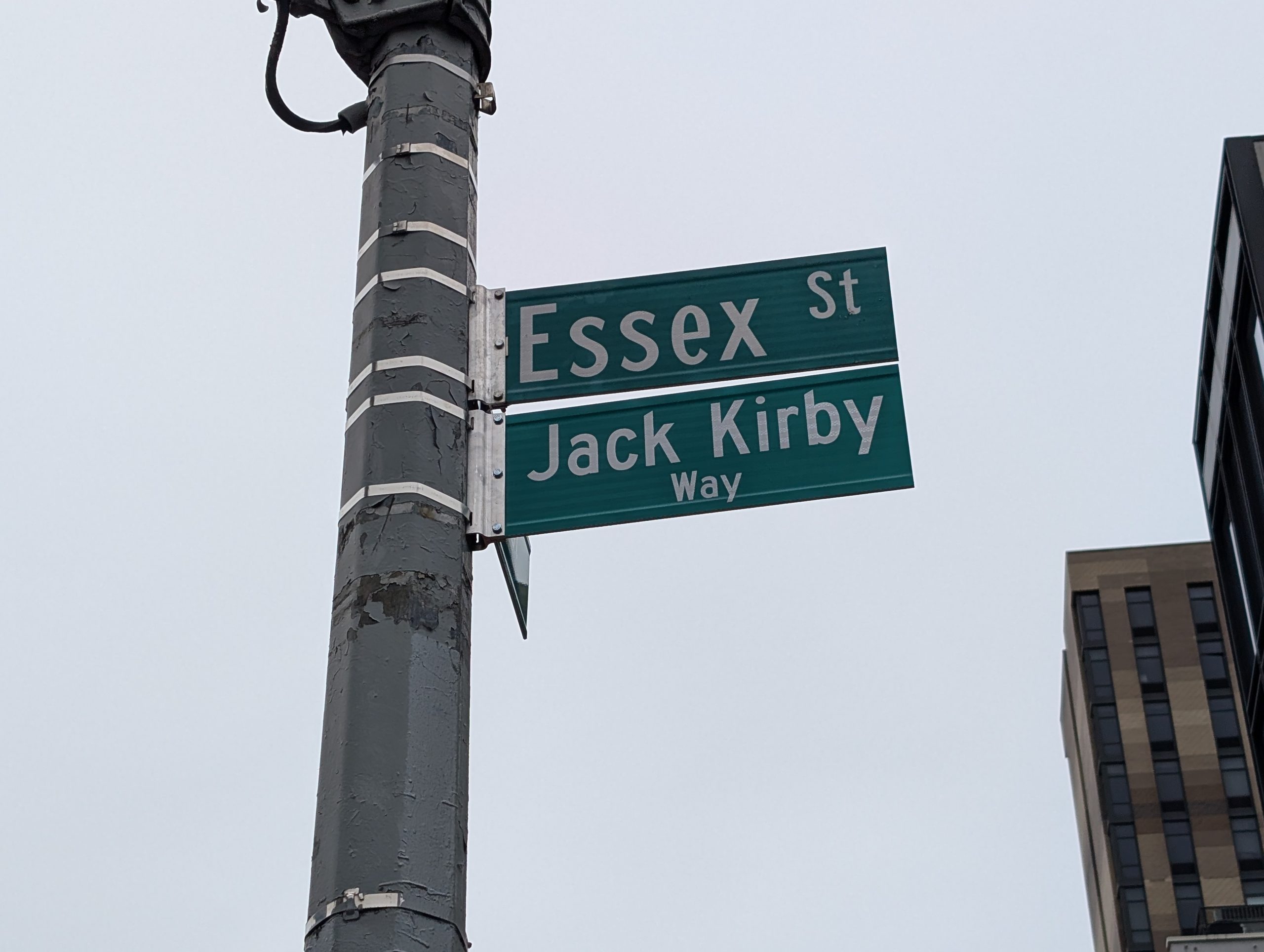
NEW YORK CITY — On a grey but resolute Monday afternoon, the intersection of Delancey and Essex Streets in Manhattan’s Lower East Side became the epicenter of a long-awaited cultural correction. As the clouds held back the rain, hundreds of New Yorkers, comic book historians, and industry titans gathered to witness the unveiling of "Jack Kirby Way."
The event marked more than just the addition of a new green-and-white sign to the city’s architectural tapestry; it represented a permanent municipal acknowledgment of Jacob Kurtzberg—known to the world as Jack "The King" Kirby—the man who, from a tenement just one block away at 147 Essex Street, dreamt up the gods, monsters, and heroes that now dominate global pop culture.
Main Facts: A Permanent Tribute to the "King of Comics"
The renaming of the corner of Delancey and Essex Streets to "Jack Kirby Way" is the culmination of a multi-year effort to honor Kirby in the neighborhood that shaped his creative DNA. While Kirby’s influence is felt in every cinema and comic shop worldwide, his personal history is deeply rooted in the immigrant experience of early 20th-century New York.
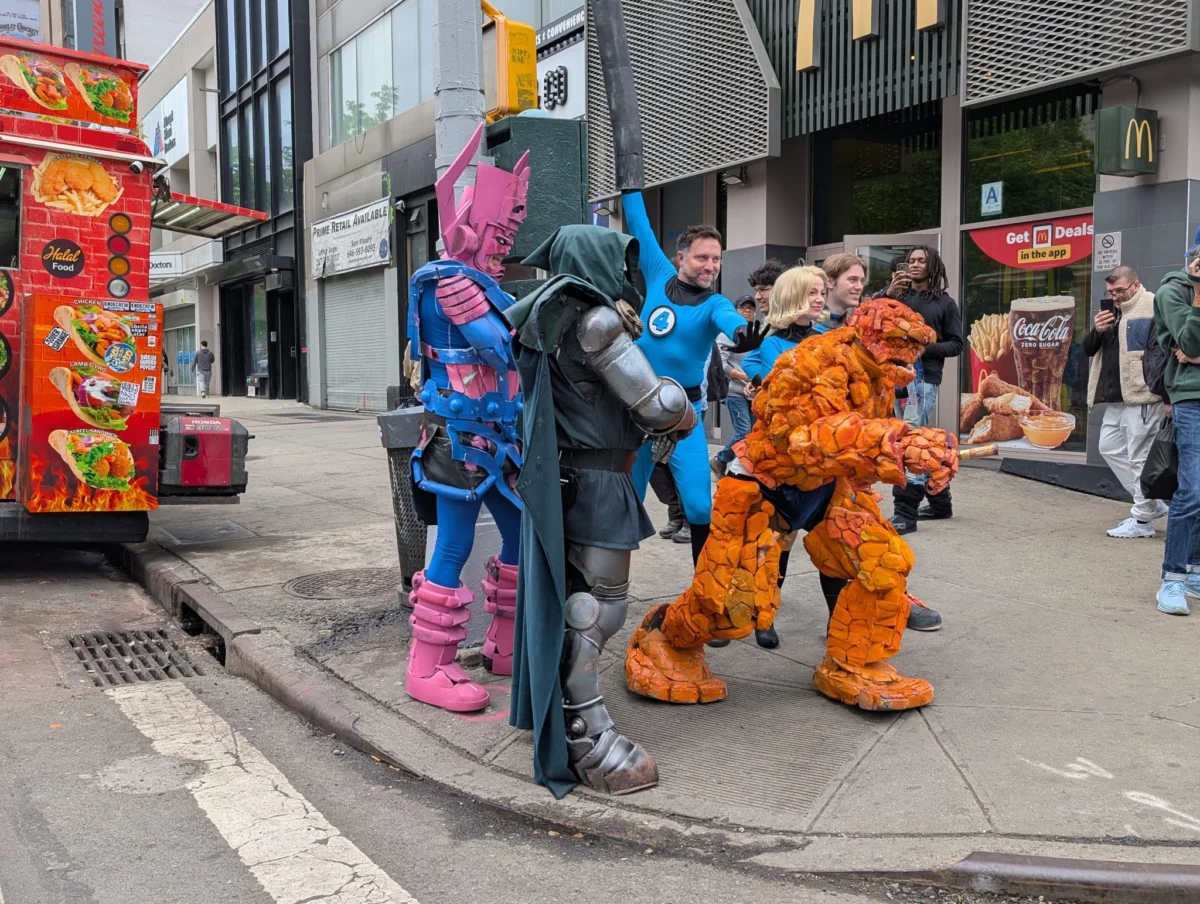
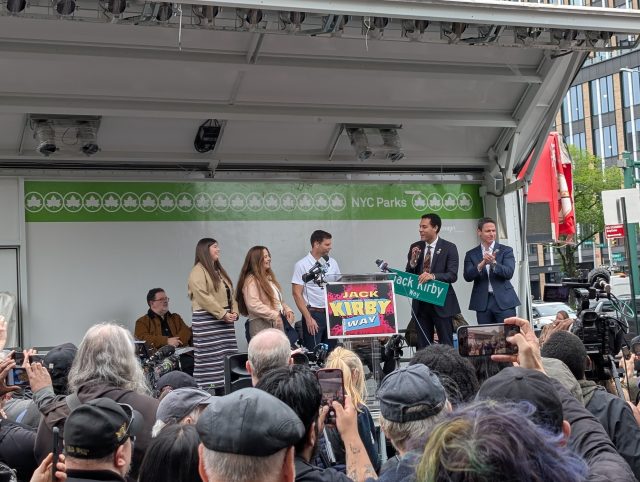
Among the crowd were figures that seemed to have stepped directly off Kirby’s kinetic pages: Doctor Doom, Galactus, and the members of the Fantastic Four were seen mingling with local residents and city officials. The ceremony, which lasted just under an hour, featured a roster of speakers that bridged the gap between the "Golden Age" of comics and the modern multi-billion-dollar industry.
Key highlights of the event included:
- The official unveiling of the "Jack Kirby Way" street sign.
- Speeches from three of Kirby’s grandchildren, offering a personal glimpse into the man behind the pencil.
- Appearances by legendary artist Jim Steranko and executives from both Marvel and DC Comics.
- The presence of New York City Councilmember Christopher Marte, who championed the legislative push for the renaming.
Chronology: From Tenement to Toponym
The road to "Jack Kirby Way" was not a straight line. For decades, fans and historians have argued that the city of New York had failed to properly recognize one of its most influential sons.
The Early Efforts
The push for official recognition began in earnest several years ago, led by pop culture historian Roy Schwartz and the Jack Kirby Museum & Research Center. These advocates worked tirelessly to navigate the bureaucratic labyrinth of New York City’s community boards and the City Council. They argued that Kirby’s contributions to the arts were as significant as those of Gershwin or Bernstein, both of whom have New York landmarks in their honor.
The 2025 "Yancy Street" Precursor
In a notable precursor to Monday’s event, a temporary publicity-driven renaming occurred last year. For a few hours, Delancey Street was dubbed "Yancy Street/Jack Kirby Way." While this delighted fans—Yancy Street being the fictional home of the Fantastic Four’s Ben Grimm (The Thing)—it was ultimately a marketing gimmick that lacked the permanence of law.
The Legislative Victory
Following the temporary event, Councilmember Christopher Marte and the Kirby family redoubled their efforts to secure a permanent designation. This required proving Kirby’s "extraordinary impact" on the city and the world. The motion eventually passed the City Council, setting the stage for the May 11, 2026, unveiling.
Supporting Data: The Architect of Modern Mythology
To understand why a street naming in the Lower East Side carries such weight, one must examine the sheer scale of Jack Kirby’s output. Born in 1917 to Austrian-Jewish immigrants, Kirby used the rough-and-tumble environment of the Lower East Side as the blueprint for his storytelling.
The Lower East Side Influence
The "Yancy Street Gang," a recurring element in the Fantastic Four, was a direct homage to the street gangs Kirby encountered as a youth. Ben Grimm, the rocky powerhouse of the Fantastic Four, is widely considered Kirby’s most semi-autobiographical character—a tough, Jewish kid from the tenements with a heart of gold and a short fuse.
A Career of Firsts
Kirby’s statistics are staggering:
- Co-creations: Captain America, the Fantastic Four, the X-Men, the Avengers, the Hulk, Thor, Iron Man, Black Panther, Ant-Man, and the Silver Surfer.
- DC Contributions: The "Fourth World" saga, including Darkseid, New Gods, and Mister Miracle.
- Innovation: He pioneered the "Marvel Method" of storytelling and introduced "Kirby Crackle," a stylistic convention for representing cosmic energy that remains an industry standard.
Despite this, for much of his life, Kirby fought for the return of his original artwork and for proper creator credit—a struggle that has made him a symbol for creator rights in the modern era.
Official Responses: "Beyond Overdue"
The tone of the ceremony was one of celebratory vindication. Speakers emphasized that while the world knows the characters, it is time the world knows the man.
Councilmember Christopher Marte addressed the crowd with a sense of urgency: "This was beyond overdue. Jack Kirby didn’t just draw comics; he drew the soul of New York into every panel. To have his name here, where he walked, where he struggled, and where he dreamt, is a victory for this community."
Paul Levitz, former President and Publisher of DC Comics, highlighted the scale of Kirby’s imagination: "Jack Kirby gave us a universe. He didn’t just provide entertainment; he provided a modern mythology that has become the dominant language of our time. It’s only fitting that we acknowledge him as powerfully as we can in our universe."
Tom Brevoort, Marvel’s Senior Vice President of Publishing, acknowledged the foundational role Kirby played in the company’s success, noting that the "Marvel Universe" is essentially a house built by Kirby.
The most poignant moments came from Kirby’s grandchildren, who spoke not of the "King of Comics," but of a grandfather who was humble, hardworking, and deeply devoted to his family. They noted that Jack would have been "tickled" to see his name on a New York street sign, likely finding it more impressive than any Hollywood blockbuster.
Implications: A New Era of Recognition
The unveiling of Jack Kirby Way arrives at a pivotal moment in the "Kirby Renaissance." For decades, Kirby was often overshadowed in the public eye by his longtime collaborator Stan Lee. However, the tide has shifted significantly in recent years.
The Fight for Credit
The ceremony held a clear undertone of "righting a wrong." The history of American comics is riddled with stories of exploitation, where creators lost the rights to characters that would eventually generate billions of dollars. Kirby’s estate reached a landmark settlement with Marvel/Disney in 2014, and since then, the push for his "Created By" credit has become standard in film and television.
Academic and Cultural Legitimacy
The street naming coincides with several other major initiatives:
- Kirbyvision: A new documentary by Ricki Stern (Joan Rivers: A Piece of Work) was recently announced, promising a deep dive into Kirby’s visual language.
- Academic Preservation: Karen Green, Columbia University’s curator for comics and cartoons, has been instrumental in bringing Kirby’s work into the academic fold, ensuring his original pages are treated with the same reverence as fine art.
- The Kirby Museum: The Jack Kirby Museum & Research Center continues to digitize his work, providing a resource for future generations of artists.
Conclusion: More Than a Marker
As the ceremony concluded, an observer noted that the event felt like "history." For the fans and professionals in attendance, it was a moment where the "sins of the past"—the lack of credit and the corporate erasure of creators—were partially washed away.
While a street sign cannot compensate for decades of lost royalties or the stresses of legal battles, "Jack Kirby Way" serves as a permanent, physical reminder that the "King" has finally returned home. In the heart of the Lower East Side, where a young Jacob Kurtzberg once looked at the stars and saw New Gods, his name now stands as a beacon for every artist who dares to dream on a grand scale.
As the green sleeve fell to reveal the name "Jack Kirby Way," the cheers from the crowd were not just for a man, but for the enduring power of imagination over the cold machinery of industry. The King has his throne, and now, he has his street.



Leave a Comment