
The Joy of Subversion: William N. Copley’s “X-Rated” Series Returns to Berlin
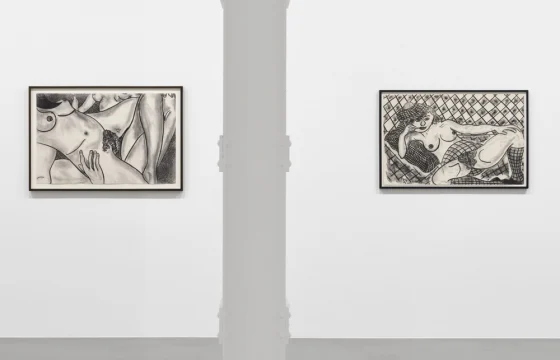
BERLIN — Galerie Max Hetzler is pleased to announce a significant solo exhibition dedicated to the mid-career mastery of William N. Copley. Titled X-Rated (1972–1974), the exhibition offers a comprehensive look at a pivotal and once-controversial chapter in the artist’s oeuvre. Marking the fourth time the gallery has presented Copley’s work, this latest iteration focuses on a period of intense productivity where the artist sought to bridge the gap between the illicit and the aesthetic. The exhibition is scheduled to remain on view at the gallery’s Berlin location through April 22, 2026, providing a rare, long-term opportunity for audiences to engage with these provocative canvases.
Main Facts: A Bold Return to the "CPLY" Aesthetic
William N. Copley, known by his artistic pseudonym "CPLY," occupies a singular position in the history of 20th-century art. Neither a pure Surrealist nor a traditional Pop artist, Copley’s work functions as a bridge between the European avant-garde and American vernacular culture. The X-Rated exhibition at Galerie Max Hetzler focuses specifically on the series produced between 1972 and 1975—a period during which Copley leaned into the "pornographic" imagery of the era to explore deeper themes of human desire, humor, and social liberation.
The exhibition features a curated selection of paintings and works on paper that exemplify Copley’s signature style: bold black outlines, vibrant geometric backgrounds, and a "slapdash" figurative approach that belies a sophisticated understanding of composition. By revisiting these works today, the exhibition highlights Copley’s enduring relevance in a contemporary culture that remains deeply conflicted about the intersection of sexuality and public imagery.
Key Exhibition Details:
- Artist: William N. Copley (CPLY)
- Exhibition X-Rated (1972–1974)
- Venue: Galerie Max Hetzler, Berlin
- Duration: Open through April 22, 2026
- Focus: Paintings and preparatory drawings from the mid-1970s exploring eroticism and pop culture.
Chronology: From Gallery Owner to Avant-Garde Provocateur
To understand the X-Rated series, one must first understand the idiosyncratic path Copley took toward the canvas. Unlike many of his contemporaries who attended prestigious art schools, Copley’s education was forged in the heat of the Surrealist movement’s twilight.
The Beverly Hills Years (1940s)
In the late 1940s, Copley had no immediate plans to become a painter. His initial ambitions were literary. However, his life changed when he co-founded The Copley Galleries in Beverly Hills with his brother-in-law, John Ployardt. During its brief but legendary existence, the gallery became an outpost for exiled European Surrealists. Copley hosted exhibitions for titans such as Man Ray, Max Ernst, and Marcel Duchamp. While the gallery was a financial failure—Copley famously ended up buying much of the work himself to support the artists—it provided him with an unparalleled apprenticeship. It was the legendary dealer Alexander Iolas who eventually recognized Copley’s potential, encouraging him to stop selling art and start making it.
The Birth of "CPLY" (1951–1970)
Copley adopted the moniker "CPLY" around 1951, coinciding with his move to France. This move was a symbolic break from his American upbringing and an immersion into the European intellectual scene. For the next two decades, he developed a style that merged the dreamlike illogic of Surrealism with the graphic immediacy of American comic strips. By the time he returned to the United States and settled in New York in the 1960s, he was perfectly positioned to respond to the burgeoning Pop Art movement, though he always maintained a more "literary" and psychological edge than his Pop peers.
The Evolution of the X-Rated Series (1972–1975)
The X-Rated series emerged during a time of significant cultural shift in America. The early 1970s saw the "Golden Age of Porn," where adult content began to seep into the mainstream consciousness despite remaining legally precarious. Copley began sourcing imagery from "under the counter" adult magazines, transforming static, often clinical pornographic poses into vibrant, kinetic narratives. This body of work culminated in a landmark 1974 exhibition at the New York Cultural Center, which serves as the historical touchstone for the current presentation at Galerie Max Hetzler.
Supporting Data: The Artistic Process and Aesthetic Philosophy
The X-Rated series is often misunderstood as a mere provocation. However, the technical data and preparatory materials on display at Galerie Max Hetzler reveal a disciplined and highly intentional creative process.
The Three-Stage Development
Copley did not paint these scenes of "copulations and orgies" on a whim. The exhibition makes his developmental process visible through the pairing of preparatory drawings with finished paintings. His method typically involved:
- Small-scale Studies: Initial sketches where the basic figurative interaction was established.
- Large-scale Refinements: Larger drawings where Copley introduced geometric complexity and refined the "pictorial dynamism."
- The Final Canvas: The finished painting, which often retained a "deliberately slapdash" feel. This was a conscious stylistic choice to avoid the coldness of hyper-realism and maintain a sense of "joy" and spontaneity.
The Matisse Connection and Visual Language
Critics have long noted a structural affinity between Copley and Henri Matisse. In works such as Calcutta (1973), the contorted, entwined bodies and attenuated limbs mirror Matisse’s late-period cut-outs and "The Dance." However, where Matisse sought a "calming influence" on the mind, Copley sought an "invigorating" one.
His use of background is particularly noteworthy. The scenes are set against vivid, brightly colored patterns—polka dots, stripes, and checkerboards—that animate the space. As critic James R. Mellow famously remarked, the works are often "too artful to be libidinous." The sheer formal beauty of the compositions often distracts from the explicit nature of the subjects, forcing the viewer to oscillate between aesthetic appreciation and voyeuristic shock.
Breaking the "Pornography Barrier"
Copley’s stated goal was to "break through the barrier of pornography into the area of joy." In the 1970s, pornography was largely associated with shame, secrecy, and the "dirty." Copley’s paintings stripped away the shame by using humor and bright palettes. He viewed sex not as a moral failing, but as a realm of "endless possibilities for originality."
Official Responses: Historical and Critical Reception
When the X-Rated series first debuted in 1974 at the New York Cultural Center, it was a litmus test for the era’s progressive values. The show was curated by Mario Amaya, a director known for his "strikingly progressive" and often daring programming.
The 1974 Critical Success
Despite the potential for scandal, the critical response was overwhelmingly positive. Peter Schjeldahl, writing for Art in America, hailed the presentation as "uniformly gorgeous." He noted that the series represented a "highly satisfying development," suggesting that Copley had finally found a subject matter that perfectly matched his irreverent style.
The positive reception was partly due to Copley’s use of "Surrealist disjunction." By titling his explicit paintings after Hollywood films—such as The Seven Year Itch, The Exorcist, or Les Quatre Cent Coups—he tempered the "shock" of the image. The titles rarely had anything to do with the visual content, creating a cognitive gap that invited the viewer to find humor in the absurdity of the pairing.
Contemporary Institutional Standing
Today, Copley’s work is held in the permanent collections of the world’s most prestigious institutions, including the Museum of Modern Art (MoMA) in New York, the Centre Pompidou in Paris, and the Tate in London. The current exhibition at Galerie Max Hetzler reinforces his status as a "painter’s painter"—an artist whose influence on subsequent generations of figurative painters cannot be overstated.
Implications: Subversion in an Uncensored Age
The re-presentation of the X-Rated series in 2024–2026 carries significant weight. We currently live in an "image-saturated world" where hardcore imagery is available at the click of a button, yet Copley’s canvases still retain a "subversive charge."
The Rejection of Neutrality
Copley’s work remains a powerful argument against "artistic neutrality." By choosing subjects that were—and in some circles, still are—considered taboo, he challenged the notion that art should be polite or purely decorative. His work suggests that the role of the artist is to clear away moralistic constraints to find the "area of joy" beneath.
A Legacy of Humor and Humanism
Perhaps the most lasting implication of the X-Rated series is its humanism. In an era where sexual politics are often fraught with tension, Copley’s work offers a different path: one of humor, playfulness, and shared humanity. By treating the sexual act with the same formal rigor and narrative curiosity as a landscape or a still life, Copley de-stigmatized the body.
As the exhibition at Galerie Max Hetzler demonstrates, Copley’s "X-Rated" paintings are not merely artifacts of the 1970s sexual revolution. They are timeless explorations of the human condition, rendered with a bold, unapologetic hand. Through April 2026, Berlin audiences have the opportunity to witness how one artist successfully navigated the fine line between the profane and the profound, ultimately proving that in the hands of a master, even the most "X-rated" subjects can become high art.




Leave a Comment