
The Unforeseen Phenomenon: Curry Barker Navigates the Aftermath of Obsession’s Staggering Success
HOLLYWOOD, CA – In an industry increasingly reliant on pre-existing intellectual property and massive marketing blitzes, the film Obsession has emerged as a rare and resounding triumph, shattering box office expectations and critical conventions alike. Its meteering success, driven almost entirely by an electrifying wave of organic word-of-mouth buzz, has catapulted director Curry Barker into the pantheon of Hollywood’s most sought-after talents. As the industry speculates wildly about Barker’s next move, the visionary filmmaker finds himself at a fascinating crossroads, fielding "some big money offers" while openly contemplating a diverse slate of future projects, including a tantalizing expansion of the Obsession universe into an anthology television series.
The unprecedented trajectory of Obsession is a testament to the enduring power of a compelling story well told, proving that authentic audience engagement can still trump the most sophisticated promotional campaigns. From its initial limited release, the film rapidly transcended niche appeal to become a cultural touchstone, drawing comparisons to genre-bending classics that redefined their respective eras. This groundswell of public enthusiasm has not only solidified Obsession‘s place in cinematic history but has also ignited fervent discussion about Barker’s subsequent endeavors. While the director himself admits to not yet having a definitive "next project" locked down, his recent remarks hint at a fascinating blend of ambition and creative introspection, particularly concerning the intriguing narrative mechanics of his breakout hit.
Unprecedented Buzz Fuels Record-Breaking Success
Obsession‘s journey to cinematic phenomenon status is a story in itself. Released with moderate expectations, it quickly defied industry projections, becoming a sleeper hit that blossomed into a cultural talking point. The film’s unique blend of suspense, psychological depth, and a genuinely surprising twist resonated deeply with audiences, prompting an almost viral spread of recommendations across social media platforms and in everyday conversations. This organic proliferation of praise, a phenomenon rarely witnessed in the contemporary movie landscape, turned Obsession into a must-see event, with countless viewers flocking to theaters based solely on the fervent endorsements of friends and critics alike.
"It’s the kind of buzz every filmmaker dreams of, but few ever truly experience," remarked a seasoned industry analyst familiar with the film’s performance. "In an age where marketing budgets often dwarf production costs, Obsession proves that quality and genuine intrigue can still cut through the noise. It’s a powerful reminder that audiences crave originality and connection, and they’ll champion a film they truly love."
The film’s box office performance, while specific figures remain under wraps, is reportedly staggering, surpassing initial projections by a wide margin and establishing new benchmarks for independent and genre cinema. This financial triumph, coupled with widespread critical acclaim, has cemented Curry Barker’s reputation as a director with a unique voice and an innate ability to connect with a broad audience.
A Deluge of Seven-Figure Offers
The predictable consequence of such a breakout success is, of course, a sudden and intense demand for the director’s services. Industry sources, including a recent report by The Hollywood Reporter, confirm that Curry Barker is now fielding a multitude of "big money offers" for his subsequent projects. These offers, reportedly reaching into the seven-figure range, underscore the studio system’s eagerness to capitalize on Barker’s newfound commercial and critical cachet.
The offers likely span a wide spectrum of genres and scales, from potential studio tentpoles requiring his distinct touch to more intimate, prestige dramas seeking his narrative prowess. The pressure on a breakout director in such a position is immense: the choice between leveraging newfound power to pursue personal passion projects or succumbing to the allure of larger budgets and broader commercial appeal. Barker’s current uncertainty about his immediate next step is understandable, reflecting the weight of these career-defining decisions. He stands at the precipice of becoming either a celebrated indie auteur or a mainstream hitmaker, or perhaps, finding a way to deftly navigate both worlds.
Charting the Course: From Theatrical Triumph to Speculated Spin-off
The trajectory of Obsession‘s success has been nothing short of meteoric, setting the stage for a period of intense anticipation regarding Curry Barker’s creative future. His recent interviews have provided the first tantalizing glimpses into the ideas swirling in his mind, revealing a thoughtful approach to leveraging the success of Obsession while also nurturing new, independent visions.
The Ascent of Obsession: A Chronology of Impact
Obsession began its theatrical run as a quietly anticipated genre film, generating modest buzz within indie circles. Its initial screenings, however, quickly sparked an enthusiastic reaction that spread far beyond these confines. Early reviews highlighted its ingenious premise and Barker’s masterful direction, particularly his ability to craft tension and deliver a truly memorable cinematic experience. Film festival awards and positive critical notices began to accumulate, but it was the organic groundswell of audience advocacy that truly set the film apart.
Weeks into its release, social media platforms buzzed with impassioned discussions about Obsession‘s plot twists, character arcs, and thematic depth. Hashtags related to the film trended consistently, and think pieces dissecting its layers appeared across various online publications. This sustained, authentic engagement translated directly into ticket sales, with each passing week seeing an increase in audience attendance rather than the typical decline. The film held its own against larger studio releases, a rare feat that cemented its status as a genuine cultural phenomenon. Its success wasn’t merely about box office numbers; it was about proving that an original, well-executed concept could capture the public imagination in a way that formulaic blockbusters often struggle to achieve.
Barker’s Vision: Anthology Series vs. Direct Sequel
Amidst the swirling rumors and lucrative offers, Barker has been remarkably candid about his thoughts on extending the Obsession narrative. While acknowledging the potential for a direct sequel, Obsession 2, his enthusiasm appears to lean more towards a different, arguably more innovative, approach: an anthology television series.
In a revealing interview with Total Film, Barker articulated his vision: "I obviously have a couple more things that I’m excited about next, but I do see Obsession 2, maybe. But what really is exciting to me is maybe an anthology. Like a one-hour episode [where] each episode is a different wish that goes completely off the rails. Maybe I’ll direct the pilot with the same DP, and then you could invite other filmmakers to kind of give their spin at it. That would be really cool."
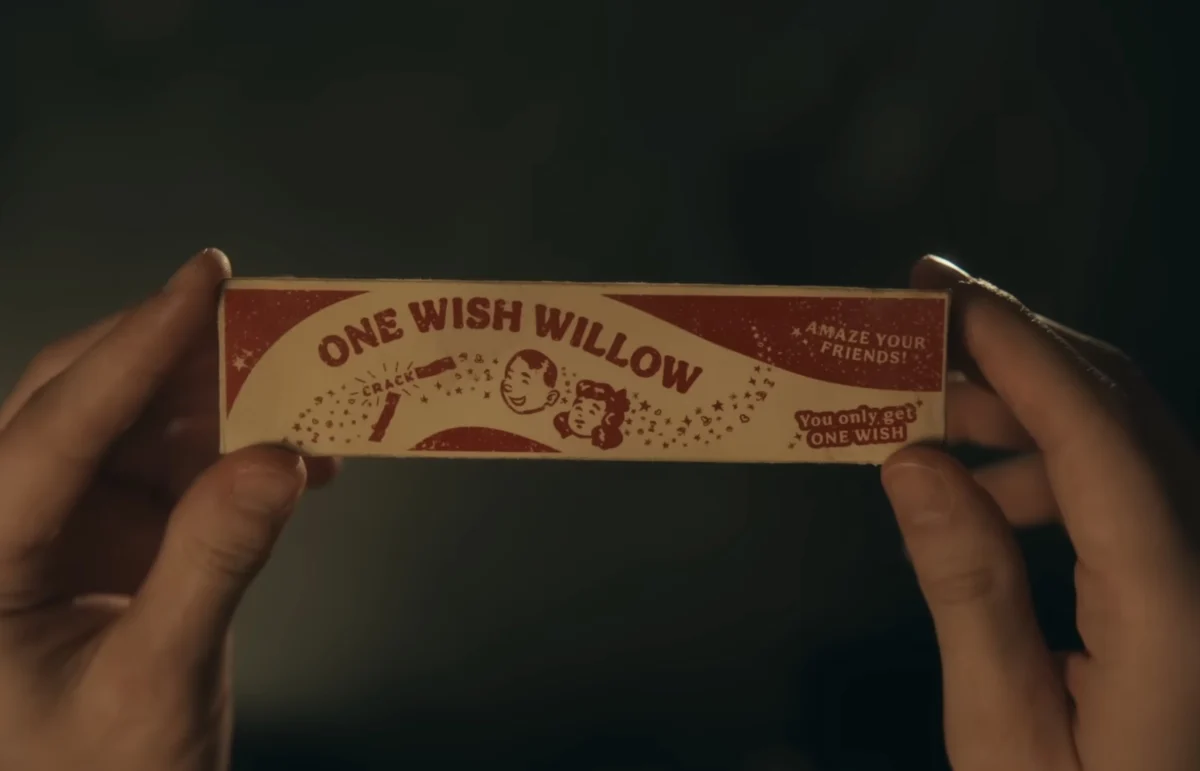
This concept resonates strongly with current trends in television, particularly the success of genre anthologies that offer self-contained narratives within a broader thematic framework. The "wish gone wrong" premise, central to Obsession‘s original twist, provides an infinitely adaptable canvas for exploring the dark underbelly of human desire and consequence. An anthology format would allow for diverse storytelling, tackling different characters, settings, and interpretations of the film’s core magical element – the mysterious "One Wish Willows."
The idea of Barker directing the pilot episode, potentially reuniting with his cinematographer to establish the visual and tonal language, offers a comforting sense of continuity for fans. Furthermore, inviting "other filmmakers to kind of give their spin at it" speaks to a generous, collaborative spirit, positioning the series as a potential breeding ground for new talent and varied perspectives within the established Obsession universe. This approach could breathe long-term life into the franchise without diluting the impact of the original film or forcing a continuation that feels unnatural.
Deconstructing the "Wish" Premise: Narrative Nuance and Creative License
One of the most engaging aspects of Curry Barker’s post-Obsession commentary has been his refreshing honesty, particularly his humorous acknowledgment of a significant "plot hole" at the heart of the film’s magical premise. This candid admission, far from undermining the film’s integrity, has instead deepened audience appreciation for Barker’s self-awareness and willingness to prioritize compelling storytelling over rigid logical consistency.
The Endearing "Plot Hole": Barker’s Candid Admission
The central conceit of Obsession revolves around the existence of "One Wish Willows," seemingly magical entities that grant people’s deepest desires, albeit often with disastrous and unforeseen consequences. However, as Barker himself openly admits, the broader implications of such a mechanism present a substantial narrative paradox within a seemingly normal world.
"It’s kind of a plot hole. It’s something I don’t like to think about too much because it totally doesn’t make sense," Barker confessed in the Total Film interview, a chuckle likely accompanying the statement. "If there’s a world of people making wishes… it really doesn’t make sense at all."
His point is acutely valid. In a world where wishes are genuinely granted, even if twisted, the fabric of reality as we know it would likely unravel. The consistent granting of desires, even for multiple individuals, would lead to an escalating absurdity. As Barker lightheartedly mused, "dragons" would likely be a common sight, alongside other fantastical or chaotic outcomes, fundamentally altering the mundane reality depicted in Obsession. The film, however, largely portrays a world indistinguishable from our own, save for the localized, potent magic of the Willows. This creates an interesting tension between the fantastical element and the grounded setting.
Alternate Realities and Narrative Constraints
Attempting to reconcile this logical inconsistency, Barker offered a speculative, albeit quickly self-debunked, theory during his interview. "Every time someone makes a wish, they enter into an alternate reality where their wish comes true," the director mused, seeking to contain the chaos of widespread wish-granting. This ingenious, multiverse-adjacent explanation would, theoretically, allow individual wishes to manifest without globally altering the primary reality for everyone else. Each wish-maker would effectively branch off into their own personal, wish-fulfilled (or wish-cursed) timeline.
However, Barker, with characteristic candor, almost immediately recognized the flaw in his own proposed solution. "Hilariously," as the original article notes, "the director soon realizes that the explanation doesn’t make sense as we see another character’s wish for a billion dollars be granted in real-time." This critical moment in the film, where a secondary character’s wish visibly and tangibly impacts the shared reality of other characters, directly contradicts the alternate reality hypothesis. The sudden appearance of immense wealth, for instance, cannot be confined to a singular individual’s branched reality if it is witnessed and reacted to by others in the "main" narrative.
This delightful exchange highlights the perennial challenge faced by creators introducing magical or fantastical elements into a realistic setting: how much logical consistency must be sacrificed for the sake of a compelling narrative? The "plot hole" becomes less a flaw and more a testament to the film’s primary objective: to explore the human condition through the lens of extreme desire and its consequences, rather than to meticulously construct a logically flawless magical system.
Embracing the "Hand-Wave" for Anthology Potential
Despite the admitted logical leaps required to sustain the "One Wish Willows" premise, Barker’s potential Obsession anthology series benefits immensely from this creative flexibility. The very nature of an anthology, with its episodic, self-contained narratives, allows for a certain "hand-wave" regarding overarching systemic logic. Each episode could present a new character, a new wish, and a new "reality" shaped by that wish, without necessarily needing to fit into a perfectly consistent global framework.
The allure of "wishes gone wrong" is a potent narrative device, rich with thematic possibilities. It allows for exploration of greed, desperation, love, revenge, and the inherent dangers of unchecked power. Each story could delve into different psychological facets, moral dilemmas, and horror subgenres, offering a diverse and engaging viewing experience. The original Obsession proved that audiences are willing to suspend disbelief for a captivating story, and an anthology series could lean into this trust, delivering a fresh dose of twisted fantasy each week. For many, including this journalist, the prospect of such a series, even with its foundational narrative quirks, is a deeply exciting one, fulfilling a "wish for the next great horror anthology series." The creative potential far outweighs the minor logical quibbles, especially when presented with Barker’s unique blend of insight and entertainment.
Industry Implications and Barker’s Trajectory
Curry Barker’s sudden emergence as a directorial force, coupled with his intriguing ideas for the Obsession franchise, carries significant implications for both his personal career trajectory and the broader landscape of the entertainment industry. His success story offers a compelling case study in the power of organic content and the evolving nature of intellectual property.
The Power of Organic Hype in a Crowded Market
The phenomenon of Obsession serves as a powerful counter-narrative to the prevailing industry wisdom that relies heavily on established franchises, bankable stars, and multi-million dollar marketing campaigns. In a saturated market, where streaming services compete fiercely for attention and theatrical releases often struggle to cut through the noise, Obsession‘s word-of-mouth success stands out as a rare and invaluable commodity. It underscores the undeniable truth that a genuinely captivating story, executed with vision and precision, can still resonate deeply enough with audiences to create its own gravitational pull.
This organic hype is not merely fleeting social media chatter; it translates into sustained interest, repeat viewings, and a dedicated fanbase that champions the work long after its initial release. For a director like Barker, this translates into immense leverage. He is not merely a craftsman for hire; he is a proven tastemaker with an undeniable connection to the audience, a quality that studios are increasingly desperate to cultivate. His ability to generate authentic excitement is a rare gift, and it positions him as a creative force capable of driving projects based on merit rather than purely commercial calculation.
The Anthology Renaissance on Streaming Platforms
Barker’s inclination towards an Obsession anthology TV series is particularly timely, aligning perfectly with the current renaissance of the anthology format, especially on streaming platforms. Series like Black Mirror, American Horror Story, Love, Death & Robots, and The Twilight Zone reboot have demonstrated the immense appeal of self-contained narratives that allow for creative freedom, diverse genre exploration, and a lower commitment threshold for viewers compared to multi-season serialized dramas.
For streaming services, anthologies offer several advantages: they can attract a wider array of talent (as directors and writers can contribute individual episodes without long-term commitments), explore controversial or niche themes without alienating a core audience, and constantly refresh their content offerings with new stories. The "wish gone wrong" premise of Obsession is perfectly suited for this format, providing a flexible framework that can encompass horror, dark fantasy, psychological thrillers, and even social commentary, all while retaining a recognizable brand identity.
Should the Obsession anthology come to fruition, it would further solidify the trend of film IPs being adapted for the small screen, often with the original creators at the helm. This allows for deeper world-building and character exploration that a single film might not permit, and crucially, it taps into the existing fanbase of the original movie, offering a ready-made audience for the spin-off.
Curry Barker: A New Auteur’s Dilemma
The spotlight on Curry Barker now is intense, and his choices will define the next phase of his career. The "big money offers" represent a significant temptation, potentially allowing him to tackle projects of a scale previously unimaginable. However, the history of Hollywood is replete with breakout indie directors who struggled to maintain their unique voice within the studio system, often finding their artistic freedom curtailed by commercial demands.
Barker’s stated interest in "a couple more things that I’m excited about next," alongside the Obsession anthology, suggests a desire to balance creative ambition with strategic career development. This often involves using the leverage gained from a hit to greenlight a passion project, or to secure a deal that grants him significant creative control over larger ventures. The dilemma for a new auteur is always how to parlay initial success into a sustained and impactful career without losing the spark that made them successful in the first place. His humorous and self-aware approach to his work, as evidenced by his comments on Obsession‘s plot hole, hints at a director who values authenticity and storytelling above all else, which bodes well for his future endeavors.
The Future Unwritten: Awaiting Barker’s Next Move
The cinematic landscape is buzzing with anticipation for Curry Barker’s next artistic endeavor. Obsession has not only delivered a thrilling and thought-provoking experience to audiences but has also reignited conversations about the power of original storytelling and the potential for new voices to disrupt established industry norms. Barker’s journey, from an acclaimed director of a sleeper hit to a highly sought-after talent, is a testament to his unique vision and undeniable connection with the zeitgeist.
Whether he ultimately chooses to expand the Obsession universe through a captivating anthology series, embark on an entirely new cinematic journey, or deftly weave between both, one thing is certain: Curry Barker has firmly established himself as a director to watch. His willingness to discuss the intricacies and even the humorous imperfections of his craft only adds to his appeal, portraying him not just as a filmmaker, but as a genuine storyteller deeply engaged with the narrative worlds he creates. The "One Wish Willows" may pose a logical conundrum, but the creative possibilities they offer, especially under Barker’s guidance, are boundless. The industry, and indeed audiences worldwide, will be keenly observing his next move, eager to see what new wonders or horrors this promising talent will conjure.


Leave a Comment