
"The Republic of Memory": Charting a Revolution Through the Lens of Arabfuturism
Speculative fiction has long been a fertile ground for linguistic innovation, often manifesting in the proliferation of prefixes and suffixes that define burgeoning subgenres. Terms like "cozy fantasy" and "cozy sci-fi" are gaining traction, while the enduring "-punk" suffix continues to evolve with "hopepunk" and "elfpunk" joining the established "steampunk" and "cyberpunk." Parallel to this, the "-futurism" suffix has become a powerful tool for culturally specific speculative narratives, giving rise to movements like Afrofuturism, Africanfuturism, and Indigenousfuturism. Among these vibrant new currents, Arabfuturism is emerging as a significant voice, offering distinct perspectives on technology, identity, and societal transformation.
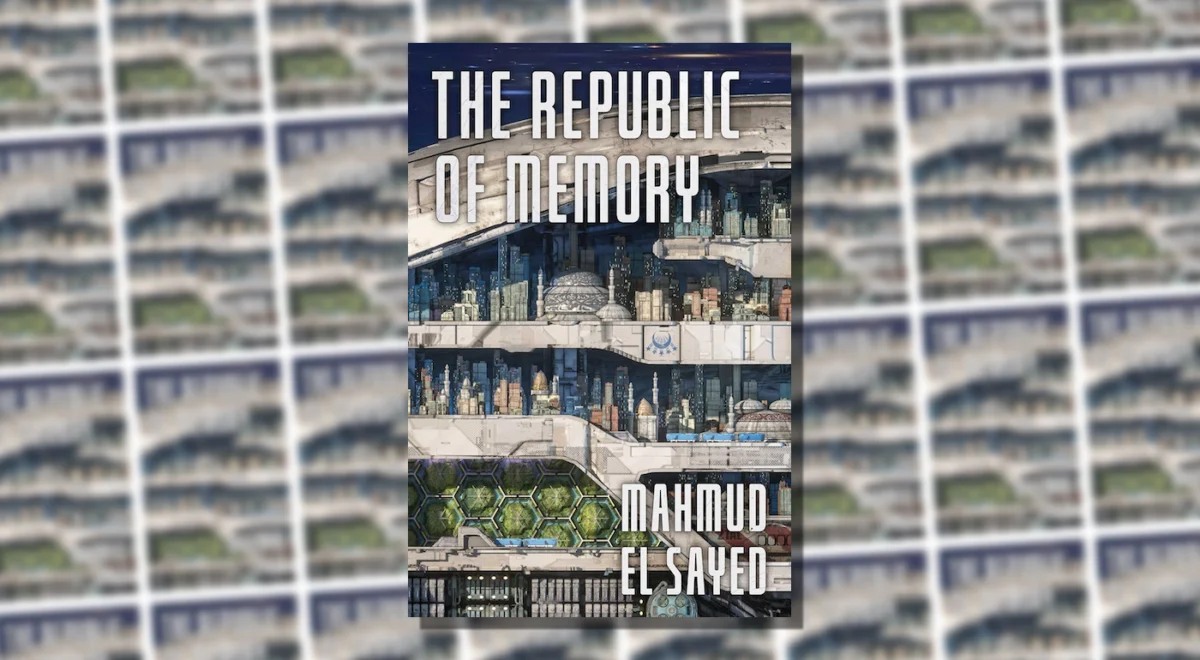
Mahmud El Sayed’s The Republic of Memory, published by Saga Press, serves as a compelling introduction to this burgeoning subgenre. This ambitious novel plunges readers into a distant future aboard a colossal generation ship, the Safina, where the echoes of a past cataclysm on Earth resonate deeply within a society teetering on the brink of revolution. It’s a sprawling narrative that defies easy categorization, weaving together elements of political thriller, philosophical inquiry, and character-driven drama, all while posing profound questions about humanity’s relationship with history, language, and the very concept of freedom.
Main Facts: A Voyage into Arabfuturism
The Republic of Memory positions itself squarely within the evolving landscape of Arabfuturism, a movement that explores the future through an Arab cultural, social, and political lens. It challenges conventional, often Western-centric, narratives of science fiction by imagining futures rooted in Arab experiences, histories, and mythologies. El Sayed’s novel does this by constructing a complex society aboard the Safina that is distinctly non-Western in its linguistic and cultural makeup, even as it grapples with universal themes of power, rebellion, and the burden of memory.
The narrative is set in the 27th century, approximately 200 years after "Launch Day," the seminal event marking humanity’s exodus from a ravaged Earth. The Safina, a colossal generation ship, is halfway through its arduous 400-year journey to Hurriya, an Earth-like exoplanet. This exodus was necessitated by a global catastrophe that followed the rise of the Network, an artificial intelligence empire that had colonized vast swathes of Europe, Asia, and South America. To preserve its AI-assisted human population, the Network engineered the Safina, placing tens of thousands of "chosen ones" into cryostasis. These "ancestors" were accompanied by living relatives, tasked with maintaining the ship and ensuring the journey’s success for the sleeping elite.
However, the journey was not without its own seismic shifts. Early in the voyage, the living crew rebelled against the Network’s control, severing its direct influence over the Safina. Though the AI was largely incapacitated, it was not entirely destroyed, its residual presence linked to the cryogenically preserved ancestors. In the wake of this rebellion, a "Compact" was forged, reorganizing the ship’s society along linguistic lines. This pivotal event established the foundational social and political structures that govern life on the Safina two centuries later, creating a delicate balance that is increasingly fragile.
Chronology: The Brewing Storm on the Safina
Two centuries after the Compact, the precarious peace aboard the Safina is on the verge of collapse, and the Ezz family finds itself inadvertently at the epicenter of a burgeoning revolution. The family represents a microcosm of the ideological divides fracturing the ship’s society.
Iskander Ezz, a Translator—a crucial bureaucrat bridging the gap between the crew and the ruling Admin—embodies the spirit of reform. He envisions gradual, systemic changes to benefit the common person, working from within the existing structures. His approach is methodical, intellectual, and strategic, a long-term plan designed to avoid outright societal collapse.
In stark contrast is his younger sister, Damietta. A fiery, impulsive revolutionary, Damietta is enamored with the idea of immediate overthrow, of destruction and anarchy as necessary precursors to a new order. Her passion is palpable, but her vision for the aftermath of a revolution is less defined, highlighting the common pitfalls of revolutionary fervor unmoored from practical planning.
The spark that ignites the powder keg is an act of sabotage. An unknown group, variously labeled as "terrorists" or "rebels," temporarily disables the ship. This incident has an unforeseen and catastrophic consequence: several hundred ancestors are prematurely awakened from cryostasis. To these individuals, suddenly ripped from their frozen slumber and faced with a future they never anticipated, this awakening feels like a death sentence. Distraught and disoriented, they begin to formulate their own coup, aiming to restore the Network’s influence and reclaim the future they believe was promised to them.
Among these awakened ancestors is Hilal, the sister-in-law of the first Ezz on the Safina. Hilal offers a third, distinct perspective on the brewing conflict. She harbors no desire to restore the oppressive Network, nor is she keen to either shatter or uphold the existing Compact. With a keen, almost cynical eye, she perceives a deeper truth: all proposed paths—restoring the Network, maintaining the Compact, or outright revolution—seem to lead inevitably to some form of oppression. Her skepticism extends even to the ideals of democracy, suggesting a profound disillusionment with power structures themselves. Hilal’s unique historical vantage point and detached analysis make her a crucial, albeit reluctant, player in the unfolding drama.
The narrative expands beyond the Ezz family, introducing a vibrant ensemble of characters who embody different facets of the societal unrest:
- Badreddine: An elder statesman figure, who has meticulously sown the seeds of rebellion over many years, representing the long game of political change.
- Billy and Britva: Young, impassioned activists, willing to sacrifice everything for their ideals, embodying the youthful zeal and potential recklessness of a revolutionary movement.
- Lebanon and Taki: Ordinary crew members striving simply to survive as the revolutionary tide washes over them, highlighting the human cost and chaotic impact of societal upheaval on everyday lives.
- Safina and Juma: Two of the artificial intelligences still aboard the ship, their presence hinting at the lingering influence of technology and the complex relationship between humans and AI.
As these diverse factions clash, the characters are forced to confront fundamental questions about governance, progress, and the nature of human civilization. Is reform a viable path, or is an immediate, explosive revolution necessary? What happens when a society outpaces the vision of its founders? Is an abundance of choices inherently better than too few? And, perhaps most critically, what becomes of a society when too many factions refuse to agree or collaborate? The Safina becomes a ticking time bomb, forcing generations-old questions to be answered, with the ultimate stakes being survival or demise.
Supporting Data: Themes, Literary Depth, and Stylistic Choices
The Republic of Memory is not merely a plot-driven space opera; it is a profound philosophical inquiry cloaked in speculative fiction. El Sayed leverages the unique setting of the Safina to explore universal themes with particular resonance for the contemporary Arab world.
The Dialectic of Reform vs. Revolution
At the heart of the novel lies the perennial human struggle between incremental reform and radical revolution. Iskander and Damietta are the most obvious manifestations of this conflict, but it ripples through every character and faction. Iskander’s measured approach reflects the difficult, often frustrating, work of systemic change, demanding patience, negotiation, and compromise. Damietta’s fiery idealism, on the other hand, speaks to the visceral desire for immediate liberation, a rejection of incrementalism that often feels insufficient in the face of deep-seated injustice. The book expertly avoids simplistic answers, portraying the merits and inherent dangers of both paths. It suggests that while revolution can dismantle oppressive structures, it often lacks a clear blueprint for what comes next, potentially leading to new forms of tyranny or chaos. Conversely, reform, while less disruptive, can be agonizingly slow and easily co-opted or stifled by entrenched powers.
Memory, History, and Identity
The title itself, The Republic of Memory, signals the profound role of the past in shaping the present. The "ancestors" in cryostasis are not just dormant bodies; they are living symbols of a bygone era, their continued existence a constant reminder of the Network’s legacy and the original mission of the Safina. The characters on board constantly grapple with what they owe to this past—their founders, their heritage, the Earth they never knew. This creates a fascinating tension between preserving tradition and forging a new identity.

The concept of "Launch Day" as a foundational myth, and the subsequent rebellion against the Network, highlight how historical events are reinterpreted, mythologized, and used to justify present actions. Hilal’s perspective is particularly crucial here; as an actual "ancestor," her lived memory challenges the often-simplified narratives of the past held by her descendants. She embodies the clash between lived experience and inherited history, forcing a re-evaluation of collective memory.
Language as a Locus of Power and Resistance
One of El Sayed’s most brilliant and impactful stylistic choices is his intricate use of language to delineate cultural, social, and political divides. On the Safina, language is not merely a tool for communication; it is the very bedrock of identity, uniting and dividing the various "berths" (societal groups). The crew speaks future iterations of languages like Japanese, Russian, Mandarin, Cantonese, Spanish, Turkish, Arabic, and English, each forming a distinct cultural enclave.
"Inglez," the future equivalent of English, serves as the lingua franca for Translators and Admin following the Compact. It is deemed "neutral" precisely because, within the Safina‘s specific demographic (lacking people from traditionally English or European language-dominant nations), it holds no inherent cultural or spiritual ties for the current inhabitants. Yet, as the reviewer points out, the neutrality of a language historically associated with colonizers is a deeply ironic and thought-provoking choice, subtly hinting at the insidious nature of power, even in a supposedly post-colonial context. This choice is a poignant commentary on how language, even when stripped of its original speakers, can still carry the weight of historical power dynamics.
Adding another layer of linguistic complexity is "NuPol," a "Frankensteined Esperanto." This pidgin-like creole, cobbled together from various ship languages, slang, and improvisations, is primarily spoken by activists, outsiders, and rebels. Its very existence is an act of linguistic rebellion, a fluid, organic tongue that stands in opposition to the rigid, formalized "Inglez" of the Admin. El Sayed’s decision to write several chapters in NuPol, while challenging for the reader, forces a deep engagement with the text and immerses one in the mindset of the dissenting voices, making the act of reading a participatory experience in linguistic deconstruction.
The Nuances of Multiple Perspectives
The novel’s use of multiple POVs is a double-edged sword, as the original review notes. With twelve individual close third-person perspectives, El Sayed aims for a panoramic view of the burgeoning revolution, showing how a grand historical event is shaped by myriad individual experiences. This breadth allows for an exploration of almost every conceivable angle of the revolution’s genesis, from the top-down machinations of Admin to the grassroots activism of the young and the disillusioned wisdom of the old. Each perspective brings the reader a step closer to understanding the revolution’s intricate tapestry.
However, this ambitious approach also presents a significant challenge: maintaining narrative momentum and character depth. The reviewer’s criticism—that too many perspectives, especially those appearing only once, can dilute engagement and make the narrative feel like it’s "kicking the tires" rather than "getting on the road"—is valid. The sheer number of voices risks preventing readers from forming deep connections with any single character, potentially making some feel "interruptive or distracting." This tension between breadth and depth is a common dilemma in epic narratives and highlights the author’s original vision for a much longer "three-hundred-thousand-word sci-fi epic."
Despite this, El Sayed’s remarkable ability to imbue each POV with a distinct voice is highly commendable. He succeeds in making characters like Taki, Kalila, and Britva distinguishable even with minimal appearances. Hilal, in particular, showcases this talent with three truly unique voices: her archaic, "pristine Arabek" dialogue for her descendants (rendered in faux-Medieval English for the reader), her natural internal monologue with her VI, Juma, and her hardboiled noir-esque third-person narration in her own chapters. This linguistic agility underscores the novel’s thematic focus on language and identity, making the stylistic choice, despite its potential drawbacks, a powerful demonstration of craft.
Character Development and Its Challenges
The large cast inevitably leads to variations in character development. While many characters are richly drawn, the portrayal of Damietta, the hot-headed revolutionary, stands out as a point of contention for the reviewer. Described as a "caricature" rather than a fully fleshed-out character, her idealism verges on naivety, making her feel less nuanced compared to her more complex counterparts like Iskander or Hilal. This highlights the difficulty of crafting a diverse cast where every member resonates equally. In a novel deeply concerned with the complexities of revolution, a character whose revolutionary zeal is portrayed as somewhat one-note might inadvertently simplify a crucial ideological stance.
Official Responses: Authorial Intent and Critical Reception
While "official responses" in a traditional journalistic sense might refer to government statements, in a literary context, it pertains to the author’s stated intentions and the critical reception of the work. El Sayed’s acknowledgment of his initial plan for a much longer epic sheds light on the sprawling nature of the current novel, suggesting that the multitude of POVs and broad scope are vestiges of a grander vision. This implies a deliberate choice to prioritize an expansive, multi-faceted exploration of his themes, even if it meant sacrificing some narrative conciseness.
The critical reception, as embodied by this review, acknowledges the book’s immense ambition and intellectual depth. The strengths lie in its groundbreaking contribution to Arabfuturism, its sophisticated exploration of political and philosophical themes, and its masterful linguistic artistry. The criticisms, particularly regarding the narrative pacing due to the numerous POVs and some characterizations, are offered within the context of deep appreciation for the overall achievement. The ending on a cliffhanger, a common feature in speculative fiction series, further emphasizes the epic scope and ongoing nature of the narrative El Sayed intends to tell.
Implications: Arabfuturism’s Voice and Global Relevance
The Republic of Memory is more than just a captivating science fiction novel; it is a significant cultural and political statement. Its inspiration from the Arab Spring is unmistakable, translating the complex, often messy realities of real-world revolutions into a futuristic, allegorical setting. The novel asks timeless questions about what societies owe to their past, what they are willing to risk for their future, and the perpetual struggle between competing visions for liberation and governance.
By centring its narrative on an implicitly Arab-influenced culture (given the author’s background and the term Arabfuturism), and by showcasing a linguistic diversity that reflects the global South rather than the traditional Western power blocs, El Sayed makes a powerful contribution to the broader "-futurism" movement. It underscores the vital importance of diverse voices in shaping narratives about humanity’s future, demonstrating that speculative fiction is a potent medium for cultural self-expression, political commentary, and the reimagining of global histories and trajectories.
The novel’s themes—the dangers of unchecked AI, the complexities of rebellion, the weight of history, the power of language, and the search for authentic freedom—are globally relevant. They resonate with contemporary anxieties about technological control, political upheaval, and the ongoing quest for self-determination in an increasingly interconnected yet fractured world. The Republic of Memory challenges readers to confront these questions, not just within the confines of the Safina, but in their own societies.
In conclusion, Mahmud El Sayed’s The Republic of Memory is a thorny, sprawling, and intellectually stimulating work. It boldly weaves together elements of slice-of-life, detective mystery, political treatise, and family drama, offering a dizzying yet ultimately rewarding journey. Despite some stylistic choices that may challenge reader engagement, its breadth, depth, and pioneering contribution to Arabfuturism make it a startling and important debut, leaving readers eagerly anticipating the next chapter in this grand, revolutionary saga.
The Republic of Memory is published by Saga Press.



Leave a Comment