
The High-Frontier of Extended Reality: Meta Quest 3 and the Future of Astronaut Training
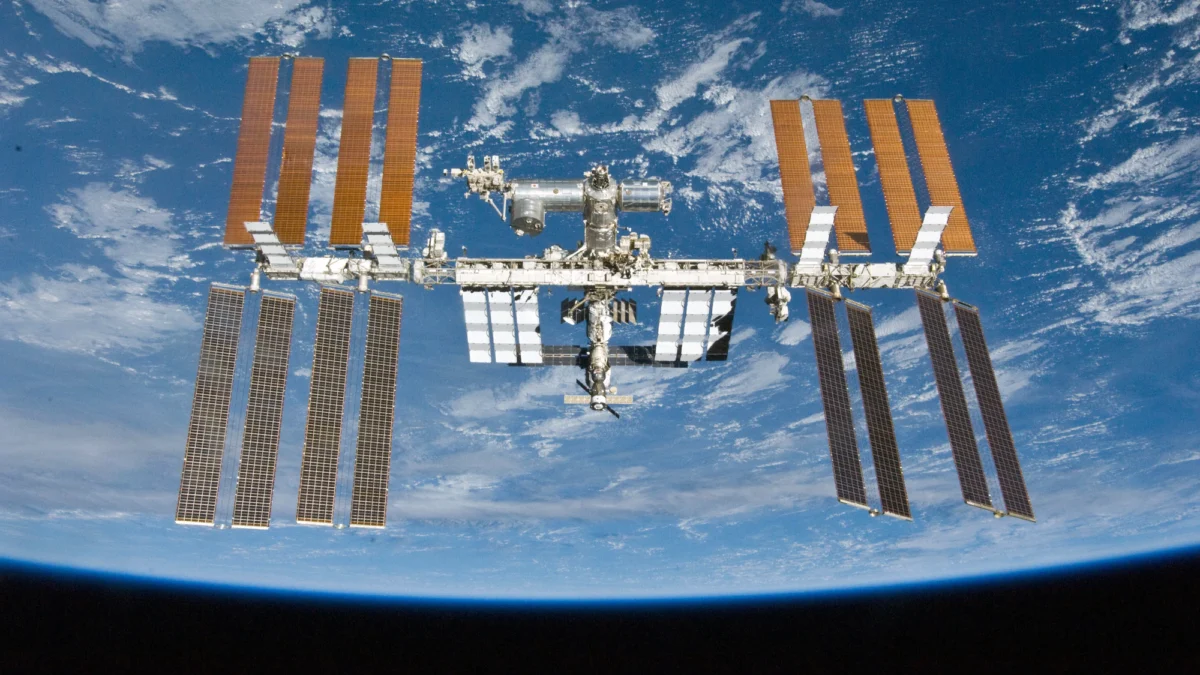
The integration of cutting-edge consumer technology into the rigors of space exploration has reached a new milestone. In a significant announcement from Meta and the European Space Agency (ESA), two Meta Quest 3 headsets are scheduled for deployment to the International Space Station (ISS). This mission represents more than just a hardware delivery; it is the culmination of a six-year strategic collaboration aimed at revolutionizing how astronauts prepare for the most perilous aspect of their missions: the spacewalk.
As the ISS enters its final decade of operation, the introduction of high-fidelity mixed reality (MR) and virtual reality (VR) tools marks a pivotal shift in orbital maintenance and training protocols. By leveraging the advanced passthrough and tracking capabilities of the Quest 3, the ESA aims to provide astronauts with an immersive, high-stakes rehearsal environment before they ever cycle through the airlock.
Main Facts: A New Era of Orbital Training
The primary objective of sending the Quest 3 units to the ISS is to facilitate specialized training for Extravehicular Activities (EVAs), commonly known as spacewalks. Traditionally, astronauts spend hundreds of hours training in the Neutral Buoyancy Laboratory (NBL)—a massive pool in Houston—to simulate the weightlessness of space. However, once in orbit, the ability to refresh those skills or rehearse a specific, mission-critical repair in a 1:1 digital twin of the station is invaluable.
The Quest 3 units being sent are not merely "off-the-shelf" consumer products in terms of their software configuration. They have been specifically adapted to function in a microgravity environment, a feat that has historically plagued mobile XR (Extended Reality) hardware. This deployment is part of a broader initiative by the ESA to digitize astronaut workflows, reducing the reliance on physical manuals and increasing the safety margins for complex external repairs.
Key Highlights of the Mission:
- Hardware: Two Meta Quest 3 headsets equipped with advanced pancake lenses and color passthrough.
- Primary Goal: Spacewalk (EVA) simulation and procedural rehearsal.
- Partnership: A six-year joint development effort between Meta and the European Space Agency.
- Technical Breakthrough: Utilization of an evolved "Travel Mode" to stabilize tracking in zero-G.
Chronology: A Decade of XR in Low Earth Orbit
The Quest 3 is the latest in a lineage of headsets that have sought to conquer the unique challenges of the space environment. To understand the significance of this latest mission, one must look at the decade-long history of XR on the ISS.
2015: Microsoft HoloLens and Project Sidekick
In 2015, NASA partnered with Microsoft to send the original HoloLens to the ISS. This project, dubbed "Sidekick," focused on Augmented Reality (AR). It featured two primary modes: "Remote Expert Mode," which allowed ground crews to see what the astronaut saw and draw annotations in their field of view, and "Procedure Mode," which overlaid animated holographic illustrations over the machinery the astronaut was servicing.
2017: The Oculus Rift and Neuroscience
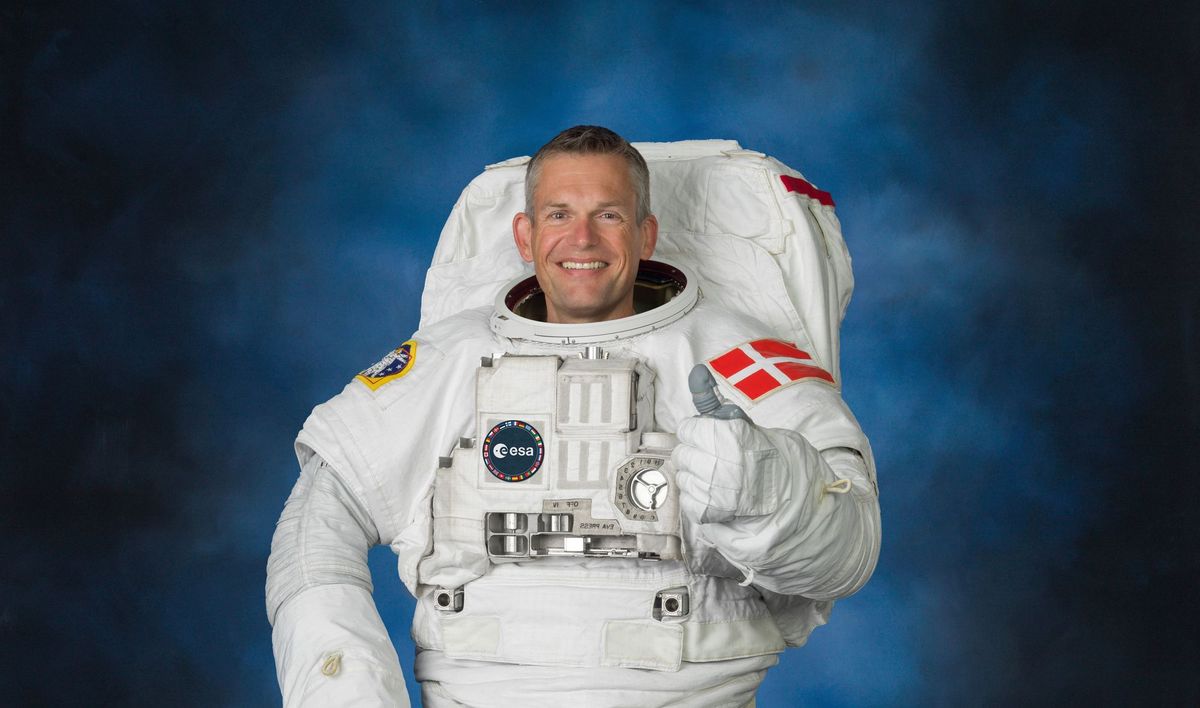
Two years later, the Oculus Rift (the predecessor to the Quest line) arrived at the station. ESA astronauts Thomas Pesquet and Alexander Gerst utilized the tethered VR headset for microgravity neuroscience experiments. The goal was to study how the human brain maps its surroundings and maintains spatial orientation when the traditional sense of "up" and "down" is removed.
2023: HTC Vive Focus 3 and Mental Health
Recognizing the psychological toll of long-duration spaceflight, HTC sent a Vive Focus 3 to the ISS in 2023. This mission focused on "Space Therapy." By providing astronauts with 360-degree immersive videos of serene Earth-based locations—forests, beaches, and mountain peaks—the headset served as a vital tool for mental health, helping to combat the feelings of isolation and confinement inherent in orbital life.
2024/2025: Meta Quest 3 and Tactical Training
The current mission moves beyond experimentation and mental health into the realm of tactical operations. The Quest 3 will be used as a functional tool for mission success, allowing for real-time rehearsal of complex mechanical tasks.
Supporting Data: Overcoming the Microgravity Tracking Hurdle
The most significant technical barrier to using VR in space is the Inertial Measurement Unit (IMU). On Earth, XR headsets use a combination of cameras (computer vision) and IMUs (accelerometers and gyroscopes) to determine their position. The accelerometer is particularly crucial because it measures the gravity vector, allowing the headset to know which way is "down."
In the constant freefall of the ISS, the gravity vector is effectively zero. On a standard headset, this causes the internal software to become "confused," leading to significant "drift" where the virtual world appears to float away or rotate uncontrollably.
The Evolution of "Travel Mode"
To solve this, Meta’s engineers looked toward a solution they had recently developed for terrestrial travel. In early 2024, Meta released "Travel Mode" for the Quest 3, designed for use on airplanes. On a plane, the constant acceleration and tilting would normally break VR tracking. Travel Mode solves this by telling the headset to ignore certain IMU data and rely more heavily on visual tracking.
For the ISS mission, this technology has been pushed to its limit. In the space-bound version of the software:
- IMU Suppression: The accelerometer data is almost entirely ignored to prevent the software from searching for a gravity vector that doesn’t exist.
- Visual-Only SLAM: The headset relies on Simultaneous Localization and Mapping (SLAM) using its external cameras to "lock" onto the interior geometry of the ISS modules.
- Contrast Adaptation: Since the lighting on the ISS can be harsh and metallic, the visual tracking algorithms were tuned to recognize the specific textures and high-contrast environments of the station.
Official Responses and Strategic Vision
Meta and the ESA have characterized this collaboration as a fundamental step toward the next era of human spaceflight.
"This is the result of a six-year collaboration," a Meta spokesperson noted, emphasizing that the project was not an overnight success but a meticulous engineering journey. The collaboration involved testing the hardware in various simulated environments, including parabolic "vomit comet" flights, to ensure the software could handle the transition from Earth’s gravity to weightlessness.
The ESA views the Quest 3 as a bridge to the future. With the ISS scheduled for decommissioning in 2031, the agency is focused on ensuring that the lessons learned in Low Earth Orbit (LEO) are transferable to the upcoming Artemis missions to the Moon. In these deep-space environments, where communication delays with Earth can last seconds or even minutes, having an "on-board" digital expert in the form of an XR headset is considered a mission necessity.
Implications: The "Swan Song" of the ISS and the Lunar Future
The deployment of the Quest 3 comes at a bittersweet moment in space history. The ISS, a marvel of international cooperation that has been inhabited since 2000, is entering its final years. However, the technology being pioneered on the station today will serve as the backbone for the next fifty years of exploration.
The Artemis Transition
As the United States, Europe, and their partners (excluding Russia) shift focus to the Artemis Moon Base, the role of XR will expand. On the Moon, astronauts will face even greater isolation. Headsets like the Quest 3—or their future iterations—will serve three critical functions:
- Operational Efficiency: Overlaying technical data on lunar habitats and rovers.
- Training: Simulating lunar surface sorties where the lighting conditions and terrain are treacherous.
- Quality of Life: Providing a "virtual escape" to Earth, serving as a private cinema or a social space to interact with family members in a more immersive way than a standard video call.
The Rise of Private Space Stations
The retirement of the ISS will not mean the end of a human presence in Earth’s orbit. Private companies are already developing "successor" stations. Vast’s Haven-1, for instance, is set to be the first commercial space station. These private entities are expected to adopt consumer-grade XR tech much faster than government agencies, potentially making headsets a standard piece of equipment for every "space tourist" and commercial researcher.
Bringing the Experience Home: Consumer Access
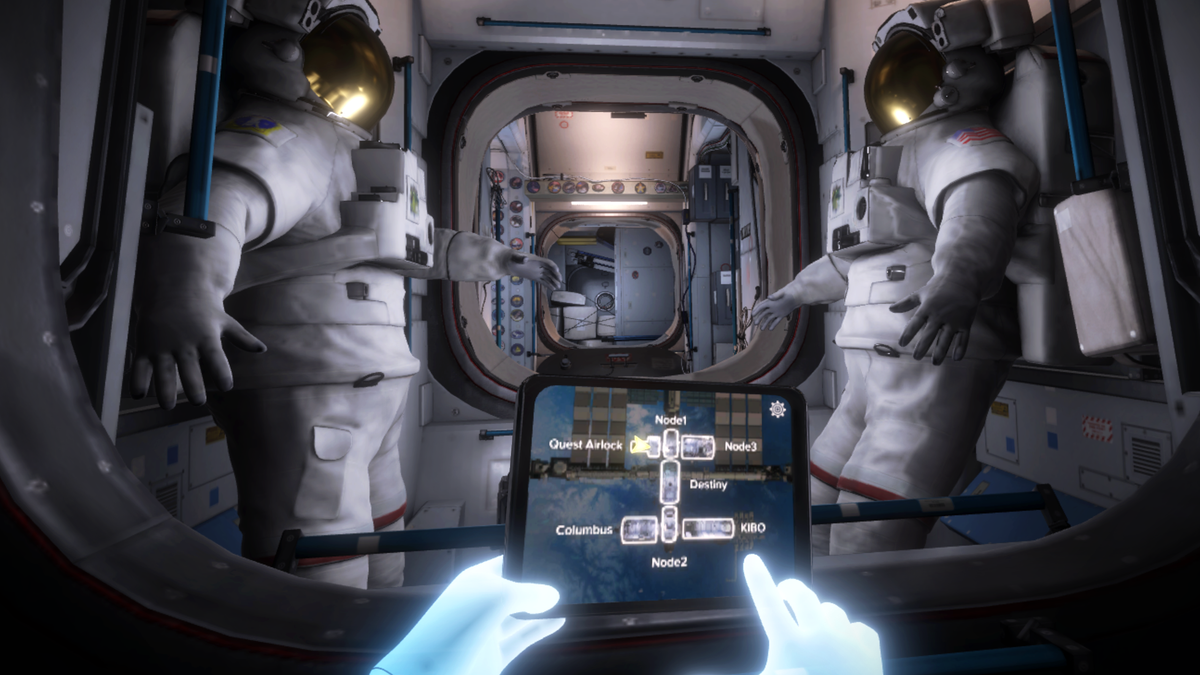
While the Quest 3 is heading up to help astronauts feel more prepared, the technology also allows those on Earth to experience the ISS. Applications like Mission: ISS (available on the Meta Horizon Store) allow users to experience a day in the life of an astronaut, from docking cargo capsules to performing spacewalks.
Furthermore, the recent release of the Vast Haven-1 VR experience on Quest, Apple Vision Pro, and Steam allows the public to walk through the planned interiors of the first commercial space station. This democratization of the space experience highlights the dual nature of XR: it is a professional tool for those at the edge of the frontier and a window for those of us remaining on the ground.
As the two Meta Quest 3 headsets begin their journey to the stars, they carry with them the promise of safer missions and a more connected experience for those brave enough to leave our planet. The "planes, trains, and space stations" mantra of Meta’s Travel Mode is no longer just a catchy phrase—it is the new reality of 21st-century exploration.



Leave a Comment