
Tabletop Gaming Magazine Celebrates 11 Years: Former Editor Christopher John Eggett Reflects on a Transformative Era
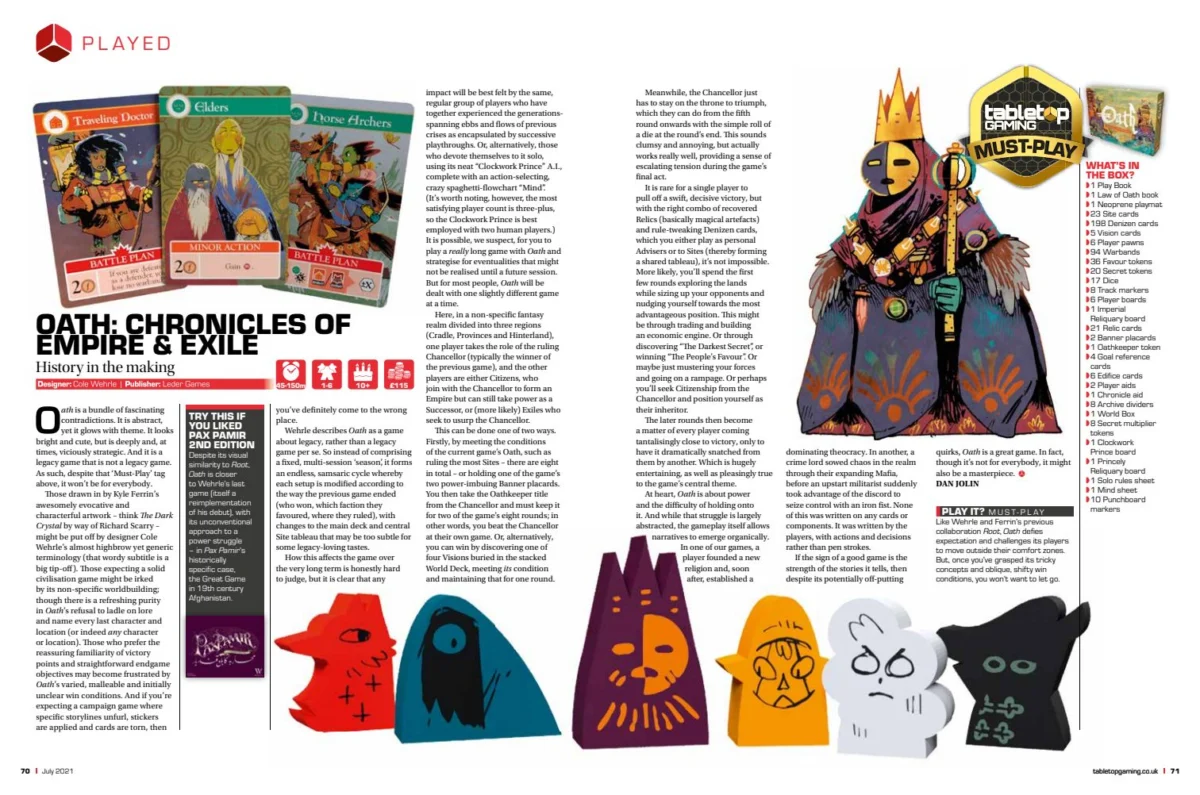
LONDON, UK – Tabletop Gaming magazine, a cornerstone publication for enthusiasts of board games, role-playing games, and wargames, marks its eleventh anniversary today, a significant milestone since its inception at the UK Games Expo in 2015. To commemorate this journey, the magazine is delving into its rich history, offering insights from the editors who have shaped its pages over more than a decade. Among these pivotal figures is Christopher John Eggett, who helmed the publication through a period of unprecedented global change, offering a unique perspective on the evolution of the tabletop industry.
Eggett, who served as Editor from November 2019 to June 2023, overseeing issues 36 through 79, provides a compelling retrospective on his tenure. His reflections span the creative process of crafting compelling covers, the intellectual thrill of engaging with visionary game designers, and the profound shifts in gaming culture brought about by a global pandemic. His insights not only celebrate the magazine’s enduring legacy but also illuminate the dynamic landscape of modern tabletop gaming.
A Chronicle of Editorship: Christopher John Eggett’s Era
Christopher John Eggett’s time at the helm of Tabletop Gaming magazine was defined by a profound period of transformation, both for the publication and the world at large. Taking the reins in November 2019, Eggett stepped into a vibrant but rapidly changing industry. His editorship, spanning nearly four years, coincided directly with the onset and sustained impact of the COVID-19 pandemic, an event that reshaped social interactions, consumption habits, and, crucially, the very mechanics of game design and play.
During his tenure, Eggett was responsible for curating content that captured the zeitgeist of the hobby, from in-depth reviews and designer interviews to features exploring emerging trends and the cultural significance of games. He navigated the challenges of remote collaboration and the shift in audience engagement, ensuring that Tabletop Gaming remained a vital source of information and inspiration for its readership during an era when many turned to tabletop games for connection and escapism. His editorial vision guided the magazine through 44 issues, each reflecting a snapshot of a community adapting and innovating in the face of adversity.
Defining Moments and Influences: An Editor’s Perspective
Eggett’s reflections offer a granular view of the choices and experiences that shaped his time as editor, providing invaluable supporting data on the magazine’s editorial process and the industry’s trajectory.
The Art of the Cover: A Personal Connection to Carcassonne
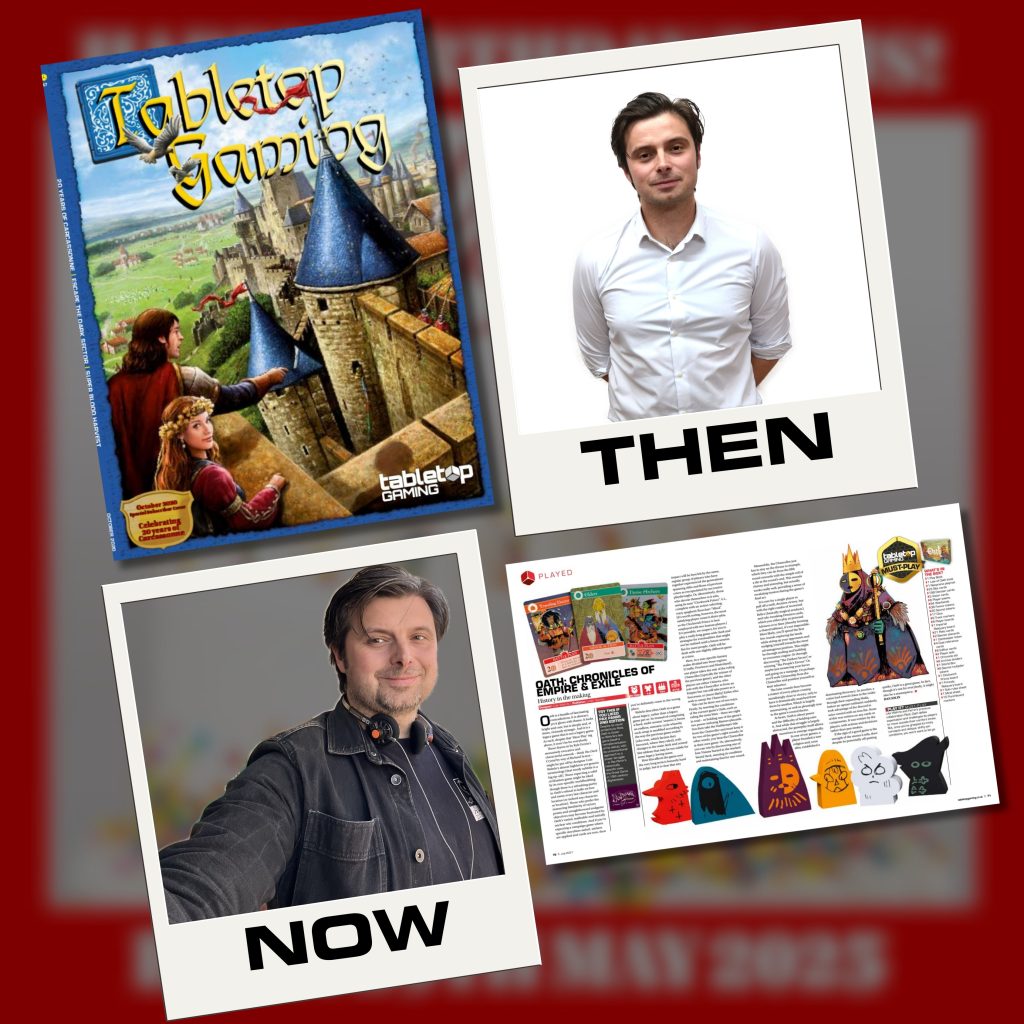
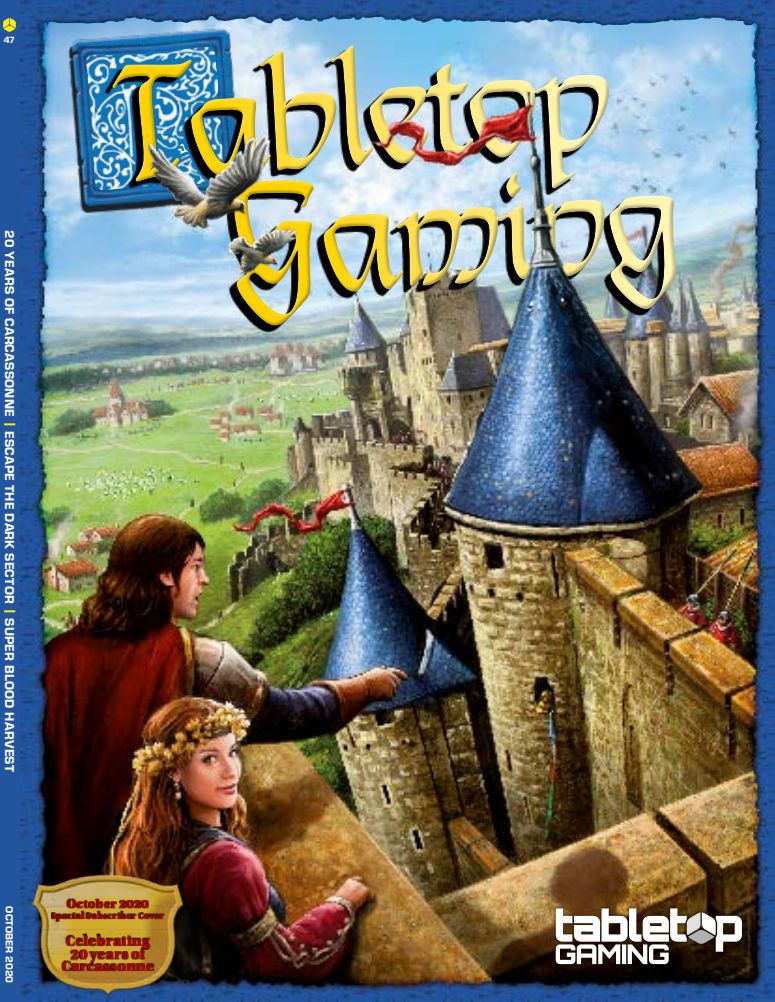
When asked about his favourite magazine cover, Eggett immediately points to the special-edition subscriber cover for Carcassonne’s 20th anniversary. This choice is deeply personal and speaks volumes about the enduring appeal and foundational role of certain games within the hobby. "We were able to fully recreate the box art and layout," Eggett recalls, highlighting the meticulous attention to detail involved in paying homage to a classic.
Carcassonne, first released in 2000, is a tile-placement game celebrated for its elegant simplicity and strategic depth. Players draw and place land tiles to build a medieval landscape, scoring points by completing roads, cities, cloisters, and fields. Its accessible rules and engaging gameplay have made it a gateway game for countless individuals, introducing them to the broader world of modern board gaming. For Eggett, this connection was particularly strong: "Carcassonne is where hobby gaming started for me, so it really felt like coming home." This sentiment underscores how much of the tabletop hobby is built on personal narratives and nostalgic connections, with games serving as touchstones for individual journeys into the community. The ability to craft a cover that resonated so deeply with his own origin story in gaming exemplifies the passion that drives dedicated editors and the powerful link between personal experience and professional output.
Interviews That Resonated: Voices of Innovation and Vision
Eggett’s role as editor brought him into contact with some of the most innovative minds in game design. His favourite interviews reveal a diverse array of creators whose work challenged conventions and expanded the horizons of the hobby.
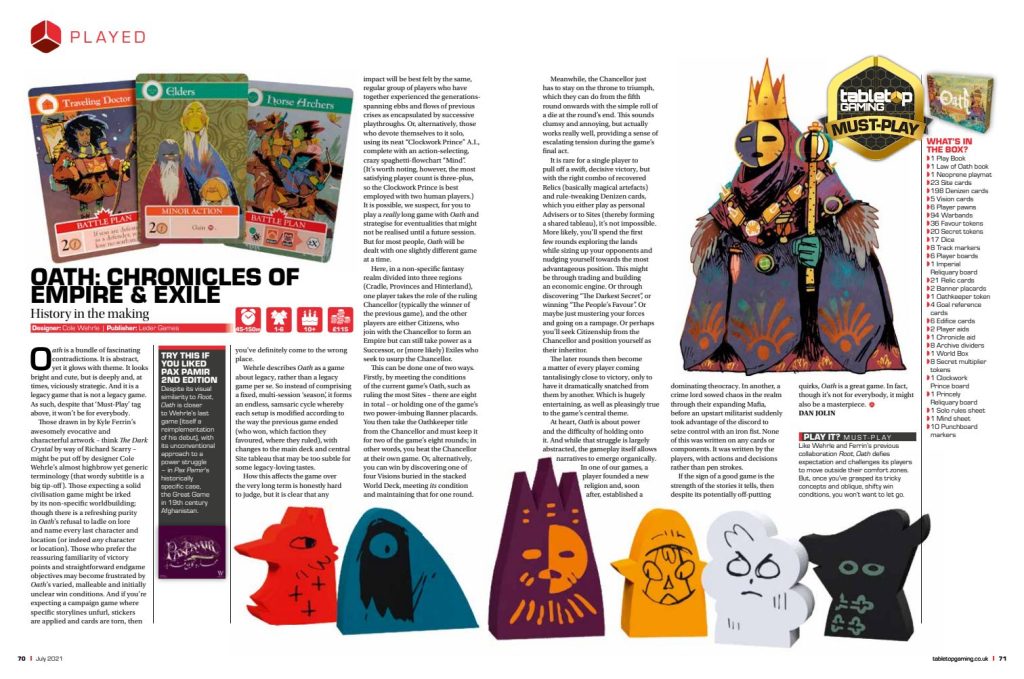
One designer who left a significant impression was Cole Wehrle, known for complex, narrative-rich games like Root, Pax Pamir (Second Edition), and Oath: Chronicles of Exile and Empire. Eggett resonated deeply with Wehrle’s approach: "Cole Werhle (Oath) is someone who thinks about games in the same way as literature, and I resonated with that." Wehrle’s designs are often characterized by their intricate historical or fantastical settings, asymmetrical player powers, and emergent narratives, demanding a thoughtful engagement akin to interpreting a complex text. This perspective elevates games beyond mere entertainment, positioning them as a form of interactive storytelling and intellectual pursuit.
Sean Aaberg, the artistic force behind Dungeon Degenerates: Hand of Doom, also proved to be an inspirational figure. Eggett notes, "Sean Aaberg’s (Dungeon Degenerates) art-punk roots are inspirational." Aaberg’s work is characterized by a distinctive, gritty, and often grotesque aesthetic that deliberately eschews mainstream fantasy tropes. His "art-punk" philosophy imbues Dungeon Degenerates with a raw, counter-cultural energy, challenging traditional notions of beauty and polish in game art. This embrace of the unconventional resonated with Eggett, highlighting the magazine’s appreciation for diverse artistic expressions within the hobby.
Another memorable encounter involved Pelle Nilsson and Johan Nohr, the creators of the phenomenon that is MÖRK BORG. Their origin story, as recounted by Eggett, was particularly charming: "Pelle Nilsson and Johan Nohr’s MÖRK BORG origin story (written in lunchbreaks) was a joy to report." MÖRK BORG is a Swedish art-punk OSR (Old School Renaissance) role-playing game renowned for its brutal, grimdark setting, minimalist rules, and striking, chaotic graphic design. The idea that such a groundbreaking and influential game could emerge from humble lunchbreak scribbles speaks to the organic, passionate nature of independent game development and the unexpected places true innovation can spring from.
Finally, when pressed for his "pure ‘would like to go for a pint with’" choice, Eggett settled on the design duo David Thompson and Trevor Benjamin, creators of acclaimed titles like Undaunted and War Chest. "It’s got to be David Thompson and Trevor Benjamin (Undaunted, War Chest) as a pair. And I should have let them get me into hex-and-counter wargames much earlier!" he admits. Thompson and Benjamin are celebrated for their ability to distill complex military strategy into accessible yet deep gameplay experiences. Their Undaunted series, for example, combines deck-building with tactical combat, making wargame mechanics approachable for a wider audience. Eggett’s humorous self-admonishment reflects a common sentiment among gamers: the regret of discovering a compelling sub-genre later than one wishes, underscoring the vastness and constant evolution of the hobby.
Games That Shaped an Era: Legacy and Innovation
Eggett identifies two games that he feels definitively shaped his editorial era, each representing a significant trend or innovation within the tabletop landscape.
The first is Oath: Chronicles of Exile and Empire. Eggett describes it as "a game that is so good at aligning player position and intention that you can teach it by asking people what they want to do. You can really ‘compose’ a turn in it." Oath, another creation by Cole Wehrle, is a complex, narrative-driven game of empire-building and political intrigue set in a fantastical world. Its most distinctive feature is its "chronicle" system, which allows the outcome of one game to influence the starting conditions and lore of subsequent games, creating an evolving, persistent world. "It also has a kind of ‘memory’ where each time you play, you change the constitution of the world for the next game, so there’s a record of everyone who played," Eggett explains. He views Oath as a pivotal design, calling it "a cap on the destructive legacy era, and an invitation to designers to add more ‘life’ to their games." This refers to Oath‘s innovation in creating persistent changes without the irreversible destruction of components often found in earlier "legacy" games. It offered a more nuanced, evolving narrative experience, encouraging players to invest in a continuous story rather than a finite campaign.
The second defining game of his era is MÖRK BORG. Building on its compelling origin story, Eggett highlights its profound impact on the indie RPG scene. "MÖRK BORG is the second. It spawned a new and energetic wave of indie roleplaying games by being so open to graphic design fun, and there being plenty of obvious gaps for new supplements to fill." MÖRK BORG‘s success demonstrated that a game could be both mechanically lean and aesthetically bold, appealing to players seeking alternatives to traditional, rule-heavy RPGs. Its distinctive visual style, combining stark typography with distressed textures and striking imagery, proved incredibly influential. The game’s open-ended nature and focus on creative freedom also fostered a thriving community of third-party content creators, filling the "obvious gaps" with countless fan-made supplements, adventures, and artwork. "Seeing the huge community form around it felt like getting in on the ground floor of an exciting new movement," Eggett reflects, capturing the palpable energy and collaborative spirit that MÖRK BORG ignited.
The Unplayed Masterpieces and Personal Play
The life of a gaming magazine editor, ironically, often means sacrificing personal playtime for the demands of the job. Eggett laments, "Yes, every huge campaign game! Sadly, assigning away things you really want to play is all part of the job." This poignant confession resonates with many hobbyists who find their passion for games often outstrips their available time, highlighting the professional obligation to cover a broad spectrum of games even if it means missing out on personal experiences with epic sagas.
Despite the professional demands, Eggett still finds time for personal gaming, especially with his family. His favourite game that he still plays today is Mausritter, a game he admits he "regret only giving a half page at the time." Mausritter is a charming, rules-light tabletop role-playing game about mouse adventurers in a dangerous, oversized world. It leverages familiar tropes of fantasy adventure but scales them down to the perspective of tiny rodents, making mundane objects feel epic and everyday creatures feel monstrous. "There’s nothing like being placed in the relatable-but-scaled-down-world of mouse adventuring for bringing out the surprising capacity for violence and ingenious trap-setting that lives inside a six-year-old girl," Eggett shares, illustrating the unique joy and imaginative power of introducing RPGs to children. His anecdote underscores the profound, often unexpected, ways games can foster creativity and connect generations.
A Pre-Pandemic Snapshot: AireCon and the Looming Change
Among the many events Eggett attended, one stands out for its unique atmosphere, capturing a moment on the precipice of global disruption. "The AireCon before the world closed because of Covid had a very ‘trying to play Jenga on the Titanic’ feel about it," he recalls. AireCon, a popular tabletop gaming convention held in Harrogate, UK, is known for its relaxed, inclusive atmosphere. The 2020 event, held just weeks before widespread lockdowns began, carried an undeniable undercurrent of apprehension. Eggett’s vivid metaphor perfectly encapsulates the surreal experience of that time: attempting to engage in a lighthearted activity while a monumental, unseen threat loomed. Despite the tension, or perhaps because of it, the event forged lasting bonds: "I made some good friends there under the strained circumstances." This reflection highlights the resilience of the gaming community and its capacity for connection even in the most uncertain times.
COVID-19’s Transformative Impact on Game Design
Eggett identifies the COVID-19 pandemic as "the biggest change in gaming during your time in charge." The lockdown measures and social distancing requirements fundamentally altered how games were designed and, crucially, how they were intended to be played.
"Covid changed the way games were designed and how they were designed to be played," Eggett states unequivocally. This shift manifested in several key areas:
- Rise of Solo Play: "Solo became a primary testing and playing feature," he observes. With group gatherings restricted, designers increasingly focused on creating robust single-player experiences, ensuring games could be enjoyed even in isolation. This led to a boom in dedicated solo modes and complex solo automa systems.
- Remote Collaboration: The necessity of working from home meant that "remote collaboration meant that the social fizz of gaming took a backseat." While digital tools facilitated communication, the spontaneous, iterative nature of in-person playtesting and brainstorming was often lost, impacting the organic development process.
- Altered Gameplay Dynamics: Eggett notes a distinct shift in the characteristics of games released post-pandemic. "The games that came out at the end of my time were smoother, more rounded experiences – but often lacked the intentionally created cross-table frustration." He describes them as feeling "like lovely machines or fairground rides." This suggests that the emphasis on individual playability and streamlined mechanics, a byproduct of solo-centric design, might have inadvertently diminished the interactive friction and direct player conflict that define many group gaming experiences. While games became more polished and less prone to rules ambiguities, some of the messy, unpredictable human elements that generate memorable social interactions were potentially muted.
- The Upside: Despite these trade-offs, Eggett acknowledges a significant positive outcome: "The upside is a lot of really good solo experiences, of course!" The pandemic undeniably accelerated the maturation of solo gaming as a legitimate and highly valued segment of the hobby, catering to players who prefer solitary strategic challenges or simply cannot always gather a group.
A Final Piece of Wisdom: "Don’t Take Having Fun Quite So Seriously."
When asked for a single piece of advice he would give his younger self at the start of his editorship, Eggett’s response is both concise and profound: "Don’t take having fun quite so seriously." This seemingly simple statement encapsulates a deeper truth about balancing passion with perspective. In a hobby driven by enthusiasm, it’s easy to become overly critical, competitive, or stressed by the pursuit of "optimal" fun. For an editor, this could translate into immense pressure to always feature the "best" games, to maintain a perfect journalistic standard, or to endlessly dissect every nuance. Eggett’s advice is a reminder to embrace the inherent joy and spontaneity of gaming, to allow for imperfections, and to prioritize the intrinsic pleasure of the hobby over any perceived solemnity or obligation. It’s a valuable lesson for both professionals and enthusiasts alike, advocating for a lighter, more appreciative approach to the games that bring so much joy.
Broader Implications and Legacy
Christopher John Eggett’s reflections offer more than just personal anecdotes; they provide a crucial lens through which to understand the evolving landscape of tabletop gaming. His tenure, straddling the pre- and post-pandemic worlds, captures a pivotal moment of adaptation and innovation within the industry.
The magazine’s ability to thrive for 11 years, particularly through the turbulent period Eggett describes, underscores the enduring power and appeal of tabletop gaming. In an increasingly digital world, the tangible experience of board games and RPGs continues to captivate, offering unique forms of social connection, intellectual challenge, and creative expression. Tabletop Gaming magazine, as a print publication, serves as a testament to the value of dedicated, curated content that goes beyond ephemeral online discussions, providing a lasting record and authoritative voice within the hobby.
Eggett’s insights into defining games like Oath and MÖRK BORG highlight significant trends: the move towards more narrative-driven, evolving game experiences, and the explosive growth of the independent RPG scene fueled by creative freedom and community engagement. His observations on the impact of COVID-19 are particularly salient, illustrating how external forces can profoundly shape design philosophies, leading to a greater emphasis on solo play and streamlined mechanics, even as the social dynamics of gaming undergo subtle shifts.
Ultimately, Eggett’s candid reflections—from the personal connection to a Carcassonne cover to the friendships forged under strain at AireCon—reveal the human element at the heart of the tabletop industry. Editors like Eggett don’t just review games; they curate culture, amplify diverse voices, and guide a passionate community through its triumphs and transformations. His parting advice, "Don’t take having fun quite so seriously," serves as a timeless reminder of the essential spirit that defines tabletop gaming: a boundless capacity for joy, wonder, and connection, even when the stakes are high.
As Tabletop Gaming magazine looks forward to its next decade, the contributions of editors like Christopher John Eggett will undoubtedly remain a vital part of its rich tapestry, chronicling the stories, innovations, and enduring passion that define the world of tabletop gaming.
Hear from the other magazine Editors from Tabletop Gaming’s 11-year history:


Leave a Comment