Ribbiting Chaos: An In-Depth Look at ‘Frog Sqwad’ and the Evolution of the Physics-Based Party Genre
The indie gaming landscape has long been a fertile ground for experimental multiplayer experiences that prioritize "couch co-op" chaos over hyper-realistic graphics or complex narratives. From the frantic kitchen management of Overcooked to the gelatinous brawls of Gang Beasts, the genre has thrived on the hilarity of controlled failure. The latest contender to leap into this arena is Frog Sqwad, a title that blends physics-based traversal with a high-stakes scavenger hunt.
Developed with a focus on "wacky" aesthetics and high-player-count integration, Frog Sqwad tasks players with a singular, absurd mission: satisfy the insatiable hunger of the "Swamp King" by delivering human delicacies—ranging from hamburgers to giant eggs—through a series of increasingly hazardous environments.
Main Facts: The Core of the Sqwad
At its heart, Frog Sqwad is a cooperative party game designed for up to eight players. While many modern co-op titles cap their player count at four, Frog Sqwad doubles down on the potential for mayhem by allowing seven friends to join a single session. This high player ceiling is a strategic move, positioning the game as a go-to choice for larger social gatherings and online groups.
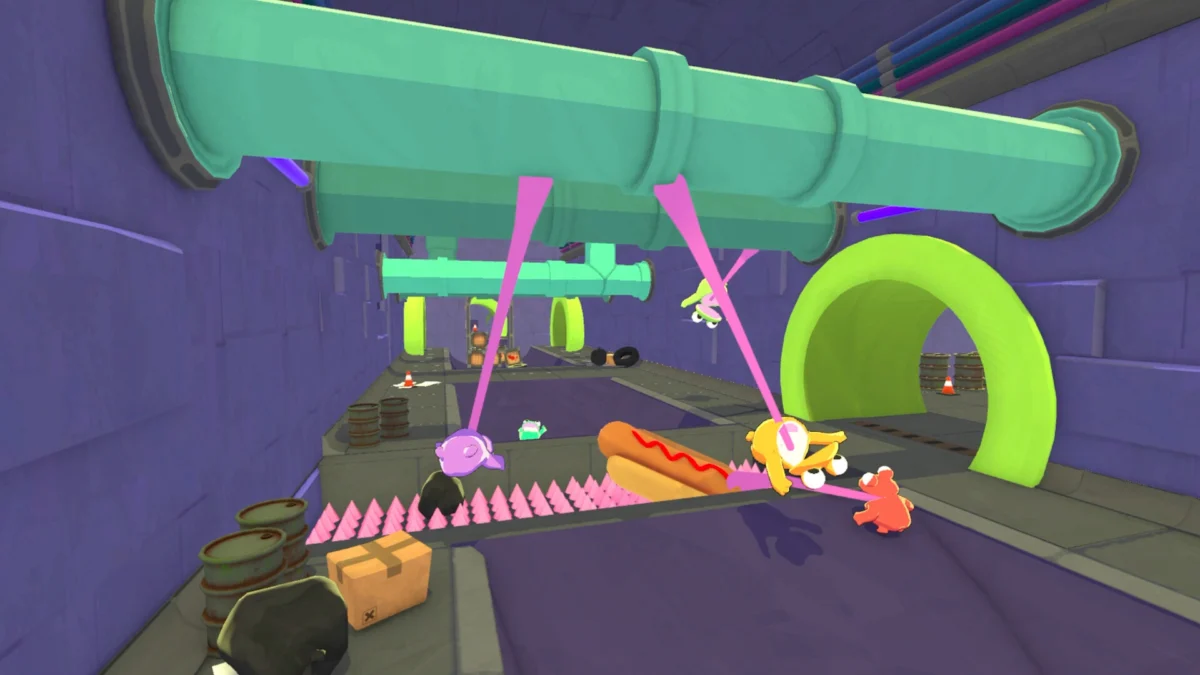
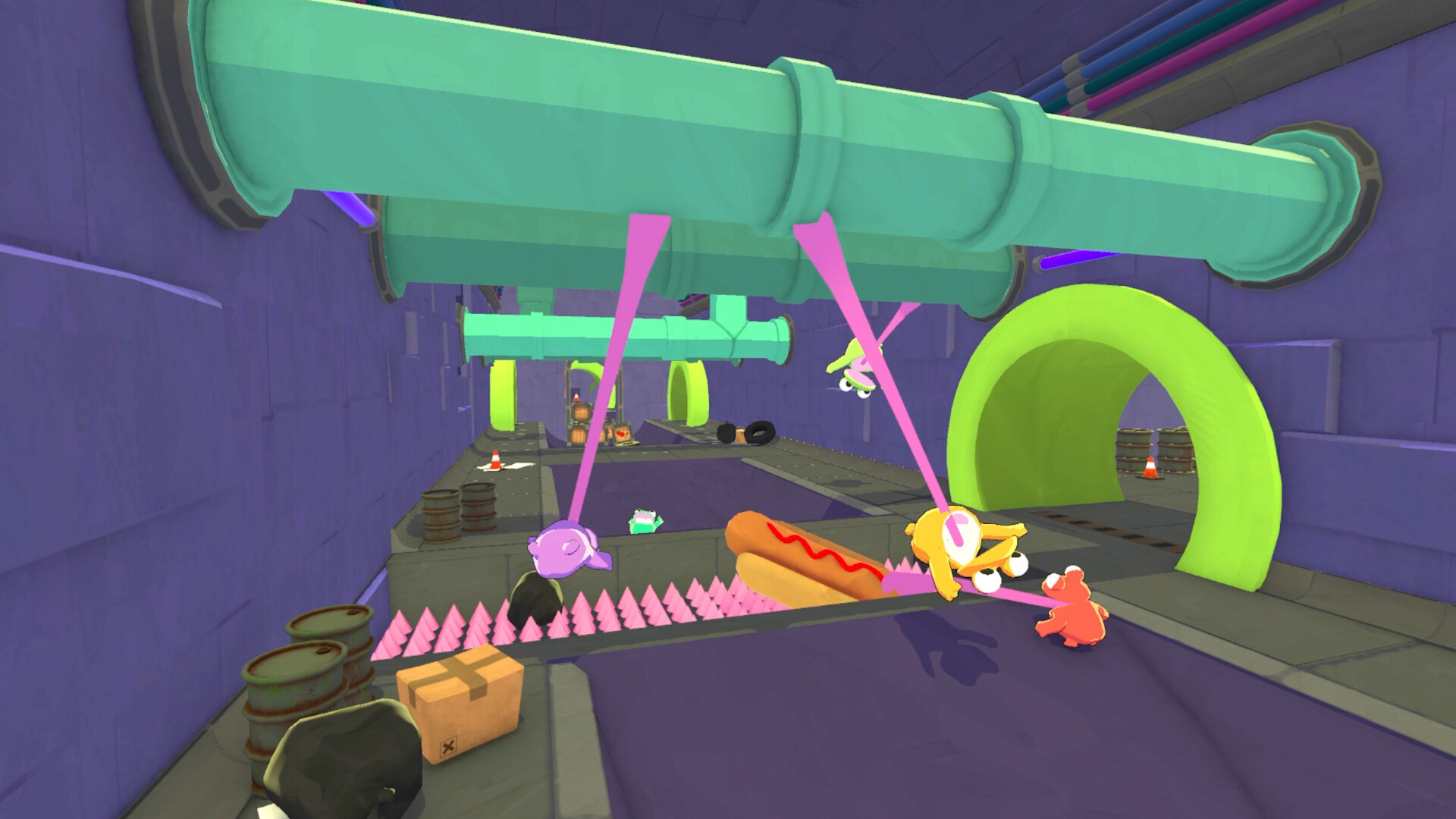
The primary gameplay loop revolves around a unique "tongue-to-travel" mechanic. Unlike traditional platformers where movement is dictated by walking or running, the amphibians in Frog Sqwad rely on their sticky, retractable tongues to grapple onto surfaces, swing across chasms, and manipulate objects. This mechanic serves a dual purpose: it is both the primary tool for navigation and the only way to secure the "offerings" required by the Swamp King.
The objectives are simple in theory but grueling in practice. Players must scavenge for food items—hamburgers, apples, French fries, and oversized eggs—and transport them to a central collection bowl to meet a daily quota. Failure to satisfy the King is not an option, creating a "ticking clock" tension that defines the rhythm of each level.
Chronology: From London Demos to Steam Release
The journey of Frog Sqwad into the hands of the public has been marked by strategic showcases at indie-focused events. One of the most significant milestones in the game’s pre-release history was its presence at the "New Game Plus" event in London. This event, known for highlighting innovative indie titles and providing a platform for developers to gather direct player feedback, offered a first look at the game’s idiosyncratic control scheme.
Journalists and playtesters at the event, including noted indie critic Jupiter Hadley, noted the game’s distinct "floaty" movement. This feedback highlighted a core characteristic of the game: its reliance on physics-based unpredictability. Unlike the "snappy" controls found in precision platformers like Celeste, Frog Sqwad embraces a certain level of input lag and momentum-based drift, forcing players to adapt to the weight and arc of their frog’s leap.
Following its successful demo period and promotional trailer reveals, Frog Sqwad officially launched on the Steam platform. Its release comes at a time when the "chaotic co-op" subgenre is seeing a resurgence, driven largely by the "streamer effect," where high-energy, visually funny games gain rapid traction on platforms like Twitch and YouTube.
Supporting Data: Mechanics and Level Design
To understand the appeal of Frog Sqwad, one must examine the granular mechanics that differentiate it from its peers. The game utilizes a "Growth and Transformation" system that adds a layer of strategy to the frantic food gathering.
The Consumption Loop
Not all food gathered is destined for the Swamp King. Smaller food items can be consumed by the players themselves. This serves two functions:
- Health Regeneration: In a world filled with toxic ooze and spikes, maintaining health is vital.
- Physical Scaling: As frogs eat, they grow in size. If a player consumes enough, they transform into a "giant ball." In this state, the player loses the ability to run or use precise tongue grapples but gains the ability to roll through obstacles and break down walls. This introduces an emergent gameplay element where one player might sacrifice their agility to become a "demolition expert" for the rest of the squad.
Procedural Generation and Environmental Hazards
To ensure longevity, Frog Sqwad employs procedurally generated maps. This means that no two runs are identical, preventing players from simply memorizing paths. Each map is populated with a variety of hazards:
- Slime Monsters: Predatory entities that can consume the players, resetting their progress toward the bowl.
- Toxic Ooze: Environmental floors that are instant-death zones, requiring precise swinging to bypass.
- Mechanical Puzzles: Levels often feature buttons and pressure plates that require coordination to activate, often revealing hidden caches of high-value food like the "giant eggs."
Physics and Portability
The physics engine handles the weight of the objects differently. While a hamburger might be easy to "tongue" and carry, larger items like eggs require dragging. These larger items are also "breakable," adding a layer of fragility to the mission. If a player is too reckless while swinging an egg across a spike pit, they risk losing the offering entirely, forcing a restart of the collection process.
Official Responses and Developer Philosophy
While the developers of Frog Sqwad have leaned into the "wacky" and "chaotic" descriptors in their marketing materials, there is an underlying philosophy of "cooperative tension." The game is designed to be difficult, bordering on frustrating, which is a hallmark of the genre.
In response to early critiques regarding the "floatiness" of the movement, the design intent appears to be the creation of a "skill floor" that is easy to understand (point and lick) but a "skill ceiling" that is difficult to master. The floaty physics are not a technical oversight but a deliberate choice to ensure that "perfect" play is rare, thereby maximizing the comedic potential of mistakes.
The official announcement trailers emphasize the "Sqwad" aspect—the idea that the game is a social catalyst. The developers have positioned the title as a "friendship tester," much like the Mario Party series, where the pressure of the Swamp King’s quota can lead to hilarious breakdowns in communication among teammates.
Implications: The Market for "Friendly Friction"
The release of Frog Sqwad carries several implications for the indie gaming market and the party game genre as a whole.
1. The Expansion of Player Counts
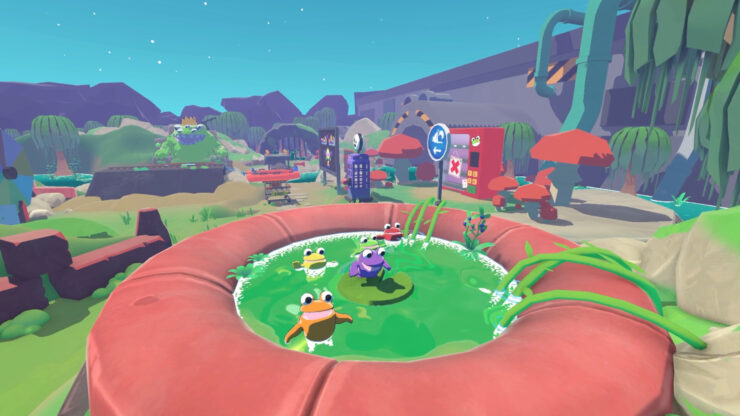
For years, the four-player local co-op limit was the industry standard, dictated by the hardware limitations of older consoles. With the shift to PC-centric indie development and robust online netcode, Frog Sqwad’s eight-player support represents a growing trend. Games are increasingly becoming social hubs, and by accommodating larger groups, Frog Sqwad taps into a market of players who are often excluded from traditional four-player titles.
2. Physics as a Gameplay Barrier
The "floaty" controls mentioned by critics represent a polarizing trend in game design. While some players find the lack of precision frustrating, others find it essential to the "party" atmosphere. When a character doesn’t go exactly where the player intends, it creates "emergent comedy." Frog Sqwad bets heavily on this, suggesting that the future of party games lies not in polished mechanics, but in "delightful friction."
3. The "Swamp King" Narrative Model
Frog Sqwad utilizes a "looming threat" narrative (The Swamp King) to drive gameplay. This is a highly effective way to provide context to repetitive tasks. By giving players a "boss" to serve, the game creates a sense of hierarchy and stakes that are often missing from pure sandbox physics games. This model is likely to be emulated by other indie developers looking to add structure to "silly" premises.
4. Accessibility and Streamability
The visual clarity of Frog Sqwad—brightly colored frogs, oversized food items, and clear environmental dangers—makes it highly "streamable." Viewers can immediately understand the goal and the stakes, even without playing the game. In the current market, "streamability" is often the difference between a niche success and a viral hit. Frog Sqwad’s mix of high-speed swinging and catastrophic failures is tailor-made for the "Live" audience.
Conclusion
Frog Sqwad is more than just a game about amphibians eating fast food; it is a testament to the enduring appeal of cooperative chaos. By leveraging a high player count, a unique grapple-based movement system, and the inherent unpredictability of procedural generation, it carves out a distinct niche in the Steam library.
While the "floaty" physics may present a steep learning curve for those used to the rigid precision of traditional platformers, the game finds its "magic" in the shared struggle of a group trying to satisfy a gluttonous King. As the indie scene continues to evolve, Frog Sqwad stands as a reminder that sometimes, the most fun can be found in a sticky, frantic, and entirely ridiculous mess.