
"Orchid Rain on the Underground": Chris "Daze" Ellis Reimagines NYC’s Vibrant Legacy at PPOW Gallery
New York, NY – [Date of Publication] – PPOW Gallery is currently hosting "Orchid Rain on the Underground," the third solo exhibition by celebrated artist Chris "Daze" Ellis. Running through April 25, 2026, this captivating exhibition offers a profound exploration of New York City’s enduring spirit, seamlessly weaving together a new series of paintings, a multimedia installation, and a striking site-specific mural. Ellis, a pivotal figure in the graffiti and urban art movements, masterfully channels the raw energy and spontaneous creativity of the 1970s and 80s, while simultaneously showcasing a meticulously honed artistic practice cultivated over five decades. "Orchid Rain on the Underground" is more than just an exhibition; it’s a powerful testament to the lasting influence of a bygone era and its continued resonance within the contemporary creative landscape of New York City.
A Legacy Forged in the Urban Crucible: Daze’s Artistic Genesis
Chris "Daze" Ellis, born in Brooklyn in 1962, emerged from a New York City teeming with nascent artistic energy. His formative years were deeply intertwined with the burgeoning graffiti culture, finding inspiration in the groundbreaking work of early pioneers like Blade, Lee Quiñones, and PHASE 2. While attending the High School of Art and Design in the mid-1970s, Ellis began to carve out his own identity as an artist. Simultaneously, he was an active participant in the city’s vibrant nightlife, frequenting legendary establishments that would later become etched into the annals of New York’s cultural history.
These iconic venues, including the Lit Lounge in the East Village, Danceteria on West 21st Street, and the Mudd Club in Tribeca, served as more than just places for revelry. They were dynamic incubators of social and artistic experimentation, functioning as informal art galleries and performance spaces. This immersive environment, pulsating with diverse creative expression, profoundly shaped Ellis’s early artistic output. By the early 1980s, Ellis had begun a significant transition, moving beyond the ephemeral act of tagging subway cars to establishing a dedicated studio practice. This evolution allowed him to encapsulate the very essence and ethos of the city, transforming ephemeral street art into enduring studio works that captured the soul of New York.
Echoes of the Past, Visions of the Present: Artistic Influences and Evolution
Ellis’s artistic trajectory is deeply rooted in a dialogue with art history, drawing inspiration from both the gritty realism of early 20th-century urban painters and the expressive dynamism of Abstract Expressionism. He acknowledges the profound influence of artists like John Sloan of the Ashcan School and Reginald Marsh of the WPA era, whose works illuminated the everyday lives and struggles of New Yorkers. Ellis honors these urban realists by centering his own creative evolution on the streets and subways of New York City, recognizing them as vital canvases for artistic exploration.
Simultaneously, Ellis’s work resonates with the lyrical abstraction found in the paintings of Joan Mitchell and Willem De Kooning. This influence is evident in his signature style, which masterfully combines bold, gestural swathes of acrylic and spray paint with meticulously rendered details of subway car interiors, dark tunnels, and bustling stations. This juxtaposition creates a powerful visual narrative, capturing both the raw energy of the urban environment and the intimate details of its lived experience.
"Gem Spa In the 80s": A Nostalgic Portrait of a Cultural Nexus
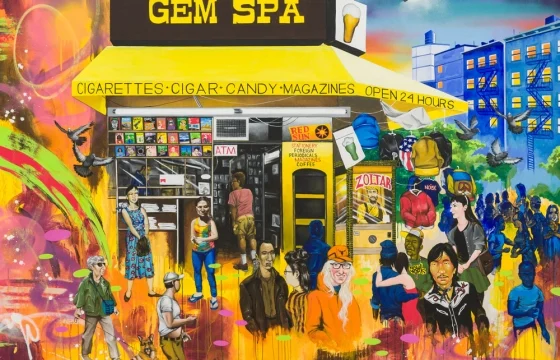
A standout piece in "Orchid Rain on the Underground" is "Gem Spa In the 80s," a 2025 painting that vividly resurrects a beloved New York City landmark. The iconic newspaper stand and candy store, once a fixture at the corner of St. Mark’s Place and Second Avenue, was a vital hub for the city’s diverse subcultures. Gem Spa was not just a place to grab a quick snack; it was a central meeting point and a nexus of intellectual and artistic exchange, famously referenced by literary giants like Jack Kerouac and Allen Ginsberg, who hailed it as a "nerve center" of the city.
In this evocative painting, Ellis populates the scene with figures who were integral to his life and the broader cultural landscape of the time. The foreground teems with familiar faces, including the influential critic and curator Carlo McCormick and the visionary artist Martin Wong. Their presence within the bustling composition underscores the interconnectedness of the creative community and the profound impact these individuals had on shaping the city’s artistic identity. "Gem Spa In the 80s" serves as a poignant portal, transporting viewers back to a specific moment in time and celebrating the enduring spirit of community and artistic camaraderie.
Floral Flourishes Amidst Urban Decay: Symbolism of Resilience and Beauty
Beyond literal representations of the urban environment, Ellis’s work in "Orchid Rain on the Underground" is imbued with a rich symbolic language. In several pieces, vibrant technicolor floral arrangements ascend from heaps of urban rubble. This striking imagery serves as a powerful metaphor for optimism amidst inequality and a testament to the unexpected beauty that can emerge from destruction and decay.
The inclusion of both exotic tropical flora and familiar local flowers from Ellis’s home in upstate New York adds another layer of meaning. These floral elements function as poignant memorials to what has been lost – whether it be personal memories, cultural landmarks, or the innocence of a bygone era. Simultaneously, they stand as hopeful testaments to the enduring beauty and creative spirit that continue to thrive in the most unexpected corners of the city. The "orchid rain" of the exhibition’s title itself suggests a delicate yet persistent blossoming, a visual representation of life and art finding a way to flourish even in the harshest urban environments.
Immersive Experiences: The Site-Specific Mural and Multimedia Installation
"Orchid Rain on the Underground" transcends the traditional gallery experience with its innovative use of space and immersive elements. A significant highlight is the site-specific mural that adorns the gallery walls. By bringing an aspect of his practice often confined to outdoor spaces into the interior setting, Ellis transforms the gallery into an extension of the urban landscape. This mural, which guides viewers through a hallway, culminates in the exhibition’s final room, where a captivating multimedia installation awaits.
This immersive environment is designed to transport visitors directly into a composite scene from Ellis’s youth. A pulsating light-up dance floor and a shimmering disco ball evoke the vibrant energy of the city’s nightlife. Actual subway car seats are strategically placed, grounding the experience in the everyday reality of urban transit. The sonic landscape is equally crucial, featuring a meticulously curated track that fuses house, disco, hip-hop, and club music – genres that defined the soundtrack of Ellis’s formative years. This installation powerfully emphasizes the freedom, creative inspiration, and sense of community that flourished in these settings, underscoring their profound importance to Daze’s personal and artistic development.
A Continuing Dialogue with the City’s Heartbeat
"Orchid Rain on the Underground" is a comprehensive showcase of Chris "Daze" Ellis’s artistic journey. By seamlessly integrating elements from throughout his career, the exhibition offers a compelling narrative of his lifelong exploration of daily life in New York City. It is a deeply personal yet universally resonant homage to the people, places, and cultural forces that collectively comprise the city’s vibrant and enduring heartbeat. The exhibition serves as a powerful reminder that the legacy of the graffiti movement and the spirit of urban creativity are not confined to history books; they continue to evolve, inspire, and shape the cultural landscape of New York City today. PPOW Gallery’s presentation of this exhibition solidifies Daze’s position as a vital contemporary artist whose work continues to resonate with both historical significance and present-day relevance.



Leave a Comment