
The Sheridan-verse Expansion: How a Modern Television Empire Redefined the American Frontier
Introduction: The Cultural Phenomenon of the Dutton Dynasty
What began in 2018 as a gritty contemporary Western on a fledgling cable network has transformed into one of the most formidable intellectual property juggernauts in entertainment history. The "Sheridan-verse"—a sprawling collection of interconnected series overseen by Academy Award-nominated screenwriter Taylor Sheridan—has not only dominated ratings but has also revitalized the Western genre for a global audience.
A recent retrospective assessment of the franchise highlights the deep lore and intricate character webs that have captivated millions. From the blood-soaked soil of the Yellowstone Dutton Ranch in Montana to the corridors of power in Kingstown, Michigan, Sheridan’s narratives explore themes of legacy, loyalty, and the brutal cost of survival. This report examines the foundational elements of this television empire, the chronological evolution of its storytelling, and the industry-wide implications of its unprecedented success.
Main Facts: The Pillars of the Sheridan-verse
At the heart of the Sheridan-verse lies the Yellowstone Dutton Ranch, a fictional empire that is stated to be the largest contiguous cattle ranch in the United States. Located in the rugged landscape of Montana, the ranch borders Yellowstone National Park, creating a permanent state of friction between the Dutton family, land developers, the neighboring Broken Rock Reservation, and the federal government.
The Patriarchal Lineage
The franchise is anchored by legendary performances from Hollywood royalty. For the first four and a half seasons of the flagship series Yellowstone, Oscar-winner Kevin Costner portrayed John Dutton III, the iron-willed patriarch. His portrayal of a man willing to commit extra-legal acts to preserve his family’s heritage became the emotional and moral center of the show.
The lineage extends back to the late 19th century. In the prequel series 1883, James Dutton (played by country music star Tim McGraw) serves as the original patriarch who leads his family on a harrowing journey along the Oregon Trail. By the 1920s, the mantle is picked up by Jacob Dutton, portrayed by Harrison Ford in the series 1923, as the family navigates the dual pressures of the Great Depression and Prohibition.
The "Y" Brand and the Blood Oath
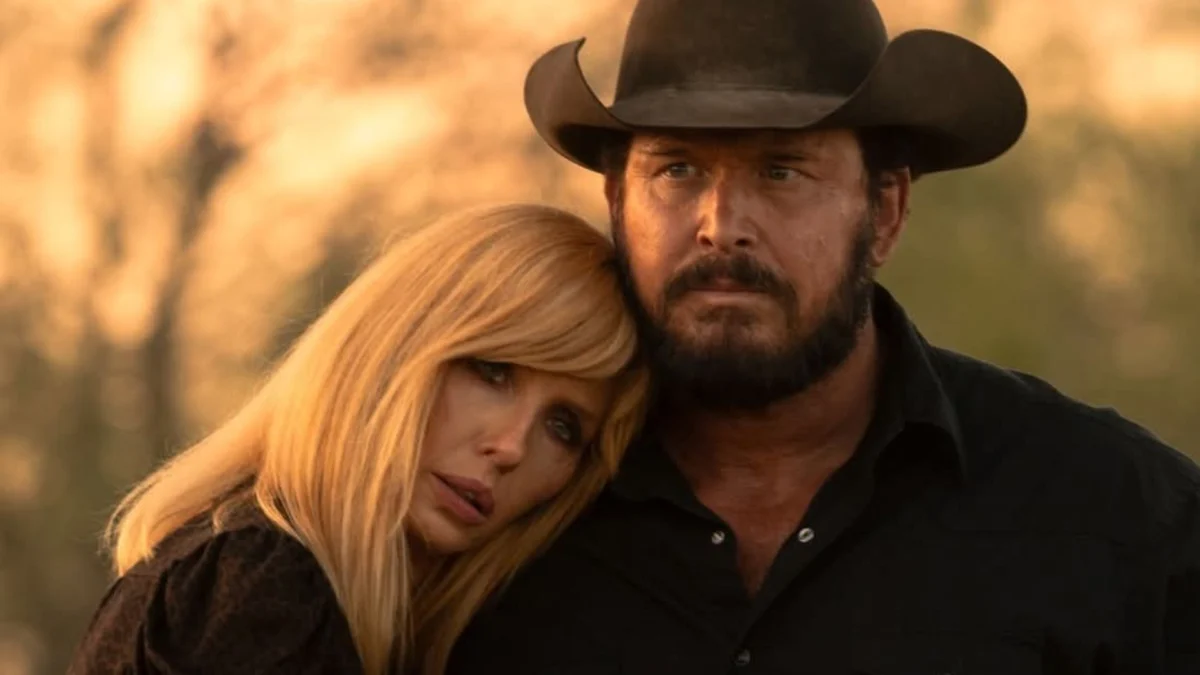
One of the most distinct elements of the Sheridan-verse is the "Y" brand. On the Dutton Ranch, certain cowboys—often those with criminal pasts or those seeking redemption—receive a permanent hot-iron brand on their chests. This symbol represents a lifelong commitment to the ranch, a "blood oath" that ensures absolute loyalty. Characters such as Rip Wheeler, the ranch’s fierce foreman and eventual husband to Beth Dutton, embody this culture of silence and sacrifice. Conversely, those who betray this trust are often "taken to the train station"—a euphemism for being executed and disposed of in a jurisdictional "no-man’s land" across the state border.
Chronology: The Evolution of a Multi-Generational Saga
The timeline of the Sheridan-verse is a complex tapestry that moves both forward and backward through American history to explain the present-day motivations of the Dutton family.
-
2018: The Genesis of Yellowstone
The flagship series debuted on the Paramount Network, introducing John Dutton and his children: the eldest Lee (who dies early in the series), the lethal corporate shark Beth, the conflicted former Navy SEAL Kayce, and the ambitious, adopted lawyer Jamie Dutton. The show established the "Modern Western" aesthetic, blending soap-opera drama with high-stakes political maneuvering. -
2021: Expanding the Horizon with 1883 and Mayor of Kingstown
Sheridan expanded his reach in two directions. 1883 provided a visceral, poetic look at the family’s origins, narrated by Elsa Dutton. Simultaneously, Sheridan stepped away from the ranch with Mayor of Kingstown. Starring Jeremy Renner as Mike McLusky, the series shifted the focus to a "prison town" in Michigan, where the McLusky family acts as unofficial power brokers between inmates, police, and gangs. -
2022: The Golden Age of Prequels and Mobsters
1923 brought Harrison Ford and Helen Mirren into the fold, detailing the Duttons’ struggle against drought and cattle thieves during the early 20th century. During this same window, Sheridan launched Tulsa King, starring Sylvester Stallone as a Mafia capo exiled to Oklahoma, further proving Sheridan’s ability to write compelling "fish-out-of-water" crime dramas.
Supporting Data: Ratings, Revenue, and Real-World Impact
The success of the Sheridan-verse is backed by staggering statistical data that underscores its dominance in the "Peak TV" era.
Viewership Metrics
Yellowstone Season 5, Part 1, averaged over 11.5 million viewers per episode in Nielsen’s Live+Same Day ratings, making it the most-watched show on all of television, surpassing even major broadcast network procedurals. The premiere of 1923 broke records for Paramount+, becoming the service’s most-watched premiere of all time with 7.4 million viewers across all platforms.
The "Yellowstone Effect" on Montana
The show’s cultural footprint has translated into significant economic shifts. According to a study by the University of Montana’s Bureau of Business and Economic Research, the production of Yellowstone resulted in $730 million in economic impact for the state in 2021 alone. Furthermore, "Yellowstone-induced" tourism accounted for an estimated 2.1 million visitors to Montana, spending approximately $1.1 billion.
Casting and Production Value
The Sheridan-verse has become a preferred destination for A-list cinema stars. The transition of Kevin Costner, Harrison Ford, Helen Mirren, Sylvester Stallone, and Nicole Kidman (in Special Ops: Lioness) to the small screen signifies a shift in the industry’s power dynamics. Sheridan’s insistence on filming on location—using the real-life Chief Joseph Ranch in Darby, Montana—adds an expensive but essential layer of authenticity to the production.
Official Responses: Navigating Conflict and Departures
Despite its success, the franchise has faced significant behind-the-scenes turbulence, particularly regarding its lead star and production schedules.
The Kevin Costner Exit
The most significant disruption in the Sheridan-verse occurred during the production of Yellowstone Season 5. Reports of scheduling conflicts between Kevin Costner and the production team led to a prolonged hiatus. Costner eventually confirmed his departure from the series, citing his commitment to his multi-part Western film project, Horizon: An American Saga.
In response, Paramount Network announced that the flagship series would conclude with Season 5B, though the universe would continue through various spin-offs. Taylor Sheridan expressed disappointment over the exit but emphasized his commitment to finishing the story in a way that honored the character of John Dutton.
The Jeremy Renner Recovery
Mayor of Kingstown faced its own crisis when lead actor Jeremy Renner suffered a near-fatal snowplow accident in January 2023. The production was halted as Renner underwent extensive rehabilitation. In an official statement, Renner praised Sheridan and the crew for their patience, eventually returning to film Season 3 in early 2024, a move hailed as a "miraculous" recovery by industry peers.
Implications: The Future of the Frontier
The Sheridan-verse represents more than just a collection of popular shows; it is a blueprint for the future of streaming services and the "New Western" genre.
The Paramount+ Strategy
The Sheridan-verse is the cornerstone of the Paramount+ streaming strategy. By creating a web of interconnected prequels and spin-offs, Paramount has successfully reduced "churn" (subscribers canceling their service), as fans must remain subscribed to follow the multi-generational saga. Upcoming projects like 6666 (set on the historic Four Sixes Ranch in Texas) and Landman (focused on the West Texas oil industry) suggest that the "verse" is only just beginning to explore the American landscape.
The Redefinition of the "Red State" Drama
Critics have often labeled Yellowstone a "Red State" show due to its rural setting and traditional themes. However, the show’s nuanced exploration of Indigenous rights, corporate greed, and the corruptive nature of power has earned it a broad, bipartisan audience. The implication for the television industry is clear: there is a massive, underserved market for high-production-value dramas that center on the American heartland rather than coastal urban centers.
Conclusion: A Lasting Legacy
As Yellowstone prepares for its final episodes, the legacy of Taylor Sheridan’s creation is secure. He has managed to turn a ranch in Montana into a modern-day Camelot—a place of myth, tragedy, and enduring fascination. Whether through the lens of a wagon train in 1883 or a prison yard in Kingstown, the Sheridan-verse continues to ask the same fundamental question: How far are you willing to go to protect what is yours?
For the audience, the answer is clear: they are willing to follow the Duttons wherever the trail leads next.


Leave a Comment