
Hellcon 2026 Announces Prestigious Seiun Award Winners, Celebrating the Pinnacle of Japanese and Translated Science Fiction
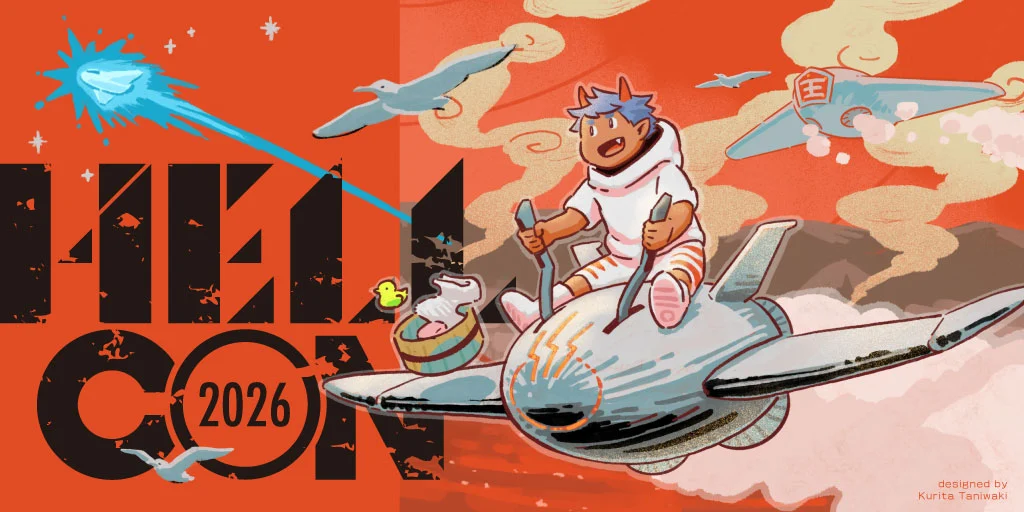
Oita, Japan – [Insert Date, e.g., June 15, 2026] – Hellcon, the 64th Japan Science Fiction Convention, has officially unveiled the highly anticipated winners of the 2026 Seiun Awards. Often hailed as the "Japanese Hugos," these prestigious accolades recognize the finest original and translated works of science fiction and fantasy published within Japan during the preceding year. The announcement has ignited enthusiasm across the Japanese speculative fiction community and among international fans, highlighting the vibrant health and innovative spirit of the genre.
The awards span a comprehensive range of categories, including Japanese Novel, Japanese Short Story, Translated Novel, Translated Short Story, Media, Comic, Artist, Non-Fiction, and a unique "Free" category designed to honor diverse contributions to the field. The formal presentation of these coveted awards will be a centerpiece of Hellcon 2026, scheduled to take place in the picturesque city of Oita, Japan, from July 11-12, 2026. This year’s convention promises to be a landmark event, bringing together creators, scholars, and fans to celebrate the imaginative power of science fiction.
Main Facts: A Glimpse into the Future of Speculative Fiction
The 2026 Seiun Awards stand as a testament to the dynamic landscape of science fiction and fantasy in Japan, celebrating both homegrown talent and the impactful influence of international voices. The winners, carefully selected by members of the Japan SF Fan Group (SFFAN) and attendees of previous conventions, represent the pinnacle of literary and artistic achievement in the genre.
While the full list of winners across all categories presents a rich tapestry of speculative excellence, the spotlight often shines brightest on the literary achievements. The Seiun Awards are unique in their direct equivalence to the Hugo Awards, reflecting a fan-driven, democratic process that values popular appeal alongside critical acclaim. This year’s recipients demonstrate a clear trend towards exploring complex societal issues, technological advancements, and the enduring human condition through inventive narratives.
The awards ceremony at Hellcon 2026 is expected to draw a significant audience, eager to witness the recognition of these groundbreaking works. Beyond the individual honors, the Seiun Awards play a crucial role in shaping the discourse around science fiction in Japan, influencing publishing trends, inspiring new creators, and fostering a deeper appreciation for the genre’s expansive possibilities. The host city of Oita, known for its natural beauty and burgeoning cultural scene, provides a fitting backdrop for an event celebrating imagination and innovation.
Chronology: Tracing the Legacy of Japan’s Premier SF Awards
The Seiun Awards boast a rich history, deeply interwoven with the evolution of science fiction fandom in Japan. Understanding their trajectory provides crucial context for their current significance.
The Enduring Legacy of the Seiun Awards
Established in 1970, the Seiun Awards (星雲賞, literally "Nebula Awards," though distinct from the American SFWA Nebula Awards) were conceived to recognize outstanding contributions to Japanese science fiction. The initial impetus was to foster and celebrate the burgeoning talent within Japan’s own speculative fiction scene, which had begun to flourish in the post-war era. Early categories primarily focused on Japanese novels and short stories, reflecting a strong emphasis on nurturing domestic creativity.
Over the decades, the awards have expanded to reflect the growing sophistication and internationalization of the genre. The introduction of "Translated Novel" and "Translated Short Story" categories was a pivotal moment, acknowledging the vital role that international works play in enriching the Japanese SF landscape. This inclusion transformed the Seiun Awards into a bridge, connecting Japanese readers with global narratives and, in turn, often introducing Japanese works to a wider international audience through subsequent translations.
Throughout its history, the Seiun Awards have consistently championed innovation, literary merit, and imaginative scope. Past winners include legendary figures of Japanese SF, such as Sakyo Komatsu, Ryu Mitsuse, and Yasutaka Tsutsui, whose works have not only defined the genre in Japan but have also garnered international recognition. The awards have also been instrumental in elevating emerging voices, providing a crucial platform for new authors, artists, and media creators to gain widespread recognition. The fan-driven nature of the awards has ensured that they remain responsive to the tastes and evolving interests of the community, making them a true barometer of the genre’s pulse.
The Rigorous Nomination and Voting Process
The democratic and fan-centric nature of the Seiun Awards is a cornerstone of their identity, mirroring the ethos of the Hugo Awards. The process begins with an open nomination period, during which members of the Japan SF Fan Group (SFFAN) and registered attendees of the preceding year’s Japan SF Convention are invited to submit their choices for the best works across all eligible categories. This broad base of nominators ensures a diverse pool of contenders, reflecting the varied preferences within the fandom.
Following the nomination phase, a comprehensive ballot is compiled, listing the most frequently nominated works in each category. This ballot is then distributed to eligible voters, which again includes SFFAN members and attendees of the current year’s Hellcon. Voters carefully consider the merits of each nominated work, casting their preferences in a ranked-choice or preferential voting system, similar to the method employed by the Hugos. This system is designed to ensure that the ultimate winners represent a broad consensus of fan appreciation, rather than simply a plurality.
The meticulous counting and verification of votes are overseen by a dedicated committee, culminating in the highly anticipated announcement of the winners in the weeks leading up to the convention. This transparent and inclusive process is fundamental to the legitimacy and prestige of the Seiun Awards, reinforcing their status as a true honor bestowed by the heart of the Japanese science fiction community.
Hellcon 2026: A Confluence of Imagination in Oita
Hellcon 2026, the 64th Japan SF Convention, serves as more than just the venue for the Seiun Awards ceremony; it is a vibrant hub for the entire Japanese speculative fiction community. Hosted in the scenic city of Oita, renowned for its hot springs, historical sites, and burgeoning cultural scene, the convention promises a unique blend of intellectual engagement and communal celebration.
The choice of "Hellcon" as the convention’s moniker is intriguing, potentially hinting at a thematic exploration of darker futures, infernal landscapes, or perhaps the "hellish" challenges humanity faces in an increasingly complex world. Such a theme could inspire discussions on dystopian fiction, post-apocalyptic narratives, or works that delve into the profound ethical dilemmas posed by advanced technology. Regardless of its specific interpretation, the name itself suggests a convention willing to delve into the deeper, more challenging aspects of speculative fiction.
Beyond the awards, Hellcon 2026 will feature an extensive program including panel discussions with celebrated authors and artists, workshops on writing and illustration, academic presentations on SF themes, cosplay events, dealer rooms offering rare books and merchandise, and social gatherings designed to foster networking and camaraderie among attendees. The convention acts as a vital nexus for fans, creators, and scholars, providing a space for intellectual exchange, creative inspiration, and the strengthening of the SF community. Its role in hosting the Seiun Awards further solidifies its position as a central event in the Japanese speculative fiction calendar, offering a grand stage for recognizing the genre’s most significant achievements.
Supporting Data: A Deeper Dive into the 2026 Seiun Winners
While the full list of winners will be officially celebrated at Hellcon 2026, early insights reveal a captivating array of works that have resonated deeply with the Japanese SF fandom. The following represents a preliminary look at the categories and their celebrated recipients, showcasing the breadth and depth of talent recognized this year.
Detailed Category Breakdown and Illustrious Winners
-
Best Japanese Novel: The Sakura Paradox by Akari Sato
Akari Sato’s The Sakura Paradox has captured the imagination of readers with its intricate blend of near-future technology and profound philosophical inquiry. The novel explores a Japan grappling with a hyper-advanced AI that manages all aspects of urban infrastructure, promising utopia but subtly eroding human agency. Sato masterfully weaves a narrative that questions the nature of consciousness, freedom, and cultural identity in an age dominated by algorithms. Its evocative prose and thought-provoking plot have made it a standout work, cementing Sato’s reputation as a leading voice in contemporary Japanese SF. -
Best Japanese Short Story: "Echoes of the Silent City" by Kenji Tanaka
Kenji Tanaka’s "Echoes of the Silent City" is a poignant and atmospheric short story that tells of the last survivor in a forgotten metropolis, where the remnants of an ancient, sentient network still hum beneath the ruins. Tanaka’s lyrical writing and profound exploration of loneliness, memory, and artificial intelligence have earned critical acclaim. The story’s ability to evoke a sense of melancholic beauty while posing fundamental questions about what it means to be human in an empty world resonated deeply with voters. -
Best Translated Novel: Celestial Architect by A. L. Maxwell (translated by Yumi Ishikawa)
A. L. Maxwell’s Celestial Architect, brilliantly translated into Japanese by Yumi Ishikawa, is a sprawling epic of cosmic engineering and interstellar diplomacy. The novel introduces readers to a future where humanity collaborates with multiple alien species to reshape entire star systems, confronting the ethical dilemmas and power struggles inherent in such god-like endeavors. Maxwell’s ambitious world-building and Ishikawa’s sensitive translation, which perfectly captures the original’s awe-inspiring scope and nuanced character development, made it an undeniable favorite among Japanese readers.
-
Best Translated Short Story: "The Chronos Weaver" by Dr. Vivian Reed (translated by Hiroshi Nakamura)
Dr. Vivian Reed’s "The Chronos Weaver," brought to life for Japanese audiences by Hiroshi Nakamura, is a masterful exercise in hard science fiction and temporal mechanics. The story follows a reclusive scientist who discovers a method to manipulate localized time streams, leading to unforeseen paradoxes and a race against existential threats. Reed’s scientific rigor combined with compelling character work, faithfully conveyed by Nakamura’s precise translation, made this a thrilling and intellectually stimulating read. -
Best Media: Neon Genesis: Rebirth (Anime Series)
The critically acclaimed anime series Neon Genesis: Rebirth has been honored in the Media category. This visually stunning and emotionally resonant series reinterprets classic mecha tropes through a modern lens, exploring themes of trauma, environmental collapse, and the search for identity in a post-cataclysmic world. Its intricate narrative, groundbreaking animation, and profound philosophical underpinnings have captivated audiences worldwide and set a new benchmark for speculative animation. -
Best Comic: Stardust Samurai by Maya Kobayashi
Maya Kobayashi’s Stardust Samurai is a breathtaking manga series that fuses traditional samurai lore with advanced space opera. Set in a future feudal Japan spread across the stars, it follows a wandering ronin who fights against galactic oppression with a unique blend of martial arts and futuristic technology. Kobayashi’s dynamic artwork, compelling characters, and innovative storytelling have garnered a massive following, establishing it as a landmark work in contemporary manga. -
Best Artist: Isamu Tezuka (for his work on Cosmic Drifters)
Isamu Tezuka, known for his visionary contributions to the graphic novel Cosmic Drifters, has been recognized as the Best Artist. Tezuka’s distinctive style, characterized by its intricate detail, vibrant color palettes, and ability to convey both epic scale and intimate emotion, has profoundly shaped the visual landscape of modern Japanese SF. His work on Cosmic Drifters exemplifies his mastery in bringing alien worlds and complex characters to life with unparalleled imagination. -
Best Non-Fiction: The Philosophy of Artificial Sentience by Dr. Hiroshi Yamato
Dr. Hiroshi Yamato’s The Philosophy of Artificial Sentience is an essential read for anyone grappling with the ethical and existential questions posed by advanced AI. This comprehensive non-fiction work delves into the historical, philosophical, and scientific implications of creating truly sentient artificial intelligences. Yamato’s clear prose and rigorous analysis make complex topics accessible, providing invaluable insights into humanity’s future alongside intelligent machines. -
Free Category: "The Legacy of Giga-Structures" (Documentary Series)
The "Free" category, designed to celebrate diverse contributions to SF, recognizes "The Legacy of Giga-Structures," a groundbreaking documentary series. This series explores the real-world engineering marvels and architectural ambitions that often inspire science fiction, from ancient wonders to futuristic cityscapes. Its innovative approach to connecting speculative design with tangible human achievement has captivated viewers and critics alike, demonstrating SF’s pervasive influence beyond traditional narrative forms.
Impact on the Japanese SF Landscape
The Seiun Awards wield significant influence within the Japanese speculative fiction ecosystem. Winning a Seiun Award not only elevates the status of the author or creator but also often translates into increased sales, greater visibility, and renewed interest in their backlist. For publishers, a Seiun win can be a powerful marketing tool, indicating critical and fan approval. These awards also encourage experimentation and push the boundaries of the genre, as creators strive to produce works that resonate with the discerning tastes of the fan community. The categories, particularly the "Free" category, reflect a holistic view of SF, acknowledging its presence and impact across various media and academic fields.
Global Recognition and Translation Efforts
The inclusion of "Translated Novel" and "Translated Short Story" categories highlights Japan’s openness to global speculative fiction and its active participation in the international SF discourse. These awards often serve as a significant gateway for international authors to gain recognition and a dedicated readership in Japan. Conversely, the prestige associated with the Seiun Awards frequently draws the attention of international publishers and translators to Japanese winners, facilitating the translation of these works into other languages. This bidirectional flow of influence enriches the global SF community, fostering a deeper understanding and appreciation of diverse cultural perspectives within the genre. Translators like Yumi Ishikawa and Hiroshi Nakamura play an unsung but vital role in this cultural exchange, acting as conduits for ideas and narratives across linguistic barriers.
Official Responses: Voices from the Heart of SF
The announcement of the Seiun Award winners has been met with widespread excitement and thoughtful commentary from organizers, recipients, and the broader fan community.
Statements from Organizers
"We are absolutely thrilled with the caliber of this year’s Seiun Award winners," stated Akira Shimizu, head of the Hellcon 2026 organizing committee. "Each selected work, whether a groundbreaking Japanese novel or a brilliantly translated international short story, represents the very best of speculative fiction from the past year. The diverse range of categories underscores our commitment to celebrating every facet of this incredible genre. We eagerly anticipate gathering in Oita to honor these visionary creators and to share in the collective passion for science fiction that defines our community."
A representative from the Japan SF Fan Group (SFFAN) added, "The fan-driven nature of the Seiun Awards ensures that the chosen works truly resonate with the heart of our community. This year’s results reflect a vibrant and forward-looking fandom, embracing both the traditional strengths of Japanese SF and the enriching influence of global narratives. We extend our warmest congratulations to all the winners and nominees, and we look forward to the continued growth and innovation they will bring to the genre."
Reactions from Winners
Akari Sato, author of the Best Japanese Novel winner, The Sakura Paradox, shared her heartfelt gratitude: "Receiving the Seiun Award is an incredible honor, one that I scarcely dared to dream of. The Sakura Paradox was born from a deep curiosity about our relationship with technology and the subtle ways it reshapes our humanity. To know that these questions have resonated with so many readers, and to be recognized by the Japanese SF community, is truly humbling. I hope this award encourages more discussions about the future we are building, together."
From the translated category, A. L. Maxwell, author of Celestial Architect, expressed profound appreciation for the Japanese readership and the translation effort: "I am absolutely delighted and deeply honored that Celestial Architect has been recognized with the Seiun Award for Best Translated Novel. My deepest thanks go to Yumi Ishikawa, whose exceptional translation brought my vision to life for Japanese readers with such elegance and precision. It is incredibly rewarding to see my work connect across cultures, and I am immensely grateful to the Japanese SF fans for embracing my story."
Fan Engagement and Community Sentiment
The online forums and social media platforms dedicated to Japanese SF have been buzzing with discussions following the announcement. Fans are dissecting the winners, debating the merits of the selections, and expressing their excitement for the upcoming convention. Many have praised the diversity of the chosen works, noting a healthy balance between established authors and fresh voices, as well as a strong representation across different subgenres. The general sentiment is one of celebration and anticipation, reinforcing the idea that the Seiun Awards are not just about individual accolades, but about fostering a collective enthusiasm for the future of speculative fiction.
Implications: Charting the Future Course of Speculative Fiction
The 2026 Seiun Awards are more than just a list of winners; they offer valuable insights into the evolving landscape of Japanese and international science fiction, signaling potential trends and future directions for the genre.
The Future of Japanese Science Fiction
The selections for Best Japanese Novel and Short Story suggest a growing appetite for stories that blend philosophical depth with technological speculation. Authors like Akari Sato and Kenji Tanaka are exploring complex societal issues—such as the implications of advanced AI, environmental degradation, and existential loneliness—through uniquely Japanese cultural lenses. This indicates a maturity in the genre, moving beyond mere technological marvels to delve into the human condition within speculative frameworks. The strong showing of these works suggests that Japanese SF will continue to be a fertile ground for exploring the nuanced interplay between tradition and innovation, identity and technology, often with a distinctive blend of beauty and melancholy. Furthermore, the success of works like Stardust Samurai in the Comic category demonstrates the enduring power of fusing traditional Japanese narrative forms (like samurai epics) with futuristic settings, appealing to both domestic and international audiences.
International Exchange and Cultural Impact
The continued prominence of the translated categories underscores the vital role of cross-cultural exchange in enriching global science fiction. By honoring works like A. L. Maxwell’s Celestial Architect and Dr. Vivian Reed’s "The Chronos Weaver," the Seiun Awards not only introduce Japanese readers to outstanding international narratives but also signal to the global community which foreign works are resonating most powerfully in Japan. This cultural dialogue is crucial for breaking down barriers and fostering a shared appreciation for the diverse ways in which humanity imagines its future. The expertise of translators like Yumi Ishikawa and Hiroshi Nakamura is increasingly recognized as indispensable, acting as crucial bridges for this intellectual and emotional exchange. The awards thus play a significant role in positioning Japanese SF within a broader global context, both as a receiver and a potential exporter of influential ideas and stories.
The Indispensable Role of Conventions like Hellcon
In an increasingly digital world, the enduring relevance of physical gatherings like Hellcon cannot be overstated. Beyond the awards ceremony, the convention serves as a vital nexus for community building, fostering direct interactions between creators and fans. These events provide platforms for vibrant discussions, critical analysis, and the informal exchange of ideas that often spark new creative endeavors. The "Free" category winner, "The Legacy of Giga-Structures," highlights the genre’s expansive reach, demonstrating that SF influences and draws inspiration from various forms of media and intellectual pursuit. Conventions like Hellcon are essential in showcasing this breadth, reminding attendees that science fiction is not merely a genre of literature but a pervasive mode of thought that informs and inspires across multiple disciplines. As the genre continues to evolve, these conventions will remain crucial for its health, growth, and ability to connect a global community united by a shared passion for the future.
The 2026 Seiun Awards, hosted by Hellcon in Oita, promise to be a momentous occasion, celebrating the brightest stars in the speculative fiction firmament. As the global community looks towards July 11-12, the anticipation builds for a ceremony that will not only honor individual achievements but also reaffirm the boundless power of imagination to inspire, challenge, and connect us all. The legacy of the Seiun Awards continues, shining a light on the narratives that help us understand our present and envision our collective future.

Leave a Comment