"anOther Nemesis": A Collaborative Poetic Endeavor Navigating Shared Visions and Structural Challenges
MAIN FACTS
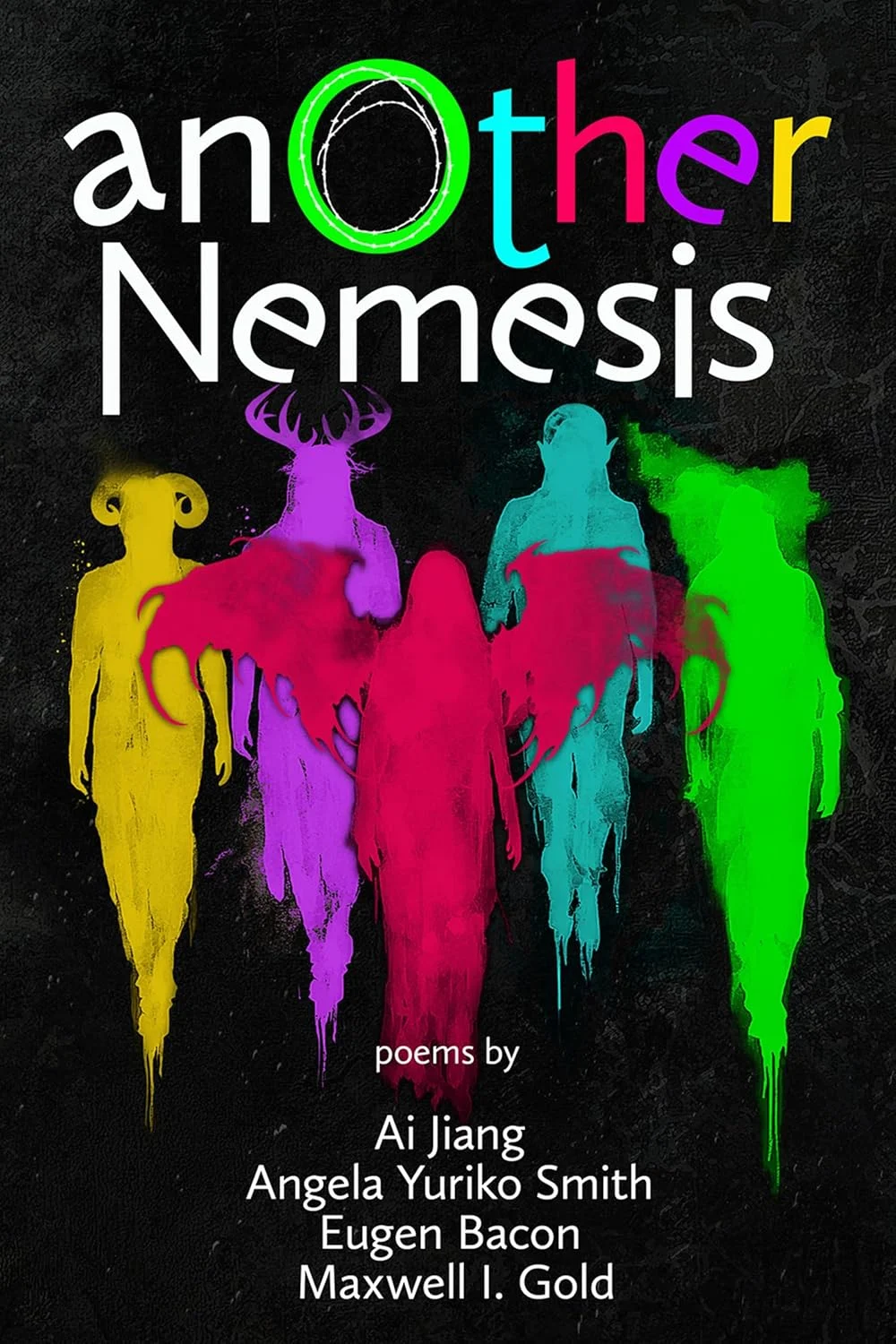
The ambitious collaborative poetry collection, anOther Nemesis, brings together four distinct voices—Ai Jiang, Angela Yuriko Smith, Eugen Bacon, and Maxwell I. Gold—in a potent exploration of feminist and anti-colonial themes. Released as an ebook, this anthology positions itself as a critical intervention into contemporary socio-political discourse through the medium of verse. At its core, the collection champions a unified perspective of resistance, offering an emotionally consistent window into a global, multi-racial, and multi-ethnic artistic and political project. However, despite its powerful thematic coherence, the book’s architectural decisions regarding its collaborative structure have drawn significant critical attention, raising questions about the synergy between its distinct parts and the overarching vision. Reviewers note that while the individual contributions shine with innovation and deep engagement, the collection struggles to forge a truly interactive dialogue between its esteemed authors, leaving some to ponder the ultimate gains of its collaborative format.
The four poets are recognized figures within speculative and literary circles, each bringing a unique stylistic approach and thematic preoccupation. Ai Jiang is known for her formally innovative explorations of boundaries and oppression. Angela Yuriko Smith frequently weaves mythological narratives into contemporary contexts. Eugen Bacon is celebrated for her visceral language and intense figural presence. Maxwell I. Gold often crafts verse with a direct, utopian critique. Their collective effort in anOther Nemesis promises a rich tapestry of perspectives united by a shared ideological compass: a fierce feminist anti-colonial stance against oppressive structures of modern capitalism and societal injustice. The book’s very premise—a multi-authored response to global challenges—underscores its aspiration to present a comprehensive, multifaceted counter-narrative.
CHRONOLOGY OF CRITICAL ENGAGEMENT
The critical journey through anOther Nemesis begins with an appreciation for the inherent complexities and opportunities of collaborative writing. Initial engagement with the collection is often marked by an anticipation of how multiple authorial voices and visions will intertwine, whether differences will be highlighted or minimized, and the resulting effect on the finished text. For anOther Nemesis, this anticipation is particularly keen given its explicit display of architectural decisions.
The first point of clarity for critics is the undeniable political horizon of the book. All four poets unequivocally share a feminist anti-colonial perspective, a thematic cohesion that resonates throughout the collection, providing an "emotionally consistent window" into a project of resistance and forward-thinking imagination. This ideological alignment initially signals a strong, unified front.
However, as the reading progresses, the structural organization, though seemingly straightforward, begins to reveal underlying tensions. The collection is divided into four conceptually titled sections: "The Colonizers," "Primal Sources," "Nameless Others," and "Crooked Ontologies." Within each section, poems are clustered by author in a fixed sequence (Jiang, Smith, Bacon, Gold), each preceded by a "Behind the Poems" note. While this repeated structure provides a superficial coherence, creating a discernible arc within each section as readers encounter the authors in the same order, a sense of "arbitrariness" ultimately emerges.
The critical lens then sharpens on the disconnect between the conceptual promise of the section titles and the actual content. Reviewers grapple with why specific poems are placed in particular sections, finding it "difficult to impossible" to identify a clear rationale. The individual poets, while sharing overarching thematic targets like contemporary capitalism and resistance, develop their visions in parallel, rather than in an interactive dialogue across authorial boundaries. This lack of cross-pollination leads to the perception that the collection, despite its multi-authored nature, functions more like "four chapbooks on a shared theme that have been chopped up and recombined." The "Behind the Poems" notes, intended to provide context and bridge these gaps, paradoxically reinforce the individual nature of each poet’s project, turning attention away from the section’s collective intent and towards the author’s broader oeuvre. This chronological unfolding of critical reception highlights a fundamental tension between the collection’s ambitious collaborative intent and its execution, leaving critics to weigh the powerful individual contributions against the perceived structural shortcomings.
SUPPORTING DATA AND ANALYSES
The structural decisions of anOther Nemesis are undeniably prominent, yet their efficacy in fostering true collaboration remains a central point of contention. The four distinct section titles – "The Colonizers," "Primal Sources," "Nameless Others," and "Crooked Ontologies" – are conceptually ambitious, signaling a deep interest in theoretical frameworks rather than a narrative progression. As one analysis points out, these titles suggest diverse conceptual spaces: "The Colonizers" as an opposing force, "Primal Sources" as origins of power, "Nameless Others" as subaltern subjects, and "Crooked Ontologies" as a framework for anti-colonial being. However, the radical differences in the kind of concept each title denotes underscores an implied distinction between the sections themselves, suggesting not "four angles or four stages but four totally separate theoretical or conceptual components to the vision of the book."
Despite this conceptual segmentation, the reading experience often blurs these distinctions. Critics struggle to discern why each poet’s specific group of poems resides in a particular section. For instance, the section titled "The Colonizers" is noted for its absence of direct descriptions of colonizers, though the omnipresent specter of colonialism permeates the verse. Similarly, the other three sections largely remain "inscrutable" in their specific thematic alignment with their titles. An exception is cautiously noted in Angela Yuriko Smith’s contributions to "Primal Sources," where poems like "Thoth," "Saraswati," "Orpheus," and "Scheherazade" invoke powerful mythological figures. Yet, even here, a critical "stretch" is required to assert their equal "primal-ness" or their exclusive status as "sources" compared to other potential mythological figures (e.g., Lilith, Loki, Odin). This highlights the difficulty in aligning individual authorial intent with the overarching conceptual architecture.
The "Behind the Poems" notes, strategically placed before each author’s cluster of poems, initially promise to serve as explanatory bridges. These notes are lauded for being "interesting and informative," offering "valuable context for each poet’s sense of their own project," and often demonstrating elegance and thoughtfulness. However, they consistently fall short in articulating how the preceding poems specifically fit into the section’s conceptual title or how they connect to the other authors’ contributions within that section. For example, Eugen Bacon’s note to her poems in "Nameless Others" begins evocatively: "To know that life is an ER, everything a triage. Without a name, you’re a blank photograph, face down. The nurse waits for you to lie still, undiagnosed and overexposed in a wide white room" (p. 55). While powerful in its own right and impactful in relation to the subsequent poems (like "Misguided"), it does not explicitly clarify how these poems articulate the position of "nameless others" within the section or their dialogue with other poets’ work. Rather, these notes, throughout the volume, tend to direct the reader’s focus towards the individual poet’s compositional process and goals, reinforcing the sense of separate contributions rather than a cohesive collection.
Individually, the poets offer compelling work:
- Angela Yuriko Smith employs a consistent and distinctive approach, crafting haibuns in the voices of mythological figures reimagined in the contemporary, digitally-mediated world. Her Circe becomes a content creator, Cassandra a social media prophet of doom, Scheherazade a podcaster, and Echo a social-media lurker. While innovative in her concept of modernity and myth, the repetitive language used to describe these figures can lead to a certain predictability, a potential drawback partially mitigated by the dispersal of her contributions throughout the collection.
- Ai Jiang’s poems are lauded for their formal and conceptual innovation, frequently addressing themes of boundaries, borders, and their transgression. Her redacted acrostic, "English," is cited as a prime example of her inventive approach. Her work consistently circles questions about the structures that limit oppressed individuals, including the nation-state, developing a reflective mode that stands out for its intellectual depth.
- Eugen Bacon explores similar themes of oppression and resistance but through a lens of "presencing in" language, characterized by a profound viscerality and figural intensity. This approach offers a compelling contrast to Jiang’s more reflective style. Two moments from the final section exemplify her unique voice: the opening of "Seasoned Utopia" with its "deluge of platelet florals" and "red blood cell is a glow" (p. 81), and the stark imagery in "Relax": "xiii. The calmness of the gun before a bullet shatters your face" (p. 82). These instances insist upon a raw, physical presence that comments powerfully on the pervasive violence of modernity.
- Maxwell I. Gold’s contributions introduce a crucial strand of utopian critique. Poems such as "The Assimilation of Gods That Were Never Gods" and "Here in the Future, There Were No Walls" directly articulate a vision of hope and the potential for a better world. However, his work is sometimes perceived as less leveraging of its poetic form, occasionally reading like a "fragmentary treatise in verse" due to the "sheer directness of their utopian critique." While Gold’s notes provide valuable context for his vision, his poetic style, though offering "interesting thinking," often approaches didacticism, a tendency recognized in other political literary works like Ursula K. LeGuin’s The Word for World Is Forest.
The strength of Jiang and Bacon’s poems, particularly their innovation, imagery, and linguistic presence, is frequently highlighted, while Smith’s project, despite its unique vision, risks repetition. Gold’s directness, while offering potent critique, occasionally sacrifices poetic nuance for explicit messaging.
OFFICIAL RESPONSES AND ARTISTIC INTENT
Given that the original text is a critical review, there are no "official responses" from the authors in the traditional sense of a counter-statement or public address. However, the collection itself, particularly through the "Behind the Poems" notes provided by each author, serves as an implicit articulation of their individual artistic intents and, by extension, their collective vision. These notes, while failing to explicitly bridge the structural gaps identified by critics, offer valuable insights into the poets’ self-conception of their projects.
The very act of contributing to a collaborative anthology, especially one with such overt political leanings, implies a shared understanding of the overarching message. The consistent feminist anti-colonial perspective across all four poets is not accidental but a deliberate choice, signaling an agreement on the "targets of their social engagement." The decision to organize the book into conceptually distinct sections and maintain a fixed order for author clusters suggests an intended, albeit perhaps unrealized, narrative or thematic progression in the authors’ minds. It points to a desire to present a multi-faceted argument, perhaps believing that the juxtaposition of their distinct voices would inherently create a richer, more comprehensive exploration of the anti-colonial struggle.
For example, while Eugen Bacon’s note to her "Nameless Others" poems might not explicitly link them to other authors’ contributions, it deeply explores the vulnerability and significance of identity in a world that often denies recognition. This reflects her individual commitment to a core theme of the "Nameless Others" section, implying her belief that her specific exploration contributes to the broader conceptual space. Similarly, Maxwell I. Gold’s notes, which provide context for his "vision of the potential of hope and determination," underscore his conviction in the power of direct utopian critique. These individual statements, rather than forming a direct dialogue between the authors within the book’s structure, act as individual declarations of purpose, collectively contributing to the overarching political project. The authors’ implicit response, therefore, lies in their unwavering commitment to their shared political vision and their faith that their individual contributions, when brought together, would collectively amplify this message, even if the structural scaffolding designed to facilitate interaction proved less robust than intended.
IMPLICATIONS
anOther Nemesis offers a compelling case study in the complexities and aspirations of collaborative writing, particularly within the realm of political poetry. Its strengths undeniably lie in the powerful, cohesive political vision shared by its four authors. The collection successfully delivers a vibrant and emotionally resonant exploration of feminist and decolonial poetics, providing a breadth of focus that would be difficult for a single author to achieve. For readers actively seeking poetry that not only engages with politics but embraces the political as a core aesthetic virtue, anOther Nemesis presents a rich and thought-provoking experience.
However, the critical analysis highlights significant implications for the craft of collaborative anthologies. The book’s structural tensions—where the explicit organizational framework (section titles, fixed author order) often feels at odds with the substructural reality of individual authorial trajectories—suggest a missed opportunity for true synergistic interaction. The collection, in its current form, falls short of creating a "genuinely interactive dialogue" between its contributors. This raises crucial questions about how multi-authored texts can best leverage their inherent advantages. Should authors strive for a tighter conceptual integration across their contributions, or should they prioritize allowing each poet to fully articulate their position, letting the juxtaposition speak for itself? anOther Nemesis suggests that without clear, mutually reinforcing connections, the collaborative advantage can "shear or even cleave under pressure like a sheet of rock at a fault line."
For the genre of political poetry, the collection underscores the enduring power of direct engagement with social issues. Even when the formal structure falters, the unwavering commitment to a feminist anti-colonial perspective resonates profoundly. It contributes to a lineage of politically charged speculative poetry, recalling discussions around conceptual versus narrative organization in collections like R.B. Lemberg’s Marginalia to Stone Bird or Lo Kwa Mei-En’s The Bees Make Money in the Lion. Furthermore, the observation regarding Maxwell I. Gold’s "treatise in verse" echoes Ursula K. LeGuin’s reflections on the "lure of the pulpit" in her own politically charged works. This situates anOther Nemesis within a broader conversation about the balance between artistic expression and explicit messaging in literature aiming for social change.
Ultimately, anOther Nemesis stands as a testament to the power of collective intent in addressing pressing global issues through poetry. While it may not fully realize its collaborative potential in terms of structural integration, its individual contributions are undeniably strong, and its unified political voice is clear and impactful. It challenges both writers and readers to consider the intricate dance between individual artistry and collective vision, particularly when the stakes are as high as dismantling colonial structures and imagining a more just future.