The Unseen Architect: Exploring the Metaphysical Dimension of Human Consciousness
A chance encounter in a local coffee shop sparks a profound discussion about purpose, compassion, and the elusive nature of the human spirit.
Introduction: The Unanswered Questions
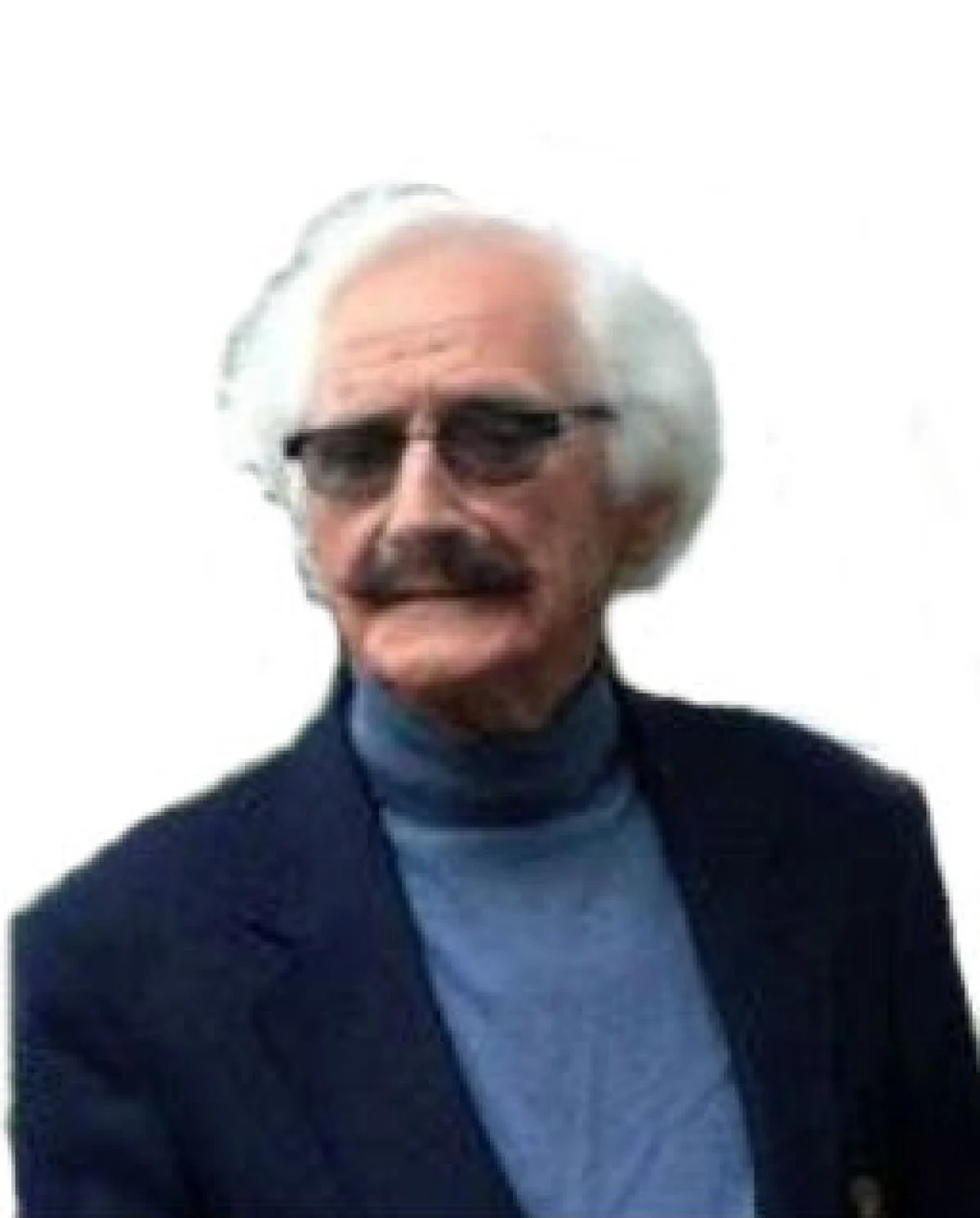
It was a mundane Tuesday, the kind often punctuated by the hum of fluorescent lights and the whir of machinery. My car was undergoing its routine service, a necessary pause in the rhythm of daily life. Seeking solace and a much-needed caffeine fix, I retreated to the familiar comfort of a nearby coffee shop. It was there, amidst the aroma of freshly brewed beans, that I found myself drawn into a conversation with two university students. As is often the case when my background as a retired professor of philosophy and psychology is revealed, the inevitable questions began to surface, touching upon the deepest inquiries of existence: purpose, the human condition, and the very essence of what it means to be.
These young minds, brimming with intellectual curiosity, were grappling with fundamental questions that have occupied thinkers for millennia. Their earnestness was palpable, a testament to the enduring human drive to understand our place in the universe. Yet, the complexity of these topics often leaves us searching for answers that lie beyond the readily apparent.
The Paradox of Human Nature: Conflict and Compassion
"It’s not easy to talk about purpose," I began, acknowledging the inherent difficulty in distilling such a vast concept into simple terms. "Throughout history, nations and individuals alike have been embroiled in conflict, driven by a multitude of motivations that often overshadow any shared sense of benevolent purpose." The echoes of wars, ideological clashes, and societal strife resound through the annals of human existence, a stark reminder of our capacity for division and destruction. Even today, the global landscape is marked by instances of intolerance and a lack of spiritual understanding between diverse communities.
However, to paint a purely bleak picture would be to ignore the remarkable resilience of the human spirit. "Even so," I continued, a sense of cautious optimism coloring my tone, "there are countless charitable organizations operating globally, dedicating themselves to alleviating the suffering of those less fortunate." I gestured, as if the very act could conjure the image of dedicated individuals working against overwhelming odds.
Doctors Without Borders: A Beacon of Altruism
A prime example of this profound commitment to humanity is the organization Doctors Without Borders (Médecins Sans Frontières). This is not merely a group of medical professionals; it is a testament to the power of altruism in its purest form. Nurses and doctors, driven by an unwavering compassion and a deep-seated need to act, venture into some of the world’s most perilous regions. They are men and women who willingly put their lives, their careers, and their personal comfort on the line, traveling to remote and dangerous locations. Their motivation stems not from a desire for personal gain or recognition, but from a powerful internal force, a dedication to serving a moral imperative that transcends borders and political boundaries. This is the human spirit at its most inspiring, manifesting in acts of profound selflessness. Their work exemplifies the best of what humanity can achieve when driven by empathy and a commitment to easing suffering.
Unveiling the Metaphysical: Beyond the Senses
As our conversation deepened, I introduced a concept that often eludes easy definition: the metaphysical. "Only one of you," I noted, observing their reactions, "seemed familiar with the term." This observation underscored a broader societal trend, where the exploration of abstract and intangible realms is often relegated to the periphery of our intellectual pursuits.
The word "metaphysical" denotes a level of awareness in human consciousness that extends beyond the observable world, a realm that transcends the limitations of our five senses. It is a dimension of experience that cannot be empirically measured or scientifically quantified. It speaks to the subjective landscape of our inner lives, the realm of thoughts, feelings, and intuitions that shape our understanding of ourselves and the world around us.
The Questing Imagination and the Inner Dialogue
Metaphysical awareness, I elaborated, is akin to a silent, continuous dialogue. It is a process fueled by our innate curiosity and our always-questing imagination. This inner discourse grapples with the "how" and "why" of our psychological complexity, driven by what has historically been described as "spirit" – the animating force of the human spirit. This is the part of us that asks the profound questions, that seeks meaning, and that yearns for understanding beyond the superficial. It is the engine of introspection, the force that compels us to look inward and explore the depths of our own being.
Aristotle and the Genesis of Metaphysical Thought
At this juncture, I felt I had captured their full attention. I explained that the term "metaphysical" itself has roots in ancient Greek philosophy. It was the renowned scientist and philosopher Aristotle who, in his seminal work, used the term "ta meta ta physika" – literally, "those things after the physics" – to describe a branch of philosophy that dealt with abstract concepts, fundamental realities, and the underlying principles of existence. The prefix "meta" signifies "beyond" or "after," thus introducing the concept of the mind as a realm that operates beyond the purely physical.
This realm encompasses thoughts, ideas, feelings, hunches, and ruminations – all manifestations of an intuitive range of consciousness. These are not merely random mental occurrences; they are seen as serving the forces of spirit, often described as being instigated by the soul. This perspective suggests that our mental lives are not solely the product of biological processes but are also influenced by a deeper, more profound, and perhaps even spiritual dimension.
The Duality of Human Consciousness: Rationality and Intuition
This brings us to a crucial point: the understanding of human consciousness as a duality. For centuries, thinkers have recognized that our awareness comprises two interconnected, yet distinct, facets. On one hand, we possess the outwardly directed, rational, and sensory brain. This is the part of us that engages with the external world, processing information through our senses and employing logic and reason to navigate our environment. It is responsible for our scientific understanding, our practical problem-solving, and our interaction with the material world.
On the other hand, we have the inwardly directed, intuitive, and spiritual brain. This aspect of our consciousness operates on a different frequency, tapping into insights, feelings, and premonitions that defy purely logical explanation. It is the source of creativity, empathy, and our capacity for abstract thought. Together, these two facets – the rational and the intuitive, the outward and the inward – form a mental partnership we commonly refer to as the "mind." This intricate interplay between our analytical and our intuitive faculties is what allows us to experience the full spectrum of human awareness.
The Unexamined Self: A Missed Opportunity
It was at this point that I posed a question to the students, a simple yet profound inquiry designed to gauge their engagement with these introspective concepts: "Do you ever ponder the unique nature of your own personalities?" The response was dishearteningly uniform: a pair of blank looks. This reaction, while perhaps not indicative of a lack of intelligence, suggested a potential disconnect between their academic pursuits and a deeper exploration of their own inner lives. The richness of philosophical inquiry lies not only in understanding external phenomena but also in turning that lens inward, examining the very fabric of our individual consciousness.
A Final Thought from the Frontier of Neuroscience
As the last drops of my cappuccino were savored, it was time to depart. I felt a lingering sense of the unexplored potential in our brief exchange. To leave them with a thought that might resonate, I recalled the words of Wilder Penfield, a towering figure in the field of neuroscience and a distinguished brain surgeon. Penfield, after decades of dedicated research into the complexities of the human brain, found himself grappling with the fundamental nature of mind. He famously stated that he could only describe mind as a "non-temporal, non-spatial entity." This description, rooted in his scientific observations, points directly to the metaphysical dimension – a reality that exists independently of time and space, a concept that aligns with the philosophical understanding of the mind as something beyond the purely physical. His words served as a final testament to the enduring mystery and profound significance of the metaphysical in understanding the human experience.
Conclusion: The Unfolding Mystery
The encounter in the coffee shop, though brief, served as a potent reminder of the perennial human quest for meaning and understanding. The students’ questions, born from a genuine intellectual curiosity, touched upon the very foundations of our existence. While the path to purpose and profound self-awareness is often complex and challenging, the exploration of the metaphysical dimension offers a crucial avenue for deeper insight. By acknowledging the interplay between our rational and intuitive faculties, and by daring to ponder the unseen architect of our inner lives, we can begin to unlock the richer tapestry of human consciousness. The journey of self-discovery is an ongoing one, and the questions posed in that humble coffee shop are the very catalysts that propel us forward into a more profound understanding of ourselves and our place in the grand, unfolding mystery of existence. The human spirit, in its boundless capacity for compassion and introspection, continues to beckon us towards these deeper realms of awareness.