Unveiling the Untamed: Gregory Ariail’s "Hermits Die on Thursday" Reshapes Appalachian Narrative
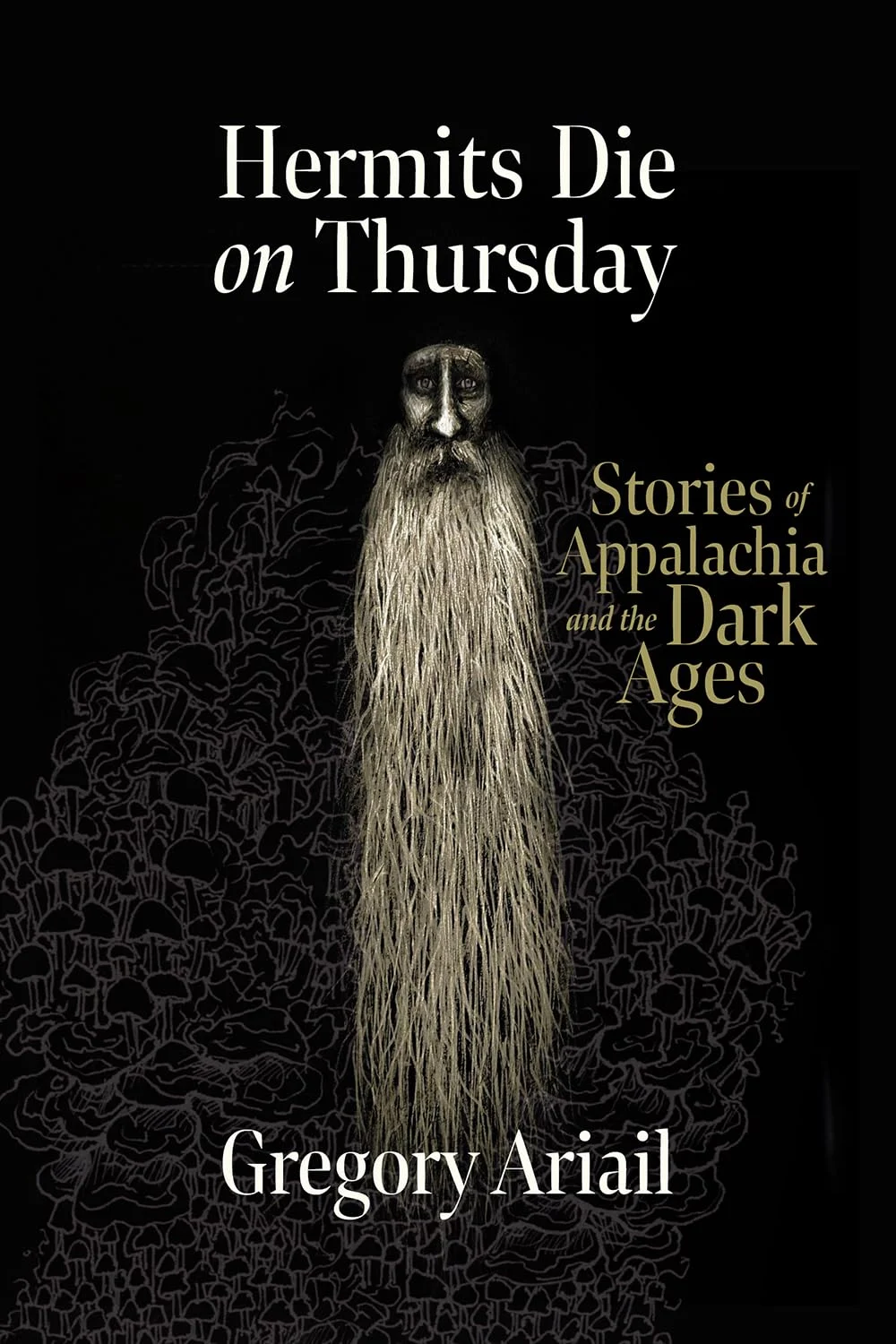
Jacksonville, AL – In an era often characterized by a relentless drive for clarity and categorization, author Gregory Ariail offers a profound counter-narrative through his latest collection, Hermits Die on Thursday: Stories of Appalachia and the Dark Ages. This ambitious work delves into the lives of hermits and the mystical landscapes they inhabit, particularly the Appalachian region, employing magical realism to challenge conventional understandings and reveal a world far more complex, interconnected, and enchanted than commonly perceived. Ariail’s writing acts as a portal, inviting readers to transcend simplistic labels and embrace the irreducible essence of human experience and the natural world.
The collection, heralded for its breathtaking inventiveness, posits that the appeal of hermits often lies in their perceived simplicity. Yet, as Ariail masterfully demonstrates, these solitary figures, like the rugged mountains they call home, are anything but straightforward. His stories argue that to truly understand a hermit, or indeed, a place like Appalachia, one must confront a dense tangle of biographical intricacies and philosophical undercurrents, much like unraveling a ball of tangled threads.
Historical Echoes: The Complex Lives of Real-World Hermits
Ariail’s literary explorations are not without historical precedent, drawing inspiration from the rich, albeit often obscured, tapestry of real-life recluses whose stories defy easy categorization. The history of Appalachia, particularly, is dotted with figures whose lives blur the lines between isolation, philosophy, and societal critique.
Marx Edgeworth Lazarus: An Antebellum Anarchist in Solitude
One such figure is Marx Edgeworth Lazarus, a man whose real name belied a life of profound intellectualism and eventual reclusion. Born in North Carolina in 1822, Lazarus emerged as an intellectual anomaly in the antebellum South. Unlike many of his contemporaries, his philosophical leanings aligned more closely with the transcendentalist and utopian movements prevalent in New England, championing the "perfectibility of man and society." His early life saw him grapple with personal struggles, leading him to pen a book on theories to halt nocturnal emissions, a testament to his deeply introspective and unconventional mind. Later, he vehemently critiqued the institution of marriage, viewing it as a system that inherently enslaved women – a remarkably progressive stance for his time and region, made all the more intriguing by his own marriage to a nineteen-year-old woman in his thirties, a footnote that speaks volumes about the inherent contradictions within human lives, even those of philosophers.
Lazarus was a vocal advocate for the phalanstery, a utopian communal living experiment proposed by French social theorist Charles Fourier. These communes envisioned hundreds of people living under one roof, practicing free love and sharing all property. The concept struggled to gain widespread acceptance even in the more liberal North. Yet, Lazarus, alongside other Southern anarchists, harbored radical hopes of persuading slaveholders to convert their plantations into multiracial communist utopias. This vision, audacious and profoundly challenging to the foundational structures of the Old South, never found a willing participant. Following his service as a Confederate surgeon during the Civil War – another unexpected turn for an anarchist – Lazarus retreated from society, choosing the quiet solitude of the Appalachian foothills in Alabama, where he lived and died as the "Sand Mountain Hermit," his activities largely lost to the annals of history, precisely because hermits, by definition, live away from the gaze of the public.
Ches McCartney, The Alabama Goat Man: A Nomadic Enigma
Another iconic figure, more sociable yet equally enigmatic, was Ches McCartney, widely known as the Alabama Goat Man. McCartney carved a unique niche in the collective consciousness of the Southeast, traveling across the region in a goat-drawn wagon during an era when automobiles and air conditioning were becoming commonplace. His distinctive mode of travel and his solitary, nomadic existence made him a folk hero, with portraits adorning the homes of many Alabama intellectuals. However, beneath the surface of this beloved figure lay a life of surprising ambition and eccentricity. Few knew that McCartney had run away from home as a teenager to marry a circus knife thrower, a romantic and rebellious start to his journey. Even fewer were aware of his grand, quixotic plan to drive his goats all the way to Los Angeles with the intention of courting and marrying Hollywood actress Morgan Fairchild.
These historical figures, Lazarus and McCartney, serve as powerful reminders that the human spirit, even in its most isolated forms, is characterized by an irreducible complexity. Their stories, filled with unexpected turns, contradictions, and profound philosophical underpinnings, lay the groundwork for Ariail’s literary exploration, demonstrating that the appeal of hermits as "simple" figures is a deceptive veneer.
Gregory Ariail’s Literary Innovation: Magical Realism in Appalachia
Ariail’s Hermits Die on Thursday takes these historical and archetypal complexities and amplifies them through the lens of magical realism, a genre that seamlessly integrates the fantastical into the mundane to reveal deeper truths about reality.
"All Hermits Died on Thursday": Obituaries of the Extraordinary
The collection’s title story, "All Hermits Died on Thursday," exemplifies this approach. It presents a series of short obituaries for Appalachian hermits, each one a miniature masterpiece of invention that compresses profound complexity into a few vivid lines. These are not ordinary recluses; they are figures who defy logic and natural law:
- Hermits choking on their own long beards: This grotesque yet poignant image evokes the self-contained nature of isolation, where even aspects of one’s identity can become an unexpected instrument of fate. It’s a physical manifestation of being consumed by one’s own singular existence.
- Corpses that levitate: Such an event transcends the finality of death, suggesting a spiritual lightness, an otherworldly quality that persists beyond the mortal coil, hinting at a profound connection to forces beyond human understanding.
- Hermits possessing books of astronomical knowledge far beyond the science of their day: This detail challenges the stereotype of the uneducated recluse, imbuing these figures with ancient wisdom or a prophetic insight that connects them to the cosmos, perhaps through intuitive understanding rather than formal education.
- A suicide note declaring, "I’ll ride the moon all the way down to hell to meet my mother and Mr. Price, my Latin teacher": This particular line is a microcosm of Ariail’s genius. It blends the cosmic (riding the moon) with the deeply personal and mythological (journeying to hell), and then juxtaposes it with the startlingly mundane and intellectual (meeting a Latin teacher). The inclusion of "Mr. Price, my Latin teacher" shatters any preconceived notion of a simple, uncultured hermit, suggesting a rich, perhaps hidden, intellectual life and an enduring connection to past influences.
These fantastical elements are not mere embellishments; they are integral to Ariail’s mission to deconstruct and enrich the hermit archetype. They provide "complexity in shorthand," allowing readers to grasp the multifaceted nature of these characters without exhaustive biographical detail. The existence of a short film on YouTube, posted by Ariail himself, offers a spoiler-free glimpse into the unique flavor of these tales, inviting readers into a world where the extraordinary is an undeniable part of the everyday.
Appalachia as a Realm of Enchantment
The first half of Hermits Die on Thursday is devoted to Appalachia, and Ariail’s treatment extends the same magical realism and profound inquiry to the entire region as he does to its reclusive inhabitants. He presents isolated rural hill people confronted with riddles that defy rational explanation, asserting that reality is always more complex and interconnected than it appears on the surface. Each story implicitly challenges the reader: "You thought you knew what this thing was, but you didn’t know anything, really."
The questions posed by Ariail’s narratives are designed to unravel conventional thinking:
- Why would a hermit, even in the remote hills of Appalachia, not have had a Latin teacher? This question forces a re-evaluation of assumptions about education, isolation, and the intellectual capacity of those living on the fringes.
- Why couldn’t mushrooms, growing on unseen hillsides, form into the shape of Queen Elizabeth? And if they did, why wouldn’t such a natural agglomeration be revered? This query blurs the lines between natural phenomena, human perception, and the attribution of sacred meaning, inviting a reconsideration of what constitutes art, divinity, or even a miracle in the wild.
The Author’s Journey: From Fantasy Fandom to Regional Resonance
Gregory Ariail’s unique perspective on Appalachia and its hidden magic is deeply rooted in his personal artistic journey, which he shared during a reading in northern Alabama. Growing up in North Carolina, Ariail was initially drawn to traditional fantasy. His path to writing about the mountains as an artistic subject was not direct; it emerged from venturing into nature to create fan films. This gradual realization – that the immediate, local landscape could be as captivating and fantastical as any imagined world – mirrors the reviewer’s own childhood experience of playing with Star Wars figures in the hills, eventually understanding that a landscape doesn’t need to be Endor to be inherently interesting.
Ariail’s approach diverges significantly from many Appalachian writers who often focus on the sociology of mountain people or the troubled history of the region, exploring themes of poverty, exploitation, or cultural preservation. While these are vital narratives, Ariail chooses a different path. His focus remains on the "forest and mountains themselves, still vast and untamed." He portrays a landscape that many residents only glimpse from highways, revealing its profound, almost spiritual, essence. He evokes a sense of primordial awe, akin to how early humans revered the moon and sun as gods because they were ever-present yet untouchable. Ariail convinces his readers that to truly touch these mountains is to "enter the spirit world," suggesting an inherent animism and mystical power residing within the natural environment itself.
Implications: Poverty, Magic, and the Untamed Frontier of Rationality
The name Appalachia frequently conjures images of poverty, a condition defined by "not having enough." Ariail recontextualizes this scarcity, transforming it into a lens through which to explore the deepest questions of human nature and existence. In his Appalachian narratives, "not enough" takes on a different meaning:
- Not enough people to tame the landscape: This implies a wilderness that retains its primal power, unbowed by human dominion.
- Not enough logic to explain the events of the world: This opens the door to the supernatural, the inexplicable, and the limits of human reason.
- Not enough God to bring justice: This suggests a world where divine intervention is absent or insufficient, leaving room for a more untamed, unpredictable form of magic or fate.
This "not enough" creates a space where the universe reveals its "feet that stick out of this too-short blanket of rationality and civilization." Ariail’s characters frequently encounter "frightening magic," much like one might stumble upon the odd, unexpected flora and fauna of Appalachia if one ventures off the beaten path. The reviewer’s own experiences – encountering a moth the size of a pizza slice or waking to a mass of ladybugs, only later learning these were "hill-country things" – serve as a mundane precursor to the profound, unsettling surprises in Ariail’s world. Imagine, for instance, waking to find your chickens suddenly possessing tiny human-like heads with beards; this encapsulates the very essence of surprise and disquieting wonder that defines Ariail’s magical realism. It’s a world where the natural order is playfully, yet profoundly, subverted.
Bridging Worlds: Appalachia and the Dark Ages
The latter half of Hermits Die on Thursday shifts its setting to the Europe of the Dark Ages, exploring fantasy and magical realism within that historical context. Yet, the transition is remarkably seamless, almost imperceptible, highlighting the thematic continuity of Ariail’s vision. If the section were not explicitly labeled, readers might barely notice the change in geographical and historical parameters.
The core elements remain: hermits still populate isolated landscapes, demon-like figures lurk near a treacherous natural world, and the boundaries between reality and myth are fluid. However, new elements are introduced: kings, fjords, and glaciers, gradually grounding the reader in more familiar tropes of epic fantasy. This intentional progression allows Ariail to explore universal themes of human isolation, the power of nature, and the struggle between good and evil, but always through his distinctive, genre-bending lens. The "ragged magic" encountered in the weird, untamed Appalachia section, infused with its unique blend of folk wisdom and surrealism, renders the magic of the Dark Ages stories "all the more luminous." The reader, having passed through the "portal of weird Appalachia," is now attuned to the subtle, profound enchantment that permeates both sections of the collection.
Conclusion: A Luminous Contribution to Modern Literature
Gregory Ariail’s Hermits Die on Thursday: Stories of Appalachia and the Dark Ages stands as a significant contribution to contemporary literature. It is a collection that not only entertains but also challenges perceptions, enriches understanding, and expands the boundaries of what regional literature and magical realism can achieve. By meticulously crafting stories that blend historical insight with fantastical elements, Ariail invites readers to look beyond the surface, to question established narratives, and to find the extraordinary within the seemingly ordinary.
Whether one reads for profound insights into the human condition, for a deeper appreciation of the untamed spirit of places like Appalachia, or simply to be transported to worlds both familiar and utterly alien, this book offers a journey well worth taking. Ariail’s work reminds us that the world, even the most isolated corners of it, is teeming with irreducible complexities and a persistent, often frightening, magic that waits to be discovered by those willing to look beyond the blanket of rationality.
About the Reviewer:
Tim Lockette is a writer, English teacher, and former journalist who lives in Jacksonville, Alabama. He’s the author of three YA novels, Atty at Law, Atty in Love, and Tell It True. His website is timlockette.com.