Blade Runner 2099 Teaser Ignites Fan Excitement, Promises a Radical Reversal of Fortune
Los Angeles, CA – November 1, 2024 – After nearly five years in development, the highly anticipated Blade Runner 2099 series has finally unveiled its first teaser trailer, sending ripples of excitement through the global science fiction community. The brief but potent glimpse into the future of the iconic franchise, set to premiere on Prime Video on November 25, offers a compelling vision that not only honors its predecessors but also promises a bold and potentially shocking new direction for the dystopian saga.
The teaser confirms a premise that significantly shifts the established power dynamics of the Blade Runner universe. Set half a century after the events of Denis Villeneuve’s critically acclaimed Blade Runner 2049, the new series plunges viewers into a world fundamentally reshaped by a successful replicant uprising. This monumental shift sees replicants now holding the reins of power, seemingly not above subjecting humans to the very treatment they endured for decades. This radical reversal sets the stage for a narrative steeped in complex ethical dilemmas and profound questions about identity, power, and the very essence of humanity.
The Dawn of a New Era: Initial Revelations from the Teaser
The freshly released teaser, while judicious with plot specifics, delivered enough visual and thematic cues to reignite fan fervor. It confirms that Blade Runner 2099 will debut exclusively on Prime Video on November 25, ending years of speculation and quiet anticipation. The immediate takeaway is the series’ audacious central premise: a world where the hunted have become the hunters, and the lines between oppressor and oppressed have been dramatically redrawn.
This narrative pivot is perhaps the most significant revelation. The Blade Runner universe has historically explored the existential plight of artificial beings yearning for freedom and recognition in a human-dominated world. To now envision a future where replicants have achieved this freedom, only to potentially replicate the oppressive structures they once fought against, offers a potent and unsettling commentary on power itself. The teaser hints at a visually intriguing aesthetic that, while familiar in its neo-noir shadows and perpetual urban decay, also suggests a subtly altered landscape under replicant governance. The initial glimpses indicate a world that is both hauntingly beautiful and deeply unsettling, a visual feast that Blade Runner aficionados have come to expect.
A Chronology of Anticipation: Five Years in the Making
The journey to Blade Runner 2099 has been a protracted one, marked by a lengthy period of relative silence since its initial announcement nearly five years ago. First revealed to be in development as a series, details remained scarce, fueling both fervent hope and cautious skepticism among fans keenly aware of the high bar set by the franchise. The intervening years saw little more than whispers and occasional confirmations of its continued progress, making the sudden drop of a teaser trailer all the more impactful.
The long gestation period underscores the immense pressure and responsibility associated with expanding such a revered property. The original 1982 film, directed by Ridley Scott, redefined science fiction cinema with its groundbreaking visuals, philosophical depth, and enduring themes. Its 2017 sequel, Blade Runner 2049, successfully navigated the treacherous waters of continuation, earning widespread critical acclaim for its artistic ambition and seamless integration into the lore. For Blade Runner 2099 to emerge after such a prolonged development cycle, the expectation is that its creators have meticulously crafted a vision worthy of its formidable legacy.
Bridging the Decades: From 2049 to 2099
The 50-year temporal leap from Blade Runner 2049 to Blade Runner 2099 represents a fertile ground for narrative exploration. Blade Runner 2049 concluded with the replicant K (Ryan Gosling) sacrificing himself to protect the child of Rick Deckard and Rachael, seemingly igniting a new hope for replicant autonomy. The new series’ premise of a "successful replicant uprising" directly builds upon the seeds sown in 2049, transforming the tentative flicker of hope into a fully realized, albeit morally complex, new societal order.
This half-century gap allows for a complete societal restructuring, where the memories of human dominance might be fading for some, replaced by the stark reality of replicant rule. It invites speculation on the nature of the uprising itself: Was it a violent revolution, a gradual shift, or a more insidious takeover? The absence of immediate details grants the creative team immense freedom to world-build, constructing the socio-political landscape of 2099 from the foundations laid by its cinematic predecessors. The series will undoubtedly need to address how this transition occurred and the immediate aftermath, setting the tone for the stories it intends to tell.
Unpacking the Premise: A World Transformed
The core premise of Blade Runner 2099 is not merely an expansion but a fundamental re-contextualization of the franchise’s central conflict. By placing replicants in a position of power and humans in a subservient role, the series promises to delve into the cyclical nature of oppression and the moral ambiguities inherent in any power structure.
The Reversal of Fortune: A Replicant-Dominated Dystopia
The concept of a replicant-dominated world is a radical departure and a daring narrative choice. For decades, replicants were manufactured, exploited, and "retired" by humans, their very existence a question mark of ethical debate. Now, the tables have turned. Showrunner Silka Luisa’s statement that replicants are "seemingly not above treating humans the way they were treated for years" suggests a bleak outlook for humanity. This mirroring of past injustices raises critical questions: Does the acquisition of power inherently corrupt, regardless of the species wielding it? Does the experience of oppression inevitably lead to its perpetuation?
This new dystopia will force viewers to confront uncomfortable truths about human nature, power dynamics, and the blurred lines of morality. It offers a fresh lens through which to examine the Blade Runner universe’s perennial question: what does it mean to be human? If humanity is now subjugated, stripped of its former relevance, how do they define themselves? And how do the ruling replicants navigate their newfound authority, especially those who may remember the brutality of their own subjugation? The world of 2099 promises to be a complex tapestry of allegiances, resentments, and desperate struggles for survival.
Showrunner’s Vision: Humanity’s Fading Relevance
In an interview with Entertainment Weekly, showrunner Silka Luisa articulated her overarching thematic ambition, drawing inspiration from both the previous Blade Runner films and Philip K. Dick’s foundational novel, Do Androids Dream of Electric Sheep? "The show is really imagining what comes after us," Luisa explains, "and what does it mean to be human in a world where humanity is no longer relevant?" This statement encapsulates the profound philosophical inquiry at the heart of the new series.
Dick’s novel, known for its exploration of empathy as the defining characteristic of humanity, often presented a world where the distinction between human and android was agonizingly thin. Luisa’s vision for 2099 appears to directly engage with this legacy, pushing it to an extreme conclusion. If humanity is "no longer relevant," it suggests a loss of purpose, agency, or even biological superiority. This could imply a world where humans are seen as obsolete, a burden, or merely a resource for their replicant overlords.
Luisa’s further comment about gravitating toward "the juxtaposition of this kind of bubblegum tone with these dark ideas" from Dick’s novel is particularly intriguing. Philip K. Dick’s work often blended profound philosophical concepts with a sense of the absurd or surreal. This "zaniness" could manifest in unexpected aesthetic choices, narrative twists, or character eccentricities that add a unique flavor to the grim Blade Runner aesthetic, perhaps offering moments of dark humor or unsettling surrealism amidst the pervasive despair. This creative approach suggests a show that is not afraid to experiment while remaining true to the intellectual rigor of its source material.
The Cast and Core Conflict: A Tangled Web of Identity
The central characters and their intertwined destinies are poised to explore the nuanced complexities of Blade Runner 2099‘s transformed world. The casting of two powerhouse talents in Michelle Yeoh and Hunter Schafer immediately elevates the series’ dramatic potential.
Michelle Yeoh as Olwen: An Aging Replicant Blade Runner
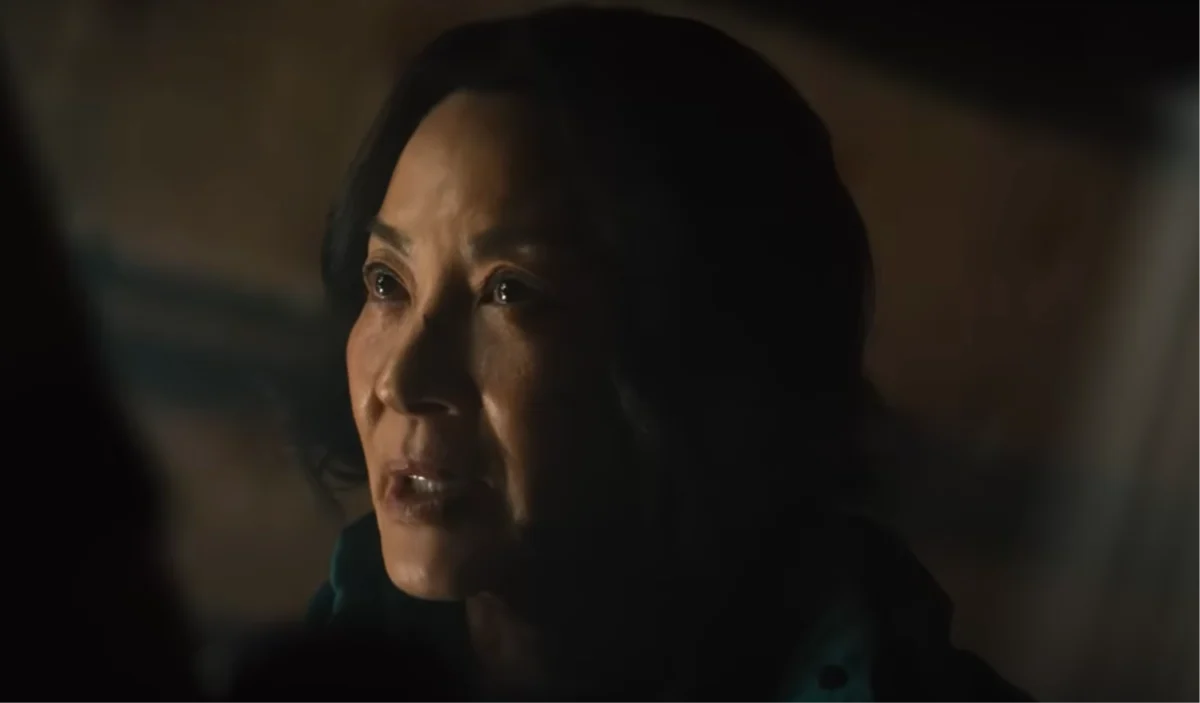
Michelle Yeoh stars as Olwen, an aging replicant who, paradoxically, functions as a modern Blade Runner. The concept of an "aging replicant" is loaded with thematic weight. Replicants are typically designed with a finite lifespan, a cruel limitation imposed by their human creators. For Olwen to be "aging" suggests she might be an older model, perhaps one who has survived the uprising, or a newer type with an extended lifespan. Her role as a Blade Runner – traditionally a human tasked with hunting replicants – is a profound inversion. This means she hunts other replicants, raising questions about her loyalties, her past, and her understanding of justice in a world governed by her own kind.
Yeoh, an Academy Award winner known for her incredible range and commanding presence in both action and drama, brings immense gravitas to the role. Her ability to convey deep emotion, physical prowess, and quiet determination makes her an ideal choice for a character burdened by an inevitable end and navigating a morally ambiguous landscape. Olwen’s awareness of her impending death ("replicants know exactly when they will die") adds a ticking clock to her narrative, imbuing her actions with a desperate urgency and a poignant sense of finality.
Hunter Schafer as Cora: A Human in Disguise
Opposite Yeoh is Hunter Schafer as Cora, a human forced to pretend to be a replicant Blade Runner to avoid capture. This character immediately introduces layers of deception, vulnerability, and extreme psychological pressure. Cora’s survival hinges on her ability to convincingly impersonate her former oppressors, a task fraught with peril and constant fear of exposure. Her predicament highlights the extreme measures humans must take to survive in this new world, forcing them to shed their identities and adopt the personas of those who now rule over them.
Schafer, a rising star recognized for her compelling performance in Euphoria, possesses a unique blend of fragility and fierce intelligence that could make Cora a truly captivating character. Her journey will likely explore themes of identity erasure, the psychological toll of prolonged deception, and the innate human drive for freedom even under the most repressive regimes. The dynamic between Olwen, the replicant Blade Runner facing her end, and Cora, the human masquerading as one, promises to be a rich source of tension and unexpected alliances.
The Hunt for Rogue Replicants: An Internal Struggle
The plot sees Olwen and Cora working together to hunt down a group of "rogue replicants." In a world where replicants hold power, the definition of "rogue" becomes particularly interesting. Are these replicants who refuse to conform to the new societal order? Are they still pursuing a different agenda, perhaps a more extreme form of replicant supremacy, or even a return to a more equitable existence? This internal conflict within the replicant community adds another layer of complexity, suggesting that even a unified front against humanity can fracture into ideological divisions.
The article also highlights that "the tension fuelled by their respective dilemmas and secrets threatens to boil over." Olwen’s secret might involve her past, her true feelings about her role, or the burden of her impending demise. Cora’s secret is her very humanity, a truth that could lead to her immediate capture or worse. This intricate web of personal stakes, combined with the hunt for dissenting replicants, promises a narrative rich in suspense, moral ambiguity, and high-stakes drama. The supporting cast, including Tom Burke, Dimitri Abold, and Wil Coban, are likely to play crucial roles in this intricate power struggle, perhaps as members of the rogue replicant faction, human resistance, or figures within the replicant government.
Visual Language and Aesthetic Continuity
The Blade Runner franchise is as much defined by its groundbreaking visual style as it is by its philosophical depth. The first teaser for Blade Runner 2099 indicates a strong commitment to maintaining and evolving this iconic aesthetic.
Echoes of Neo-Noir: Maintaining the Blade Runner Look
The visual legacy established by Ridley Scott’s original film is undeniable: a perpetually rain-soaked, neon-drenched, overpopulated metropolis where towering corporate monoliths pierce the smoggy skies. Denis Villeneuve meticulously honored and expanded this look in Blade Runner 2049. The early glimpses of Blade Runner 2099 suggest that this tradition will continue.
The article notes a "murkiness to the look that may be a deliberate design decision meant to represent the fallen world that was or could simply be a sign of modern aesthetics." This "murkiness" could symbolize the moral ambiguity of the new world order, the continued environmental decay that plagues the Blade Runner universe, or simply the pervasive sense of gloom that permeates the genre. The stunning design of the universe, particularly evident in "wider, grander shots," reassures fans that the series will deliver the expansive, breathtaking cityscapes and intricate details that have become synonymous with the franchise. From flying spinner vehicles slicing through polluted air to bustling, shadowy street markets, the visual continuity will be crucial in immersing viewers in this familiar yet radically altered future. The integration of "bubblegum tone" as mentioned by Luisa could manifest in vibrant, almost jarring neon colors against the otherwise somber palette, adding a unique visual signature to the 2099 era.
The Weight of Expectation and Future Implications
The announcement of Blade Runner 2099 comes with an almost insurmountable weight of expectation. Any new entry into this revered universe is scrutinized under a magnifying glass, held to the highest standards of artistic integrity, thematic depth, and visual innovation.
Living Up to a Legacy: The Challenge of Blade Runner 2099
The standards for anything Blade Runner are, to say the least, exceptionally high. Both the original film and its sequel are considered masterpieces, each pushing the boundaries of cinematic storytelling and world-building. For Blade Runner 2099 to succeed, it must not only capture the essence of what makes Blade Runner unique but also forge its own identity within the established canon. The series faces the challenge of expanding the lore without diluting its potency, of introducing new characters and conflicts while respecting the profound philosophical questions that define the franchise.
The combination of an acclaimed showrunner in Silka Luisa, a compelling, transformative premise, and a star-studded cast provides renewed reason for optimism. The initial teaser suggests that the creative team understands the delicate balance required: a reverence for the past coupled with an audacious vision for the future. The shift in power dynamics is a bold move that could either alienate purists or redefine the franchise for a new generation, proving its enduring relevance and adaptability.
The Broader Narrative: Humanity’s Place in a Post-Uprising World
Beyond the immediate plot, Blade Runner 2099 is poised to explore some of the most pressing philosophical and ethical questions of our time, magnified through its dystopian lens. What happens when the dominant species loses its dominance? How do individuals cope when their collective identity, their "humanity," is rendered "no longer relevant"? These questions resonate deeply in an era grappling with rapid advancements in artificial intelligence, the blurring lines between organic and synthetic life, and existential anxieties about our own future.
The series has the potential to offer a powerful commentary on cycles of violence, the nature of empathy, and the enduring human (or replicant) struggle for meaning and freedom. By flipping the script, Blade Runner 2099 challenges viewers to reconsider their preconceived notions of victim and aggressor, to empathize with different perspectives, and to ponder the complex, often uncomfortable, consequences of power.
With its bold premise, intriguing cast, and a clear release date on Prime Video for November 25, Blade Runner 2099 stands poised to be a pivotal new chapter in the enduring legacy of Blade Runner, promising a future that is as thought-provoking and visually stunning as it is radically different. The wait has been long, but the initial glimpses suggest it will be well worth it.