RIP David Hockney: Legendary British Artist and Pop Art Pioneer Dies at 88
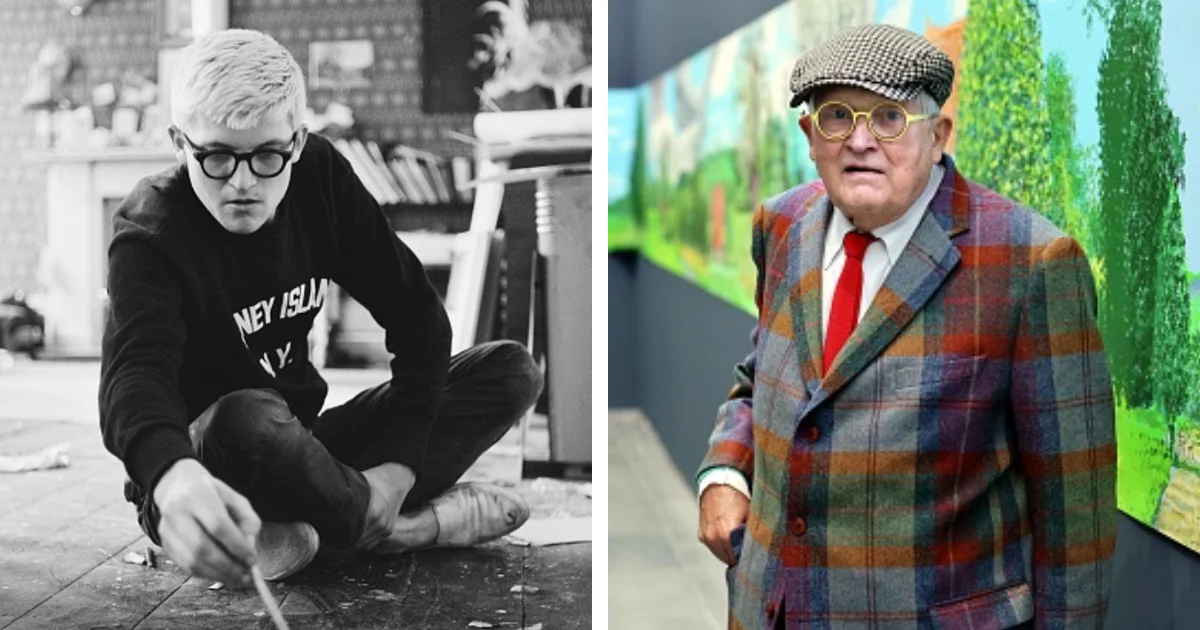
His studio confirmed that Hockney passed away peacefully at his home in London on the morning of June 11, 2026, surrounded by close friends and his long-time assistants. The news comes just weeks before he was set to celebrate his 89th birthday.
Hockney’s death marks the end of an era for contemporary art. As a leading figure of the 1960s Pop Art movement and arguably the most influential British painter of the 20th and 21st centuries, Hockney’s career was defined by a restless curiosity. He was an artist who refused to be pinned down by medium or geography, moving seamlessly from the rain-slicked streets of Northern England to the turquoise horizons of Southern California, and from the traditional oil canvas to the glowing screen of the iPad.
The Passing of a Titan: Main Facts and Immediate Reaction
The announcement of Hockney’s passing sent ripples through the international cultural community. Known for his signature round spectacles, bleached blonde hair in his younger years, and an unwavering commitment to the "joy of looking," Hockney remained prolific until his final days.
"David Hockney was a giant who stood at the intersection of tradition and the future," said Sir Nicholas Serota, former director of the Tate and current Chair of Arts Council England. "He taught us that art is not just about what we see, but how we see it. His work was an ongoing masterclass in perspective, color, and the sheer pleasure of being alive."
Hockney’s health had been a subject of private speculation among the art elite, though he continued to debut new works as recently as early 2026. His final public appearance was via a recorded video message for an exhibition in Paris, where he appeared sharp-witted, clutching a cigarette—a lifelong habit he defended with characteristic stubbornness—and discussing his latest fascination with the way light hits the Thames.
A Life in Color: The Chronology of a Master
The Bradford Beginnings and the Royal College of Art
Born on July 9, 1937, in the industrial city of Bradford, Yorkshire, David Hockney was the fourth of five children. His upbringing in a working-class family during World War II and the subsequent years of austerity deeply influenced his early aesthetic, which often featured the muted tones of post-war Britain.
However, Hockney was never destined for the mundane. At the Bradford School of Art, he displayed a prodigious talent for drawing. In 1959, he moved to London to attend the Royal College of Art (RCA). It was here that he first made waves, not just for his art, but for his defiance. When the RCA refused to grant him a diploma because he had failed to complete an essay requirement—arguing that he should be judged solely on his art—Hockney responded by sketching his own diploma. The college eventually relented, recognizing the undeniable genius in their midst.
The Lure of the West: The California Years
In 1964, seeking a world with more light and less social inhibition, Hockney moved to Los Angeles. The move was transformative. In the sprawling suburbs of Southern California, he found his most iconic subject matter: the backyard swimming pool.
Works like A Bigger Splash (1967) became emblems of a new kind of modernism. By using fast-drying acrylics, Hockney captured the ephemeral moment of water erupting into spray—a feat of technical precision that looked deceptively simple. During this period, he also produced a series of "double portraits," including Mr and Mrs Clark and Percy (1971), which explored the psychological complexities of human relationships with a cool, detached elegance.
The Joiners and the Exploration of Perspective
By the 1980s, Hockney began to feel that traditional photography was "unfair" because it captured the world from a single, static point of view. This led to his famous "joiners"—composite photographs made of dozens of individual Polaroids or 35mm prints. By layering different angles of the same scene, such as in Pearblossom Hwy., 11-18th April 1986, he mimicked the way the human eye actually moves and perceives space, effectively bringing Cubist theories into the photographic age.
Return to the Wolds: The Yorkshire Landscapes
In the early 2000s, Hockney returned to his roots, settling in the seaside town of Bridlington. This period saw a massive outpouring of large-scale oil paintings depicting the Yorkshire Wolds. He spent years documenting the changing seasons, culminating in the massive Bigger Trees Near Warter, a work composed of 50 individual canvases that eventually occupied an entire wall at the Royal Academy.
The Digital Frontier
Even in his 70s and 80s, Hockney remained more tech-savvy than artists half his age. He famously embraced the iPhone and later the iPad as legitimate artistic tools. He enjoyed the "instantaneity" of digital painting, often emailing "flower of the day" drawings to his friends. His 2023 immersive exhibition, Bigger & Closer (not smaller & further away), used high-resolution projection technology to allow viewers to step inside his paintings, proving that his appetite for innovation was never satiated.
Supporting Data: The Hockney Economy and Global Reach
Hockney’s influence was backed by staggering commercial and critical data. He was one of the few living artists whose name carried the same weight in the boardroom as it did in the classroom.
- Auction Records: In November 2018, Hockney’s Portrait of an Artist (Pool with Two Figures) sold at Christie’s for $90.3 million. At the time, it was the highest price ever paid at auction for a work by a living artist, surpassing Jeff Koons.
- Exhibition Attendance: His 2017 retrospective at the Tate Britain, which traveled to the Pompidou Centre and the Metropolitan Museum of Art, became the fastest-selling exhibition in the Tate’s history, drawing nearly 500,000 visitors in London alone.
- Volume of Work: It is estimated that Hockney produced over 3,000 paintings, drawings, and prints over his 60-year career, not including his thousands of digital sketches.
- Institutional Presence: His work is held in the permanent collections of over 100 major museums worldwide, including the MoMA (New York), the Museum of Contemporary Art (Tokyo), and the National Portrait Gallery (London).
Official Responses and Tributes
The death of David Hockney has prompted a wave of tributes from the highest levels of government and the arts.
The British Prime Minister issued a statement from 10 Downing Street:
"David Hockney was not just a painter; he was a national treasure who exported British creativity to every corner of the globe. From the gray skies of Yorkshire to the bright sun of California, he showed us the world in high definition. His loss is immeasurable."
The Director of the Metropolitan Museum of Art, Max Hollein, remarked:
"David was a constant student. Every time you spoke with him, he was obsessed with a new way of looking—whether it was through a camera lucida or an iPad. He was a bridge between the Old Masters and the digital age. The art world is significantly dimmer today."
Harry Styles, who was famously painted by Hockney in 2023, shared a brief tribute on social media:
"To be observed by David was to be seen truly. He was a kind, brilliant, and utterly singular man. Rest in peace, David."
Implications and Legacy: What Hockney Leaves Behind
The passing of David Hockney raises significant questions about the future of the art market and the direction of contemporary painting.
The Market Impact
Art historians predict a "Hockney surge" in the secondary market. As no new works will ever be produced, his late-career Yorkshire landscapes and his early LA paintings are expected to reach unprecedented valuations. Curators are already planning a series of posthumous retrospectives that will likely focus on his later digital works, which remain his most debated contribution to the canon.
A New Philosophy of Sight
Hockney’s greatest legacy, however, is not financial—it is philosophical. He spent his life arguing against the "tyranny of the lens." He believed that the camera had made us lazy observers and that painting was the only way to truly represent the "human-ness" of vision. His book Secret Knowledge: Rediscovering the Lost Techniques of the Old Masters (2001) sparked a global debate by suggesting that artists like Vermeer and Caravaggio used optical aids. This willingness to challenge the "purity" of art history made him a polarizing but essential figure.
The Hockney Effect on Future Artists
Hockney leaves behind a generation of artists who have been given "permission" to be figurative in an era of abstraction, and to be colorful in an era of minimalism. He proved that an artist could be both a populist and a high-brow intellectual, both a traditionalist and a disruptor.
As the sun sets on the life of David Hockney, the art world reflects on a man who famously said, "I have always believed that art should be a deep pleasure. I think there is a contradiction in ‘boring art.’" By that metric, Hockney was perhaps the most successful artist of all time. He was never, for a single moment, boring.
David Hockney is survived by his siblings and a global family of admirers who will continue to see the world through the vibrant, distorted, and beautiful lens he provided. Details regarding a public memorial service at St. Paul’s Cathedral are expected to be announced later this week.