Tyra Banks Files Explosive Defamation Lawsuit Against Netflix Over ‘ANTM’ Docuseries
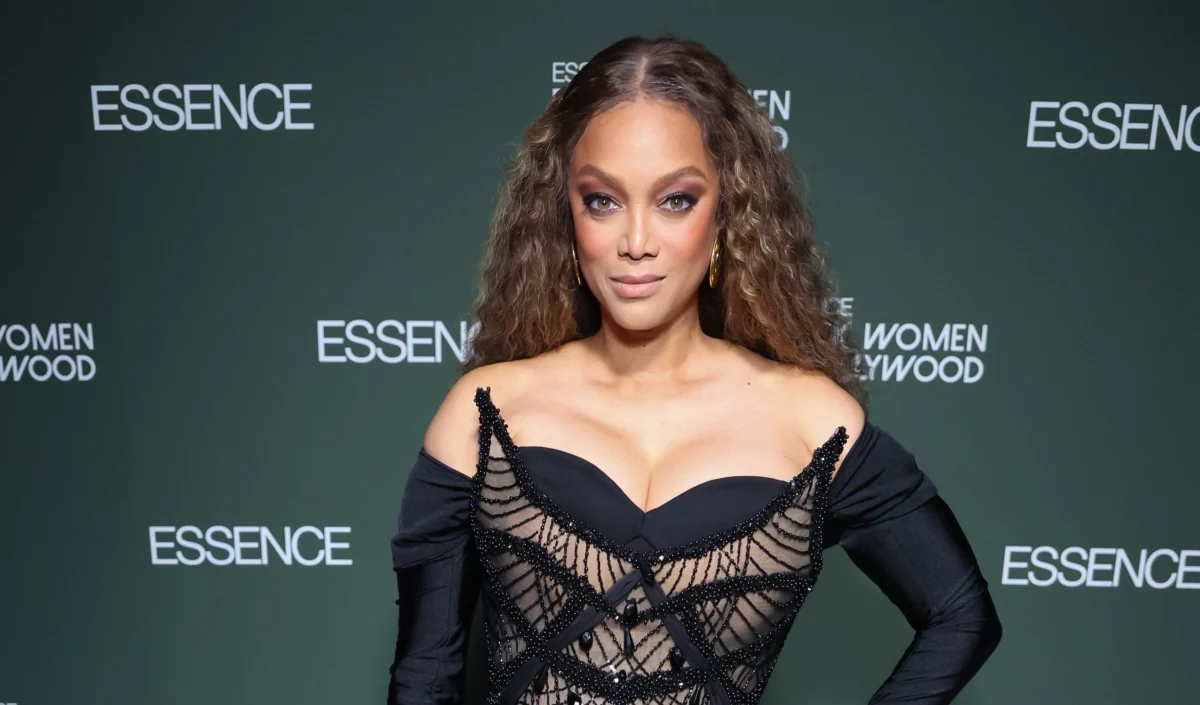
In a legal move that has sent shockwaves through the entertainment industry, supermodel and media mogul Tyra Banks has filed a comprehensive defamation lawsuit against streaming giant Netflix. The lawsuit, filed in Los Angeles, alleges that the recent docuseries Reality Check: Inside America’s Next Top Model utilized "surgical manipulation" and deceptive editing to craft a false narrative that portrays Banks as a negligent and callous leader who knowingly ignored a sexual assault on her set.
The legal action marks a significant escalation in the ongoing cultural re-evaluation of America’s Next Top Model (ANTM), a show that dominated reality television for over two decades. Banks, who served as the creator, host, and executive producer of the series, claims that her participation in the documentary—intended to provide context and accountability—was instead weaponized against her to generate sensationalist content.
The Core Allegations: Defamation and "False Light"
According to the complaint obtained by Variety, Banks is suing a coalition of entities and individuals involved in the production of the docuseries. The defendants named include Netflix, 89 Blocks Holdings, EverWonder Studio, Netflix Music, and co-directors Mor Loushy and Daniel Sivan. The lawsuit seeks damages for false light, defamation by implication, breach of contract, and false endorsement.
At the heart of the filing is the discrepancy between the raw footage of Banks’ interview and the final product aired to millions of Netflix subscribers. Banks’ legal team asserts that the former host sat for an exhaustive "three-and-a-half-hour" interview, ostensibly to discuss the legacy of the show, its successes, and its documented shortcomings. However, the lawsuit claims the producers distilled this lengthy testimony into a mere "16 minutes" of screen time.
The suit alleges that the remaining footage was "reassembled to support a false and defamatory narrative unrelated to what she actually expressed." Most damagingly, Banks claims that her efforts to take accountability for certain aspects of the show were intentionally omitted—left on the "cutting room floor"—to ensure she appeared as a villain in the documentary’s narrative arc.
Chronology of Conflict: From Reality TV Pioneer to Documentary Subject
To understand the gravity of the lawsuit, one must look at the timeline of America’s Next Top Model and its recent transition from a nostalgic relic to a lightning rod for controversy.
The Rise of ANTM (2003–2018)
Launched in 2003, America’s Next Top Model was a pioneer of the "competition reality" genre. Over 22 cycles, Tyra Banks oversaw the transformation of aspiring models, creating some of the most viral moments in television history. However, in recent years, social media "re-watches" have scrutinized the show’s treatment of race, body image, and the psychological pressure placed on young contestants.
The Development of ‘Reality Check’
In the wake of this cultural shift, Netflix and the production teams at EverWonder Studio and 89 Blocks Holdings began developing a docuseries aimed at providing a "behind-the-scenes" look at the franchise. Banks, according to the lawsuit, agreed to participate in good faith, believing the project would be a balanced retrospective.
The Release and the Fallout
When Reality Check: Inside America’s Next Top Model premiered, the reception was immediate. While some praised the series for giving a platform to former contestants, Banks’ legal team argues the series crossed a legal line by fabricating a narrative of criminal negligence. The lawsuit claims the producers engaged in "deliberate omission" to suggest that Banks "knowingly allowed a contestant to be sexually assaulted on her show" and subsequently "exploited that contestant’s trauma for ratings."
Supporting Data: The Case of Shandi Sullivan
The most "egregious example" of manipulation cited in the lawsuit involves Shandi Sullivan, a standout contestant from ANTM Cycle 2, which aired in 2004.
The incident in question occurred during the contestants’ trip to Milan. Sullivan, who was intoxicated at the time, had a sexual encounter with a local man. In the original 2004 broadcast, the storyline focused on Sullivan’s subsequent confession of infidelity to her boyfriend in a dramatic, tear-filled phone call. For twenty years, this was framed by the show and the public as a narrative of a relationship in crisis.
The "Surgical" Edit
In the Netflix docuseries, the narrative is fundamentally altered. The lawsuit points out that Sullivan is now shown describing the event as a sexual assault. Banks’ lawyers contend that this was a framing Banks "had never heard before and was not told during her interview."
The lawsuit highlights a specific sequence:
- The Question: Director Mor Loushy asks Banks, "You remember the story with Shandi?"
- The Edit: The docuseries shows Banks glancing upward, saying "um," and then the screen abruptly cuts to black.
- The Implication: The lawsuit argues this edit was "devastating and deliberate," designed to make it appear that Banks was so indifferent to an assault that she could not even recall the victim or the event.
The "Unedited" Reality
Banks’ legal team claims that the unedited, raw footage tells a completely different story. According to the filing, the full footage shows Banks nodding affirmatively and stating clearly, "I do remember her story." By cutting the clip before she could answer, the lawsuit alleges the producers created a "complete fabrication" of her reaction.
Official Responses and Production Silence
As of the filing, the defendants have remained largely silent. Representatives for Netflix did not immediately respond to requests for comment from major news outlets, including Variety. This is standard practice in the early stages of high-stakes litigation, as corporate legal teams typically review the filing before making public statements.
The production companies, EverWonder Studio and 89 Blocks Holdings, along with directors Loushy and Sivan, have also withheld comment. However, the lawsuit suggests that the "breach of contract" claim stems from specific agreements regarding how Banks’ likeness and testimony would be used—agreements she claims were discarded in favor of sensationalism.
Implications for the "Docuseries Industrial Complex"
The lawsuit filed by Tyra Banks arrives at a critical juncture for the streaming industry. The "tell-all" docuseries has become a staple of Netflix’s content strategy, often revisiting 1990s and 2000s pop culture with a modern, critical lens. While these documentaries often provide necessary corrections to past media narratives, Banks’ lawsuit raises questions about the ethics of "accountability" filmmaking.
Legal Precedent: Defamation by Implication
The case leans heavily on the concept of "defamation by implication." Unlike standard defamation, where a person is accused of lying outright, defamation by implication occurs when true facts (like an interview clip) are arranged in such a way as to create a false and defamatory impression. If Banks’ team can prove that the 3.5-hour interview contained the very accountability the producers claimed she lacked, the "false light" claim could carry significant weight in court.
The "Reality Check" for Reality TV
If the case goes to a jury trial, as Banks has requested, it could force a reckoning regarding how much creative liberty documentary filmmakers can take when editing interviews. It also highlights the tension between "Reality TV" stars and the platforms that distribute their stories. Banks, a woman who built an empire on the "edit," is now claiming to be a victim of it.
Damages and Future Outlook
Tyra Banks is requesting a jury trial and is seeking an "appropriate" amount of punitive damages. Beyond the financial compensation, the lawsuit appears to be a move to protect a brand that Banks has cultivated for over thirty years. As a businesswoman with numerous ventures, including her Smize & Dream ice cream brand and various television production deals, a narrative that labels her as a "suppressor of sexual assault information" is professionally catastrophic.
The outcome of this case will likely determine the future of America’s Next Top Model’s legacy. For years, Banks has faced criticism for the "tough love" and sometimes harsh conditions of the competition. However, this lawsuit draws a firm line between being a "tough boss" and being a "criminal conspirator."
By challenging Netflix, one of the most powerful entities in global media, Banks is signaling that while she may be open to discussing the flaws of her past work, she will not allow her history to be rewritten through what she terms "surgical manipulation."
As the legal proceedings move forward, the industry will be watching closely. A victory for Banks could lead to stricter "final cut" approvals for documentary subjects, while a victory for Netflix would solidify the broad editorial protections typically afforded to filmmakers under the First Amendment. For now, the "smize" has been replaced by a stern legal gaze as Tyra Banks prepares for her most high-stakes competition yet: a battle in a court of law.