Exploring the Ethereal: Kit Anderson’s ‘Safer Places’ and the New Wave of Magical Realism in Graphic Narratives
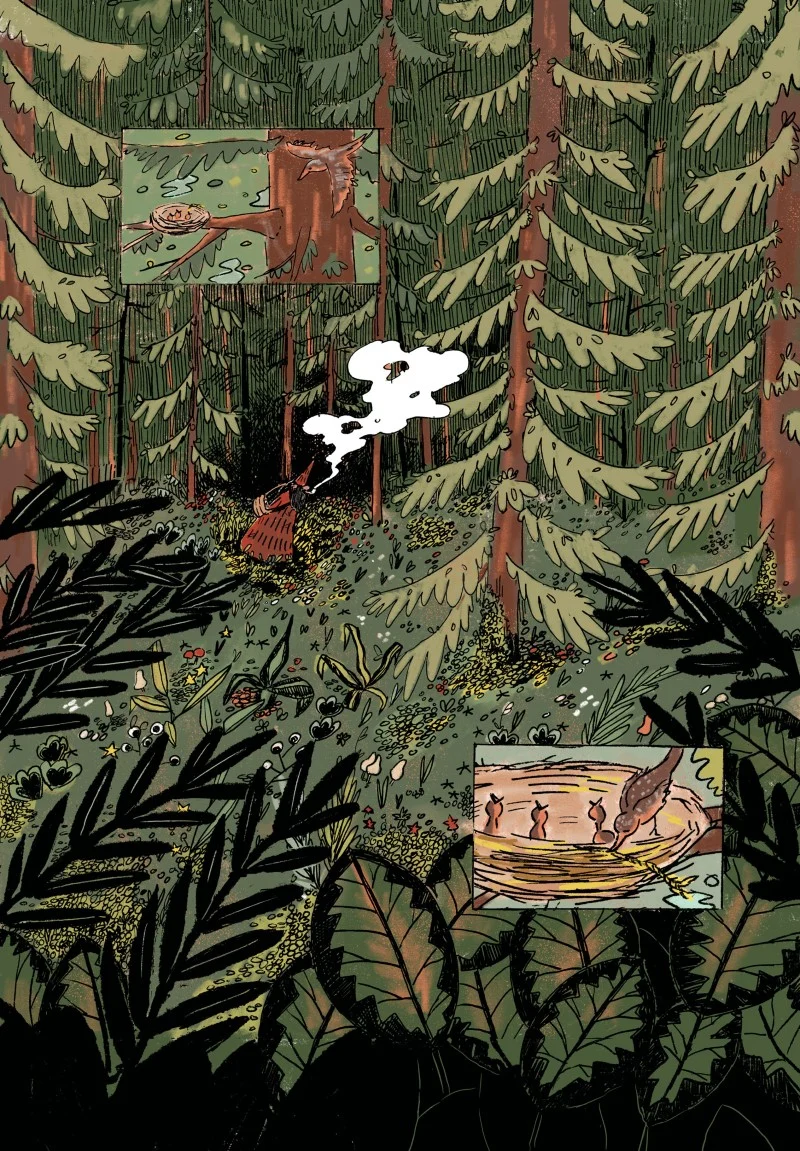
The independent comics landscape has long been a sanctuary for experimental storytelling, yet few recent releases have captured the fleeting, tactile nature of dreams as poignantly as Kit Anderson’s Safer Places. Published by the prestigious Avery Hill Publishing, the work has recently been spotlighted by DoomRocket as a seminal entry in their "Required Reading" series. This designation marks the book as a significant contribution to the medium, blending high-concept magical realism with a deeply personal exploration of memory, technology, and the reclamation of nature.
Main Facts: The Emergence of ‘Safer Places’
Safer Places is a collection of interrelated stories—a "chapter-book of dreams"—written and illustrated by Kit Anderson. Released through Avery Hill Publishing, a house known for its curated selection of avant-garde and emotionally resonant graphic novels, the book retails for $19.99 (£14.99).
The core of Anderson’s work lies in its refusal to adhere to traditional narrative constraints. Instead, it invites the reader into a world where a wizard serves as a guide through landscapes that are simultaneously post-apocalyptic and lushly reborn. The book is characterized by its "uncanniness and ineffability," utilizing a visual style that shifts between rustic melancholy and cosmic abstraction.
The primary facts surrounding the publication highlight a growing trend in the industry: the move away from linear, plot-driven "superhero" tropes toward "literary comics" that prioritize atmosphere, philosophical inquiry, and visual experimentation. Anderson’s work is being cited by critics not just for its aesthetic beauty, but for its sophisticated handling of "deep time"—the concept of nature’s endurance far beyond the human or technological lifespan.
Chronology: The Journey Through the Wizard’s Lens
The narrative structure of Safer Places functions less like a novel and more like a musical composition or a curated gallery. The journey begins with an invitation to "walk with the wizard," a trope that Anderson subverts by placing this magical figure within a world of "technological enchantment."
The Early Chapters: Rebirth and Reclamation
The initial movements of the book focus on the concept of rebirth. Anderson presents images of farms being torn down, not as a tragedy, but as a precursor to nature’s reclamation. One of the most striking early sequences involves a flowered hillside that literally rises up and walks away—a metaphor for the agency of the earth itself. These early chapters establish the tone of "magical realism" where the impossible is treated with a mundane, almost reverent, acceptance.
The Middle Movements: Dream Submersion and Internalization
As the reader progresses deeper into the volume, the "dream logic" takes hold. Anderson shifts the visual palette, utilizing a technique of inverting black and white panels. This "dream submersion" signals a transition from the external world to the internal psyche. Here, the stories become more fragmented. The author explores the "basement of memory," where stairs may not exist and domestic animals, such as cats, offer cryptic, philosophical advice.

The Conclusion: The Symphonic Resolution
In the final segments, the book moves toward what critics describe as a "comics symphony." Themes introduced in the early chapters—agency, the cycle of nature, the longevity of plastic versus the finality of organic life—repeat with different "instruments." The conclusion does not offer a traditional "quest’s end" but rather a philosophical surrender. The recurring refrain "So let go" acts as the final note, urging the reader to accept the lack of "safe places" in a world of constant flux.
Supporting Data: Artistic Lineage and Visual Mechanics
To understand the impact of Safer Places, one must analyze Anderson’s artistic influences and the specific mechanics she employs to manipulate time and space on the page.
Artistic Influences
Anderson’s work is a dialogue with the history of independent cartooning. Reviewers have noted several key stylistic touchstones:
- Ted Stearn: The "rustic melancholy" of Anderson’s landscapes echoes Stearn’s ability to find pathos in the weathered and the rural.
- Inés Estrada and Julie Doucet: The "transformative reveries" and the fluid, often surrealist depictions of the body and environment draw parallels to these masters of the underground scene.
- Buk Ulreich: In her most abstract moments, Anderson’s art breaks from traditional rendering to resemble Ulreich’s mid-century paintings. Her "dream horses" are rendered as white splashes against a "cosmic night," prioritizing the impression of a shape over the detail of its anatomy.
Visual Storytelling Mechanics
Anderson’s mastery of the "grid" allows her to play with poetic timing. In Safer Places, panels are not merely containers for action; they are rhythmic markers. Words often cascade over full-page images, creating a sense of "deep time" where space and time are implied by the layout but obscured by the content.
The use of "dream logic" is supported by her technical choice to invert values. By switching the traditional relationship between ink and negative space, Anderson visually represents the state of being "beyond consciousness." This isn’t just an aesthetic choice; it is a functional tool that guides the reader’s emotional state, making the experience of reading the book feel like a physical immersion into another’s mind.
Official Responses and Critical Synthesis
The critical reception of Safer Places has centered on its thematic density and its place within the broader "Folk Horror" and "Gothic Fantasy" genres. Arpad Okay, writing for DoomRocket, emphasizes that the book’s title is a misnomer—or perhaps a challenge. "The stories that come from Safer Places don’t feel particularly safe," Okay notes. "More like haunted, reminded, desired, overcome."
The Role of the Guide
A significant point of critical discussion is Anderson’s use of animal guides—the Cat and the Fox. These figures represent the "cycle of nature," reminding the protagonist (and the reader) that being led out of the wilderness is a temporary state. Critics have compared this thematic thread to Raven Lyn Clemens’ The Paradox of Getting Better, highlighting a shared interest in the ongoing, non-linear nature of recovery and understanding.

Comparative Literature
Literary analysts have drawn parallels between Anderson’s narrative structure and Zuo Ma’s Night Bus. Both works utilize a "conversation" between stories, where one fragment recontextualizes the one that preceded it. This "screensaver-alt-escape-art" experiment, as it has been described, positions Safer Places as a work of agency. It asks the reader: where do we invest our energy when the world around us is a ghost of familiarity?
Implications: The Future of the Indie Graphic Novel
The publication and subsequent acclaim of Safer Places have several implications for the comics industry and the literary world at large.
1. The Elevation of the Anthology Format
Historically, anthologies or "fragmented" collections have been harder to market than single-arc graphic novels. However, the success of Safer Places suggests an appetite for "symphonic" storytelling—where thematic unity is more important than plot continuity. This opens doors for other artists who work in impressions and sensations rather than traditional "hero’s journey" structures.
2. Reconciliation of the Mundane and the Gothic
Anderson’s ability to mix "suburban rituals" with "gothic fantasy" provides a roadmap for modern magical realism. By placing a talking cat in a basement or juxtaposing the longevity of plastic against a blooming hillside, she addresses contemporary anxieties regarding the environment and the digital age without being didactic. The implication is that the "new gothic" will not be found in haunted castles, but in the "hole in the wall" of a modern apartment.
3. The "No Safer Places" Philosophy
Perhaps the most profound implication of the work is its philosophical stance on safety. By asserting that "there are no safer places, no quest’s end," Anderson aligns her work with a growing movement of "existential comics." This genre focuses on the necessity of the "guide" and the importance of "letting go." It suggests that in an era of global instability, art’s role is not to provide a sanctuary of safety, but to provide the tools—the "wizard" and the "cat"—to navigate the haunting beauty of the unknown.
In conclusion, Kit Anderson’s Safer Places stands as a testament to the power of the graphic medium to explore the ineffable. Through its sophisticated visual language and its symphonic approach to theme, it challenges the reader to find agency within the dream, and to recognize that while there may be no truly safe places, there is a profound, natural beauty in the journey itself. As Avery Hill Publishing continues to champion such voices, the boundary between "comic book" and "fine literature" continues to dissolve, leaving behind a trail of flowered hillsides and cosmic stars for the reader to follow.