CSotD: Facts, or something like them
In a week characterized by high-stakes diplomacy and military maneuvers, President Donald J. Trump has faced bipartisan criticism for a series of public appearances and policy decisions that observers describe as "uniquely partisan." From a widely panned address that major networks refused to broadcast to a burgeoning energy crisis fueled by conflict with Iran, the administration finds itself at the center of a global storm.
Main Facts: A Presidency Under Siege
The events of the past week have highlighted a significant shift in how the executive branch interacts with both the public and the international community. The primary developments include:
- Media Blackout: Major news networks, including ABC and NBC, took the rare step of declining to air the President’s recent address on their primary channels, relegating it to online streaming. Even Fox News, traditionally a staunch ally, cut away from the speech once it devolved into purely political rhetoric.
- Military Escalation: The United States has engaged in direct military strikes against Iranian infrastructure, including bridges and water supplies. In retaliation, Iran has targeted American-friendly bases in neighboring territories, resulting in the confirmed deaths of at least two American service members.
- Diplomatic Friction: An appearance at the World Cup in Spain ended in embarrassment for the administration after the President was escorted away from a Spanish team victory photo by FIFA President Gianni Infantino.
- Election Denialism: Despite the passage of several years, the President continues to prioritize claims of 2020 election fraud, recently alleging that Chinese operatives obtained U.S. voter rolls to influence the outcome—a claim that has found little traction even among his usual defenders.
- Domestic Appointments: The appointment of the late Senator Lindsey Graham’s sister to his vacant seat has sparked accusations of nepotism and "rubber-stamp" politics, further polarizing the Senate.
Chronology of Events: July 13 – July 20, 2026
July 13: President Trump delivers a primetime address from the Oval Office. While billed as a national policy update, the speech quickly pivots to grievances regarding the 2020 election. ABC and NBC refuse to carry the broadcast. Fox News terminates its coverage mid-speech, citing a lack of newsworthy content.
July 15: The President attends the World Cup final in Spain. In a move that goes viral on social media, he attempts to join the Spanish national team’s trophy celebration. FIFA officials are forced to intervene to maintain protocol.
July 16: The Pentagon confirms that U.S. aircraft have targeted key logistical points in Iran. Reports emerge of significant civilian impact due to the destruction of water treatment facilities.
July 17: Iran retaliates with a missile strike on a regional base housing U.S. personnel. Two American soldiers are confirmed dead.
July 18: In a press briefing, the President dismisses the significance of the casualties, comparing the losses favorably to daily death tolls in Vietnam and Afghanistan.
July 19: The Governor of South Carolina officially appoints the sister of the late Lindsey Graham to the U.S. Senate. Simultaneously, right-wing commentators launch a concerted attack on New York City Mayor Mamdani’s "Free Parents Night Out" program, labeling it a "socialist indoctrination" effort.
July 20: Global markets react to the instability in the Persian Gulf, with oil prices reaching a three-year high and fertilizer shortages threatening the upcoming agricultural cycle.
Supporting Data and Analysis
The Media Landscape and the "Silence of Fox"
The refusal of major networks to air a presidential address marks a nadir in White House-press relations. Analytical data suggests that the media’s hesitation is rooted in legal and financial self-preservation. Following the $787 million settlement paid by Fox News in a previous defamation suit regarding election technology, the network has shown a marked reluctance to broadcast unverified claims of "magical vote-fixing machines."
The Economic Toll of the Iran Conflict
The "on-again, off-again" approach to the conflict with Tehran has had a quantifiable impact on the global economy.
- Energy: Crude oil futures have risen by 14% in the last seven days.
- Agriculture: Fertilizer production, heavily dependent on natural gas from the region, has slowed, leading to a projected 20% increase in food costs by the fourth quarter of 2026.
- Humanitarian: Independent monitors report that the bombing of Iranian bridges has cut off food supplies to approximately 400,000 civilians.
The Voter Roll Allegations
The President’s recent "document dump" regarding Chinese interference has been analyzed by cybersecurity experts. The consensus is that the "stolen" voter rolls are, in fact, public records accessible to any domestic or international entity. There is no empirical evidence to support the claim by some pro-MAGA cartoonists and commentators that these rolls were used to submit fraudulent ballots.
Official Responses
The White House
When questioned about the mounting American casualties and the abandonment of the Memorandum of Understanding (MoU) with Iran, President Trump remained defiant. "I couldn’t care less [about the MoU]," the President stated. He further defended the military actions as necessary to prevent Iran from achieving nuclear capabilities, despite critics arguing the strikes have only served to radicalize the region further.
International Reaction
Gianni Infantino, President of FIFA, issued a brief statement following the World Cup incident, emphasizing that "protocol exists to ensure the focus remains on the athletes and the spirit of the game." Diplomatically, this has been interpreted as a subtle rebuke of the President’s perceived "clumsy" attempt at a photo opportunity.
The Opposition
Democratic leaders have seized on the appointment of Lindsey Graham’s sister as evidence of a "collapsing meritocracy." Senate Minority Leader [Name] stated, "The American people deserve representatives chosen for their vision, not their surname or their willingness to echo the President’s debunked theories."
On the local level, NYC Mayor Mamdani defended his babysitting program, calling it a "common-sense solution for overworked families" and dismissed the "communist" labels as "outdated Red Scare tactics designed to distract from the administration’s failures abroad."
Implications: A World at the Brink
The convergence of these events suggests a period of prolonged instability for the United States.
Geopolitical Instability
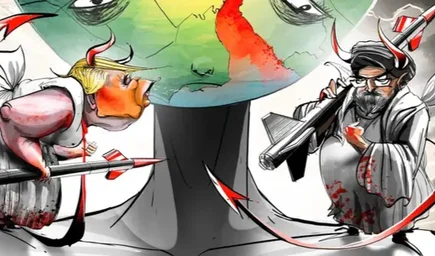
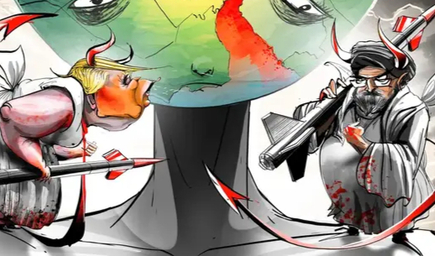
The duel between the Trump administration and the Iranian mullahs for control of the Strait of Hormuz has placed the global energy supply in a "stranglehold." If the conflict continues to escalate into infrastructure warfare—targeting water and electricity—the likelihood of a full-scale regional war increases. Furthermore, the administration’s dismissal of traditional diplomatic memoranda suggests that international treaties may no longer serve as a deterrent.
Domestic Polarization and the "Succession" Model
The trend of appointing family members to vacated legislative seats—while not unprecedented—is becoming a flashpoint for voters. As Trump promotes Graham’s sister for a full term, the Republican party faces an internal identity crisis: whether to remain a "big tent" party or consolidate into a dynastic loyalist faction.
The Evolution of Political Rhetoric
The "Red Scare" tactics utilized by commentators at outlets like Town Hall against minor municipal programs (such as free babysitting) indicate a shift in political strategy. By conflating standard social services with "Marxism" or "Communism," the right-wing apparatus aims to mobilize older voters through fear, even as younger demographics lean toward populist policies.
As the 2026 midterm elections approach, the narrative remains dominated by a President who is increasingly isolated from the media, at odds with international norms, and deeply entrenched in the grievances of the past. Whether the "optimistic analysis" from supporters—suggesting Iran is on the verge of collapse—holds true remains to be seen. Historically, however, such "happy talk" has often preceded long, drawn-out entanglements with no clear exit strategy.