The Enduring Enigma of "Close Encounters of the Third Kind": A Nightmarish Ecstasy That Still Captivates
By Oli Welsh | June 14, 2026
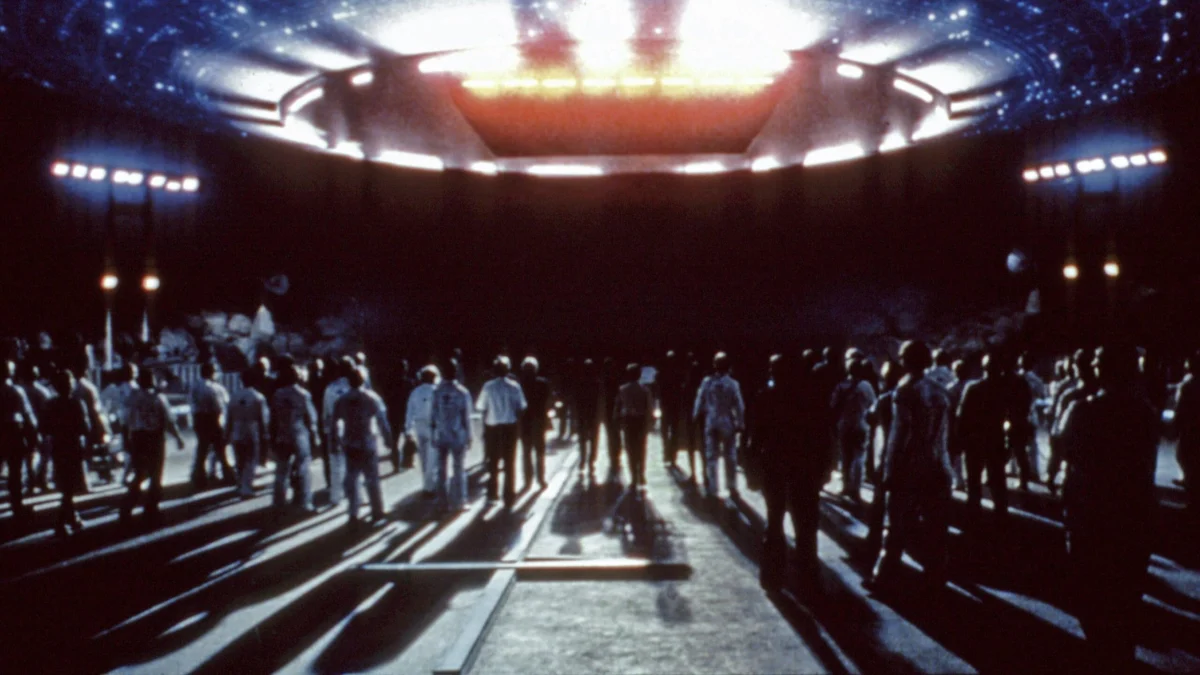
Steven Spielberg’s 1977 science fiction masterpiece, "Close Encounters of the Third Kind," remains a cinematic touchstone, a film that redefined the genre with its blend of awe-inspiring wonder and unsettling introspection. Decades after its release, its influence continues to ripple through popular culture, most recently evidenced in Spielberg’s own 2026 film, "Disclosure Day." Yet, despite its enduring legacy, "Close Encounters" occupies a unique and somewhat paradoxical space in cinematic history. While it cemented Spielberg’s reputation as a master storyteller, its particular brand of ecstatic, deeply personal science fiction, some argue, proved to be an evolutionary dead end for the genre, overshadowed by the more immediate and universally accessible space opera that arrived just six months prior: George Lucas’ "Star Wars."
The infamous bet between Spielberg and Lucas, where they famously swapped profit points on each other’s films, highlights a prescient awareness from Spielberg that his vision might not capture the broader audience in the same way as Lucas’ intergalactic adventure. While both films were colossal successes, the narrative suggests that Spielberg recognized his film’s potential to inspire a more intimate, character-driven form of sci-fi, a lineage that would lead to masterpieces like "Raiders of the Lost Ark," "Jurassic Park," and the profoundly personal "E.T. the Extra-Terrestrial." These subsequent works, while bearing the imprint of "Close Encounters," never fully encapsulated its singular, almost paradoxical, emotional core.
Even with its ubiquitous imagery etched into the global consciousness and its creation thoroughly documented, "Close Encounters of the Third Kind" retains an arresting, almost disquieting strangeness. This is a film that has undergone significant evolution, with Spielberg himself undertaking extensive revisions across three distinct edits over two decades. His candid and insightful commentary on every facet of its production—from his deep identification with Richard Dreyfuss’ increasingly obsessed Roy Neary to the ingenious, on-the-fly improvisation that birthed its still-dazzling special effects—has provided a wealth of understanding. Yet, this exhaustive dissection has not diminished the film’s capacity to unsettle and surprise, underscoring its enduring power.
The Personal Genesis of a Sci-Fi Epic
"Close Encounters of the Third Kind" stands as arguably Spielberg’s most personal film, second only to "The Fabelmans." It represents the culmination of a lifelong fascination with the unknown, a passion ignited in his youth through the creation of amateur science fiction films. The film’s status as one of the few for which Spielberg retains sole screenwriting credit, despite numerous contributions from other writers, speaks to its deeply ingrained personal vision.
As a director, Spielberg is renowned for his ability to forge an immediate and profound emotional connection with his audience. In "Close Encounters," this connection is forged at its most raw and unguarded. The narrative centers on Roy Neary (Richard Dreyfuss), a blue-collar electrical lineman whose life is irrevocably altered by an inexplicable encounter with a UFO. His ensuing obsession becomes the film’s central driving force, drawing him into a world of inexplicable phenomena and growing alien sightings that are mirrored across the globe.
Simultaneously, the film interweaves the poignant story of Jillian Guiler (Melinda Dillon), a mother desperately searching for her abducted child, and the methodical efforts of French scientist Claude Lacombe (François Truffaut) to coordinate an international response to this unprecedented event. This multi-faceted approach eschews conventional narrative structure, opting instead for a bold and unconventional three-act progression that is strikingly unbalanced.
A Narrative Deconstruction: From Mundane to Transcendent
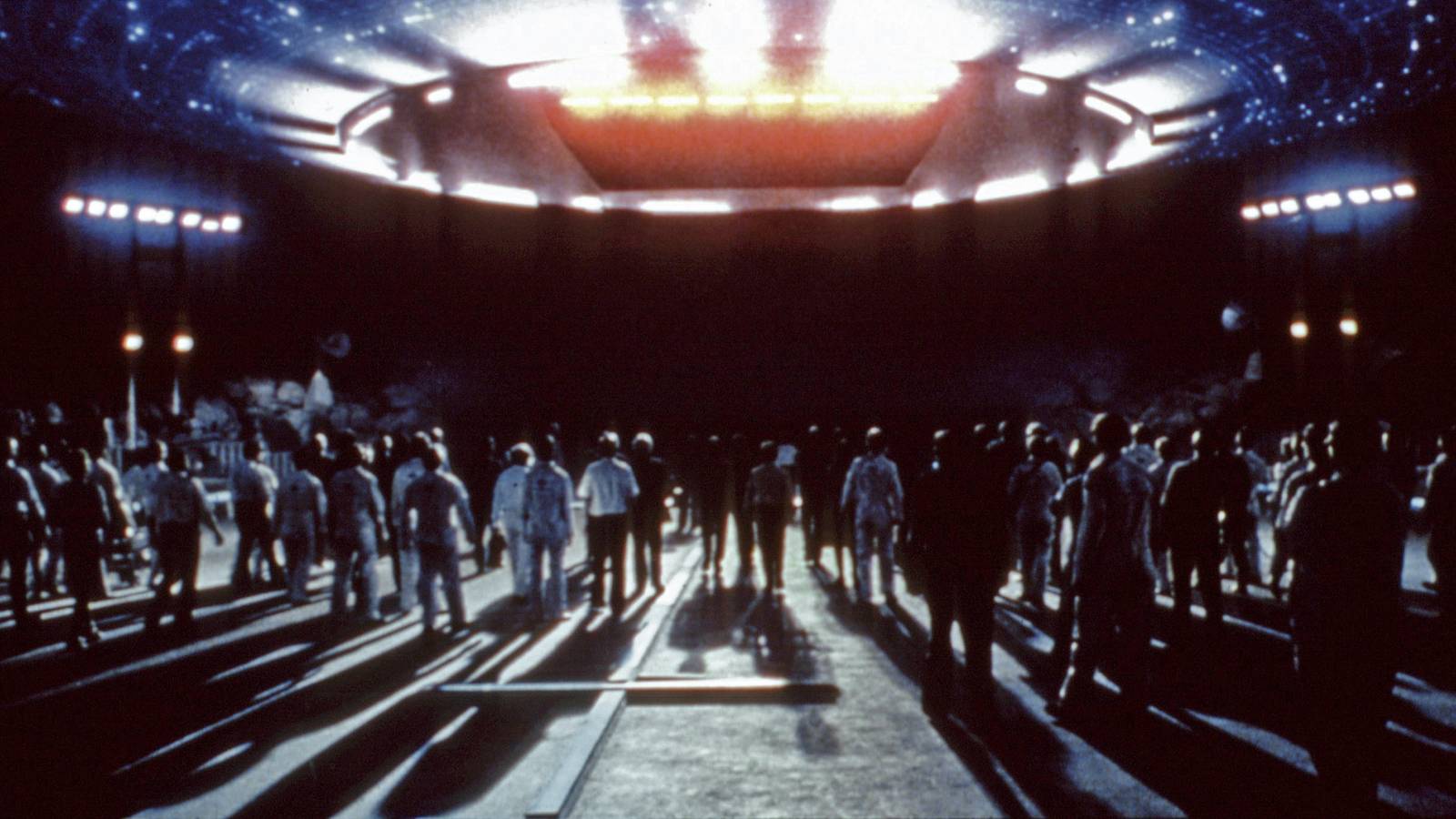
The film’s initial act functions as a compilation of mysterious occurrences, a seemingly disparate collection of inexplicable events that gradually coalesce. This segues into a gripping, paranoid psychological thriller as Roy’s obsession takes hold and his sanity is questioned. The climax, however, is a breathtaking, rapturous display of light and sound, a spectacle that doesn’t so much resolve the established storylines as it does transcend them.

This deliberate deconstruction of traditional Hollywood storytelling is one of "Close Encounters’" most potent and enduring qualities. While conventional narratives typically process extraordinary events through the lens of individual character arcs and personal stakes, "Close Encounters" meticulously sets up these intimate stories only to render them secondary, even irrelevant, in the face of the overwhelming, transcendent force of the alien encounter itself. It is a bold assertion that, in the face of the truly unknown, individual human dramas, while compelling, are ultimately dwarfed by the sheer magnitude of the cosmic event.
The Unsettling Harmony of Fear and Wonder
Perhaps the most profound and enduring aspect of "Close Encounters of the Third Kind" lies in its masterful manipulation of tone. Spielberg forged a career on his unparalleled ability to evoke both fear and wonder, often presenting them as inextricably linked. In "Close Encounters," this duality reaches its zenith, creating an experience that is simultaneously deeply optimistic and profoundly terrifying.
The film portrays the global effort to communicate with extraterrestrial life as a clandestine conspiracy, yet from within the narrative, it unfolds as a peaceful, collaborative endeavor among curious and dedicated scientists. It never judges Roy’s unthinking, almost primal quest for further encounters—a quest that mirrors Spielberg’s own, and by extension, the audience’s—nor does it shy away from depicting the devastating impact of his mental unraveling on his family.
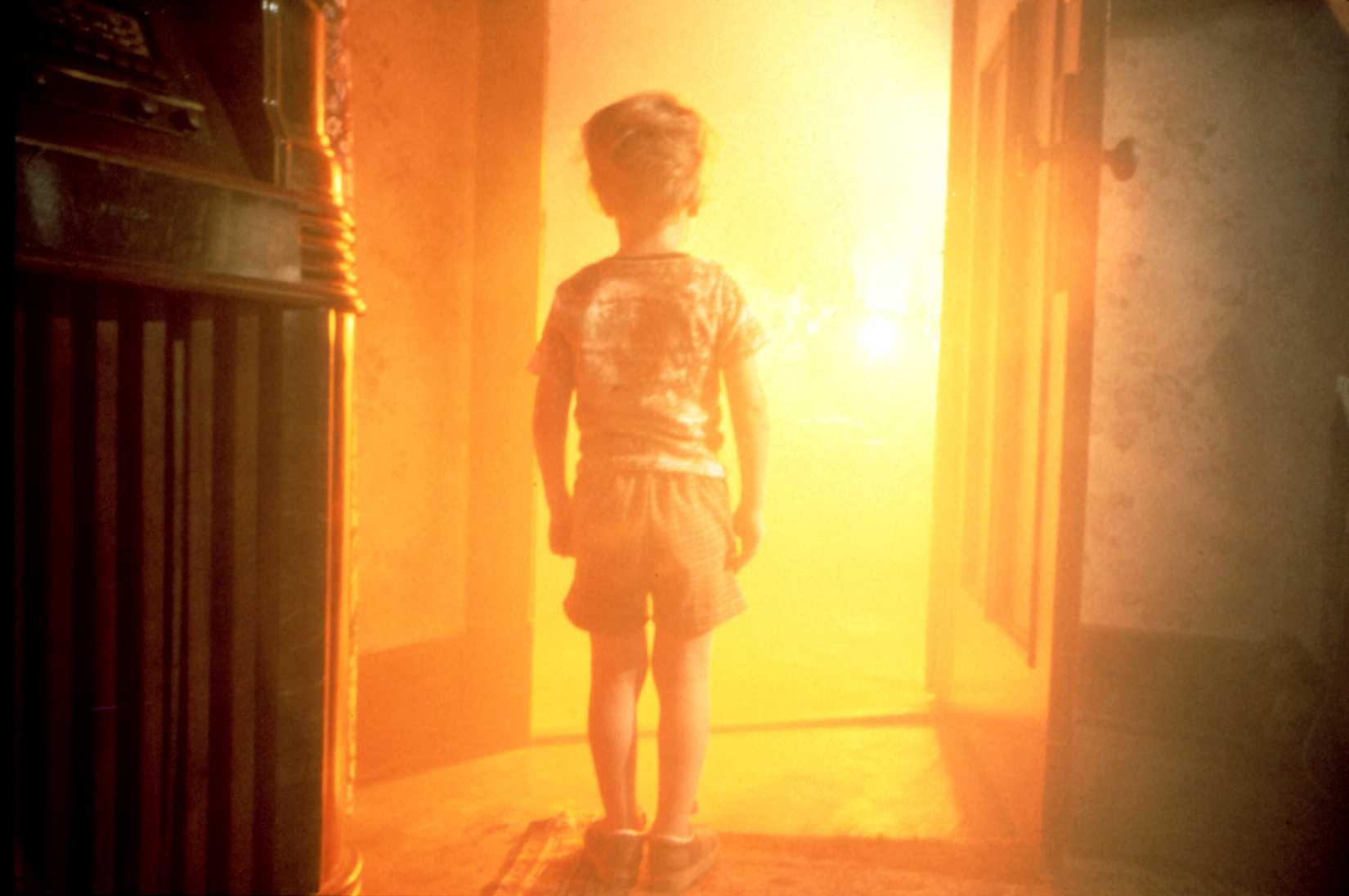
The UFOs themselves are depicted as playful entities, characterized by their tumbling, darting movements and ethereal, hazy neon hues. However, their introduction is marked by scenes of unnerving turbulence, with boiling clouds and inanimate objects violently shaking themselves apart. The imposing, blunt silhouette of Devil’s Tower looms over the film, a stark and somber presence that refuses to be rendered beautiful or easily comprehensible. This deliberate ambiguity between the sublime and the terrifying is a hallmark of the film’s unique power.
Sonic Disquiet: A Symphony of Chaos and Connection
Beyond the striking visuals, John Williams’ score and the film’s sound design contribute significantly to its unsettling atmosphere. Dialogue is often layered in a cacophonous jumble, creating a sense of breathless urgency but also profound confusion. Williams’ masterful score oscillates between soaring romantic melodies and jarring atonal passages. The film’s most iconic sequence, the musical dialogue between humans and aliens, masterfully orchestrated to move from joyful harmony into a frenzied, almost overwhelming delirium, pushes the audience to the brink of sensory overload. This deliberate excess of information underscores the overwhelming nature of the encounter.
The Paradoxical Power of "Close Encounters"
For a film in which no explicitly catastrophic events transpire, "Close Encounters of the Third Kind" often veers into the realm of the nightmarish. It is fundamentally built upon a foundation of profound emotional clashes: the juxtaposition of hope and terror, joy and madness, suspicion and unwavering awe. Yet, these are not presented as irresolvable contradictions. Instead, they coalesce to imbue "Close Encounters" with an elemental power that has shown remarkable resilience over time.
In his public persona, Spielberg often projects an image of placid control. However, the character of Roy Neary, with his manic intensity and unwavering drive, can be seen as Spielberg’s most truthful cinematic avatar. Created through a staggering expenditure of resources, allowing a filmmaker to fully realize a deeply personal fantasy, "Close Encounters of the Third Kind" ultimately explores a universal human truth: the profound fear that often accompanies the attainment of our most fervent desires. It is a testament to Spielberg’s genius that a film so grounded in personal obsession can resonate with such universal emotional depth, continuing to captivate and confound audiences with its unique blend of the terrifying and the transcendent.