
Mesh2Motion Evolves: Open-Source Animation Tool Broadens Rigging Capabilities, Offering New Horizons for Indie Developers
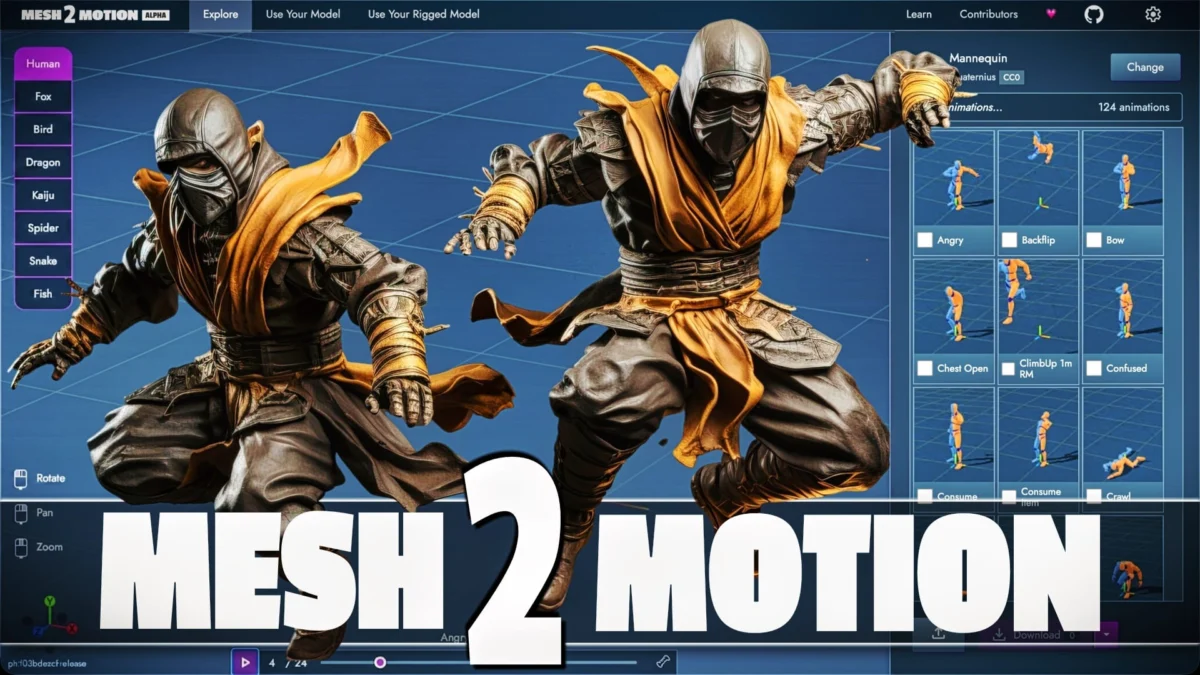
[City, State] – [Date] – The landscape of 3D character animation for game development and other digital media is constantly seeking accessible, powerful, and cost-effective solutions. For independent developers and hobbyists, the search for a viable alternative to proprietary software like Adobe’s Mixamo has been an ongoing quest. One project that has consistently emerged as a strong contender, and continues to impress with its rapid development, is Mesh2Motion. This open-source initiative, initially lauded for its intuitive approach to animating bipedal characters, has significantly expanded its horizons, now offering a diverse array of rigging and animation capabilities that extend far beyond its initial scope.
Last year, GameFromScratch.com highlighted Mesh2Motion’s potential as a free and open-source alternative to Mixamo. Since that initial review, the project has not only maintained its commitment to ease of use and accessibility but has also undergone substantial development, introducing a suite of new features that dramatically broaden its appeal. The most significant of these advancements is the introduction of several new rig types, moving beyond its foundational bipedal character animation. This expansion now includes the ability to animate a variety of creatures and fantastical beings, such as birds, snakes, and even dragons, opening up a world of possibilities for projects requiring non-humanoid motion.
From Bipeds to Beasts: A Chronicle of Mesh2Motion’s Growth
The journey of Mesh2Motion from a promising Mixamo alternative to a versatile animation suite is a testament to the power of open-source collaboration and dedicated development. The project’s core philosophy remains centered on providing a streamlined workflow that empowers users with limited animation experience to achieve professional-quality results.
Initial Launch and Core Functionality: When Mesh2Motion first gained traction, its primary focus was on simplifying the process of animating standard human-like characters. The tool offered a robust system for importing 3D models, automatically generating or applying skeletal rigs, and then animating those rigs. This core functionality was already a significant draw, providing an accessible entry point into character animation without the steep learning curve or prohibitive costs associated with industry-standard software.
The Expansion into Diverse Rigs: The recent advancements mark a pivotal moment in Mesh2Motion’s evolution. The integration of rigs for birds, snakes, and dragons signifies a strategic shift to cater to a broader spectrum of creative needs. This expansion is not merely about adding new presets; it involves developing the underlying rigging and animation systems to accommodate the unique anatomical structures and movement patterns of these diverse creatures.
- Avian Animation: The addition of bird rigs allows for the creation of realistic flight cycles, flapping wings, and nuanced head movements. This is invaluable for games featuring aerial combat, exploration, or simply populating virtual environments with dynamic wildlife.
- Serpentine Motion: Animating snakes presents unique challenges due to their limbless structure and undulating locomotion. Mesh2Motion’s new snake rigs likely incorporate advanced spline-based or procedural animation techniques to achieve fluid and believable slithering movements.
- Draconic Dynamics: The inclusion of dragon rigs opens up possibilities for epic fantasy projects. Animating large, winged reptiles requires handling complex bone structures, wing mechanics, and potentially fire-breathing animations. This capability significantly enhances Mesh2Motion’s utility for fantasy game developers.
This diversification of rig types directly addresses a common limitation of many character animation tools, which often remain focused on humanoids. By embracing a wider range of creature types, Mesh2Motion positions itself as a more comprehensive solution for a wider array of game genres and animation projects.
Core Features: Power and Simplicity United
Mesh2Motion’s enduring appeal lies in its carefully curated set of features, designed to balance powerful capabilities with an approachable user interface. The workflow can be broadly summarized as: Import, Rig, Animate, then Export.
Import, Rig, Animate, then Export
This core mantra encapsulates the user’s journey through the Mesh2Motion application. The process is designed to be as frictionless as possible, allowing creators to focus on bringing their characters to life.
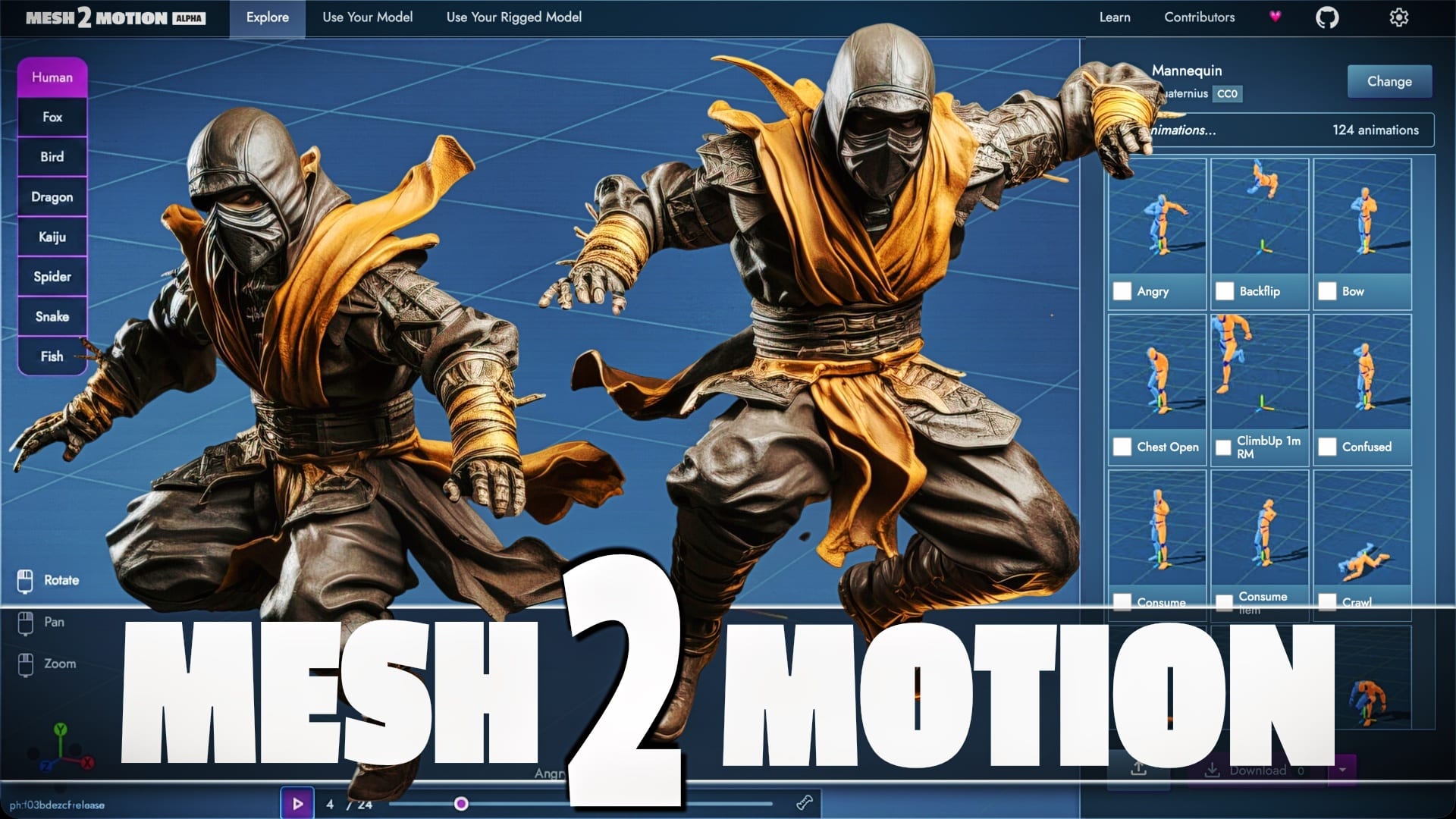
- Full Skeleton Rigs: Mesh2Motion provides comprehensive skeletal rigging solutions. This means that users can import their 3D models and quickly apply a fully functional skeleton. The rigs are designed to be robust, allowing for a wide range of motion and deformation.
- Intuitive Positioning: The positioning of the skeleton relative to the mesh is a critical step in the rigging process. Mesh2Motion offers intuitive tools that simplify this often-tedious task. This ensures that the rig accurately reflects the character’s anatomy, leading to more natural animations.
- Full Undo/Redo History: Experimentation is a cornerstone of the creative process. Mesh2Motion’s inclusion of a full undo/redo history provides a safety net, allowing users to confidently explore different rigging and animation approaches without the fear of irreversible mistakes. This feature is particularly valuable for those new to 3D animation.
Modify & Import Animations
Mesh2Motion doesn’t just provide tools for creating animations from scratch; it also embraces the concept of leveraging existing animation data and allowing for user modification.
- Source Blender Files: A key aspect of Mesh2Motion’s open-source nature is its provision of all the source Blender model and animation files. This transparency is invaluable for users who wish to delve deeper into the technical aspects of the rigging and animation systems. They can study how existing animations are constructed, modify them, or even learn from them to improve their own creations. This fosters a learning environment and encourages community contributions.
- Animation Libraries and Modification: While the article doesn’t explicitly detail pre-made animation libraries, the mention of modifying source files implies the ability to import external animations or adapt existing ones to new rigs. This is a crucial feature for efficiently populating a game or project with a variety of movements.
Export Bundled Animation File
The final, crucial step in the workflow is exporting the animated model in a format readily usable by game engines and other 3D pipelines.
- Export Multiple Animations at Once: Efficiency is paramount in game development. Mesh2Motion’s ability to export multiple animations bundled into a single file significantly streamlines the import process into game engines. This avoids the need to manage numerous individual animation files for each character.
- Single GLB Format: The chosen export format is GLB (GL Transmission Format Binary). This is a modern, widely adopted standard that natively supports 3D models, animations, and textures within a single file. Its native support by popular game engines like Unity and Unreal Engine, as well as real-time 3D libraries such as Three.js and Babylon.js, makes it an ideal choice for interoperability. This ensures that animations created in Mesh2Motion can be seamlessly integrated into a vast array of development environments.
Supporting Data and Community Engagement
The strength of any open-source project often lies in its community and the accessibility of its resources. Mesh2Motion has established a strong foundation in this regard, providing clear pathways for users to learn, contribute, and access the software.
- Mesh2Motion Homepage: The official website (https://mesh2motion.org/) serves as the central hub for information, documentation, and download links. It provides a clear overview of the project’s capabilities and its ongoing development.
- GitHub Repository: The project’s presence on GitHub (https://github.com/Mesh2Motion/mesh2motion-app) is crucial for its open-source nature. This is where the code is hosted, where developers can track progress, report bugs, and contribute to the project’s development. The repository serves as a valuable resource for technical users and potential contributors.
- Demonstration Video: The accompanying video (https://youtu.be/PNz-EpqRc1s) offers a practical demonstration of Mesh2Motion’s ease of use. By showcasing how a 3D model can be animated and then exported to a popular game engine like Godot, it provides tangible proof of the tool’s capabilities and workflow efficiency. Such visual aids are invaluable for attracting new users and illustrating the project’s potential.
- Skeleton Model Source: The inclusion of a link to the skeleton model used in the demo (https://www.fab.com/listings/8350bcac-ce96-4ce6-bae0-c2ea62258a9b) further enhances transparency and allows users to replicate or build upon the examples provided.
Official Responses and Project Vision
While the provided text doesn’t contain direct "official responses" in the form of statements from project leaders, the continuous development and feature additions serve as the project’s implicit response to the needs of the indie game development community. The vision appears to be clear: to democratize 3D character animation by providing a powerful, flexible, and free tool that rivals proprietary solutions. The expansion into diverse creature rigs suggests a commitment to supporting a wider range of creative visions, moving beyond the limitations of solely humanoid characters.
The open-source model itself is a form of "response" – a commitment to transparency, community collaboration, and iterative improvement. This approach allows the tool to evolve organically based on user feedback and developer contributions, ensuring it remains relevant and useful in the rapidly changing landscape of digital content creation.
Implications for the Indie Development Scene
The continued evolution of Mesh2Motion carries significant implications for independent game developers and animators:
- Reduced Barrier to Entry: By offering a powerful suite of animation tools for free, Mesh2Motion significantly lowers the financial barrier to entry for aspiring game developers and animators. This allows individuals and small teams with limited budgets to compete with larger studios that can afford expensive software licenses.
- Increased Creative Freedom: The expanded rigging capabilities mean that developers are no longer confined to human characters. This opens up possibilities for a wider range of game genres, from creature-focused adventures to stylized fantasy epics, without requiring specialized and costly animation pipelines.
- Empowerment of Open-Source Ecosystems: Mesh2Motion’s success strengthens the broader open-source ecosystem for game development. Projects like this demonstrate that high-quality, community-driven tools can effectively challenge commercial alternatives, fostering innovation and collaboration.
- Faster Prototyping and Iteration: The streamlined workflow and efficient export options enable faster prototyping and iteration. Developers can quickly bring their character concepts to life, test animations, and make adjustments, accelerating the development cycle.
- Educational Value: The availability of source files and the intuitive design of the application make Mesh2Motion an excellent educational tool. It provides a practical way for individuals to learn about 3D rigging and animation principles in a hands-on environment.
In conclusion, Mesh2Motion is rapidly solidifying its position as a vital tool for the indie development community. Its commitment to being free, open-source, and continuously improving, particularly with the recent expansion into diverse creature rigging, makes it an increasingly compelling alternative to traditional, costly animation software. As the project continues to mature, it promises to empower a new generation of creators to bring their imaginative worlds and characters to life with greater ease and flexibility than ever before.



Leave a Comment