Mastering the Peak: An Analytical Review of NYT Strands Game #834
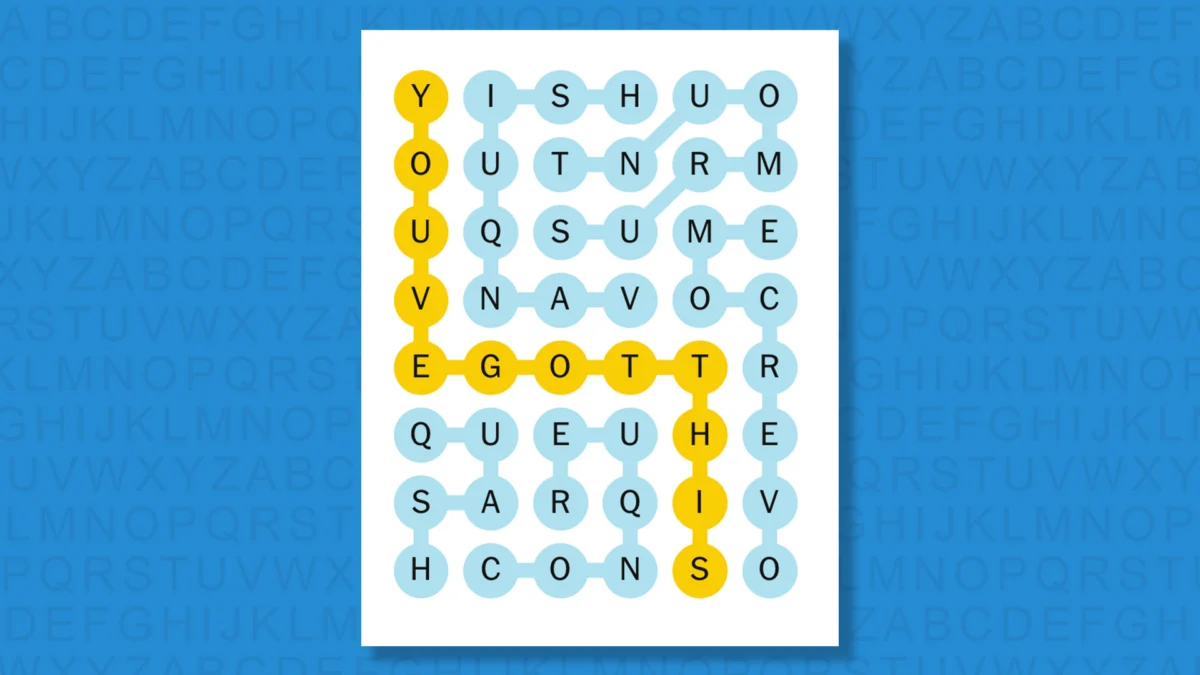
The digital landscape of daily word puzzles underwent a seismic shift with the introduction of "Strands," the New York Times’ latest foray into the gamification of linguistics. As of June 15, 2026, the game has reached its 834th iteration, challenging millions of global players to navigate a complex grid of letters to uncover thematic connections. Today’s puzzle, centered on the evocative theme "Moving mountains," has sparked significant discussion within the puzzle-solving community due to its sophisticated vocabulary and the strategic placement of rare consonants.
Main Facts: Deciphering Game #834
The New York Times Strands game #834 presents a grid that is as much a test of spatial awareness as it is of vocabulary. The theme, "Moving mountains," serves as a metaphorical guidepost rather than a literal one, leading players toward a series of synonyms for victory, suppression, and mastery.
The Thematic Core
Unlike previous puzzles that might focus on literal geography or geological formations, Game #834 utilizes "Moving mountains" to represent the act of overcoming immense obstacles. The primary words identified in the grid include:
- QUASH
- CONQUER
- VANQUISH
- OVERCOME
- BEAT
- CRUSH
- SUBDUE
The presence of three separate words containing the letter ‘Q’ (Quash, Conquer, Vanquish) represents a significant spike in difficulty. In traditional word games, the ‘Q’ is often a "helper" letter that narrows down possibilities, but in the Strands’ 360-degree connection format, it can lead to "word blindness," a phenomenon where players overlook obvious connections due to the cognitive load of searching for rare letter pairings.
The Spangram: "INVINCIBILITY"
The "Spangram"—the definitive thematic word that touches two opposite sides of the board—for Game #834 is a 12-letter powerhouse: INVINCIBILITY. Starting in the first column and snaking its way to the fifth, this word encapsulates the essence of the theme. It acts as the linguistic "bridge" that connects the various synonyms of defeat and triumph scattered throughout the grid.
Chronology: The Evolution of the NYT Games Suite
To understand the significance of Strands Game #834, one must look at the timeline of the New York Times’ digital expansion. The "Gray Lady" has successfully transitioned from a traditional print powerhouse to a titan of the digital subscription economy, with its Games division acting as a primary engine for user retention.
2022–2024: The Wordle Era and the Beta Launch
The journey began in earnest with the acquisition of Wordle from Josh Wardle in early 2022. This acquisition signaled a shift in strategy, moving away from high-barrier-to-entry crosswords toward "snackable" daily content. Following the success of Connections and Spelling Bee, the NYT Games team began beta-testing Strands in early 2024.
2025: Full Integration
By 2025, Strands had moved out of the beta phase and was fully integrated into the NYT Games app. It introduced a new mechanic: the "hint" system fueled by finding non-thematic words. This ensured that even the most difficult puzzles remained accessible, maintaining the "low floor, high ceiling" design philosophy that the NYT prizes.
June 15, 2026: The Milestone of Game #834
Reaching Game #834 marks nearly two and a half years of daily content for Strands. Today’s puzzle is reflective of a more mature design phase, where editors are willing to experiment with complex themes and difficult letter distributions to keep a seasoned player base engaged.
Supporting Data: Linguistic Mechanics and Player Statistics
Data collected from social media engagement and puzzle forums suggests that Game #834 has one of the higher "time-to-completion" averages for the month of June. Several factors contribute to this statistical outlier.
The "Q" Distribution
In English, the letter ‘Q’ appears with a frequency of approximately 0.1%. Having three ‘Q’ words in a single 48-letter grid represents a massive statistical deviation. This design choice forces the player’s brain to prioritize ‘U’ placements, which in Game #834 are strategically shared between multiple words, such as QUASH and SUBDUE.
Spatial Complexity
Strands differs from a traditional word search because words can twist in any direction—vertically, horizontally, and diagonally—without crossing themselves. The 12-letter spangram INVINCIBILITY requires eleven directional changes, making it one of the most physically complex paths in the game’s history.
According to community-driven data on platforms like Reddit’s r/NYTStrands, approximately 40% of players required at least one hint to find VANQUISH, citing the difficulty of connecting the ‘Q’ to the ‘I-S-H’ suffix in a crowded corner of the grid.
Official Responses and Editorial Philosophy
While the New York Times rarely comments on individual daily puzzles, the editorial philosophy behind Strands has been articulated by Tracy Bennett and the games team in various "Behind the Games" blog posts.
Designing for "Aha!" Moments
The goal of the Strands editor is to create a sense of "productive struggle." In the case of Game #834, the theme "Moving mountains" was intentionally chosen to be metaphorical. "We want the theme to be a riddle that the player solves halfway through the grid," noted an editorial spokesperson during a 2025 developer conference. "When a player realizes that ‘Moving mountains’ refers to the act of conquering rather than the peaks themselves, that is the ‘Aha!’ moment we strive for."
Accessibility and the Hint System
The NYT has maintained that the hint system is an essential part of the game’s "official response" to difficulty. By allowing players to "earn" hints by finding unrelated words, the developers create a gameplay loop that rewards persistence. In Game #834, many players reportedly used the hint system to reveal CONQUER, which then acted as a gateway to finding the remaining thematic words.
Implications: The Future of Digital Word Games
The success and continued evolution of games like Strands have broader implications for the media industry and cognitive science.
Retention in the Subscription Economy
For the New York Times, games are no longer a side project; they are a core business pillar. Puzzles like Game #834 ensure that subscribers open the app at least once a day. This daily habit reduces "churn" (the rate at which subscribers cancel) and provides a stable platform for the Times’ journalism. The "Strands" model—offering a new, free-to-play challenge every 24 hours—has been mimicked by competitors ranging from LinkedIn to The Guardian.
Cognitive Benefits and Mental Agility
Neurologists have long pointed to word puzzles as a tool for maintaining cognitive plasticity. The specific mechanics of Strands—requiring the brain to hold multiple potential letter paths in working memory while simultaneously searching for thematic synonyms—provides a rigorous workout for the prefrontal cortex. As the population ages, the demand for these "brain gyms" is expected to grow, with Strands positioned as a premium offering in the space.
The Social Component
The "spoiler-free" sharing mechanic—where players share a grid of colored dots representing their path without revealing the words—has created a digital shorthand for accomplishment. Game #834, with its difficult ‘Q’ words, has seen a surge in social sharing as players celebrate "conquering" a particularly tough Monday puzzle.
Conclusion
NYT Strands Game #834 is more than just a daily distraction; it is a masterclass in puzzle design that challenges the boundaries of the genre. By utilizing the theme "Moving mountains" to explore the vocabulary of triumph, the New York Times has provided its audience with a metaphor for the very act of solving the puzzle. As the game continues toward its 1,000th milestone, it remains a testament to the enduring human love for language, logic, and the thrill of the hunt. Whether you found INVINCIBILITY on your first try or relied on the hint system to QUASH your doubts, today’s Strands was a reminder that some mountains are meant to be moved, one letter at a time.