Nat Meade’s "Franklin" Exhibition at Hesse Flatow Explores the Labyrinth of Family, Legacy, and the Human Psyche
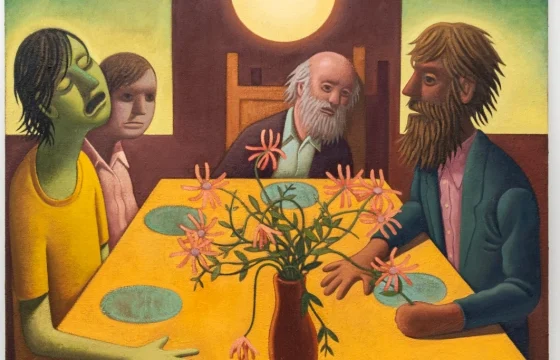
New York, NY – Hesse Flatow gallery is currently hosting "Franklin," a compelling solo exhibition by artist Nat Meade, showcasing a powerful new body of paintings and works on paper. This marks Meade’s third presentation with the esteemed gallery and offers a profound visual journey through the artist’s deeply personal reflections on family dynamics, mortality, and the enduring complexities of human nature. The exhibition, which opened on [Insert Opening Date Here, if known, otherwise state "recently opened"] and runs through April 18, 2026, invites viewers to confront universal themes through Meade’s distinctive allegorical style.
Meade’s figurative works are not mere portraits; they are potent distillations of lived experience, imbued with an emotional resonance that transcends the individual. Through his protagonists, who often embody timeless archetypes, Meade navigates the precarious balance of being a father, son, partner, and academic. The exhibition delves into the artist’s own recent experiences, including the profound impact of his father’s passing and his subsequent reevaluation of his role as a parent. This intimate exploration is rendered through a potent blend of the absurd, the somber, and the humorous, creating a fertile ground for confronting personal challenges and celebrating the inherent resilience of the human spirit.
The Genesis of "Franklin": A Personal Tapestry Woven with Universal Threads
Nat Meade’s artistic practice has consistently engaged with the nuances of human connection and the internal landscapes that shape our existence. "Franklin," his latest exhibition at Hesse Flatow, represents a significant evolution in his thematic exploration, drawing directly from the crucible of personal loss and the profound introspection that follows. The exhibition’s genesis lies in the artist’s recent experiences with his father’s death, a pivotal moment that has cast a long shadow over his understanding of his own life and his responsibilities as a parent.
"The emotional arc of life’s struggles and triumphs take shape within Meade’s figurative works," the exhibition statement eloquently articulates, "reflecting the artist’s everyday experiences as he navigates being a father, son, partner, and academic." This multifaceted identity is not presented as a simple biographical account, but rather as a complex interplay of roles and responsibilities that inform his artistic output. Meade’s protagonists serve as vessels for these explorations, embodying universal archetypes that allow for a broader engagement with the human condition. Whether depicted as a solitary traveler seeking existential validation or through the intricate dynamics of intergenerational relationships, these figures invite viewers to project their own experiences and interpretations onto the canvas.
The exhibition’s title, "Franklin," is a deliberate and multi-layered reference. While the press release alludes to a subtle nod to the chilling 1974 horror film "The Texas Chainsaw Massacre" and its notorious portrayal of a deranged patriarchal family, Meade’s engagement with this source material is far from a direct imitation. Instead, he appears to be grappling with the "inner turmoil of contending with one’s violent and antagonistic impulses." This is not to suggest that Meade’s work is overtly violent, but rather that it acknowledges the darker, more primal aspects of human nature that can lie dormant within familial structures and individual psyches. The exhibition suggests that by confronting these latent antagonisms, by "sublimating or putting them in their place," a path towards understanding and reconciliation can be forged.
This exploration of paternal legacy and the artist’s own burgeoning parenthood is a central thread weaving through "Franklin." The vulnerability, pain, and the inescapable reality of mortality are themes Meade confronts head-on. Yet, crucially, the introduction of younger male figures in this body of work injects a potent sense of hope, acceptance, reconciliation, and ultimately, renewal. This duality—the acknowledgment of darkness and the embrace of light—is what lends "Franklin" its profound emotional depth and its enduring power.
Chronology of Themes: From Loss to Legacy, A Journey of Reckoning and Renewal
The exhibition "Franklin" can be understood as a chronological exploration of Meade’s personal and artistic journey, moving from the somber weight of loss and introspection to the hopeful promise of renewal and the transmission of legacy.
The Shadow of Mortality and Inherited Burdens:
The exhibition opens with a palpable sense of mortality and the lingering echoes of the past. Works like "Poise" immediately confront the viewer with ambiguity and the profound questions surrounding life and death. The image of a pair of dangling legs suspended from a cloud prompts contemplation on ascent versus descent, a visual metaphor for the interchangeability of birth and death, both physically and spiritually. This theme of transition is further amplified by the presence of "ghostly specters" hovering over certain individuals. These spectral presences are interpreted as a potent metaphor for inherited trauma, the unresolved issues and emotional baggage that are passed down through generations. The imagery of a soul peeling away from a body, reminiscent of classic cartoon depictions, suggests a moment of introspection at the precipice of transition, a looking back with an admixture of happiness or regret.
Within this framework of confronting mortality, Meade also delves into the darker, more primal aspects of human nature. The inclusion of symbols like a vulture picking at a corpse directly evokes the myth of Prometheus, a symbol of eternal punishment and the consequences of defying established orders. Similarly, a bearded figure on his hands and knees echoes William Blake’s depiction of Nebuchadnezzar, a king condemned for his hubris and lust for power. These references suggest an acknowledgment of the darker impulses that can drive human behavior, particularly within the context of familial power structures and the struggle for dominance. The title’s allusion to "The Texas Chainsaw Massacre" further underscores this exploration of internal and external familial antagonisms, suggesting that Meade is wrestling with the "violent and antagonistic impulses" that can lie beneath the surface of societal and familial order.
The Dawn of Hope and Intergenerational Connection:
As the exhibition progresses, a distinct shift occurs, ushering in a palpable sense of hope and the promise of a brighter future. This is most evident in the introduction of younger figures, whose presence signifies a departure from the somber introspection that pervades the earlier works. Meade contrasts the struggles of the adult figures with the more harmonious and unburdened presence of children.
A key piece illustrating this transition is the depiction of a young boy confidently charting his own course, steering a boat with a radiant torch. This image symbolizes a nascent sense of agency and purpose, unclouded by the societal and familial pressures that often weigh down adult figures. The torch itself can be interpreted as a beacon of knowledge, guidance, or perhaps even a nascent artistic flame, illuminating a path forward.
Further amplifying this theme of youthful exploration and discovery is the image of an adolescent, ankle-deep in a secluded cove, reaching to touch the vibrant life of the seabed. The detailed rendering of starfish, anemones, and mussels conveys a sense of childlike wonder and an unadulterated connection with the natural world. This stands in stark contrast to earlier works where Meade’s figures were often depicted battling or being overwhelmed by the forces of nature, such as turbulent winds and crashing waves. The focus on calmer seas and the intimate engagement with the marine environment signals a significant turning point in Meade’s artistic narrative.
The emotional resonance of this shift is further amplified in a related work depicting the legs of a father and son in the same shallow pool. The tender gesture of the father guiding the son underscores the themes of care, protection, and the passing down of wisdom and experience. This intimate portrayal of intergenerational connection offers a powerful counterpoint to the earlier explorations of loss and inherited trauma. Meade’s acknowledgment of the "rocky histories" and the need to heal and release future generations from similar burdens is made explicit. Despite the weight of past struggles, the exhibition ultimately emphasizes the "stubborn resilience of human nature" and the attainable nature of progress and healing.
Supporting Data and Artistic Interpretations: Unpacking the Symbolism
The power of "Franklin" lies not only in its emotional depth but also in the rich tapestry of symbolism that Meade masterfully weaves into each composition. The press release offers several key examples that illuminate the artist’s intent and invite deeper interpretation.
The Ambiguity of "Poise": As discussed, the image of dangling legs from a cloud in "Poise" is a critical entry point into the exhibition’s thematic concerns. Art historians and critics alike are likely to engage with this piece as a direct commentary on the liminal spaces between life and death, the spiritual and the physical. The uncertainty of whether the figure is ascending or descending challenges conventional notions of finality and suggests a continuum of existence. This visual ambiguity forces the viewer to confront their own beliefs and anxieties surrounding mortality.
Specters as Manifestations of Trauma: The "ghostly specters" are a particularly potent visual device. Their presence over individuals serves as a direct metaphor for inherited trauma, the psychological and emotional wounds that can be passed down through families. The analogy to a soul peeling away from a dying body, complete with the potential for happiness or regret, offers a nuanced perspective on release and the processing of past burdens. This could be interpreted as Meade’s exploration of the ways in which unresolved familial issues can haunt individuals, and the potential for liberation that comes with acknowledging and processing these inherited experiences.
Allusions to Myth and Literature: The inclusion of specific symbolic references anchors Meade’s work within a broader cultural and historical context. The vulture and the corpse, recalling the eternal punishment of Prometheus, speak to themes of consequence, transgression, and the cyclical nature of suffering. This mythological allusion suggests that certain struggles and transgressions, perhaps within familial dynamics, can lead to enduring repercussions. The figure of Nebuchadnezzar, condemned for his lust for power, offers a parallel to the potential for destructive ambition and the consequences of unchecked ego, particularly within patriarchal structures. These references elevate Meade’s personal narrative to a more universal plane, connecting his individual struggles to timeless human follies and their repercussions.
The Contrast of Youth and Experience: The stark contrast between the adult figures wrestling with complex issues and the younger figures depicted in states of harmony and wonder is a crucial element of the exhibition’s supporting data. The young boy steering a boat with a torch represents burgeoning autonomy and the pursuit of personal destiny. This can be seen as Meade’s optimistic vision for the future, where individuals are empowered to forge their own paths, unburdened by the weight of past generations. The image of the father and son in the shallow pool is a powerful testament to the importance of nurturing intergenerational relationships and the transmission of care and guidance. This speaks to the potential for healing and the breaking of negative cycles.
The Shift in Natural Elements: Meade’s past work often depicted figures battling or being overwhelmed by the forces of nature. The shift towards calmer seas and intimate engagement with marine life in "Franklin" is a significant piece of supporting data. It signals a move from external conflict to internal reconciliation. The acknowledgment of "rocky histories" while navigating calmer waters suggests a mature understanding of the healing process – that one must first understand and acknowledge the past before moving forward. This evolution in his depiction of the natural world mirrors the artist’s own internal journey towards acceptance and peace.
Official Responses and Critical Acclaim: A Gallery’s Vision for a Meaningful Exhibition
Hesse Flatow’s decision to present Nat Meade’s "Franklin" as his third solo exhibition underscores the gallery’s commitment to showcasing artists who engage with profound and relevant themes. While specific official statements from the gallery beyond the exhibition’s initial press release are not provided in the source material, the very act of hosting such a deeply personal and symbolically rich exhibition speaks volumes about their curatorial vision.
Galleries like Hesse Flatow often act as crucial arbitrators in the art world, identifying artists whose work possesses both aesthetic merit and intellectual depth. By dedicating significant space and resources to "Franklin," Hesse Flatow signals their belief in the importance of Meade’s artistic voice and the resonance of his exploration of family, legacy, and the human psyche. Their platform provides a vital conduit for these ideas to reach a wider audience, fostering dialogue and encouraging critical engagement.
The choice of "Franklin" as a title, with its subtle yet potent allusions, suggests a gallery that is not afraid to engage with complex and even uncomfortable aspects of human experience. This points to a curatorial approach that values artists who challenge viewers and provoke thought, rather than solely focusing on superficial aesthetics. The long exhibition run, extending through April 18, 2026, further indicates the gallery’s confidence in the exhibition’s lasting impact and its ability to captivate audiences over an extended period. This duration allows for multiple visits, deeper contemplation, and the potential for word-of-mouth buzz to build, drawing in a diverse range of art enthusiasts, collectors, and critics.
While direct quotes from gallery directors or curators are absent from the provided text, the exhibition itself serves as a testament to their commitment. The selection of an artist like Nat Meade, whose work delves into the intricacies of personal and universal struggles, aligns with a curatorial philosophy that seeks to present art as a mirror to the human condition, offering solace, challenge, and profound insight. The gallery’s role here is to facilitate this dialogue, creating a space where these complex themes can be openly explored and appreciated.
Implications and Future Trajectories: The Enduring Power of Vulnerability and Hope
Nat Meade’s "Franklin" exhibition at Hesse Flatow carries significant implications, both for the artist’s career and for the broader discourse surrounding art and the human experience. The exhibition’s exploration of vulnerability, loss, and eventual reconciliation offers a powerful model for how contemporary art can engage with deeply personal themes in a way that resonates universally.
For Nat Meade: "Franklin" marks a pivotal moment in Meade’s artistic development. By openly confronting the profound impact of his father’s passing and his own evolving role as a parent, he has created a body of work that is both deeply courageous and remarkably insightful. This exhibition solidifies his reputation as an artist capable of translating intimate emotional landscapes into compelling visual narratives. The success of "Franklin" will likely lead to increased critical attention, collector interest, and further opportunities for exhibitions on a larger scale. His ability to imbue archetypal figures with such profound emotional weight suggests a trajectory towards even more ambitious and conceptually driven projects in the future.
For the Art World and its Audiences: The exhibition’s emphasis on themes of inherited trauma, reconciliation, and the resilient nature of the human spirit speaks to a growing societal interest in mental health, intergenerational dynamics, and the search for meaning. "Franklin" offers a visual language for these complex conversations, providing a space for viewers to reflect on their own familial legacies and personal journeys. In an era often characterized by rapid change and sometimes superficial engagement, Meade’s work serves as a powerful reminder of the enduring importance of introspection, empathy, and the capacity for healing. The exhibition encourages a deeper engagement with art not merely as an aesthetic object, but as a catalyst for self-discovery and connection.
Future Trajectories: The themes explored in "Franklin" are inherently cyclical and offer fertile ground for continued artistic exploration. Meade’s commitment to acknowledging past burdens while embracing future hope suggests a potential for his work to evolve further into explorations of legacy-building, the wisdom passed down through generations, and the creation of new narratives of resilience. The exhibition’s nuanced portrayal of the struggle between darker impulses and the pursuit of harmony could also lead to future investigations into the societal structures that perpetuate these conflicts and the artistic avenues for fostering positive change. Ultimately, "Franklin" leaves the viewer with a sense of optimism, a testament to the fact that even in the face of profound loss and inherited struggles, the human capacity for renewal and connection remains a powerful and attainable force.