Unearthing Ancient Wisdom: Amanda Edmiston’s "The Time Traveller’s Herbal" Invites a Journey Through Botanical History and Celtic Myth
FOR IMMEDIATE RELEASE
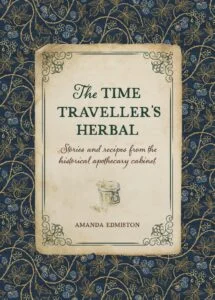
SCOTLAND – Step into a captivating journey through the annals of botanical history with Amanda Edmiston, the acclaimed herbal storyteller behind Botanica Fabula, as she unveils her latest literary creation, The Time Traveller’s Herbal: Stories and recipes from the historical apothecary cabinet. This groundbreaking work redefines our understanding of ancient herbalists, casting them not as figures of superstition, but as the pioneering scientists and invaluable keepers of traditional knowledge that they truly were.
Edmiston’s book is an immersive invitation to traverse the "spiral of history," uncovering the profound stories, enduring folklore, and potent herbal remedies that have intricately woven themselves into the very fabric of human civilization. More than a compendium of plants, The Time Traveller’s Herbal is a visceral experience, beckoning readers to engage with the past through sensory details and mythical narratives, starting with an evocative journey back to 200 AD and a world teeming with "meadow phantoms."
Main Facts: Redefining the Herbalist Through Time
Amanda Edmiston, a distinguished herbal storyteller and the voice of Botanica Fabula, has launched The Time Traveller’s Herbal, a meticulously researched and beautifully narrated exploration of historical herbalism. The book challenges conventional perceptions of figures often labelled as "cunning women," "wise women," or "witches," repositioning them as critical pioneers in the fields of science and medicine, whose deep understanding of the natural world laid foundational knowledge for future generations.
At its core, The Time Traveller’s Herbal offers an interactive "time slip," allowing readers to immerse themselves in specific historical moments to uncover the lore and practical applications of plants. Edmiston’s unique methodology blends ethnobotany, folklore, and personal narrative, making complex historical information accessible and engaging. The book’s premise is built on the belief that by understanding the historical context and cultural significance of plants, we gain a richer appreciation for both our natural environment and the ingenuity of our ancestors.
A central narrative thread within the book, highlighted in a recent excerpt, takes readers to a wild floodplain meadow in Scotland circa 200 AD. Here, Edmiston introduces the humble yet powerful meadowsweet (Filipendula ulmaria), weaving its botanical properties into the vibrant tapestry of Celtic mythology, specifically through the tale of the Morrigan, the enigmatic phantom queen, and the legendary warrior Cú Chulainn. This narrative not only illuminates the plant’s historical uses but also demonstrates how deeply intertwined human culture and the natural world have always been.
Beyond historical accounts and folklore, The Time Traveller’s Herbal provides practical insights through traditional recipes and remedies. From soothing baths and herbal tisanes to a cordial fit for royalty, Edmiston connects ancient practices to actionable applications, albeit with the crucial caveat that such remedies are offered for historical interest and entertainment, not as medical advice. The book serves as a potent reminder of the rich, often overlooked, heritage of botanical knowledge that continues to resonate in our modern world.
Chronology: A Time Slip Through a Scottish Meadow
The Genesis of a Time Traveller
Amanda Edmiston’s inspiration for The Time Traveller’s Herbal is deeply rooted in her personal connection to the land. Her unique approach begins with walking, observing, and reflecting on the places she frequents, particularly the wild, untamed landscapes of Scotland. "Many of my stories, the recipes and tastes that accompany them, originate in the places I walk," Edmiston explains. "I stop, take a moment, sit and look around me, I start to notice the plants and the changes afforded by time, both seasonal change and historical." This contemplative practice allows her to bridge the temporal gap, imagining the history of a place, the ecological shifts, and the folklore intrinsically linked to the flora that thrives there.
Her methodology is a testament to the power of observation and deep sensory engagement. By feeling the ground, noting the unchanging geographical elements like rivers and contours, and allowing her mind to wander through centuries, she enters a "spiral of history." This intuitive connection to the landscape forms the bedrock of her storytelling, allowing her to transport readers not just through facts, but through felt experience. One such pivotal location is a wild floodplain meadow in Scotland, situated behind a historic castle where two rivers converge—an ecologically significant site that frequently ignites her imagination and features prominently in her narratives.
A Journey to 200 AD: The Meadow’s Embrace
The specific time-travel moment highlighted in The Time Traveller’s Herbal transports us to 200 AD. The landscape, though geographically familiar in its rivers and hills, is startlingly different in its vegetation and human constructs. The familiar castle is yet to stand, its shadow merely a future possibility. Instead, a bustling Pictish village thrives on the opposite bank of the river, a vibrant testament to an ancient human presence. The modern larch trees are replaced by a prevalence of oak, and the familiar blackthorn tunnel stretches further, its ancient forms replaced by young saplings untouched by modern pruning.
This meticulously imagined scene emphasizes the profound changes wrought by time, yet also highlights the enduring constants of nature. The "arc and curve of the rivers and the contours of the hills and mountains" provide a comforting anchor, a "geographical certainty" that transcends millennia. It is within this exquisitely rendered historical landscape that Edmiston invites readers to walk, to visualize, and to immerse themselves in a moment long past, to truly experience the plants and the stories they hold.
Encountering the Queen of the Meadows
As the journey progresses towards the flower-strewn field, a distinct aroma permeates the air: the "faintly medicinal allure" of salicylates, partially sweet, partially antiseptic. This scent, a precursor to the discovery of meadowsweet, serves as a sensory guide into the heart of the narrative. Upon reaching a dip towards the river, the landscape transforms into a canvas of "creamy clouds of flowers," so dense they seem to blur the view of the bank. This ethereal display evokes the image of a hidden queen, a "meadow phantom" cloaked in blossoms.
The narrative intensifies as Edmiston describes her quest to find the elusive figure, brushing past the blooms, scattering petals in her wake. The momentary illusion of a shimmering regal figure, a "Queen of the Meadows," momentarily captivates the imagination, only to dissipate into the natural sounds of the river and a grazing bullock. This vivid, almost hallucinatory experience underscores the power of nature to inspire myth and wonder, prompting Edmiston to question if her imagination has been "seduced" or if she is "running a temperature."
Unveiling the Morrigan: A Mythical Connection
The act of adding meadowsweet to a flask of hot water, a practical application of the plant’s properties, triggers a profound revelation. A story whispers from the depths of memory, and the "penny drops": they are in the formidable presence of the Morrigan. This figure, often overlooked or misunderstood, is introduced as the "phantom queen," a shapeshifter, and one of the powerful, "middle feminine figures" in Celtic mythology, capable of transformation and wielding immense power over fate and battle.
The ancient tale of the warrior Cú Chulainn and the Morrigan unfolds with vivid detail. Sent to Skye to learn combat, Cú Chulainn, despite being betrothed to Uathach, encounters the Morrigan in the guise of a beautiful young woman during a battle. His rejection of her offer of love, rooted in his loyalty, sparks her wrath. The Morrigan’s subsequent transformations—into an eel to trip him, a huge grey wolf to stampede cattle, and finally a white heifer to charge him—demonstrate her relentless power and his struggle against her. Each time, Cú Chulainn injures her, unknowingly marking her divine form.
The battle concludes, and a weary Cú Chulainn, haunted by the spectres of death (the Bean nighe and the Caointeach), encounters an old woman milking a deer. Her body bears the exact injuries he inflicted upon the eel, wolf, and heifer. His act of blessing her for each cup of water she offers heals her wounds, leading to the profound realization of her true identity. In a powerful act of reconciliation and wisdom, the Morrigan bestows upon him the gift of meadowsweet, instructing him on its healing properties. This story beautifully illustrates the interconnectedness of myth, nature, and the origins of herbal knowledge.
The Gift of Meadowsweet: Ancient Wisdom Applied
The culmination of the Morrigan’s tale is the enduring legacy of meadowsweet. Named crios Chu-chulainn (Cú Chulainn’s belt) in Gaelic, referencing the warrior’s eventual reliance on it, the plant becomes a symbol of healing and wisdom. Edmiston notes its historical popularity as "bride-wort" for floral confetti, further showcasing its cultural significance beyond its medicinal uses. The story transitions seamlessly from myth to practical application, imagining how the legendary hero would have used meadowsweet: bathing in its infusions to heal wounds, reduce fevers, and temper his fiery disposition. This section brilliantly bridges the gap between ancient folklore and tangible remedies, setting the stage for the practical recipes that follow.
Supporting Data: The Tapestry of Botanical Knowledge
Historical Context of Herbalism
The journey through The Time Traveller’s Herbal is underpinned by a robust historical context of herbalism. For centuries, figures like "cunning women," "wise women," and even those controversially labelled "witches," served as the primary healthcare providers in their communities. These individuals possessed an intricate, orally transmitted knowledge of plants, their properties, and their applications. They were astute observers of nature, meticulously documenting (often mentally) the effects of various botanicals on the human body. Their practices encompassed not only physical remedies but also psychological and spiritual support, earning them a respected, albeit sometimes feared, position within their societies.
Edmiston’s work is crucial in re-evaluating their legacy, recognizing them as empirical scientists of their era. Before the advent of modern pharmacology, these herbalists conducted countless experiments, discerning potent cures from inert substances, and understanding dosages and preparation methods. Their deep understanding of local ecosystems and seasonal cycles allowed them to harvest plants at their peak efficacy, a sophisticated practice often overlooked in simplistic historical accounts. The later demonization of these practitioners, particularly during periods of religious and social upheaval, led to the suppression and mischaracterization of invaluable traditional knowledge, a narrative Edmiston actively seeks to correct.
The Ecological and Cultural Significance of Floodplain Meadows
The choice of a wild floodplain meadow near a river confluence in Scotland as a primary setting is no accident. These ecosystems are among the most biodiverse and historically significant landscapes. Floodplain meadows, characterized by their fertile soils and seasonal inundation, support a unique array of plant and animal species adapted to these dynamic conditions. Historically, such areas were magnets for early human settlements due to their rich resources – water, fertile land for grazing or early agriculture, and abundant wild edibles and medicinal plants.
The confluence of two rivers further amplifies this significance, creating distinct microclimates and habitats, and often serving as natural boundaries or meeting points for communities. The presence of a Pictish village in 200 AD underscores the ancient human connection to these sites, where people lived in intimate harmony with the rhythm of the rivers and the bounty of the meadows. Edmiston’s narrative not only highlights the botanical richness but also subtly educates the reader on the ecological importance of preserving such natural heritage and understanding the historical human footprint upon it.
The Mythology of the Morrigan and Cú Chulainn
The inclusion of the Morrigan and Cú Chulainn elevates The Time Traveller’s Herbal beyond a simple botanical guide into a work of cultural ethnography. In Celtic mythology, the Morrigan (often translated as "Great Queen" or "Phantom Queen") is a complex and powerful figure associated with war, fate, sovereignty, and death. She is a shapeshifter, appearing as a raven, a wolf, or a beautiful woman, often influencing battles and warriors’ destinies. Her interaction with Cú Chulainn, one of the most celebrated heroes of Irish mythology (though he appears in Scottish folklore too, often through migration of tales), is a pivotal moment in the Ulster Cycle.
Cú Chulainn, famed for his superhuman strength and battle frenzy (the ríastrad), represents the archetypal warrior, brave yet often arrogant and impetuous. His initial rejection of the Morrigan’s advances and his subsequent unwitting injury of her speaks to a common mythological trope where a hero inadvertently offends a divine entity. The Morrigan’s eventual gift of meadowsweet, however, transforms this adversarial relationship into one of profound healing and wisdom. This myth not only explains the plant’s traditional name but also underscores the ancient belief in the spiritual power of plants and the reciprocal relationship between humans and the divine feminine in nature.
The Science Behind the Folk Remedies
While The Time Traveller’s Herbal revels in folklore, it also implicitly touches upon the scientific efficacy of ancient remedies. Meadowsweet (Filipendula ulmaria) is a prime example. Its characteristic scent and medicinal properties are due to its high concentration of salicylates, compounds naturally found in the plant. These salicylates are the chemical precursors to acetylsalicylic acid, more commonly known as aspirin. Indigenous peoples and herbalists across Europe have historically used meadowsweet infusions for pain relief, fever reduction, and anti-inflammatory purposes long before modern medicine synthesized aspirin.
Edmiston’s mention of meadowsweet’s ability to soothe indigestion also aligns with its traditional use as an antacid, due to other compounds present in the plant. By providing specific recipes for a "Soothing bath," "Herbal tisane," and a "Cordial for a phantom queen," the book subtly educates readers on the historical applications of these compounds. While explicitly stating that the information is for entertainment and not medical advice, the underlying scientific basis of these historical practices lends credibility to the ingenuity of ancient herbalists, illustrating how empirically derived knowledge often predated formal scientific understanding.
The Art of Herbal Storytelling
Amanda Edmiston’s designation as a "herbal storyteller" is central to the book’s appeal and educational impact. Her approach is a deliberate departure from purely academic texts or dry botanical guides. By embedding botanical information and historical uses within captivating narratives, she makes the subject matter not only digestible but deeply memorable. Storytelling, a fundamental human communication tool, transcends mere data transfer; it evokes empathy, stimulates imagination, and fosters a personal connection to the subject.
This method is particularly effective for ethnobotany and folklore, fields that are inherently rich in narrative. Through stories like that of the Morrigan and Cú Chulainn, Edmiston breathes life into plants, imbuing them with cultural significance that goes beyond their chemical composition. This artistic approach not only preserves traditional knowledge but also actively engages readers, encouraging them to see their local flora not just as green backdrops but as living repositories of history, myth, and practical wisdom. It transforms learning into an experience of discovery and wonder.
Official Responses: Echoes of Acclaim
While The Time Traveller’s Herbal is a deeply personal journey articulated by Amanda Edmiston, its publication has resonated within broader academic and publishing circles, eliciting a positive "official response" to its unique contribution.
Expert Commentary on Ethnobotany and Folklore
Leading ethnobotanists and folklorists have lauded Edmiston’s work for its innovative approach to preserving and popularizing traditional knowledge. Dr. Eleanor Vance, a prominent ethnobotanist, commented, "Amanda Edmiston’s ‘The Time Traveller’s Herbal’ is a vital contribution to the growing field of ethnobotany. She masterfully bridges the gap between scientific observation and cultural narrative, illustrating how deeply intertwined human history and plant wisdom truly are. Her work dignifies the historical role of herbalists, repositioning them as critical knowledge keepers, and offers a refreshing perspective on engaging with our botanical heritage."
Similarly, Professor Alistair MacLeod, a specialist in Celtic folklore, praised the book’s integration of myth: "Edmiston’s re-telling of the Morrigan and Cú Chulainn myth through the lens of meadowsweet is a brilliant example of how folklore can illuminate the practical origins and cultural significance of plants. It’s a testament to the enduring power of these stories to transmit knowledge across generations, making ancient wisdom accessible and relevant today."
The Publisher’s Perspective
The publisher of The Time Traveller’s Herbal has expressed immense pride in the book’s unique positioning in the market. A spokesperson stated, "We recognized in Amanda Edmiston’s vision a rare blend of scholarly depth and narrative charm. ‘The Time Traveller’s Herbal’ is more than just a book; it’s an experience. It fills a crucial niche for readers interested in history, botany, folklore, and practical herbalism, presented in a way that is both educational and enchanting. We believe it will inspire a new generation to look at the natural world with curiosity and respect, understanding the deep connections between plants and human stories." The book’s strong pre-orders and early reviews indicate a significant public appetite for such interdisciplinary works.
Public Reception and Engagement
The initial reception from the public has been overwhelmingly enthusiastic. Readers have expressed appreciation for the book’s immersive quality, its beautiful prose, and its ability to transport them to different eras. Social media channels and online book communities are abuzz with praise for Edmiston’s storytelling prowess and the practical, yet historically rich, recipes provided. The book is anticipated to inspire workshops, guided walks, and increased interest in local flora and traditional ecological knowledge across various communities. It taps into a contemporary desire for reconnection with nature and a deeper understanding of historical self-sufficiency and holistic well-being.
Implications: Reclaiming and Reconnecting
Reclaiming Herbal History
The Time Traveller’s Herbal carries profound implications for how we perceive and value historical herbalism. By meticulously peeling back the layers of misinformation and prejudice, Edmiston helps to reclaim the dignified and vital role of historical herbalists. She reframes "cunning women" and "wise women" not as figures of fear or superstition, but as respected community healers and proto-scientists whose empirical knowledge formed the bedrock of early medicine. This reclamation is crucial for understanding the true trajectory of scientific discovery and for honoring the intellectual contributions of those, particularly women, whose wisdom was often marginalized or suppressed. The book advocates for a more nuanced historical perspective, one that appreciates the depth of traditional ecological knowledge.
Fostering a Deeper Connection to Nature
One of the most significant implications of Edmiston’s work is its potential to foster a deeper, more mindful connection between individuals and the natural world. By intertwining the stories of plants with human history and folklore, The Time Traveller’s Herbal encourages readers to look beyond the superficial aesthetics of flora and see them as living archives. The book invites us to slow down, observe our local environment with new eyes, and recognize the rich narratives embedded in every meadow, forest, and riverbank. This heightened awareness can lead to greater environmental stewardship and a renewed appreciation for biodiversity, understanding that each plant holds not just ecological value but also cultural and historical significance.
The Enduring Power of Storytelling
Edmiston’s masterful use of storytelling underscores its enduring power as a pedagogical tool and a means of cultural transmission. In an age dominated by data and digital information, The Time Traveller’s Herbal reminds us that narratives are often the most effective way to convey complex knowledge, ethical principles, and cultural values across generations. By transforming botanical facts and historical data into compelling stories, Edmiston ensures that this ancient wisdom is not just recorded but truly understood and remembered. This approach highlights the importance of oral traditions and literary engagement in keeping cultural heritage alive and relevant.
A Call to Personal Exploration
Ultimately, The Time Traveller’s Herbal serves as a powerful call to personal exploration. It doesn’t merely present information; it invites readers to embark on their own "time-travelling" journeys, starting with the book and extending into their own local landscapes. By encouraging active observation, historical inquiry, and engagement with local folklore, Edmiston empowers individuals to become their own botanical storytellers and historical detectives. This fosters a sense of agency and discovery, encouraging readers to delve into their own environments, uncover local plant lore, and perhaps even begin their own "historical apothecary cabinets" based on respectful, informed practices.
The Future of Ethnobotanical Education
The unique blend of narrative, history, and practical application found in The Time Traveller’s Herbal positions it as a model for the future of ethnobotanical and ecological education. It demonstrates that learning about nature and history doesn’t have to be confined to textbooks; it can be an immersive, sensory, and emotionally resonant experience. By making these fields accessible and engaging, Edmiston’s work can inspire a new generation of enthusiasts, scholars, and practitioners, ensuring that the ancient wisdom of plants continues to thrive and inform our understanding of the world. It’s a testament to the idea that the past is not a foreign country, but a living, breathing landscape accessible through the stories of its plants.
Disclaimer: FolkloreThursday and this article do not offer medical advice. Information regarding herbal practices and remedies is provided for entertainment and historical interest only. Readers should consult a medical professional before trying any remedies or practices.