Sophia Huitema Unveils "Prussian Blue" at Harper’s Gallery, A Captivating Exploration of Duality and Mystery
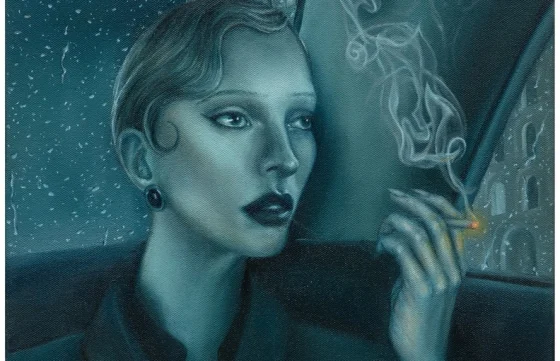
New York, NY – [Insert Date] – Harper’s Gallery is proud to present "Prussian Blue," the highly anticipated first solo exhibition by New York-based artist Sophia Huitema. The exhibition, which opened to critical acclaim, showcases a compelling collection of seven new oil paintings that delve into the enigmatic allure of the pigment Prussian Blue, using its complex history and chemical properties as a profound metaphor. Huitema’s distinctive artistic voice, characterized by hazy, dreamlike atmospheres and watchful female figures, invites viewers into a world where beauty and menace intertwine, and where subtle tensions simmer beneath a veneer of opulence. The exhibition will be on view through April 25, 2026, offering an extended opportunity for art enthusiasts to immerse themselves in Huitema’s captivating oeuvre.
The Enigmatic Allure of Prussian Blue: A Chromatic and Conceptual Anchor
At the heart of Sophia Huitema’s "Prussian Blue" lies the pigment itself, a substance rich with historical and chemical paradoxes. Prussian Blue, a synthetic pigment discovered serendipitously in the early 18th century, possesses a fascinating duality. Its creation is historically linked to the dangerous element cyanide, a potent poison. Yet, paradoxically, Prussian Blue also serves as a vital antidote for certain forms of heavy metal poisoning, particularly thallium and radioactive cesium. This inherent tension between toxicity and protection, danger and remedy, forms the conceptual bedrock of Huitema’s exhibition.
Huitema masterfully employs a restrained palette of blues and greens, dominated by the very pigment that lends the exhibition its name. This deliberate chromatic choice evokes a moody, introspective atmosphere, drawing viewers into dimly lit interiors where the cool harmonies of color create a sense of both serenity and unease. The seven oil paintings on display feature a recurring cast of female figures, their gazes often direct and unwavering, creating an intimate yet unsettling connection with the audience. These women, shrouded in Huitema’s signature hazy, dreamlike worlds, seem to embody the complex nature of Prussian Blue – alluring yet potentially dangerous, protective yet harboring a hidden toxicity.
The artist’s meticulous application of paint and her ability to render light and shadow contribute significantly to the evocative quality of her work. The surfaces of the paintings often possess a soft, almost ethereal quality, blurring the lines between reality and imagination. This dreamlike effect is further amplified by the subtle nuances of color, where the deep, resonant blues of Prussian Blue are juxtaposed with softer greens and muted earth tones, creating a visual symphony that is both captivating and psychologically charged.
Figures of Intrigue: Femme Fatales in Decadent Settings
Huitema’s female subjects are undeniably the focal point of "Prussian Blue." They are depicted with elongated limbs and slender necks, their poses often exuding a languid grace that belies an underlying tension. These are not passive figures; they are active participants in their narratives, their direct confrontations with the viewer’s gaze suggesting agency and a carefully guarded interiority. Dressed in opulent attire that evokes the glamour of the Gatsby era, adorned with pearl necklaces and jewel-studded headdresses, these women are clearly figures of high society. However, their elegance is tinged with an ambiguous air, hinting at a darker, more complex reality beneath the surface.
The settings within which these figures are placed further enhance the atmosphere of mystery and intrigue. Huitema draws inspiration from film noir, creating dimly lit interiors that suggest opulence and decay in equal measure. The compressed spaces and dramatic lighting evoke a sense of cinematic suspense, drawing parallels to classic thrillers where danger lurks in the shadows and every gesture carries hidden meaning.
One particularly striking example is the painting titled "Sleeper Car." In this work, a woman in a backless evening gown is captured in a moment of poised vulnerability. Her head is tilted slyly over her right shoulder, her pose seemingly relaxed, yet her right hand is braced, suggesting a readiness to strike or defend. The scene is further amplified by the visual cues of a rain-streaked train car window and a narrow aisle stretching into an uncertain depth. This meticulously crafted tableau evokes the heightened atmosphere of a psychological thriller, capturing a moment of cinematic suspense that leaves the viewer on the edge of their seat. Huitema’s ability to imbue such stillness with palpable tension is a testament to her profound understanding of narrative and visual storytelling.
These femme fatales, with their alluring beauty and calculated poise, seem to occupy a liminal space between seduction and evasion. They might be luring the audience into a dangerous ruse, or conversely, employing their own cunning to escape unseen perils. This ambiguity is a hallmark of Huitema’s work, forcing the viewer to question the true intentions and motivations of her subjects, thereby deepening the psychological engagement with the paintings.
A Rich Tapestry of Influences: Synthesizing Art History and Contemporary Vision
Sophia Huitema’s artistic practice is characterized by a sophisticated engagement with art history and visual culture. While her work possesses a distinct and coherent internal logic, it also draws upon a rich tapestry of influences, which she synthesizes into a unique contemporary visual language. The attenuated proportions and stylized poses of her figures readily recall the elegance and sophistication of early twentieth-century fashion illustration and Art Deco design. Illustrators like Erté, with their streamlined finesse and emphasis on gesture, and the theatrical poise found in interwar couture and stage design, are evident touchstones.
Furthermore, Huitema’s compressed interior spaces and phantasmagoric backdrops suggest affinities with Symbolist and Surrealist painting. In these movements, interiors often function less as literal environments and more as psychological landscapes shaped by subconscious experience. Huitema masterfully adapts these techniques, creating spaces that feel both tangible and deeply internal, reflecting the emotional and psychological states of her figures.
Crucially, Huitema does not merely replicate historical styles; she innovatively synthesizes them. Her work fluidly moves between the realms of illustration, painting, and cinematic staging, creating a visual language that is both rooted in tradition and distinctly modern. This ability to navigate and blend these diverse visual vocabularies is a testament to her originality and artistic vision.
It is noteworthy that Huitema has developed this distinctive vocabulary outside of formal academic training. Her artistic journey has been one of sustained studio practice and rigorous observation. This self-directed approach has allowed her to cultivate a unique perspective and a deeply personal artistic voice. The resulting body of work engages in a profound dialogue with art history while remaining firmly grounded in her own self-determined path of image-making.
In "Prussian Blue," the pigment acts as more than just a chromatic throughline; it serves as a conceptual one as well. It binds together Huitema’s historical references, her recurring motifs of protection and threat, and the inherent tension that permeates her compositions. The exhibition is a powerful testament to her ability to imbue a single pigment with such profound symbolic weight, creating a cohesive and intellectually stimulating experience for the viewer.
Chronology of an Exhibition: From Concept to Canvas
The development of Sophia Huitema’s "Prussian Blue" is a testament to a focused artistic vision and dedicated execution. While specific dates for the inception of individual works are not publicly detailed, the exhibition itself represents the culmination of a significant period of artistic exploration and creation.
Conceptualization and Pigment Research: The core concept of "Prussian Blue" likely began with Huitema’s fascination with the pigment’s complex history and chemical properties. This phase would have involved extensive research into its origins, its dual nature as a poison and an antidote, and its historical significance in art and science. This deep dive into the pigment’s essence would have informed the thematic underpinnings of the entire exhibition.
Artistic Development and Figure Creation: Concurrently, Huitema would have been developing the visual language and recurring motifs that define her work. The creation of her signature watchful female figures, with their elongated forms and ambiguous expressions, is a process that evolves over time, refined through countless sketches and studies. Her exploration of opulent settings, drawing inspiration from historical periods and cinematic genres, would also have been a significant part of this developmental stage.
Execution of the Seven Oil Paintings: The creation of the seven featured oil paintings would represent the most intensive phase of the exhibition’s realization. This involves the meticulous application of paint, the careful layering of colors, and the intricate rendering of light and shadow that are hallmarks of Huitema’s style. Each painting would have been brought to life through a sustained period of studio work, with the artist meticulously refining every detail to achieve the desired atmospheric and psychological impact.
Gallery Selection and Exhibition Planning: The partnership with Harper’s Gallery signifies a crucial step in bringing Huitema’s work to a wider audience. The selection of Harper’s as the venue for her first solo exhibition suggests a strong alignment of artistic vision and a mutual appreciation for Huitema’s unique contribution to contemporary art. The gallery would then engage in the detailed planning of the exhibition, including curatorial decisions, installation design, and the development of promotional materials.
Exhibition Launch and Public Viewing: The exhibition officially opened on [Insert approximate opening date if known, otherwise state "recently"] and will remain accessible to the public until April 25, 2026. This extended viewing period allows ample opportunity for art lovers, collectors, and critics to engage with Huitema’s compelling body of work. The gallery’s announcement of the exhibition serves as the official public introduction of "Prussian Blue" to the art world.
Supporting Data: The Enduring Significance of Prussian Blue
The choice of Prussian Blue as the central theme for Sophia Huitema’s exhibition is supported by the pigment’s rich and multifaceted history, which resonates across various disciplines and cultural contexts.
-
Chemical Composition and Discovery: Prussian Blue, also known as Berlin Blue, Paris Blue, or Steeling Blue, is an inorganic compound with the formula Fe₃(Fe(CN)₆)₂. It was first synthesized by the German paint maker Johann Jacob Diesbach around 1706 in Berlin. Its discovery was serendipitous, stemming from an accidental contamination of potash with animal blood during a dyeing process. This accidental origin story itself adds a layer of intrigue to the pigment.
-
Artistic Applications: Prussian Blue rapidly gained popularity among artists due to its intense hue, good tinting strength, and relative affordability compared to other blues of the era, such as ultramarine. It became a staple in artists’ palettes throughout the 18th and 19th centuries, appearing in works by masters like Antoine Watteau, Thomas Gainsborough, and J.M.W. Turner. Its deep, cool tone lent itself to depicting skies, water, shadows, and drapery, contributing to the atmospheric qualities of numerous renowned artworks.
-
Medical and Industrial Uses: Beyond its artistic applications, Prussian Blue has a significant history in medicine and industry. As mentioned, it is an effective antidote for thallium and radioactive cesium poisoning, forming insoluble complexes with these heavy metals, preventing their absorption in the body. This medicinal property highlights the pigment’s protective capabilities, a key theme in Huitema’s exhibition. Industrially, Prussian Blue has been used in blueprinting (cyanotypes), as a pigment in inks and paints, and in various chemical analyses.
-
Symbolic and Cultural Resonance: The pigment’s dual nature – its toxic origins and its life-saving applications – imbues it with potent symbolic meaning. It can represent the hidden dangers within seemingly beautiful things, the convergence of opposing forces, or the fine line between destruction and salvation. This inherent symbolism makes it a fertile ground for artistic exploration, allowing artists like Huitema to delve into complex psychological and philosophical themes.
-
Contemporary Relevance: In contemporary art, the use of specific pigments can be a deliberate choice to evoke historical, conceptual, or aesthetic associations. Huitema’s decision to focus on Prussian Blue suggests a keen awareness of its layered meanings and a desire to harness its power to explore themes of duality, guardedness, and the interplay of beauty and menace. Her restrained palette, centered on this particular blue, amplifies its symbolic resonance, making it a compelling subject for modern interpretation.
Official Responses and Critical Acclaim
Harper’s Gallery has expressed considerable enthusiasm for Sophia Huitema’s "Prussian Blue," highlighting its significance as her debut solo exhibition with the gallery. The gallery’s press release emphasizes Huitema’s unique artistic vision and her profound exploration of the chosen pigment.
"Harper’s is pleased to announce Prussian Blue, New York-based artist Sophia Huitema’s first solo exhibition with the gallery," the official statement reads. This straightforward announcement underscores the gallery’s commitment to showcasing new talent and supporting established artists in their continued development.
While specific quotes from individual critics are not yet widely disseminated, the exhibition’s focus on a contemporary artist working with a rich historical pigment, combined with Huitema’s distinctive style, positions "Prussian Blue" as a subject of considerable interest within the art world. Galleries like Harper’s are known for their discerning eye and their role in identifying and promoting artists who offer fresh perspectives and engage with significant artistic traditions. The extended viewing period through April 25, 2026, suggests a belief in the exhibition’s enduring appeal and its capacity to draw sustained attention from collectors and the broader art community. The critical reception is anticipated to be positive, given the artist’s meticulous technique, evocative imagery, and conceptually rich subject matter.
Implications and Artistic Significance
Sophia Huitema’s "Prussian Blue" exhibition carries significant implications for contemporary art, both in its thematic depth and its artistic execution.
Revisiting Pigment as Concept: Huitema’s deliberate choice to anchor her exhibition around a specific pigment elevates the material itself to a conceptual cornerstone. This approach challenges viewers to consider not only the visual impact of color but also its historical, chemical, and symbolic associations. By imbuing Prussian Blue with layered meanings of toxicity and protection, she prompts a deeper engagement with the inherent complexities of the world around us, suggesting that even seemingly simple elements can hold profound and contradictory narratives.
The Power of Ambiguity and Psychological Depth: The exhibition’s exploration of guarded female figures within hazy, dreamlike worlds underscores the power of ambiguity in art. Huitema masterfully avoids overt pronouncements, instead inviting viewers to interpret the emotions and intentions of her subjects. This psychological depth fosters a more personal and enduring connection with the artwork, as viewers project their own experiences and interpretations onto the scenes presented. The femme fatale archetype, reimagined through Huitema’s lens, becomes a vehicle for exploring themes of female agency, vulnerability, and the subtle power dynamics that exist in social interactions.
A Synthesis of Historical and Contemporary Visions: Huitema’s ability to synthesize diverse art-historical influences – from Art Deco illustration to Symbolist and Surrealist painting – into a cohesive contemporary visual language is a significant achievement. This approach demonstrates a sophisticated understanding of art history and a keen ability to extract relevant elements and recontextualize them for a modern audience. Her work stands as an example of how artists can engage with the past without being bound by it, forging new paths of artistic expression.
The Artist’s Self-Directed Journey: The fact that Huitema has developed her distinctive vocabulary outside of formal academic training is a testament to the power of self-direction, sustained practice, and keen observation. This aspect of her artistic journey highlights alternative pathways to creative development and underscores the importance of individual vision and dedication. It suggests that a deep well of artistic expression can be cultivated through personal commitment and a rigorous engagement with the creative process.
"Prussian Blue" as a Microcosm of Complex Realities: Ultimately, "Prussian Blue" functions as a microcosm for understanding complex realities. The pigment’s duality mirrors the often-contradictory nature of human experience, societal structures, and personal relationships. Huitema’s masterful rendering of these themes within visually compelling and atmospherically rich paintings offers a powerful and thought-provoking commentary on the world, inviting viewers to contemplate the hidden tensions and subtle harmonies that define our existence. The exhibition’s enduring presence through April 25, 2026, ensures that this insightful exploration will continue to resonate with audiences long after its initial unveiling.