The Enduring Saga of Harald Hardrede: Poul Anderson’s The Last Viking Trilogy Revisited
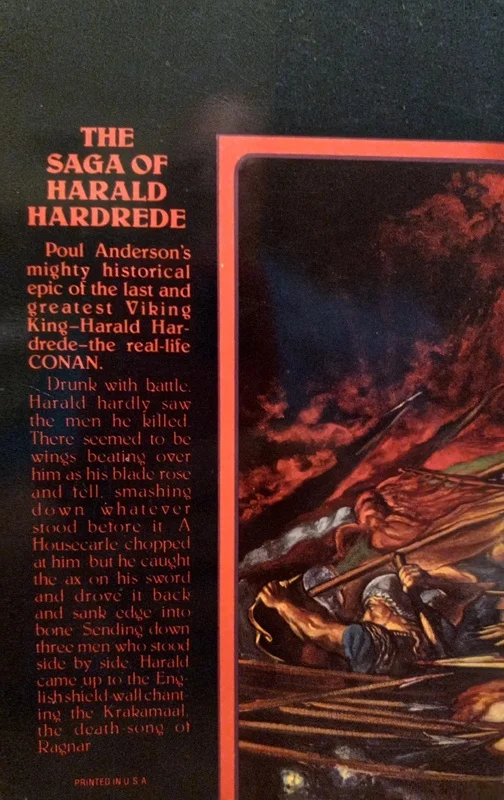
In the vast annals of speculative fiction, few authors have traversed the realms of science fiction and fantasy with the masterful ease of Poul Anderson (1926-2001). A titan of 20th-century genre writing, Anderson’s diverse bibliography is celebrated for its intellectual rigor, imaginative scope, and deep humanism. Among his many revered works, The Last Viking trilogy stands as a testament to his profound talent for blending meticulous historical research with the grand sweep of heroic narrative. Comprising The Golden Horn, The Road of the Seahorse, and The Sign of the Raven, these 1980 releases from Zebra Books offer a captivating, often visceral, journey into the life of one of history’s most formidable figures: Harald Sigurdharson, better known as Harald Hardrede. Often dubbed "the real-life Conan" for his legendary exploits and indomitable spirit, Hardrede’s saga, as reimagined by Anderson, blurs the lines between factual recounting and epic fantasy, creating a narrative that resonates with the primal allure of ancient heroism.
Main Facts
Poul Anderson’s The Last Viking trilogy presents a fictionalized yet historically grounded account of Harald Hardrede, the last great Viking king. Published by Zebra Books in 1980, the three volumes – The Golden Horn, The Road of the Seahorse, and The Sign of the Raven – chart Hardrede’s extraordinary life from a young warrior to a global adventurer, and finally, to a king whose ambitions led to his dramatic end at the Battle of Stamford Bridge. Anderson, renowned for his rigorous research, aimed to construct a portrayal of Hardrede that, while taking narrative liberties, remained faithful to the spirit and known facts of his era.
Harald Hardrede (c. 1015 – 1066), whose name translates to "Hard Ruler," was a Norwegian king whose life epitomized the twilight of the Viking Age. Born into royalty, he was a man of immense physical stature, reportedly seven feet tall, and a peerless warrior who wielded an axe with devastating effect. His early life was marked by exile, leading him through the courts of Kievan Rus’ and into the elite Varangian Guard of the Byzantine Empire, where he amassed legendary wealth and military renown. Upon his return to Scandinavia, he ascended to the Norwegian throne, dreaming of a vast northern empire. His final campaign, an invasion of England in 1066, culminated in his death at Stamford Bridge, an event that profoundly shaped European history and marked the symbolic end of the Viking era.
The trilogy is lauded for its immersive quality, particularly its vivid depiction of battle and its exploration of Hardrede’s complex character – a man of great mirth and melancholies, a lover of women and drink, and an insatiable explorer. The cover art for the trilogy is uncredited, though some speculate it might be the work of Don Maitz, known for his distinctive fantasy and historical illustrations, including the cover for Anderson’s earlier Viking-themed novel, Hrolf Kraki’s Saga. This series remains a seminal example of heroic historical fiction, celebrating a historical figure whose life story rivals the most elaborate fantasy epics.
Chronology
Poul Anderson’s Literary Journey
Poul Anderson’s career spanned over five decades, establishing him as one of the most prolific and respected figures in science fiction and fantasy. A recipient of multiple Hugo and Nebula Awards, Anderson was a master of diverse subgenres, from hard science fiction (e.g., Tau Zero) and space opera (e.g., the Technic History series) to high fantasy (e.g., The Broken Sword) and historical fiction. His ability to craft compelling narratives grounded in scientific principles or historical realities, while imbuing them with profound philosophical questions, set him apart.
The Last Viking trilogy, published in 1980, falls squarely within his heroic historical output, a niche where he excelled by meticulously researching historical periods and figures. Prior to this trilogy, Anderson had already explored Viking themes with Hrolf Kraki’s Saga (1977), demonstrating a long-standing fascination with Norse history and mythology. This foundation allowed him to approach Harald Hardrede’s story with both scholarly rigor and the imaginative flair of a seasoned storyteller, solidifying his reputation as an author capable of transporting readers to richly detailed, believable worlds, whether they were futuristic starships or ancient battlefields.
The Historical Harald Hardrede
Harald Sigurdharson’s life was an odyssey of war, exile, and ambition, perfectly embodying the spirit of the Viking Age’s final flourish.
-
Early Life and Exile (c. 1015-1030s): Born a half-brother to King Olaf II of Norway (Saint Olaf), Harald’s royal lineage thrust him into the volatile political landscape of early 11th-century Scandinavia. At the tender age of 15, in 1030, he fought alongside Olaf at the Battle of Stiklestad against a coalition of Norwegian chieftains and Danish forces. The battle resulted in Olaf’s death and a crushing defeat for their side. Wounded but alive, Harald was forced into exile, a defining moment that forged his legendary resilience. He fled eastward, eventually finding refuge in Kievan Rus’ (modern-day Ukraine, Belarus, and Russia), serving under Grand Prince Yaroslav the Wise. Here, he honed his military skills, leading campaigns against various foes and accumulating significant wealth and experience.
-
Varangian Guard and Byzantine Empire (c. 1030s-1040s): Harald’s ambitions soon led him further south to Constantinople, the heart of the Byzantine Empire. He joined the illustrious Varangian Guard, an elite unit of Norse and Anglo-Saxon mercenaries tasked with protecting the Emperor. His time in Byzantium was nothing short of extraordinary. He rose through the ranks, becoming a commander and participating in numerous campaigns across the Mediterranean. He fought in Sicily against Arab emirs, in North Africa, and against Bulgarian rebels, demonstrating exceptional tactical acumen and bravery. During this period, he amassed a colossal fortune, often by legitimate means through service and gifts, but also reportedly through less savory methods, including expropriating imperial treasures during periods of political instability. This vast wealth would prove crucial for his future endeavors.
-
Return to Norway and Kingship (c. 1040s-1060s): Around 1046, Harald returned to Scandinavia, a seasoned warrior and a wealthy man. He allied with Sweyn Estridsson, King of Denmark, threatening Norway. This led to a precarious co-rule with his nephew, Magnus the Good, who had reclaimed the Norwegian throne. Upon Magnus’s death in 1047, Harald became the sole King of Norway. His reign was characterized by continuous warfare with Denmark, a ruthless consolidation of power, and a drive to expand Norwegian influence. He established Nidaros (modern-day Trondheim) as a significant trading hub and strengthened the kingdom’s infrastructure and legal systems, despite his restless warrior spirit. He took two wives, Elisiv of Kiev and Tora Torbergsdatter, fathering several children, reflecting his desire for a dynastic legacy.
-
The Claim to England and Stamford Bridge (1066): Hardrede’s ultimate ambition led him to England. In 1066, following the death of Edward the Confessor, a succession crisis erupted. Harald claimed the English throne based on a controversial agreement between Magnus the Good and Harderknut (King of Denmark and England) years prior. He allied with Tostig Godwinson, the exiled brother of the newly crowned English King Harold Godwinson, and launched a massive invasion. After initial successes, including a victory at the Battle of Fulford, Hardrede’s forces were decisively defeated by Harold Godwinson’s army at the Battle of Stamford Bridge on September 25, 1066. Harald, fighting at the forefront, met his end in this brutal engagement. His death, just weeks before William the Conqueror’s invasion and the Battle of Hastings, marked a pivotal moment in English and European history, signifying the definitive end of the Viking Age’s military dominance and expansion.
The Trilogy’s Narrative Arc
Anderson meticulously structures his trilogy to follow the epic sweep of Hardrede’s life, each volume encapsulating a distinct phase of his journey:
-
The Golden Horn (1980): This inaugural volume immerses readers in Harald’s early years, his participation in the Battle of Stiklestad, his subsequent exile, and his adventures in Kievan Rus’. The narrative then shifts to his remarkable service in the Byzantine Empire, detailing his rise within the Varangian Guard, his military campaigns across the Mediterranean, and the immense wealth he accumulated. It establishes him as a warrior of unparalleled skill and ambition, laying the groundwork for his legendary status.
-
The Road of the Seahorse (1980): The second book chronicles Harald’s dramatic return to Scandinavia. It details his strategic maneuvers to reclaim his birthright, his eventual ascension to the throne of Norway, and the challenges of kingship. This volume explores his relentless campaigns against Denmark, his efforts to consolidate power, and his dreams of a vast northern empire. It also delves into his personal life, including his relationships and the inherent conflict between his desire for rule and his restless, exploratory spirit, which even led him on a failed Arctic expedition.
-
The Sign of the Raven (1980): The concluding volume focuses on Harald’s final, fateful endeavor: his invasion of England in 1066. Anderson vividly recreates the political machinations, the grand scale of the invasion, and the brutal realities of medieval warfare. The climax of the book is the Battle of Stamford Bridge, rendered with such intensity that, as the original author notes, it leaves a lasting impression of sweat, blood, and the raw din of battle, culminating in Hardrede’s heroic, yet tragic, death. The raven banner, "Landwaster," becomes a poignant symbol of his ultimate, unfulfilled ambition.
Supporting Data
Anderson’s Research and Verisimilitude
Poul Anderson was celebrated for his commitment to historical accuracy, even within the confines of genre fiction. For The Last Viking trilogy, he delved deeply into available historical sources, primarily the Norse sagas such as Snorri Sturluson’s Heimskringla (specifically the Saga of Harald Hardrada), Morkinskinna, and Fagrskinna. These sagas, while containing elements of embellishment common to oral traditions, provide the most comprehensive accounts of Harald’s life. Anderson’s genius lay in his ability to synthesize these disparate and sometimes contradictory sources, constructing a coherent and compelling narrative that felt authentic.
He did not shy away from acknowledging the "liberties" taken, understanding that historical fiction requires narrative shaping. However, these liberties were carefully considered, intended to enhance the dramatic impact and emotional depth without fundamentally distorting the known historical character or context. This rigorous approach allowed him to create a work that reads "more as history than fiction," providing readers with not just an adventure, but a nuanced understanding of 11th-century Scandinavia and Byzantium, their cultures, politics, and the daily lives of their inhabitants.
The "Real-Life Conan" Trope
The comparison of Harald Hardrede to Robert E. Howard’s iconic barbarian, Conan, is a recurring motif and speaks to the enduring archetype of the heroic wanderer. While Conan is a fictional creation of pure fantasy, Hardrede’s historical trajectory shares striking parallels:
- Physical Prowess and Warrior Skill: Both figures are depicted as exceptionally strong, towering individuals, masters of combat with a preferred weapon (axe for Hardrede, sword for Conan). Their effectiveness in battle is legendary.
- Wanderlust and Adventurous Spirit: Both Conan and Hardrede are extensively traveled, experiencing diverse cultures and battlefields across vast geographies. Hardrede’s journey from Norway to Russia, Byzantium, and back, mirrors Conan’s continental peregrinations.
- Leadership and Strategic Acumen: Beyond brute force, both demonstrate significant leadership qualities and strategic thinking, rising to command armies and eventually to kingship. Hardrede’s time as chief of the Varangian Guard exemplifies this.
- Complex Character: Neither is a one-dimensional hero. Both possess a mix of "great mirth and great melancholies," a love for life’s pleasures (drink, women), and a restless ambition.
- Kingship by Merit (of a sort): While Hardrede was born of royal blood, his path to kingship was not a direct inheritance but earned through years of exile, military service, and political maneuvering, echoing Conan’s ascent from barbarian to king. The original author’s observation that Hardrede’s later years as king remind him of "Conan as King" is particularly apt, highlighting the tension between the freedom of a warrior and the responsibilities of a ruler. The key distinction, of course, lies in Hardrede’s historical reality versus Conan’s fictional fantasy, and Hardrede’s royal lineage versus Conan’s humble origins as a thief. Yet, the heroic archetype they share is undeniable.
Literary Impact and Reception
The Last Viking trilogy cemented Poul Anderson’s reputation as a master of heroic historical fiction. While perhaps not as widely known as some of his science fiction epics, it holds a significant place among fans of historical adventure and those who appreciate the blurring of genre boundaries. The trilogy is often cited as an exemplary model for how to bring historical figures to life with both respect for facts and a captivating narrative flair. Its enduring appeal lies in its ability to transport readers directly into the tumultuous 11th century, making ancient battles and political intrigues feel immediate and personal. It has inspired subsequent authors working in the historical fiction and epic fantasy genres, demonstrating that real history can be as thrilling and profound as any invented mythology.
Cover Art Context
The uncredited cover art for The Last Viking trilogy (Zebra Books, 1980) remains a point of speculation. The original author’s educated guess points to Don Maitz, an acclaimed fantasy and science fiction artist known for his vibrant, dynamic, and often gritty depictions of warriors and mythological figures. Maitz did indeed illustrate the cover for Anderson’s earlier Hrolf Kraki’s Saga (Baen Books, 1988, and Del Rey/Ballantine, 1977), and the stylistic similarities, particularly in the depiction of powerful, axe-wielding Norsemen, lend credence to this theory. In the era of pulp and genre fiction, evocative cover art was crucial for attracting readers. These covers, featuring dramatic scenes and imposing figures, would have been instrumental in signaling the epic scope and heroic content within, appealing directly to the adventurous spirit of the target audience. The mystery surrounding the artist, though minor, adds a touch of intriguing lore to these influential editions.
Official Responses
Poul Anderson’s Intentions
Poul Anderson, in his prefaces and interviews regarding his historical fiction, consistently articulated his intention to create works that were both engaging and educational. He recognized the inherent challenge of presenting historical figures and events in a fictionalized format. As noted in the article, he "admitted taking some liberties but believed the works were very close to a true picture of Hardrede and his times." This reflects a scholar’s respect for the past combined with a storyteller’s imperative to craft a compelling narrative. Anderson saw historical fiction not merely as a recounting of facts, but as an opportunity to immerse readers in the mindset, culture, and emotional landscape of a bygone era. For him, the ultimate goal was to make the past feel alive, to help readers understand the motivations and realities of people like Harald Hardrede, even if it meant adjusting minor details for narrative flow or dramatic impact. His prefaces often provided context, detailing his research process and highlighting areas where he diverged from the most literal historical interpretations, ensuring transparency with his readership.
Historical Community’s View
The historical community generally holds a nuanced view of historical fiction. While accuracy is paramount for academic historians, there is often an appreciation for works that popularize history and introduce complex figures like Harald Hardrede to a broader audience. Authors like Anderson, known for their diligent research, tend to fare better with historians than those who prioritize narrative at the expense of egregious factual errors. While a historian might quibble with specific interpretations or fictionalized dialogues, the overall consensus for well-researched works like The Last Viking is typically positive, acknowledging their role in fostering interest in historical periods. These books serve as gateways, encouraging readers to delve deeper into the primary sources and scholarly analyses that informed the fiction.
Publisher’s Perspective
Zebra Books, the publisher of The Last Viking trilogy in 1980, was a division of Kensington Publishing, known for its extensive catalog of mass-market genre fiction, particularly romance, horror, and historical adventure. For Zebra, publishing a series like The Last Viking would have aligned perfectly with their strategy of offering accessible, exciting, and often pulp-influenced narratives to a wide readership. Historical adventure, especially stories featuring Vikings, appealed to a robust segment of the market that enjoyed tales of epic heroism, warfare, and exploration. The striking cover art, even if uncredited, would have been designed to catch the eye of consumers browsing bookstore shelves, promising an exhilarating read. From a publisher’s standpoint, Anderson’s reputation for quality and his ability to craft compelling narratives made The Last Viking a valuable addition to their roster, tapping into the enduring fascination with the Viking Age.
Implications
Enduring Legacy of Harald Hardrede
Harald Hardrede’s historical significance extends far beyond his own lifetime. His death at Stamford Bridge in 1066 is widely regarded by historians as the symbolic end of the Viking Age. It marked the last major Viking invasion of England and, coming just weeks before the Battle of Hastings, profoundly altered the course of English history, paving the way for Norman rule. Hardrede thus embodies the closing chapter of an era defined by Norse exploration, raiding, and settlement. His life, a microcosm of Viking ambition and resilience, continues to captivate because it represents a period of immense change and cultural exchange. Authors like Anderson are drawn to him precisely because his story is so rich with drama, heroism, and tragedy, making him a compelling figure for exploring themes of destiny, ambition, and the clash of civilizations.
Influence on Genre Blending
The Last Viking trilogy serves as an excellent example of the successful blending of historical fiction and heroic fantasy, a subgenre that continues to thrive today. Anderson demonstrated that meticulously researched historical settings and figures could be imbued with the epic scope, psychological depth, and adventurous spirit typically associated with fantasy. This approach allows authors to tap into the inherent heroism of historical events while granting themselves the creative freedom to fill in the gaps where history is silent. The trilogy’s influence can be seen in the subsequent rise of historically inspired fantasy and historical fiction that doesn’t shy away from grand, mythic narratives. It underscored that the "real-life Conan" archetype could exist not just in invented worlds but also within the documented past, enriching both genres.
The Reader’s Experience and Reflection
The original author’s profound personal reflection on the battle scenes in The Sign of the Raven highlights the enduring power of well-crafted historical narrative. His internal conflict – the rational 21st-century man condemning war versus the primal human fascination with glory and heroism – is a universal experience when confronting such tales. Literature, particularly heroic historical fiction, has a unique ability to evoke these complex emotions, allowing readers to grapple with the romanticization of warfare and the allure of figures like Hardrede, even while intellectually acknowledging its devastating costs. Anderson’s vivid descriptions, which make one "smell the blood and hear the shock of shields on shields," transcend mere historical recounting; they create an empathetic bridge to the past, challenging modern sensibilities while affirming the deep-seated human admiration for courage and resilience in the face of overwhelming odds. This immersive quality is a hallmark of truly great storytelling, provoking introspection and a deeper understanding of human nature.
Anderson’s Continued Relevance
Poul Anderson’s legacy as a versatile and visionary author remains robust. The Last Viking trilogy stands as a testament to his expansive talents, showcasing his ability to move effortlessly between the stars and the ancient battlefields of Earth. It reinforces his status not just as a science fiction icon, but as a master of historical narrative, capable of crafting stories that are both historically informative and profoundly moving. In an era where historical accuracy is increasingly valued in popular media, Anderson’s diligent approach to figures like Harald Hardrede ensures that his work continues to be relevant, offering a rich and rewarding reading experience that educates, entertains, and inspires. The continued discussion of his work, including this trilogy, underscores his lasting impact on the speculative fiction landscape and his enduring ability to transport readers to worlds both real and imagined.