Unmasking the Enigma: The Mysterious Threat in Spider-Man: Brand New Day
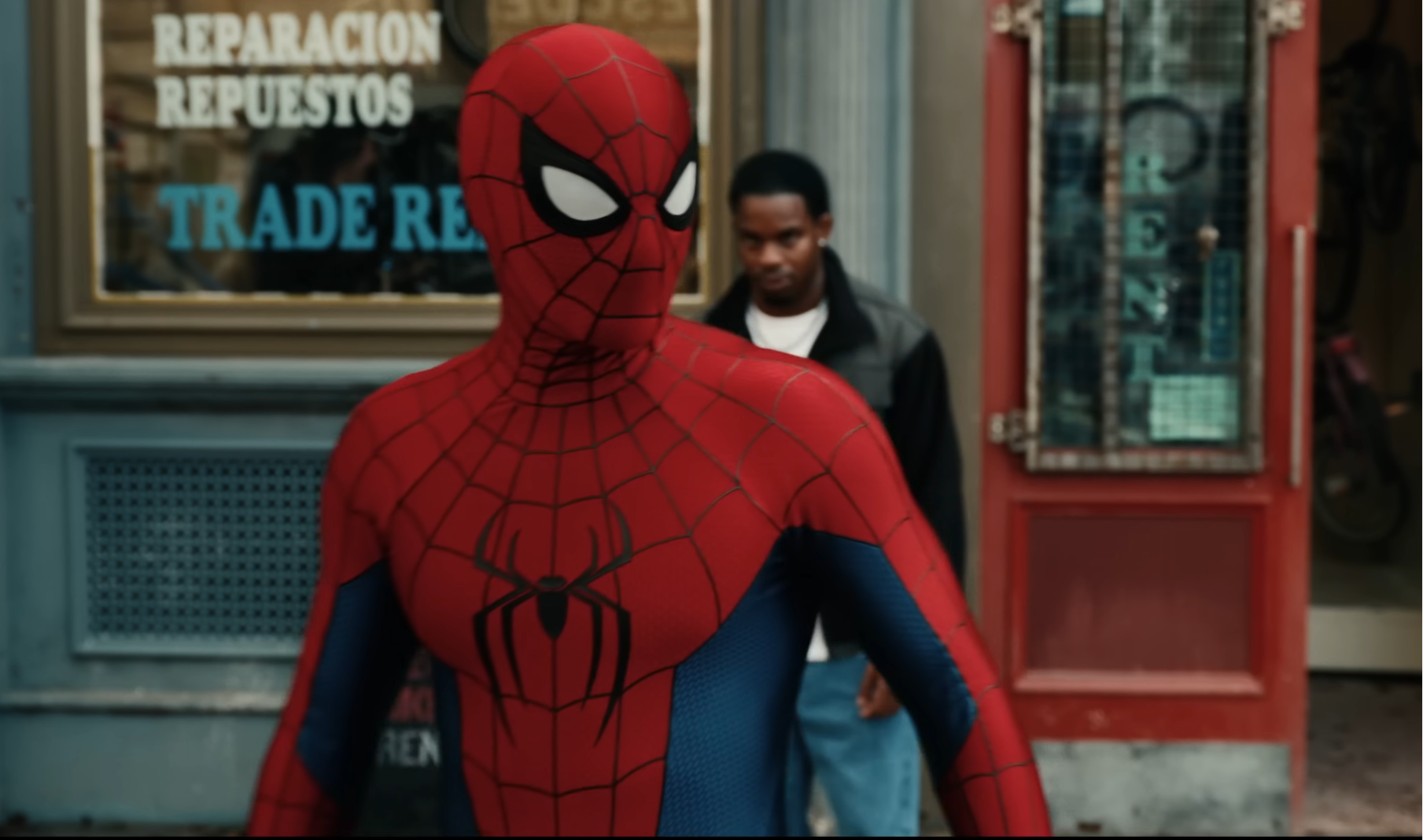
The upcoming Spider-Man: Brand New Day film is already generating significant buzz, not merely for its promise of a formidable roster of antagonists, but for a tantalizing enigma introduced in its latest trailer. While initial marketing hinted at a veritable army of "lesser" street-level villains, emphasizing the gritty, grounded themes reportedly central to the narrative, a subsequent trailer shifted focus dramatically. This new preview spotlights an unseen, unnamed entity capable of body-hopping at will, presenting a profound mystery that has ignited intense speculation among fans and industry observers alike.
This shift in emphasis suggests Brand New Day aims for more than just a multi-villain spectacle. It hints at a deeper, perhaps more insidious, threat lurking beneath the surface of New York City’s criminal underworld. Marvel and Sony have remained conspicuously silent on the identity of this mysterious malice, leaving audiences and analysts to parse every frame and whisper for clues. However, a handful of compelling candidates have emerged, each carrying significant implications for Peter Parker’s cinematic future and the broader Marvel Cinematic Universe.
A Shift from Quantity to Mystery
For months, the prevailing narrative surrounding Spider-Man: Brand New Day revolved around its ambitious scope regarding antagonists. Reports and early trailers painted a picture of Peter Parker grappling with an unprecedented array of adversaries, a concept not seen in live-action since perhaps the sheer density of foes in the Spider-Man: The Animated Series. This approach promised to ground the story, forcing Spider-Man to confront the consequences of his actions on a micro-level, dealing with the daily chaos and systemic corruption that street-level heroes often face. The emphasis was on a quantity of threats, each reflecting different facets of the city’s underbelly.
However, the most recent trailer release fundamentally altered this perception. Instead of showcasing more of the numerous, established rogues, it honed in on a singular, unnerving presence. This entity doesn’t just represent another villain; it embodies a new type of threat. The ability to seamlessly "hop between bodies at will" suggests a foe that transcends physical boundaries, potentially undermining trust, sowing chaos from within, and challenging Spider-Man in ways that traditional brawls cannot. This pivot from a collective rogues’ gallery to a singular, elusive antagonist elevates the stakes and introduces a psychological dimension previously unexplored in the current Spider-Man film series. It suggests that while the "army" of villains may provide the physical obstacles, this unseen force could be the true mastermind or the ultimate existential threat.
The Whispers of a New Era for Spider-Man
The very title, Brand New Day, echoes a pivotal, albeit controversial, era in Spider-Man comics that rebooted many of Peter Parker’s established relationships and circumstances. While the film is unlikely to directly adapt that storyline, the choice of title strongly implies a significant new direction for the character within the MCU. This isn’t just another adventure; it’s positioned as a foundational shift, perhaps redefining Peter Parker’s place in a world increasingly aware of superpowered individuals and grappling with the implications of multiverse-spanning events.
The introduction of a body-hopping threat fits perfectly within this "brand new day" ethos. It’s a departure from the tech-based villains, the multiversal incursions, or the personal vendettas that have largely defined his previous MCU outings. This kind of foe demands a different kind of heroism, one focused on deduction, protecting the innocent from internal corruption, and potentially confronting abstract concepts of malice rather than just punching a tangible villain. It forces Peter to evolve, to think beyond his web-slinging and super-strength, and to confront a threat that could literally be anyone around him. This new dynamic could usher in a more mature, complex phase for the character, aligning with the "street-level" themes by emphasizing the vulnerability of ordinary people to unseen influences.
The Trailer’s Lingering Shadow: Deconstructing the Body-Hopping Phenomenon
The latest trailer for Brand New Day carefully constructs a sense of dread around this unidentified adversary. Scenes are reportedly edited to convey sudden, unexplained shifts in character behavior, subtle changes in demeanor, or an unnerving flicker in the eyes of seemingly ordinary individuals. One moment, an ally might be offering assistance; the next, their words or actions betray a sinister intent, before they seemingly revert, leaving both Spider-Man and the audience questioning what just transpired. The visual language employed emphasizes ambiguity and psychological unease rather than overt destruction or power displays.
This body-hopping ability is depicted as fluid and instantaneous, allowing the entity to move between hosts without visible effort or a clear pattern. There are no overt energy signatures, no tell-tale visual effects, nor any explicit "transfer" shown. Instead, the effect is implied through quick cuts and reactive shots from other characters, including Spider-Man himself, whose bewildered expressions convey the confusion and danger of facing an enemy that cannot be pinned down. The lack of a distinct visual signature for the transfer itself is a crucial detail, as it directly impacts the plausibility of several leading theories. It suggests either a highly advanced, subtle power, or a deliberate choice by the filmmakers to keep the audience guessing about the villain’s true nature and abilities. This ambiguity is the very foundation upon which the ensuing fan theories are built, making the nature of the threat as mysterious as its identity.
The Leading Contenders: Fan Theories and Their Foundations
In the absence of official confirmation, the vacuum has been filled with fervent fan speculation. Several candidates from Marvel’s vast comic book history have risen to the forefront, each offering a distinct possibility for this elusive body-hopper.
Jean Grey: A Mutating Introduction to the MCU?
Perhaps the most pervasive and intriguing theory posits that the mysterious body-hopper is none other than Jean Grey, one of the most iconic and powerful mutants from the X-Men universe. This theory, however, requires a somewhat unconventional interpretation of the trailer’s narrative. Instead of viewing the body-hopping figure as a traditional villain, proponents suggest that what we are witnessing is Damage Control – the government agency responsible for cleaning up superhuman incidents – attempting to apprehend or frame Jean. In this scenario, Jean, a powerful and potentially untrained mutant, might be involuntarily manifesting her telepathic or telekinetic powers in a way that appears as "body-hopping" to those observing, especially if she’s trying to evade capture or defend herself.
The theory gains significant traction from persistent, widely circulated rumors that actress Sadie Sink has been cast as Jean Grey and will make her MCU debut in Brand New Day. These leaks, which have proven reliable in previous instances regarding character introductions and plot points, also suggest an initial antagonistic dynamic between Jean and Spider-Man. She might perceive him as an agent of Damage Control or a potential threat to her freedom, leading to confrontations where her powers, particularly if uncontrolled or misunderstood, could manifest as the observed body-hopping. While traditional portrayals of Jean Grey often emphasize telepathy and telekinesis, the breadth of her psionic abilities, especially when factoring in the cosmic Phoenix Force, certainly encompasses a range of mind-manipulating feats that could be reinterpreted as body possession or forced control in a cinematic context. The narrative potential here is immense, offering a dramatic entry point for mutants into the MCU, not as a separate entity, but deeply intertwined with the existing street-level fabric of New York. It would also set a precedent for how the MCU might handle the initial public reaction to mutants – with fear, misunderstanding, and attempts at control.
Mister Negative: A Dark Reflection from the Streets
If the X-Men connection proves to be a red herring, the focus shifts back to Spider-Man’s more immediate rogues’ gallery. Here, Mister Negative emerges as a compelling candidate. Martin Li, a benevolent philanthropist by day and a crime lord wielding darkforce energy by night, possesses powers of corruption and mind control that could easily manifest as body-hopping or coercive influence. His ability to corrupt individuals, twisting their moral compass and bending them to his will, aligns well with the insidious nature of the threat glimpsed in the trailer.
Mister Negative has seen a significant surge in popularity in recent years, largely thanks to his prominent and memorable role in Insomniac’s critically acclaimed Spider-Man video games. This increased profile makes him a recognizable yet fresh antagonist for the big screen, particularly fitting for the "street-level" narrative Brand New Day aims to explore. His dual identity, Jekyll-and-Hyde persona, and control over a criminal empire (The Inner Demons) make him a complex villain who could challenge Peter Parker both physically and morally.
The primary hurdle for this theory lies in Mister Negative’s distinct visual effects. In the comics and games, his powers are accompanied by a striking negative-space aesthetic – everything he touches or influences takes on a monochrome, inverted appearance. This distinct visual is conspicuously absent from the trailer’s depiction of the body-hopping. While cinematic trailers are masters of misdirection and selective editing, completely omitting such a signature visual effect feels like a significant deviation. It would either require a radical reinterpretation of his powers for the MCU, or suggest that the entity is someone else entirely. Nevertheless, his thematic resonance with the street-level corruption and moral ambiguity of New York makes him a strong conceptual fit.
Shadow King: A Psionic Menace from the X-Verse
Another powerful telepath from the X-Men lore, the Shadow King, also presents a strong case for the mysterious body-hopper. As one of the most potent psionic entities in the Marvel universe, often depicted as a disembodied psychic being that possesses hosts, his abilities perfectly match the description from the trailer. He is a master of mental manipulation, possession, and feeding on negative emotions, making him an ideal candidate for a foe that works from the shadows, corrupting individuals from within.
An appearance by the Shadow King would further solidify the burgeoning X-Men connection within the MCU, potentially paving the way for more mutant characters to be introduced or for existing rumors to coalesce. His deep history with characters like Professor X and Storm, and his nature as a purely psychic entity, would offer a unique kind of threat to Spider-Man, who primarily deals with physical confrontations.
However, the "plot point too many" argument weighs heavily against this theory. Brand New Day already appears to be juggling numerous street-level villains and the potential introduction of a major mutant like Jean Grey. Introducing a character as complex and powerful as the Shadow King, who typically requires extensive world-building to explain his origins and threat level, might risk overcrowding the narrative. Unless he is presented as a secondary, perhaps manipulated, threat (e.g., Jean Grey being blamed for his actions, playing into the "Damage Control framing" theory), his sudden emergence could overwhelm the film’s core focus. Still, given the X-Men’s impending integration, the Shadow King remains a plausible, albeit ambitious, option.
Krahllak: The Demonic Hand Behind the Veil
Shifting gears to a more obscure, yet thematically resonant, possibility, Krahllak, an ancient demon associated with The Hand, presents a compelling dark horse candidate. The biggest argument against Krahllak is his relative obscurity; he’s not a household name, and his comic book appearances, particularly in conjunction with Spider-Man, are rare. Making such an unknown entity the primary antagonist for a major Spider-Man film would be an unconventional choice.
However, Krahllak’s connection to The Hand is incredibly significant. The Hand, a notorious ninja cult, has been prominently featured in the Brand New Day trailers, indicating their role as a significant antagonistic force. Krahllak is often depicted as the driving demonic force behind The Hand, influencing their actions and granting them their mystical powers. Furthermore, Krahllak has a rich history with street-level heroes like Daredevil and Punisher, both of whom have been strongly rumored or confirmed to appear in or be integral to the build-up of Brand New Day. This convergence of characters and organizations provides a strong contextual link.
While Krahllak is indeed capable of possessing individuals, his typical modus operandi in the comics is less about free-wheeling, instantaneous body-hopping and more about prolonged, ritualistic possession or demonic influence. This slight discrepancy in the manifestation of his power, as hinted in the trailer, is a minor hurdle. However, the MCU has a history of adapting powers to suit narrative needs. If Krahllak is the culprit, it would firmly plant Brand New Day in the mystical, street-level corner of the MCU, bridging the gap between Spider-Man’s world and the grittier, supernatural elements explored in series like Daredevil and Punisher. It would also provide a compelling reason for these characters to converge, facing a common, ancient evil.
Madelyne Pryor: The Sinister Echo of Jean Grey
Finally, a highly speculative but creatively intriguing theory suggests the body-hopping villain is Madelyne Pryor, a clone of Jean Grey. This theory is a "cheat" in that it builds directly upon the Jean Grey speculation, but it offers a darker, more complex twist. Madelyne Pryor is infamous in the comics as the "Goblin Queen," a character deeply entangled with complex X-Men plotlines and supernatural elements that would be incredibly challenging to introduce into the MCU without a well-established mutant presence.
However, if one assumes the MCU is willing to significantly rewrite her origin – a common practice for adapting comic characters – then Madelyne Pryor becomes a fascinating possibility. Imagine her as a failed experiment by an organization like Damage Control or a shadowy government entity attempting to replicate or control mutant powers, perhaps using Jean Grey’s DNA. This "evil" version of Jean, born of genetic manipulation or dark magic, could easily explain the body-hopping seen in the trailer, presenting a corrupted mirror image of Jean’s powers.
This theory could also cleverly account for Sadie Sink’s rumored casting and any "coy statements" she might have made about her role. Perhaps she is playing both Jean Grey and Madelyne Pryor, or perhaps the initial perception of Jean as a villain is actually Madelyne, with the real Jean Grey emerging later as a potential ally. The narrative possibilities here are rich, allowing for a story that explores themes of identity, corruption, and the dangers of genetic experimentation, all while introducing a powerful, tragic antagonist. It would also circumvent some of the difficulties of introducing a full-fledged X-Men backstory by focusing on a more contained, Spider-Man-centric origin for this particular threat.
Official Silence and the Rumor Mill
In typical Marvel fashion, the studio has maintained an impenetrable wall of silence regarding the identity of this mysterious body-hopping villain. This deliberate withholding of information is a well-worn strategy designed to fuel anticipation and discussion, ensuring that the conversation around Brand New Day remains vibrant until its release. Every cryptic statement, every subtle hint in subsequent marketing materials, and every carefully framed interview quote is meticulously dissected by an eager fanbase.
The tight-lipped approach, while frustrating for those seeking definitive answers, is incredibly effective. It transforms the pre-release period into a collective detective game, where theories are passionately debated, and the smallest details are scrutinized for hidden meaning. For a character like Spider-Man, whose narrative thrives on mystery and personal stakes, this strategy amplifies the intrigue. The absence of an official response only emboldens the rumor mill, ensuring that the identity of the body-hopping threat remains the most burning question surrounding Spider-Man: Brand New Day.
Implications for the MCU’s Future and Spider-Man’s Destiny
The identity of Brand New Day‘s mysterious body-hopping villain carries profound implications, not just for Peter Parker, but for the trajectory of the entire Marvel Cinematic Universe.
The Broader Landscape of Mutant Integration
If the villain is indeed Jean Grey, Shadow King, or Madelyne Pryor, it would represent a monumental step forward in the MCU’s long-awaited integration of mutants. This wouldn’t be a post-credits tease or a cameo; it would be a substantial introduction, directly impacting an established hero’s narrative. Such a move would immediately raise questions about the existence of other mutants, how the world reacts to them, and what role organizations like Damage Control or even the burgeoning political structures of the MCU will play in their lives. It would establish a critical precedent for how the MCU plans to weave the X-Men into its existing tapestry, potentially signaling a more organic, character-driven introduction rather than a standalone franchise launch. This could set the stage for a new era of superhero team-ups, conflicts, and ethical dilemmas.
Solidifying the Street-Level Universe
Conversely, if the villain proves to be Mister Negative or Krahllak, it would powerfully solidify the MCU’s commitment to its street-level heroes and narratives. Mister Negative’s presence would deepen Spider-Man’s personal rogues’ gallery, offering a fresh, morally ambiguous foil rooted in the city’s criminal underbelly. Krahllak, with his ties to The Hand, Daredevil, and Punisher, would act as a crucial connective tissue, potentially drawing these disparate street-level characters together in a common fight against an ancient, mystical threat. This would validate the fan demand for a more interconnected, grounded corner of the MCU, demonstrating that the franchise is capable of balancing cosmic epics with gritty, urban heroism. It would also suggest a strategic move to build out a more robust "Defenders-verse" within the main MCU continuity.
A Personal Challenge for Peter Parker
Regardless of the villain’s ultimate identity, the nature of a body-hopping threat presents a unique and deeply personal challenge for Peter Parker. Unlike physically imposing foes, this entity attacks not with brute force, but with psychological manipulation and infiltration. It undermines trust, forcing Peter to question who he can rely on, and potentially even his own perceptions. This kind of foe demands more than just his physical prowess; it requires his intellect, his empathy, and his ability to see beyond the obvious. It could lead to a more introspective and emotionally taxing journey for Spider-Man, pushing him to confront not just external dangers, but also the internal vulnerabilities of himself and those he cares about. The emphasis on "Brand New Day" could very well refer to a brand new Peter Parker – one who is forced to mature, adapt, and confront threats that redefine what it means to be Spider-Man in a complex, evolving superhero landscape. The resolution of this mystery will undoubtedly shape the future of Spider-Man and leave an indelible mark on the MCU as a whole.