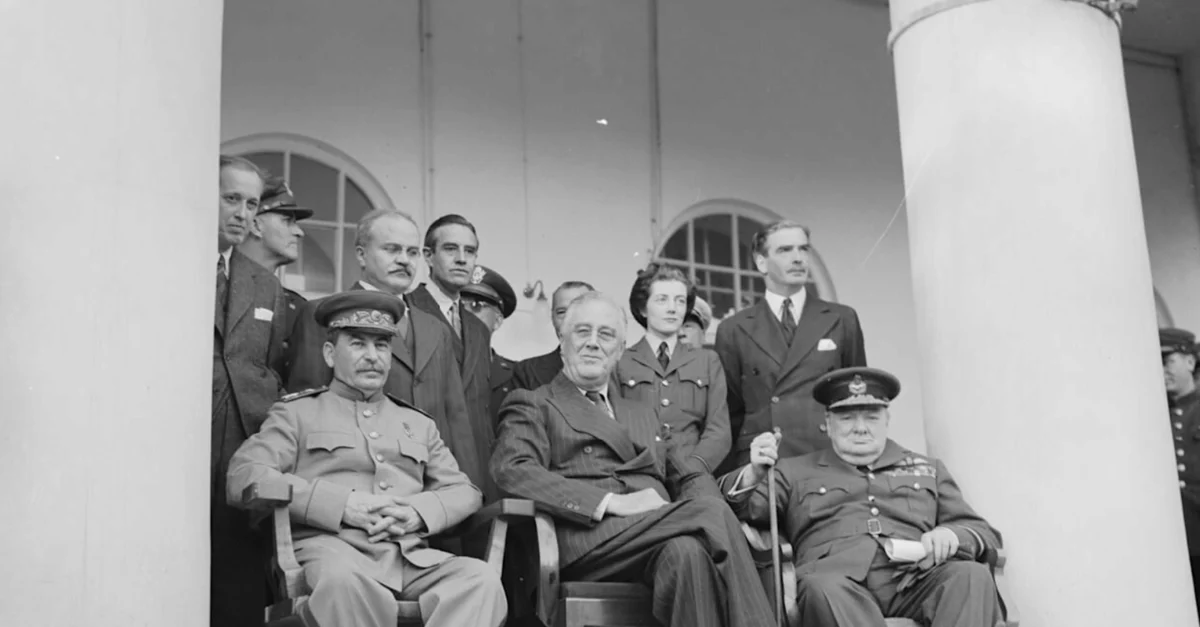
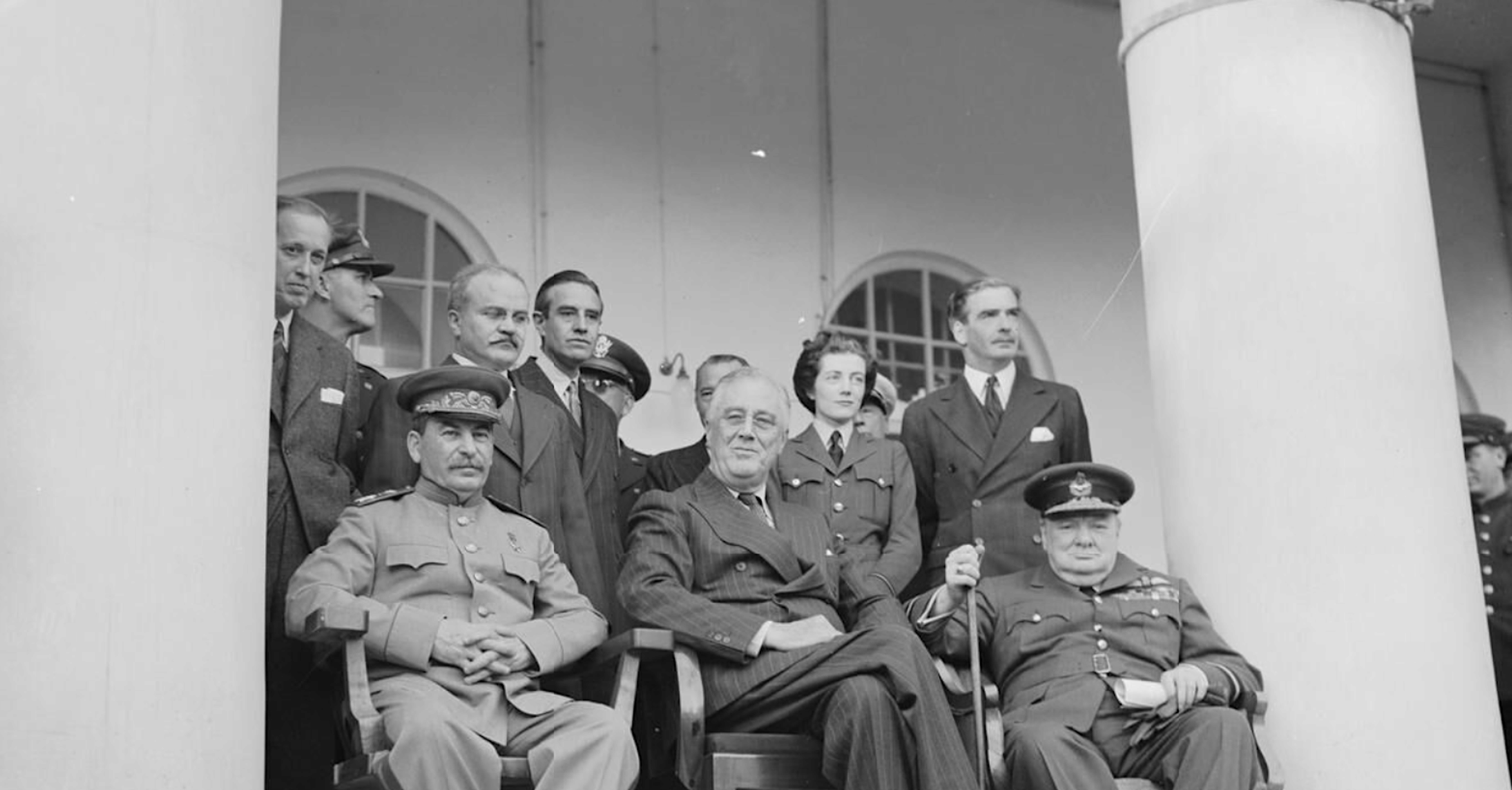
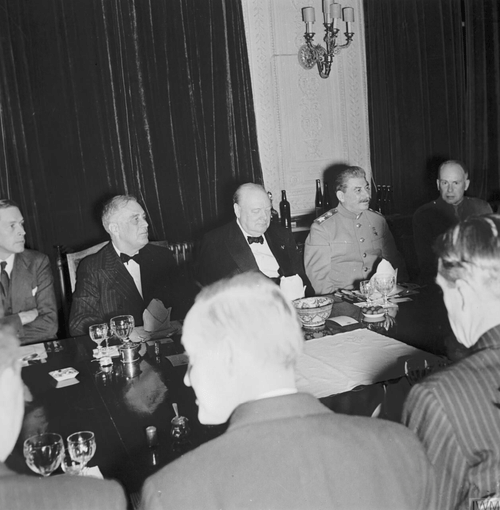
Tehran, Iran – November 28 to December 1, 1943 – Deep in the heart of wartime Iran, a momentous assembly of the most powerful leaders on Earth convened, their decisions poised to reshape the course of World War II and the subsequent global order. Code-named "Eureka," the Tehran Conference brought together the "Big Three" Allied leaders: U.S. President Franklin D. Roosevelt, Soviet Premier Joseph Stalin, and British Prime Minister Winston Churchill. Their mission was clear: to synchronize a decisive military strategy against the Axis powers of Germany and Japan, determine the precise timing and location for a long-awaited invasion of Western Europe, and, perhaps most critically, begin the intricate dance of delineating spheres of influence in a post-victory Central and Eastern Europe.
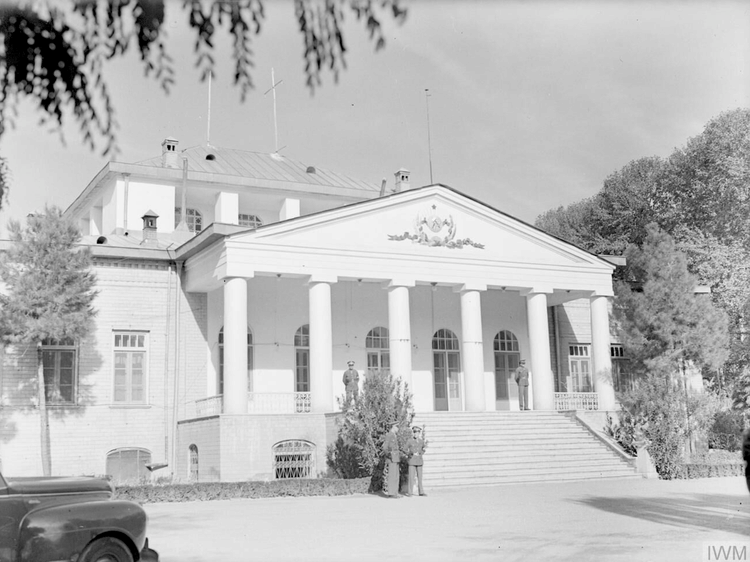
This unprecedented summit marked the first occasion all three principal Allied leaders met in person, a testament to the escalating stakes of the war and the urgent need for direct, high-level coordination. The conference, held amidst stringent security at the Soviet embassy in Tehran, aimed to hammer out a unified front, presenting a formidable display of Allied resolve to a world still reeling from years of devastating conflict.
The Global Crucible of 1943: A War on Multiple Fronts
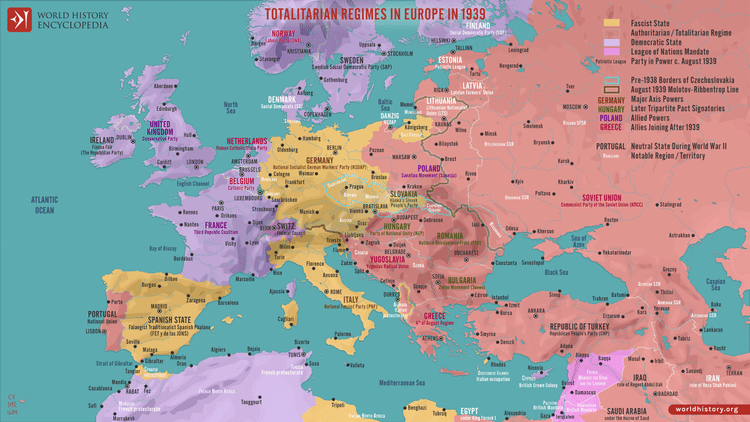
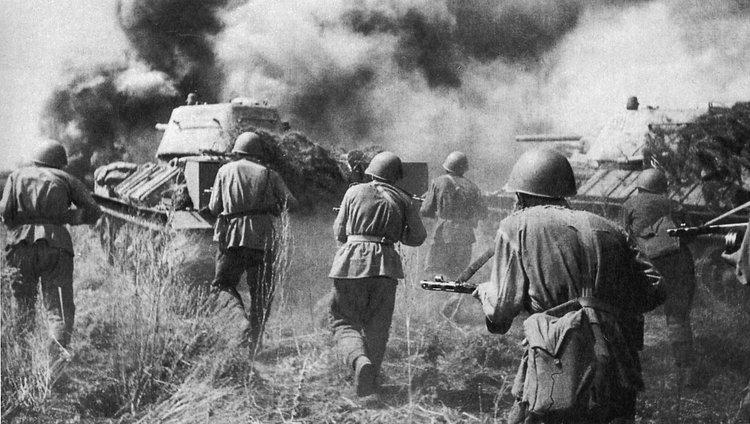
By late 1943, the tide of World War II was perceptibly turning, yet the cost of victory remained astronomically high. Europe had largely fallen under the iron fist of Nazi Germany, whose ambitious Operation Barbarossa in 1941 had plunged the Soviet Union into a brutal, existential struggle. The Eastern Front had become a meat grinder, characterized by unimaginable attrition and colossal casualties. However, a significant shift had occurred earlier in the year: the German Wehrmacht had suffered a catastrophic defeat at the Battle of Stalingrad in February 1943, a psychological and strategic blow from which it would never fully recover. This was followed by another crushing setback at the Battle of Kursk in August, the largest tank battle in history, which definitively stripped Germany of its strategic initiative in the East.
In North Africa, Italian forces had been routed, despite reinforcement by Germany’s formidable Afrika Korps. The decisive British victory at the Second Battle of El Alamein in November 1942 marked a turning point, securing the Suez Canal and opening the way for the Allied invasion of Sicily and then mainland Italy in the summer of 1943. The subsequent collapse of Mussolini’s government in September further underscored the Axis’s deteriorating position. Yet, Germany’s stubborn defense of Italy, characterized by mountainous terrain and well-fortified lines, proved to be a slow and arduous campaign.
Meanwhile, in the Pacific, Japan’s surprise attack on Pearl Harbor in December 1941 had propelled the United States into the global conflict. The Pacific War was raging, with Allied forces, spearheaded by the U.S., making impressive gains through island-hopping campaigns and commencing an invasion of Burma (Myanmar). The immense industrial and military might of the United States, now fully mobilized, along with the resilience of the British Empire and the Soviet Union’s unyielding resistance, instilled a growing confidence among the Allied leadership that victory, while costly, was inevitable. This newfound optimism, born from hard-won battlefield successes, provided the backdrop for the Tehran Conference, allowing the leaders to not only discuss the immediate war effort but also to cast their gaze towards the shape of the post-war world.
Assembling the Allied Titans: The Road to Tehran
The Tehran Conference was not the first interaction between these colossal figures, but it was the first time all three convened. Roosevelt and Churchill had met at the Casablanca Conference in January 1943 and again in Cairo just days before Tehran, where they ironed out a united Anglo-American front to present to Stalin. Churchill had also journeyed to Moscow in 1942 to meet Stalin directly, facing the Soviet leader’s insistent demands for a "second front" in Western Europe.
Roosevelt, a master of diplomacy and personal charm, believed he could bridge the ideological divide with Stalin. To this end, he accepted Stalin’s invitation to stay at the heavily guarded Soviet embassy, which also served as the primary conference venue. This arrangement, while seemingly innocuous, afforded the Soviets a distinct intelligence advantage, allowing them to monitor the American delegation closely. More importantly, it created a subtle distance between Roosevelt and Churchill, hindering the close Anglo-American collusion that often characterized their interactions. Roosevelt’s ambition to significantly sway Stalin’s thinking, however, would prove to be a persistent, if largely unrealized, aspiration.
Despite the underlying strategic tensions and differing geopolitical agendas, relations between the leaders were outwardly cordial, often facilitated by social engagements. A notable moment of camaraderie occurred on November 30, when a dinner was held to celebrate Churchill’s 69th birthday. Amidst toasts and diplomatic banter, Churchill received a Persian lamb’s wool hat as a gift. The previous day, Stalin had been presented with the magnificent Sword of Stalingrad, a ceremonial gift commissioned by King George VI of Great Britain. Engraved with the inscription, "To the steel-hearted citizens of Stalingrad, the gift of King George VI, in token of the homage of the British people," the sword symbolized the profound respect and admiration of the British people for the Soviet Union’s heroic defense and victory at Stalingrad, a gesture that undoubtedly resonated deeply with Stalin and served to momentarily warm the often frosty Anglo-Soviet relationship. These symbolic exchanges, however, belied the formidable strategic and political disagreements that dominated the conference agenda.
Forging the Western Front: Operation Overlord
The most pressing military question facing the "Big Three" was the establishment of a "Second Front" in Western Europe. Since the fall of France in 1940 and the subsequent Battle of Britain, Hitler had refrained from a cross-Channel invasion, deterred by the Royal Air Force’s air superiority. The United States, Britain, and their allies had been steadily amassing men and materiel, preparing for a monumental amphibious assault on Continental Europe, an operation code-named Overlord.
Stalin’s demand for this Western Front was relentless and understandable. The Soviet Union had borne the brunt of the Nazi war machine for over two years, suffering millions of casualties and immense devastation. He urgently sought to relieve the tremendous pressure on the USSR by forcing Germany to divide its forces. The Western Allies, while committed to the invasion, were more cautious. An amphibious assault on such a scale was fraught with immense logistical challenges and the certainty of horrific casualties. It required overwhelming force, meticulous planning, and favorable conditions to succeed.
A critical strategic debate unfolded. Churchill, ever mindful of British interests and the potential for a repeat of the carnage of World War I’s Western Front, advocated for a continued focus on the Mediterranean, pushing into German-controlled northern Italy and potentially striking through the "soft underbelly" of Europe into the Balkans. This strategy, he argued, could open supply lines to the Soviet Union through the Black Sea and protect British imperial interests. However, both Stalin and Roosevelt firmly rejected this, viewing it as a diversion that would fatally weaken the primary attack on France, which they insisted must remain the main focus. Roosevelt, in particular, was keen to launch a direct assault on the heart of German power and demonstrate American commitment to the European theater.
Ultimately, a consensus was reached: the main invasion, Operation Overlord, would target Normandy, France, in May 1944 (though it was later delayed by a month to June). To ensure its success, Stalin agreed to launch a massive Soviet offensive on the Eastern Front simultaneously, thereby fully occupying German forces and preventing their redeployment westwards. A secondary invasion, code-named Operation Anvil (later Dragoon), would be conducted from the Mediterranean, striking through southern France to support Overlord. To sow confusion among the German high command, all three allies also agreed to cooperate in devising elaborate deception plans, designed to mislead Berlin about the timing and location of the true invasion. The crucial decision of who would serve as the supreme commander-in-chief of Operation Overlord was, however, deferred to a future conference, a strategic choice reflecting the complexity and sensitivity of inter-Allied command.
Beyond the Battlefield: Shaping the Post-War World
While military strategy dominated the headlines, the Tehran Conference also laid the groundwork for the post-war international order, touching upon a wide array of political and territorial issues.
The Future of Germany: The question of what to do with a defeated Germany was a central, albeit unresolved, concern. The leaders were acutely aware of the historical precedent of the Treaty of Versailles after World War I, which, in its harshness, was widely believed to have contributed to the rise of Nazism. The objective this time was to ensure Germany could never again launch aggressions, but also to avoid creating lasting resentment that could breed future conflict. Stalin, advocating for a weakened Germany, favored breaking it up into its individual states. Churchill suggested splitting Germany in half along a north-south line. Roosevelt, meanwhile, proposed keeping Germany as a whole but subjecting it to some form of joint Allied governance, particularly over its vital industries and economy. While no definitive plan was adopted, it was agreed that Austria, forcibly annexed by Germany in the 1938 Anschluss, should have its independence restored. Furthermore, Germany would be made to pay financial reparations to the victors and the territories it had brutally occupied.
Global Security and New Alliances: Roosevelt, a visionary internationalist, successfully championed the idea of a new, more robust international peacekeeping organization, a successor to the failed League of Nations. This concept built upon the January 1942 "United Nations Declaration," signed by the USSR, Britain, the USA, and China, which had committed the Allies to a common purpose. The discussions in Tehran solidified the commitment to forming what would eventually become the United Nations, signaling a collective desire for a more stable and cooperative global future.
Other Strategic Decisions: Beyond Germany and the global security framework, other significant issues were addressed:
Turkey: Efforts were made to bring Turkey into the war on the Allied side, recognizing its strategic importance controlling access to the Black Sea.
Yugoslavia: It was agreed to support the communist partisans led by Josip Broz Tito, acknowledging their effectiveness in tying down German forces.
Japan: Stalin formally promised that the USSR would join the fight against Japan once Germany had been defeated in Europe, a crucial commitment that would significantly shorten the Pacific War.
Iran: In a declaration of solidarity with its host, the conference formally stated that Iran, then occupied by Allied forces, would be declared an independent state after the war, respecting its sovereignty.
The Polish Problem: A Harbinger of the Cold War
Perhaps the most contentious and morally fraught discussion at Tehran revolved around the future of Poland, a topic collectively known as the "Polish Question." This issue laid bare the fundamental ideological and territorial differences that would later define the Cold War.
Stalin was unyielding in his demands. He insisted on retaining the Polish territories allocated to the USSR in the infamous 1939 Nazi-Soviet Pact, effectively shifting Poland’s eastern border westwards along the Curzon Line, a demarcation line proposed after World War I. Furthermore, he sought access to the Baltic coast via East Prussia, essentially aiming for control over all of Eastern and much of Central Europe. For Roosevelt and Churchill, this presented a profound moral and strategic dilemma. They hoped that the war’s progress might soften Stalin’s claims, but they also recognized the grim reality: if the Soviet Red Army occupied Europe up to and including Germany, there would be little the Western Allies could do to alter the facts on the ground.
Stalin’s diplomatic cunning was evident throughout these discussions. His invitation to Roosevelt to stay at the Soviet embassy proved strategically astute, allowing Soviet intelligence to monitor the American delegation and, crucially, preventing Roosevelt and Churchill from closely coordinating their positions. Churchill himself later recalled in his memoirs his discomfort with this arrangement:
"The British Prime Minister recalled, in his own memoirs, how he felt obliged to seek a private interview with Stalin to complain that Roosevelt now seemed to be avoiding him, and to counteract what he saw as the Soviet leader’s attempts to split the Anglo-US alliance by exploiting Roosevelt’s goodwill and what many regarded as a naïve idealism in his approach to world affairs." (Imperial War Museums)
While unable to fully resist Stalin’s territorial demands, Roosevelt and Churchill at least agreed on a potential compensatory measure: should the Red Army occupy most of Poland before the Western Allies arrived, Poland could be compensated by extending its western border at the expense of a defeated Germany. This idea, which involved shifting Poland westward, was a pragmatic but deeply controversial compromise. Stalin was also adamant that the current Polish government-in-exile in London would have no role in Poland’s post-war future, accusing some of its members of engaging in "negative propaganda" against the USSR. These complex and sensitive issues, particularly regarding Poland’s sovereignty and future political alignment, remained largely unresolved at Tehran, deferring the ultimate decisions to future conferences and foreshadowing the deep divisions that would soon emerge between East and West.
Immediate Aftermath and Lingering Shadows
The Tehran Conference concluded with a sense of guarded optimism. Militarily, it was a resounding success, establishing the framework for the decisive "Second Front" that would ultimately lead to Germany’s defeat. The agreement on Operation Overlord and the coordinated Soviet offensive was a monumental achievement, promising to accelerate the end of the war in Europe. The commitment to a new international organization for peace also laid vital groundwork for a more stable post-war world.
However, the political implications were more complex and, in hindsight, darker. The concessions made to Stalin regarding Poland and the broader understanding of Soviet territorial ambitions in Eastern Europe sowed the seeds of future discord. While Roosevelt and Churchill believed they were making pragmatic choices necessary to maintain the alliance and win the war, critics would later argue that they had effectively "negotiated away" the sovereignty of Eastern European nations, paving the way for Soviet domination. The conference highlighted the inherent tension between the immediate military imperative of defeating the Axis and the long-term political implications of post-war power dynamics.
The Road to Yalta and Potsdam: A Shifting Landscape
The decisions initiated at Tehran would be further elaborated and, in some cases, cemented at subsequent Allied conferences.
The Yalta Conference in February 1945, again involving Roosevelt, Churchill, and Stalin, took place as Allied victory in Europe was imminent. Here, Germany and Austria were formally agreed to be divided into four zones of occupation, with their respective capitals, Berlin and Vienna, similarly partitioned. The new borders for Poland, largely based on the Curzon Line proposed at Tehran, were agreed upon, shifting Poland’s western frontier at Germany’s expense. Crucially, Stalin also promised to hold free and unfettered elections in Poland and other liberated Eastern European nations—a promise that, to the bitter disappointment of the West, was never fulfilled. Regarding Japan, Roosevelt and Stalin struck a deal: in exchange for Russia entering the war against Japan, certain Soviet territorial demands in Asia would be met, including the southern half of Sakhalin and the Kuril Islands. Other matters included Germany’s reparations, the detailed formation of the United Nations, and organizing public trials for war criminals.
Many historians and contemporary observers felt that Roosevelt and Churchill had conceded too much control of Eastern Europe to the USSR at Yalta. However, the grim reality was that by early 1945, the Red Army already occupied most of this region, presenting the Western Allies with a fait accompli rather than a negotiable point.
The final major wartime summit, the Potsdam Conference, was held from July to August 1945, after victory in Europe had been achieved. With new leadership in the West—Harry S. Truman as the U.S. President and Clement Attlee replacing Churchill mid-conference as British Prime Minister—the dynamic had shifted. Stalin, now the most experienced leader at the table, continued to press Soviet interests. A surrender ultimatum, known as the Potsdam Declaration, was issued to Japan. This ultimatum was famously ignored, leading to the atomic bombings of Hiroshima and Nagasaki and Japan’s eventual surrender on August 14. All parties at Potsdam had nominally agreed to allow democratic elections in countries Nazi Germany had occupied. Yet, this commitment was systematically disregarded in the Soviet-occupied half of Europe, where communist regimes, loyal to Moscow, were rapidly installed. The resulting mutual suspicion and ideological chasm between East and West meant that Potsdam would be the last conference of its kind, as the world rapidly descended into a new era of geopolitical confrontation: the Cold War.
Conclusion: A Pivotal Turning Point
The Tehran Conference stands as a pivotal moment in 20th-century history. It was the crucial juncture where the "Big Three" forged the military strategy that would ultimately defeat Nazi Germany, most notably by committing to the massive cross-Channel invasion of Operation Overlord. Beyond the battlefield, Tehran marked the beginning of a complex, often uneasy, dialogue about the post-war world. It laid the foundation for the United Nations, signaling a collective desire for a new era of international cooperation.
However, it also exposed the deep fissures in the Grand Alliance, particularly regarding the future of Eastern Europe and the aspirations of the Soviet Union. The compromises made, especially concerning Poland, contained the seeds of the Cold War, demonstrating the inherent tension between wartime necessity and long-term geopolitical stability. While militarily successful, Tehran illuminated the nascent ideological struggle that would dominate international relations for the next five decades, forever altering the geopolitical landscape of the world.
The Eridu Genesis, an ancient Sumerian text, stands as the earliest known Mesopotamian account of a catastrophic Great Flood, a narrative that reverberates through millennia and cultures, from the Akk
FOR IMMEDIATE RELEASE [City, State] – [Date] – A new literary voice is poised to captivate readers with a collection that delves deep into the rich tapestry of African history, legend, and folklore. H
Constantinople, Ottoman Empire – In the annals of the Ottoman Empire, few rulers cast as long and transformative a shadow as Sultan Mahmud II (1785-1839). Ascending to a throne teetering on the precip