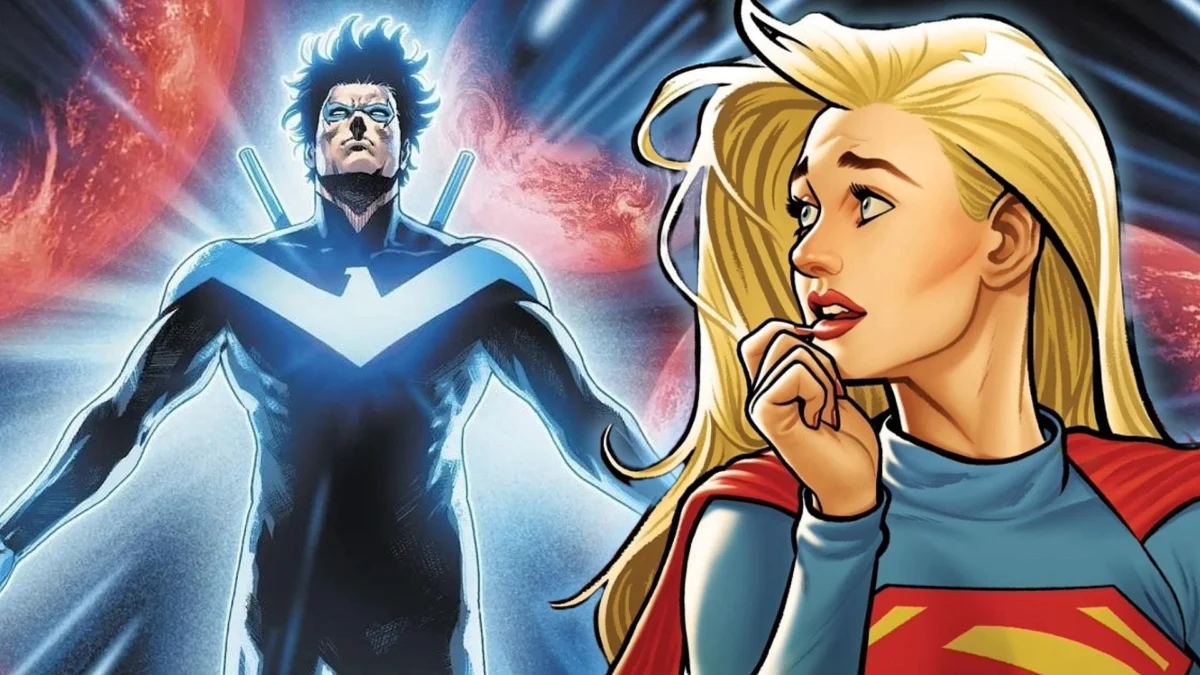
DC Officially Reveals Supergirl’s New Legacy-Changing Nightwing Costume
The following report serves as an expanded analysis of the facts, history, and cultural implications of the Man of Steel, as presented through the lens of this latest investigative and educational endeavor.
I. Main Facts: The Anatomy of a Legend
The Daily Planet’s recent data release confirms that the public’s fascination with Superman remains at an all-time high. The trivia challenge highlights eight core pillars of the Superman mythos: his extraterrestrial origins, his civilian identity, his emotional anchors, his physical vulnerabilities, his cinematic influence, his primary antagonists, his rural upbringing, and his professional home in Metropolis.
At his core, Superman is an immigrant story. Born Kal-El on the planet Krypton, he was sent to Earth by his parents, Jor-El and Lara, moments before their world succumbed to a geological cataclysm. This "Last Son of Krypton" was not merely a survivor but a refugee who would eventually become Earth’s greatest protector.
The data reveals that the public identifies Superman not just by his powers—which include flight, invulnerability, heat vision, and super strength—but by his restraint. As a resident of Metropolis, he operates under the civilian guise of Clark Kent, a "mild-mannered" reporter. This duality allows him to understand the human condition from the ground up, ensuring that his god-like abilities are always tempered by a human conscience.
II. Chronology: From the Stars to the Streets
The timeline of Superman is a narrative of evolution, spanning decades of history both within the fictional universe and in real-world cultural impact.
1. The Kryptonian Exodus
The chronology begins in the final days of Krypton, a scientifically advanced civilization that grew complacent in its brilliance. While the ruling council ignored the signs of planetary instability, the scientist Jor-El took drastic measures. The launch of baby Kal-El’s vessel remains the most significant event in DC history, marking the end of a civilization and the birth of a legend.
2. The Smallville Foundation
Upon crash-landing in the American Midwest, the infant Kal-El was discovered by Jonathan and Martha Kent. In the rural town of Smallville, Kansas, the Kents instilled in the boy a moral compass that would define his future. Between the late 1930s (his first comic appearance) and the modern era, the "Smallville years" have been recognized as the most formative period of his life, proving that "Nature vs. Nurture" leans heavily toward the latter in the making of a hero.
3. The Metropolis Era
As an adult, Clark Kent moved to Metropolis, joining the Daily Planet. This era marked the beginning of the "Superman" persona in the public eye. It was here he met Lois Lane, the intrepid journalist who would become the love of his life, and Perry White, the editor-in-chief who would provide the framework for his journalistic integrity.
4. The Modern Mythology and Cinema
The chronology extended into the 20th and 21st centuries through various media. Most notably, 1978 marked a turning point when Christopher Reeve took on the mantle in Superman: The Movie. This era cemented the visual and emotional template for the character, followed by modern reinterpretations such as Brandon Routh’s Superman Returns and Henry Cavill’s tenure in the DC Extended Universe (DCEU).
III. Supporting Data: The Pillars of the Mythos
To understand why Superman remains a global icon, we must examine the specific elements that comprise his world.
The Journalist and the Icon
Lois Lane is more than a supporting character; she is the "Pulitzer Prize-winning" heart of the narrative. Data suggests that Lois represents the human pursuit of truth, serving as a mirror to Superman’s pursuit of justice. Her role at the Daily Planet ensures that even when Superman is not in the sky, the fight for what is right continues on the front pages.
The Science of Vulnerability
Despite his near-invincibility under Earth’s yellow sun, Superman is susceptible to Kryptonite—radioactive remnants of his home planet. The Daily Planet’s challenge identifies several varieties:
- Green Kryptonite: The most common, causing physical weakness and potential death.
- Red Kryptonite: Known for causing unpredictable psychological and physical mutations.
- Gold Kryptonite: Capable of permanently stripping a Kryptonian of their powers.
- Blue Kryptonite: Primarily affecting the imperfect clone, Bizarro.
This vulnerability is essential to the narrative, as it humanizes an otherwise unstoppable force, creating stakes that are as much about survival as they are about heroism.
The Antagonists: Ego and Order
Superman’s rogues’ gallery is topped by two distinct threats:
- Lex Luthor: A human billionaire whose genius is matched only by his narcissism. Luthor views Superman as an affront to human achievement, representing the "Dark Mirror" of human potential when stripped of empathy.
- General Zod: A relic of Krypton’s military past. Zod represents what Superman could have been had he been raised without the Kents’ values—a tyrant who demands that the world "Kneel before Zod."
IV. Official Responses: Insights from the Newsroom
In preparation for this report, several "staff members" at the Daily Planet provided insights into the character of the man they see both in the office and in the sky.
Perry White, Editor-in-Chief:
"People ask me why we still cover him with such fervor. It’s simple. In this business, we deal with the worst of humanity—corruption, greed, and tragedy. Superman is the one story that reminds us that there is a better version of ourselves. He’s not just a ‘cape’; he’s a reminder that the truth still matters."
Lois Lane, Senior Investigative Reporter:
"The world sees the ‘S’ and thinks of power. I see the man behind the glasses and think of integrity. The trivia challenge isn’t just about facts; it’s about understanding that a hero is someone who chooses to do the right thing, even when they don’t have to."
Jimmy Olsen, Photojournalist:
"I’ve got a signal watch for a reason. He’s always there. But what people don’t realize is that Clark Kent is just as much of a hero for the stories he writes. He gives a voice to the people who can’t fly."
LexCorp Official Statement (Archived):
"While the Daily Planet continues its hagiography of the ‘alien from Kansas,’ LexCorp remains committed to human exceptionalism. We believe that humanity should not rely on a ‘god’ to solve its problems. True progress comes from human intellect, not extraterrestrial benevolence."
V. Implications: The Future of Hope
The release of the "Superman Trivia Challenge" comes at a time when the concept of the "Hero" is being constantly redefined. The implications of Superman’s continued relevance are twofold.
The Cultural Anchor
In a fractured media landscape, Superman serves as a "Global Monomyth." He is a character that transcends borders, representing universal values of "Truth, Justice, and a Better Tomorrow." The trivia challenge serves as a cultural literacy test, ensuring that the foundational stories of our modern mythology are passed down to new generations.
The Psychological Impact
Psychologists often cite Superman as an example of "The Altruistic Ideal." By focusing on his upbringing in Smallville and his life as Clark Kent, the narrative emphasizes that power does not inherently corrupt if it is rooted in a strong moral foundation. The implication is that "Superman" is not just a person, but a standard of behavior that anyone can aspire to, regardless of their ability to fly.
The Cinematic Horizon
As the film industry continues to reboot and reimagine these characters, the data from the 1978 Christopher Reeve era remains the "Gold Standard." Future iterations, including the upcoming cinematic reboots directed by James Gunn, are expected to return to these core tenets: the bright colors, the sense of wonder, and the unwavering belief that a man can fly.
Conclusion: The Spinning Globe
As the sun sets over the Metropolis skyline, reflecting off the gold globe of the Daily Planet, the legacy of Kal-El remains as unshakable as the building itself. Whether he is saving the world from a Kryptonian invasion or simply rescuing a cat from a tree, the Man of Steel represents the best of what we can be.
The Daily Planet’s trivia challenge is more than a game; it is a testament to a character who has survived for over 80 years not because he is invincible, but because he is indispensable. As we look to the stars, we are reminded that while Krypton may be gone, its last son has made Earth his true home, teaching us all that hope is the strongest force in the universe.
"Up, Up, and Away!" is not just a catchphrase—it is an invitation to look upward and strive for a better world.