Annecy Animation Festival 2026: A Curated Journey Through Animated Masterpieces
Annecy, France – June 21, 2026 – As the prestigious Annecy International Animation Film Festival unfurls its vibrant tapestry of cinematic artistry, the sheer volume of exceptional works presented can often feel overwhelming. For festival-goers, navigating the extensive selection requires a discerning eye and a willingness to delve beyond the most prominent screenings. This year, as in previous editions, the festival showcases a breathtaking array of short films, each offering a unique window into diverse cultures, profound human experiences, and innovative artistic visions.
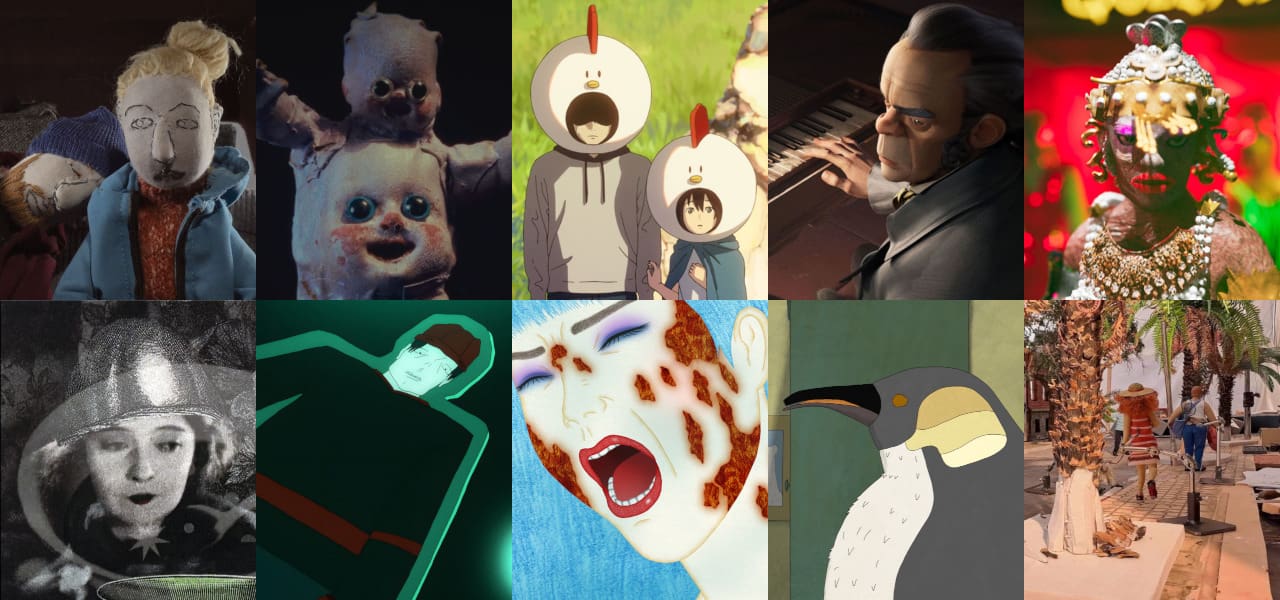
This curated selection aims to guide audiences through some of the most compelling short films gracing the Annecy program. These are the works that demand your attention, the films that will spark conversation, and the pieces that have the potential to linger in your mind long after the credits roll. From poignant explorations of war and trauma to darkly humorous fables and speculative futures, these ten shorts represent the cutting edge of animated storytelling.
A Deep Dive into Annecy’s Compelling Short Film Selections
The following sections offer an in-depth look at five films handpicked by Chris Robinson, followed by five more curated by Jamie Lang, each bringing their unique perspective to the diverse landscape of animated shorts at Annecy 2026.
Chris Robinson’s Picks: Navigating Memory, Identity, and the Absurd
Chris Robinson, a keen observer of the animation circuit, presents a collection of shorts that probe the depths of human emotion, the scars of conflict, and the unsettling corners of the human psyche.
When the Sea Was Calm: A Stop-Motion Elegy for Lost Childhood and War
Mamuka Tkeshelashvili’s When the Sea Was Calm (Georgia) is a powerful and deeply affecting stop-motion film that masterfully contrasts the idyllic memories of childhood with the brutal realities of war. The narrative begins bathed in the warm glow of a Sokhumi summer, a period of youthful innocence for a teenage boy who finds himself enamored. The film paints a serene yet restless portrait of this time, punctuated by the simple joys of football, beach days, and the burgeoning stirrings of desire. Tkeshelashvili employs a unique visual language, with occasional rapid, first-person perspectives imbuing the stop-motion imagery with a disarming, almost handheld immediacy.
However, this idyllic calm is not destined to last. The serene atmosphere is shattered by the ominous arrival of a plane, followed by the devastating descent of missiles. Explosions rip through the city, the joyous sounds of barking dogs are replaced by desperate howls, and plumes of smoke signal the city’s descent into chaos. As war engulfs Sokhumi, the object of the boy’s affection is forced to flee with her family. Amidst the pandemonium of evacuation, she loses her beloved dog. In a poignant act of resilience and tenderness, the boy finds the animal and carries it with him as his world burns. The long, sun-drenched summer of childhood has irrevocably ended.
Tkeshelashvili’s directorial hand captures the visceral panic of escape with a destabilizing visual approach. The camera lurches and stumbles through the unfolding tragedy, employing fast, blurred, fisheye, and unstable shots. The inherently slightly stilted realism of stop-motion, with characters often depicted in frantic, accelerated motion, transforms the act of fleeing into a waking nightmare. The film viscerally conveys the desperate scramble for safety, the disorienting confusion of an attack, the collapse of ordinary time, and the primal, irrational urge to protect a small, living creature amidst utter destruction.
Decades later, the boy, now a middle-aged man, returns to Sokhumi to confront the desolate remnants of what time and war have wrought. The integration of archival footage serves to deepen the film’s emotional resonance, serving as a stark reminder that this is not merely a fictional narrative but a memory deeply rooted in tangible devastation. When the Sea Was Calm offers a heart-wrenching reflection on the War in Abkhazia and the destruction of Sokhumi, while simultaneously resonating with the universal experience of anyone whose life has been irrevocably fractured by the before and after of conflict.

Penguin: An Absurdist Exploration of Guilt and Transformation
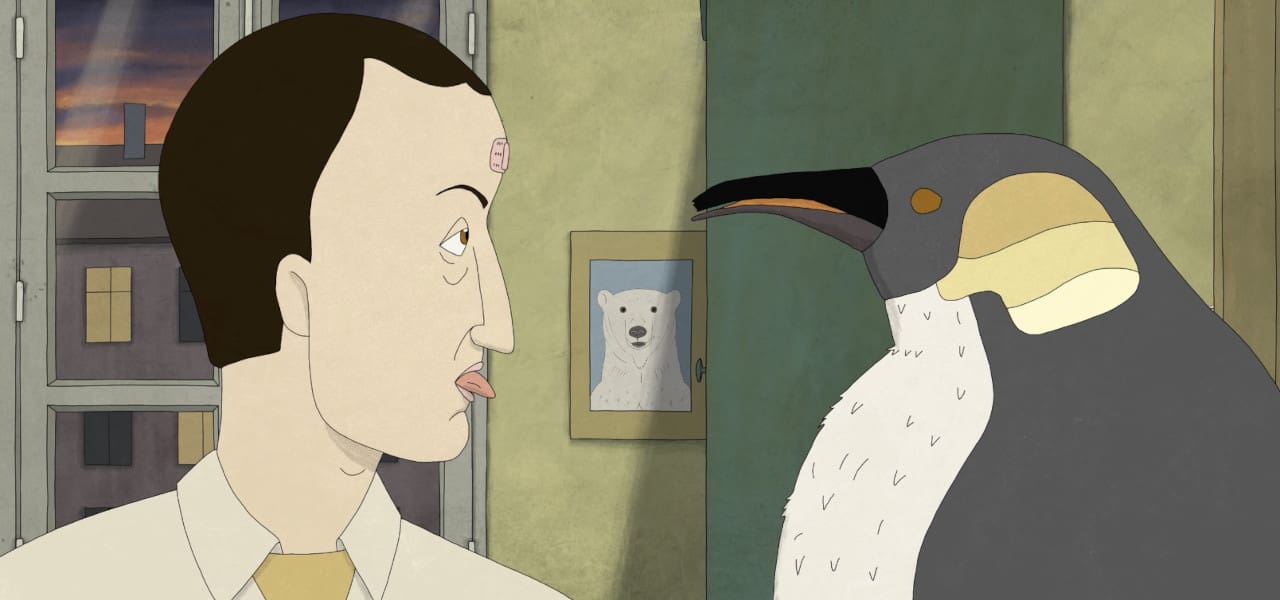
Kaspar Jancis’s Penguin (Estonia) delves into the peculiar and the profound, picking up a philosophical thread from Werner Herzog’s documentary Encounters at the End of the World. Herzog’s contemplation on whether a penguin could succumb to madness and wander towards its own demise finds an echo in Jancis’s work, which propels this idea into even stranger, darker, and more absurdist territory.
The narrative begins with a hunter returning from Antarctica, bearing a singular, macabre gift for his partner: a penguin he has shot after it strayed from its colony. In true Estonian absurdist fashion, the film calmly unfurls the consequences of this seemingly simple act. Later, a statue of the headless penguin topples onto the man while he and his wife are engaged in intimacy. Shortly thereafter, he begins to exhibit avian behaviors, squawking, craving fresh fish, and gradually adopting the characteristics of the creature he so brutally dispatched. What commences as a grotesque romantic gesture soon unravels the couple’s relationship, posing a central question that pervades the film: has the man undergone a genuine transformation, or has his wife’s perception of him fundamentally shifted?
Stripped of dialogue and meticulously paced with Jancis’s signature languid comic timing, Penguin treats its bizarre premise with an almost unnerving matter-of-factness. The result is a form of deadpan magic realism, where profound transformation is accepted before it is fully understood. No medical intervention can reverse the unfolding metamorphosis, yet the film’s true inquiry lies not in the man’s condition but in his wife’s evolving response to it. Is this merely an allegorical fable exploring guilt, appetite, and retribution? Or, beneath its peculiar surface, does it offer a tender meditation on love, perception, and the painful generosity of allowing someone to depart when their happiness has evidently waned?
Praying Mantis: A Visceral Descent into Moral Rot and Maternal Instinct
Joe Hsieh, renowned for his animated macabre works such as The Present and Night Bus, returns with Praying Mantis (Taiwan), another stomach-churning exploration of moral decay. The film immediately assaults the senses with its garish aesthetic: lurid neon colors, sleazy characters, cheap hotel rooms, and a world that feels intrinsically contaminated even before the horror fully manifests.
The story centers on two men seeking female companionship, who encounter a seductive woman and escort her back to a hotel. The initial encounter plays out as familiar macho sleaze, before taking a sharp and gruesome turn. The woman is revealed to be more than a mere femme fatale; she is a praying mantis mutant who preys on men to feed her offspring residing in an underground lair.
While this premise could easily have devolved into a simplistic revenge fantasy, Hsieh elevates it into something far more queasy and unsettling. The woman’s violence is intricately linked to themes of abandonment, pregnancy, loss, and a monstrous pact forged in the name of maternal love. A mysterious nurse hovers over the narrative, acting as both caregiver and manipulator, transforming survival into an inescapable trap. What initially appears as straightforward predation gradually morphs into something more melancholic and desperate: a mother weaponized for a child whose needs are insatiable.
The horror of Praying Mantis stems not solely from the physical consumption of bodies but from the pervasive sense that every character has been poisoned by their own desires. Men exploit women, women exploit men, care devolves into control, and love curdles into hunger. Even the child’s incessant demand for "more" begins to sound less like innocence and more like a grotesque echo of the external world – our collective appetite, our insatiable greed, our relentless consumption. While enjoyment may not be the primary objective of Praying Mantis, its power lies in its ability to drag viewers into a vile, exquisitely controlled nightmare, leaving them to ponder whether the true monster resides within the woman, the men, the nurse, the child, or the systemic forces that have shaped them all.
What We Leave Behind: Confronting Trauma in the Canadian Hockey Mythology
Alexandra Myotte and Jean-Sébastien Hamel’s What We Leave Behind (Canada) marks a significant departure from their previous work, A Crab in the Pool. This new film embarks on a cerebral and cathartic journey, focusing on a man still ensnared by the trauma of childhood sexual abuse. Dan, though an adult, remains psychologically tethered to the hockey rink where he was victimized. This buried past has left him wounded, voiceless, and fundamentally incomplete.

The film’s tone and visual design are a stark contrast to the bright palette and surreal dark humor of Crab. Here, the color palette is muted and earthy, evoking the somber tones of Igor Kovalyov. The hockey rink is not depicted as a nostalgic Canadian gathering place but as a psychic ruin: cold, desolate, and haunted by the echoes of past trauma.
Dan arrives at the rink with a gaping wound in his neck, empty bottles scattered nearby hinting at his struggles with alcohol, collapse, or attempts to numb his pain. He is suddenly thrust onto the ice, battered by tabletop hockey players, as if reduced to a mere toy in an unseen game. A harsh light illuminates him, cast by the rink custodian. The custodian finds Dan in a state of disarray, drunk, soiled, and unable to articulate his suffering. While appearing to show pity, his warning about the dangers of the rink carries a more sinister undertone. Is he protecting Dan, exerting control, or embodying the very abuser from years past? The film’s fractured camera movements mirror Dan’s damaged inner state, transforming the rink into a labyrinth of shame, memory, fear, and self-recrimination.
For international audiences, it is crucial to understand that hockey in Canada transcends mere sport; it is a national mythology built upon stoicism, silence, obedience, and unwavering team loyalty. In recent years, this mythology has been profoundly shaken by a disturbing wave of sexual abuse and assault scandals within amateur hockey. Myotte and Hamel tap into this pervasive unease, utilizing the rink not as a nostalgic backdrop but as a site where authority, secrecy, and tradition can serve as a veil for profound harm.
What We Leave Behind extends beyond the initial act of violence to explore its protracted aftermath. It illustrates how abuse can shadow individuals into adulthood, distort their sense of self, and lead them to appear unstable to those unaware of the horrors they have endured. The film advocates for compassion without sanitizing the damage inflicted. The filmmakers eschew any simplistic resolution. Dan does not awaken miraculously healed, nor does the wound in his neck magically close. The first flicker of recovery emerges only when he finds his voice, when the buried violation can finally be articulated. This is not an easy film to watch, nor should it be.

The Stars Watch from Long Ago: A Hypnotic and Mystifying Cosmic Journey
Stacey Steers’s The Stars Watch from Long Ago (United States), created in collaboration with editor John Romano, is instantly recognizable as a Steers work: hypnotic, mystifying, and almost entirely silent. The film interweaves celestial bodies, insects, flora, and domestic spaces as a house drifts aimlessly through the cosmos. Two women and a girl appear to inhabit this spinning abode, quietly devising solutions to an unknown predicament. Fires rage, insects transform into soup, and flowers bloom unexpectedly on a barren planet.
A pervasive sense of disconnection and loss permeates the film’s world. Characters are depicted in a state of limbo, one mode of existence having vanished, with another perhaps on the horizon – but where and when remains uncertain. The film carries a persistent melancholy, as if the house is fleeing a chaotic, burning world, both literally and figuratively. The conclusion is deliberately ambiguous. Drawing inspiration from a scene in Víctor Erice’s The Spirit of the Beehive (1973), the girl gazes with wonder at the stars. But which stars are they? How near or far are they? Are they light-years away, or merely beyond reach? Despite this uncertainty, a glimmer of hope persists.
Jamie Lang’s Picks: Speculative Futures, Artistic Torment, and Existential Quests
Jamie Lang steps in to guide us through a selection of shorts that venture into speculative futures, explore the dark recesses of artistic creation, and ponder the very nature of existence.
Acid City: Resilience in the Face of Environmental Collapse
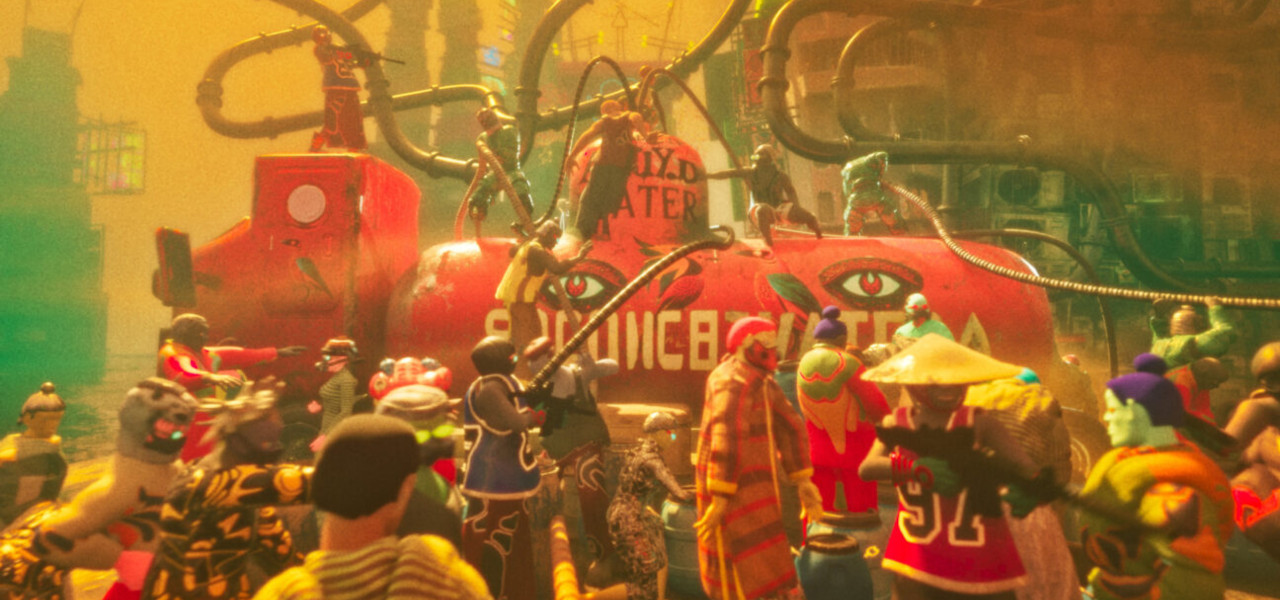
Acid City (United States), by directors Jack Wedge and Will Freudenheim, initially presents itself as a bleak dystopian vision. A floating metropolis drifts precariously in the vast expanse of an acidic ocean. The sun beats down relentlessly on toxic waters, and many of its inhabitants bear the physical marks of generations of environmental degradation. However, the film’s focus transcends mere catastrophe; it is deeply interested in the lives of those who have adapted to and learned to coexist within this challenging environment.

First unveiled at its Rotterdam premiere, this short is presented in a documentary style, following a film crew as they spend a day immersing themselves in the lives of the residents of this peculiar city. Real interviews conducted on the streets of New York are seamlessly interwoven with fictional characters, forging an unusual hybrid that feels simultaneously speculative and eerily familiar. Scientists, laborers, children, and passersby discuss life in Acid City as if it were simply another ordinary place to call home.
It would have been facile to create a film that wallowed in despair. Yet, despite Wedge and Freudenheim constructing a city that is undeniably crowded, polluted, and precarious, it is also imbued with a palpable vibrancy. Its inhabitants cultivate communities, develop unique rituals, adapt their infrastructure, and find profound meaning within circumstances that should, by all accounts, be insurmountable.
Visually, Acid City is a remarkable feat of compressed world-building. The city feels as though it has been pieced together from fragments of countless real-world locations, resulting in a dense urban landscape that is both alien and instantly recognizable. The rough, unpolished edges of the animation only serve to strengthen this illusion, lending the city an authentic, lived-in quality rather than an artificial, designed appearance.
The Quinta’s Ghost: Goya’s Haunted Masterpieces Brought to Animated Life
James A. Castillo’s The Quinta’s Ghost (Spain) ventures into the dark and haunting world of Francisco de Goya’s Black Paintings. These enigmatic works, created directly on the walls of his country home (known as "quinta" in Spanish) during the twilight years of his life, are saturated with dread, isolation, and a profound sense of mortality. Castillo’s film imagines the psychological forces that may have fueled their creation, transforming one of art history’s most inscrutable chapters into a gothic animated nightmare.
The narrative follows an aging and increasingly frail Goya as he retreats to La Quinta del Sordo, the very house where he painted his renowned murals. Illness, memory, and fear begin to blur into a disorienting tapestry. The house itself appears to gain sentience, becoming both a silent witness and an active participant as disturbing visions draw the artist deeper into obsession. While the supernatural imagery is undeniably frightening, the film’s most profound anxieties are rooted in recognizably human experiences.
Visually, The Quinta’s Ghost draws directly from Goya’s distinctive style. Viewers are immersed in a world of distorted figures and shadowy forms, meticulously rendered by Pakoto Martinez and animated in Quill by Joaquín Martínez. These visual elements seem to smear and bleed across the frame, creating the distinct sensation of wandering through a fever dream painted over two centuries ago. Echoing the works that inspired it, Castillo’s film lingers in the uneasy territory where artistic creation intersects with personal torment, suggesting that great art can indeed emerge from our darkest encounters with ourselves.
A Couple Clucking Chickens Were Still Kickin’ in the Schoolyard: Fujimoto’s Early Absurdism
Seishiro Nagaya’s A Couple Clucking Chickens Were Still Kickin’ in the Schoolyard (Japan), part of a larger anthology based on early works by Chainsaw Man creator Tatsuki Fujimoto, showcases flashes of the absurdist themes that would later define his acclaimed career. However, the narrative often feels improvisational, with twists and revelations piling up at a pace that outstrips the story’s ability to fully support them.
The film is set in a post-apocalyptic world where humanity has been annihilated by a war with alien invaders. In the desolate ruins of this ravaged planet, a young alien attends school, mirroring the routines of a human child. While tending to the school’s animals, the alien discovers that two of the chickens are, in fact, humans in disguise, concealing themselves beneath comically unconvincing mascot heads to evade detection.

From this peculiar premise, the story races through themes of sacrifice, friendship, and abrupt reversals. What lingers after its surprising conclusion is not the intricate plot but the underlying concern with connection. Fujimoto repeatedly returns to the fundamental question of whether human relationships can endure in a hostile world. The answer offered here is decidedly bleak. The bonds between the characters hold significance, but they ultimately prove powerless against the larger, inexorable forces bearing down upon them.
Merrimundi: A Hallucinatory Collage of Creation and Decay
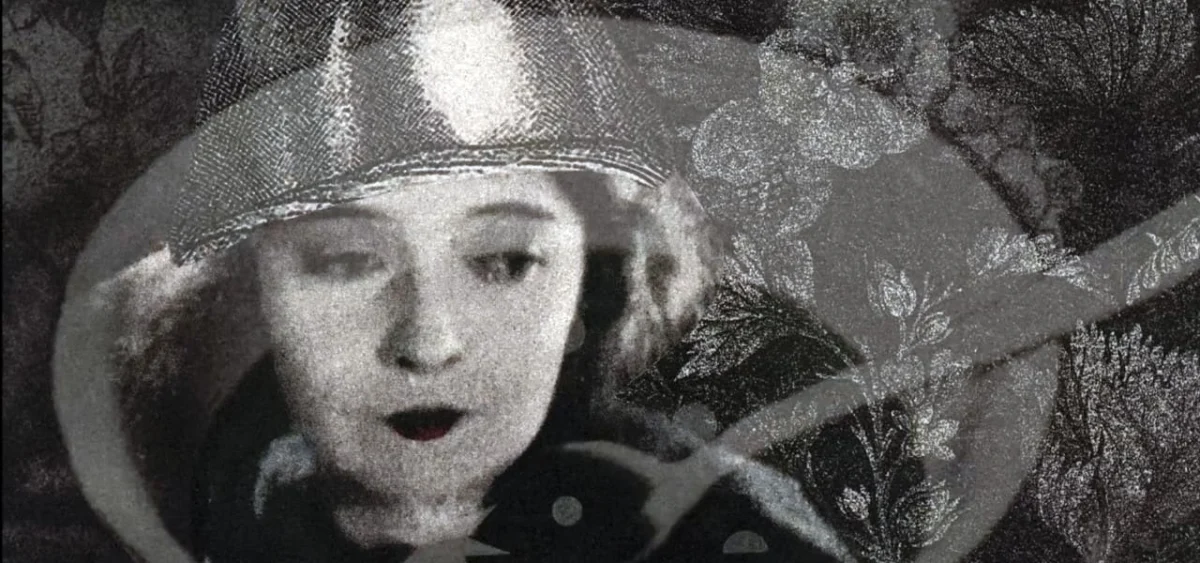
Niles Atallah’s Merrimundi (Chile) unfolds in a strange, futuristic landscape where singing cherubs undergo a cycle of melting, reformation, and renewed song, trapped in an endless loop of creation, decay, and rebirth. In this short film, narrative takes a backseat to raw sensation. The film drifts through a series of hallucinatory tableaux populated by angels, flowers, statues, puppets, and synthesized voices. Languages overlap and dissolve into one another, songs transform into chants, and images emerge from darkness only to mutate into something entirely new. At times, Merrimundi evokes the feeling of a forgotten religious pageant; at others, it resembles a computer dreaming with the contents of a vast museum.
Atallah has long been drawn to the uncanny, but Merrimundi may be his most unrestrained work to date. The film embraces chaos over coherence, layering stop-motion, live-action footage, digital effects, and performance into a dense, audiovisual collage. The result calls to mind the handmade surrealism of Jan Švankmajer and the Quay Brothers, while remaining distinctly and unmistakably Atallah’s own creation. Beneath the surface of this delirium lies a quiet anxiety about the future. Much of the film is framed as a message from a sentient machine attempting to communicate through the fragmented ruins of human culture. The machine’s vision of paradise is beautiful, absurd, and subtly unsettling. Merrimundi is a testament to pure imaginative excess, functioning as an equal measure of musical, fever dream, and end-of-the-world prophecy.
Winter in March: A Tender Portrait of Exile and Identity
Natalia Mirzoyan’s Winter in March (Armenia, Belgium, Estonia, France), a recent winner of the Grand Prix for Best Short at Animafest Zagreb, offers a quietly devastating portrait of exile, guilt, and displacement. Drawing inspiration from the experiences of Russians who fled their country in the wake of the invasion of Ukraine, the film transforms a contemporary political reality into something dreamlike, intimate, and profoundly human.

A young couple makes the difficult decision to leave St. Petersburg behind, embarking on a journey to Georgia in hopes of escaping a state they no longer recognize as their own. Roads stretch endlessly through snow-covered landscapes, border crossings become surreal and disorienting obstacles, and their homeland recedes into the distance, both physically and emotionally. Mirzoyan narrates this poignant story through the use of handmade puppets and fabric textures, imbuing every frame with a hauntingly fragile quality. The characters appear as if stitched together from the very material of their memories, bearing the indelible marks of a world that no longer feels stable.
Winter in March eschews reducing the complex issue of migration to mere politics. The film is equally concerned with matters of conscience, identity, and the profound loneliness that accompanies the realization that the place one loves and the actions of its governing state can no longer be reconciled. The result is a remarkably compassionate film about individuals caught between countries, between uncertain futures, and between the versions of themselves they once were and the people they are becoming.