Acclaimed Author Angela Liu Unpacks "Magical Girl Eater": A Grim Reflection on Nostalgia, Capitalism, and Identity
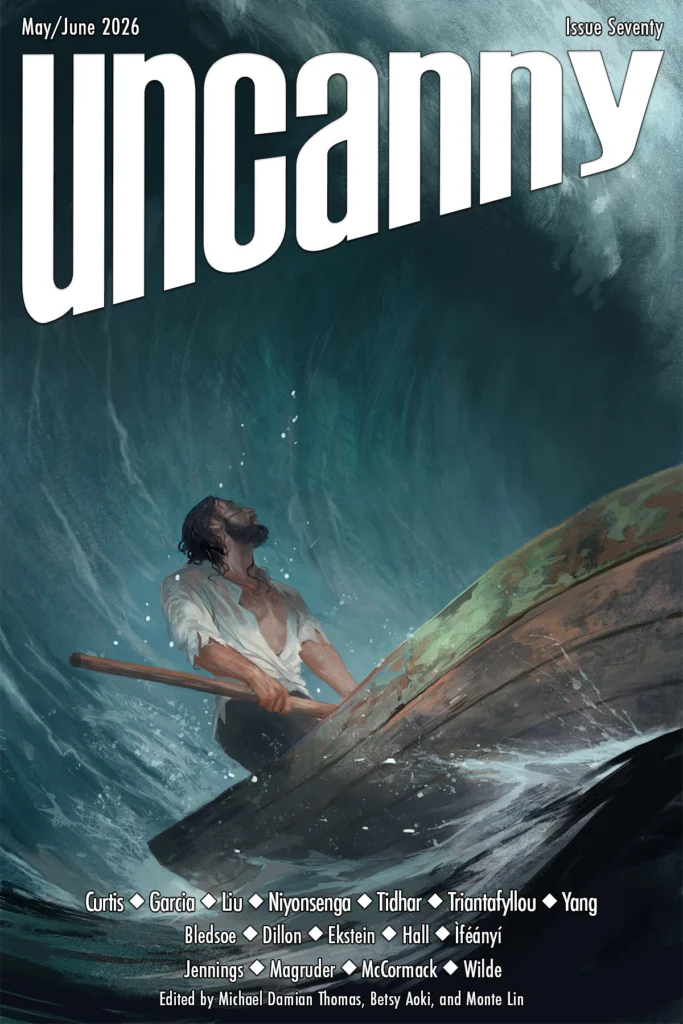
NEW YORK, NY & TOKYO, JAPAN – In the ever-evolving landscape of speculative fiction, Angela Liu stands out as a distinctive voice, celebrated for her nuanced explorations of complex themes. A Chinese-American writer and poet based between the vibrant metropolises of New York City and Tokyo, Liu has garnered significant critical acclaim, including multiple Nebula Award nominations, a 2025 Astounding Award finalist nod, and nominations for prestigious honors such as the Hugo, Locus, Ignyte, and Rhysling Awards. Her latest offering, "Magical Girl Eater," published in the esteemed Uncanny Magazine, is a compelling and unsettling narrative that peels back the layers of beloved childhood nostalgia to expose the sharp teeth of corporate greed and commercial exploitation.
The story, Liu’s sixth contribution to Uncanny Magazine, is described as a "grim take on the intersection of corporate interests and nostalgic fandom." It’s a fast-paced examination of the intoxicating allure and crushing pressures of fame, set against a backdrop where the innocent magic of youth is systematically commoditized. Through "Magical Girl Eater," Liu masterfully challenges readers to reconsider the true cost of preserving their cherished memories in a world driven by market forces.
Main Facts: Unveiling "Magical Girl Eater"
The Premise: When Childhood Dreams Meet Corporate Reality
"Magical Girl Eater" plunges readers into a world where the idealized figures of magical girl anime, once symbols of hope and justice, are now entangled in a web of corporate interests. The narrative explores the price of public adoration and the relentless demands of the spotlight, questioning what happens when the pure essence of a cultural phenomenon is filtered through the cynical lens of capitalism. Liu’s story serves as a stark reminder that even the most cherished icons are not immune to commodification, and that the line between celebrating and exploiting fandom can be disturbably thin. It forces a confrontation with the uncomfortable truth that beloved franchises, born from creativity and imagination, often evolve into lucrative brands, with their original spirit potentially sacrificed for profit.
Author’s Background and Critical Acclaim
Angela Liu’s prolific career is marked by a unique blend of academic rigor and imaginative storytelling. Her academic pursuits at Keio University in Japan, where she researched mixed reality with a particular focus on new narrative platforms, underscore her forward-thinking approach to storytelling. This background provides a fascinating lens through which she dissects contemporary cultural phenomena, often blending technological insights with deeply human narratives.
Her literary work frequently delves into themes of intergenerational trauma, a reflection of her bicultural identity and keen observation of human experience. Alongside these profound explorations, Liu also embraces the "weird things" – elements of the fantastical, the uncanny, and the monstrous that populate the speculative fiction genre. Her stories and poems have found homes in leading publications such as Clarkesworld, Strange Horizons, and Lightspeed, cementing her reputation as a significant voice in contemporary science fiction and fantasy. Her consistent recognition by major award committees is a testament to the quality and impact of her writing, positioning her as a writer whose work is both critically acclaimed and deeply resonant with readers.
Chronology of Inspiration: From Childhood Longing to Critical Commentary
The Genesis of an Idea: Sailor Moon and the Commodification of Memory
The conceptual seed for "Magical Girl Eater" was planted long ago, stemming from Liu’s personal observations of the resurgence of Sailor Moon merchandise. She recalls the distinct feeling of nostalgia that washed over her as she encountered everything from high-end luxury bags and meticulously crafted makeup cases shaped like the iconic transformation compacts to premium repackagings of toys from her own childhood. This wave of commercialized nostalgia triggered an internal conflict: the rational understanding that these items were exorbitantly priced compared to their original counterparts clashed with a deep-seated, almost primal childhood desire. "Growing up, who didn’t want to be one of the sailor scouts, with their own planet name?" Liu muses, articulating a sentiment shared by countless fans who once dreamt of wielding crescent wands and transformation pens. Now, as a working adult, the ability to afford these previously unattainable items presented a peculiar dilemma, highlighting the emotional and material pull of nostalgic consumption.
It was this profound realization – the commoditization of a cherished past – that solidified her desire to write a story dissecting the phenomenon. Liu set out to re-examine classic magical girl tropes through the unflinching gaze of capitalism. She meticulously pondered the transformation of traditional narrative roles: "Who would be the ‘villain mastermind’?" she questioned, implying a corporate entity rather than a supernatural foe. "What kind of costumes and weapons would they have?" – suggesting branded attire and market-driven gadgets. Even the core concepts of "fans" and "justice" would be irrevocably altered once money became the central driving force, warping their original innocent meanings.
Beyond the Happy Ending: The Unseen Aftermath of Fandom
Liu’s background as a childhood reader of fanfiction significantly influenced her approach to "Magical Girl Eater." Fanfiction, by its very nature, explores the narrative spaces beyond official endings, imagining continuations, alternative universes, and character developments that the original creators might not have considered. This ingrained curiosity led Liu to ponder the profound question: "what happens after the original story ends?" In real life, she observes, there is no such thing as a definitive "happy ending" because life, with all its complexities, simply continues.
Applying this philosophical lens to the magical girl genre, Liu envisioned a scenario where Sailor Moon and her companions existed in our contemporary world. How would these beloved characters, paragons of virtue and friendship, navigate the relentless pressures of global popularity, extensive merchandising campaigns, and corporate partnerships? How would the public, conditioned by consumer culture, perceive them then? Would their heroism be overshadowed by their marketability? Liu admits her own surprise at how swiftly and effortlessly the narrative veered into darker territory once the pragmatic, often ruthless, interests of corporate stakeholders were introduced into what was once the most innocent of scenarios. The interview reveals her conviction that even the purest ideals can be corrupted when financial gain becomes paramount, a central tenet explored in "Magical Girl Eater."
Supporting Data: The Stark Realities of Nostalgia Marketing
Researching the Remake Phenomenon: Whitewashing and Replaceability
In crafting "Magical Girl Eater," Angela Liu undertook extensive research, meticulously examining new products, collaborations, and remakes of beloved series from the 1990s and early 2000s. Her analytical approach involved a personal assessment: identifying which remakes or products resonated positively with her own nostalgic sentiments and which ones, conversely, left a "bad taste" in her mouth. This personal filtering process allowed her to pinpoint the precise mechanisms through which nostalgia is either genuinely celebrated or cynically exploited.
A significant trend she observed over the past decade was the proliferation of "live-action" adaptations of popular cartoons and anime. While some offered fresh interpretations, many were marred by the pervasive issue of whitewashing – casting white actors in roles originally portrayed by characters of color or characters from specific cultural backgrounds. Liu cites the live-action adaptations of Death Note and Ghost in the Shell as particularly "egregious examples" of this problematic practice. This phenomenon sparked a critical inquiry into the concepts of "replaceability" within franchises: what constitutes the "vital" versus "nonvital" components of an original work? She noted how superheroes are routinely recast and rebooted, often suggesting that the "person inside the costume matters less than the costume itself." This observation led to the profound conclusion that the idea of replaceability – the ease with which characters, actors, or even core elements can be swapped out "to inject some new life into a franchise" – ultimately became the "emotional backbone" of "Magical Girl Eater." It underscores a chilling implication: in the pursuit of sustained market relevance, the authenticity and integrity of the original vision can become expendable.
The Luxury of Fandom: High-End Merchandise and Capitalist Cosplay
Merchandising has always been an intrinsic part of magical girl series, but Liu was genuinely surprised by the astronomical prices some of these new items commanded and, crucially, by their target demographic. Far from being aimed at children, these luxury goods were explicitly marketed towards older generations – adults who now possessed the disposable income to fulfill childhood desires. The examples she cites are striking: Sailor Moon x Jimmy Choo shoes, a Luna-P bag (replicating the iconic talking cat from Sailor Moon) priced at over $10,000, lavish Sailor Moon-themed bedroom furniture sets exceeding $3,000, and even brand-name wedding rings. This premium market caters directly to the adult fan’s emotional investment, transforming cherished symbols into high-status consumer goods.
Furthermore, Liu observed the burgeoning trend of "casual cosplay" and its capitalist underpinnings. Once a dedicated hobby requiring hours, if not months, of intricate costume crafting, cosplay has become increasingly accessible through mass production. Now, anyone can purchase a ready-made costume of their favorite character online and receive it within days. This convenience has paved the way for collaborations between beloved franchises and real fashion brands, enabling fans to purchase "cosplay-inspired clothing" – a phenomenon where individuals are willing to "drop $200 for a ‘uniform’ jacket." This commercialization of an expressive fan activity inspired a pivotal line in her story: "anyone can be a magical girl!" While seemingly empowering, the phrase, in the context of "Magical Girl Eater," takes on a darker, more cynical meaning, suggesting that the path to becoming a "magical girl" is now paved with consumerism rather than inherent virtue or destiny.
Official Responses and Personal Reflections: Liu’s Artistic Voice
Recurring Threads: Memory, Transformation, and the Comfort of Food
Angela Liu’s literary tapestry is woven with several recurring threads that define her unique artistic voice. Among these, memory stands out as arguably the most pervasive theme. She views memories as both precious personal possessions, accessible regardless of wealth, and powerful conduits that connect individuals. Yet, she also recognizes their darker potential: "something people use to manipulate each other (or even themselves)." The chilling prospect of altering someone’s memories, thereby fundamentally changing their identity, is an idea that both "fascinates and terrifies" her, forming a psychological bedrock for many of her narratives.
Transformation is another central motif in Liu’s work, particularly her fascination with monsters. She explores the myriad ways individuals can "become one (or save one!)," often employing a distinctive narrative format. Rather than beginning with a human character’s gradual descent, Liu frequently starts "with the monster and working your way backward to understand how they got there." This approach is evident in early works like "Ppaka," which features a protagonist who believes he is a frog, and "Another Girl Under the Iron Bell," where a demon’s past as a human is slowly unveiled. This inversion allows for a deeper exploration of identity, empathy, and the circumstances that shape monstrousness.
Finally, food consistently appears in all of Liu’s stories, serving multiple purposes. Beyond its role in world-building and character development, food acts as a personal narrative anchor. She reveals that when she encounters writer’s block, she instinctively turns to writing a food scene to "work through it." This practice stems from a deeply personal, cultural association: "That’s how we solve problems in my family—talking about it over food." This detail offers a warm, intimate glimpse into her creative process and cultural heritage, grounding her often-fantastical narratives in relatable human experience.
The Ultimate Hair: A Magical Girl Name Rooted in Identity
When playfully prompted by Uncanny Magazine to choose her own "corny Magical Girl name," Angela Liu offered a choice imbued with personal history and cultural significance: "Angela the Ultimate Hair." This seemingly whimsical name carries a deeper resonance, stemming from her childhood nickname "Maomao," which literally translates to "hair-hair" in Chinese (毛毛). It’s a common term of endearment for babies in Chinese culture, a linguistic detail that highlights her bicultural upbringing.
Liu candidly shares the initial awkwardness she felt introducing herself as "Maomao" to relatives or coworkers in China, often eliciting sympathetic or amused reactions. "Oh my god, how could they do that?" people would exclaim, bewildered by her parents’ choice not to give her an "official" Chinese name, much like their own names had been "Americanized" upon immigration to the US. However, with maturity, Liu has come to understand this unconventional name as a "kind of gift." She realized that "almost always, everyone would relax after I introduced myself," suggesting that the unusual, almost endearing quality of "Maomao" served to disarm and connect, fostering an immediate sense of warmth and familiarity. Her chosen magical girl name, therefore, is not merely a playful fantasy but a reclaiming of a unique aspect of her identity, transforming a source of past awkwardness into a symbol of ultimate power and connection.
The Art of Brevity: A Champion of Flash Fiction
As a prolific author of short stories, Angela Liu expresses a profound appreciation for flash fiction, a form she cherishes for its distinct advantages. She describes it as "a great form for experimenting, a real sandbox for playing with ideas, language, and format where every line matters." This emphasis on precision and economy of language aligns with her own meticulous approach to storytelling, where every word is carefully chosen to maximize impact.
Beyond its artistic merits, flash fiction holds practical value for Liu, particularly in her role as a mother and caretaker. With often "small pockets of time for reading rather than long stretches," flash fiction provides the perfect literary escape. Its concise nature allows for complete immersion and satisfaction within limited timeframes, making it an ideal companion for busy individuals. She generously shares a list of her favorites, showcasing a diverse range of voices and styles within the genre:
- "We Never Went Away, We Just Hid Better" by Sam Rebelein
- "Piano Lesson" by Richard Siken (a prose poem she reads like flash)
- "Five Views of the Planet Tartarus" by Rachael K. Jones
- "Quantum Eurydice" by Avi Burton
- "Snare" by Seán Padraic Birnie
- "First Girls" by Jessica Luke Garcia
- "Within The Dead Whale" by Spencer Nitkey
- "Things My Father Says About Tennis" by Binh Do
- "Unsolved Mysteries" by Chris Scott
Liu also actively seeks out flash fiction in dedicated sections of leading speculative fiction magazines such as Lightspeed, Nightmare, and Uncanny, and in specialized flash-dedicated journals like Small Wonders and hex. Her advocacy for the form underscores its growing importance and versatility in contemporary literature.
Implications and Future Horizons: A Novel on the Horizon
The Broader Message of "Magical Girl Eater"
"Magical Girl Eater" transcends its genre trappings to deliver a potent commentary on contemporary consumer culture and the integrity of beloved narratives. By dissecting the commoditization of nostalgia through the lens of magical girl tropes, Liu offers a critical examination of how market forces can distort and even corrupt the essence of what we hold dear. The story serves as a cautionary tale, prompting readers to question the true value of their emotional investments in commercialized fandoms and to reflect on the societal implications of allowing corporate interests to dictate cultural memory. Its relevance extends beyond genre fans, speaking to anyone who has witnessed the commercial exploitation of a cherished past.
Angela Liu’s Next Chapter: A Debut Novel
Looking ahead, Angela Liu is embarking on a significant new chapter in her literary career. She proudly announced her participation in the prestigious Clarion West Novel Writing cohort this year, an intensive workshop renowned for nurturing genre fiction talent. This commitment signals a dedicated focus over the coming months towards the ambitious undertaking of completing her first novel. The transition from her highly acclaimed short stories to a longer form promises to expand her thematic explorations and narrative scope, offering readers a more expansive journey into her unique literary universe. This move is a testament to her continuous artistic growth and her dedication to pushing the boundaries of speculative fiction.
Conclusion: A Voice Reshaping Speculative Fiction
Angela Liu stands as a formidable and insightful voice in modern speculative fiction. Her work, exemplified by "Magical Girl Eater," consistently demonstrates an exceptional ability to blend deeply personal insights with sharp cultural commentary and imaginative storytelling. From her meticulous exploration of memory and transformation to her keen observations on the commercialization of nostalgia, Liu’s narratives are both intellectually stimulating and emotionally resonant. Her upcoming novel marks a pivotal moment, promising to further solidify her position as an author who not only entertains but also challenges, provokes, and ultimately enriches the literary landscape. With her unique background and unwavering commitment to exploring the "weird things" that reflect the human condition, Angela Liu continues to reshape and redefine what speculative fiction can achieve.
© 2026 Uncanny Magazine