The Black Codes: A Post-Civil War Attempt to Re-Enslave Freedmen and Undermine Emancipation
A Legacy of Control and Subjugation
In the tumultuous aftermath of the American Civil War, as the United States grappled with the monumental task of Reconstruction, a sinister new legal framework emerged in the former Confederate states: the Black Codes. Enacted between 1865 and 1866, these racist and discriminatory policies were a direct attempt to circumvent the Thirteenth Amendment, which abolished slavery, and to re-establish a system of racial control and forced labor over newly emancipated African Americans. Far from merely restricting freedoms, the Black Codes sought to deny Black people equal political rights, limit their economic autonomy, and effectively return them to a state of quasi-slavery, thereby maintaining the deeply ingrained racial hierarchy and the plantation-based economy of the South.
Rooted in centuries-old vagrancy laws and the brutal slave codes that had defined antebellum chattel slavery, the Black Codes were a defiant assertion of white supremacy. They manifested as a complex web of legal restrictions designed to bind Black laborers to their former masters, restrict their movement, deny them access to land and skilled trades, and criminalize their very existence outside the strictures of white control. The audacity and severity of these codes ignited widespread outrage among Northerners and the ascendant Radical Republicans in Congress. This indignation proved to be a critical catalyst, triggering the "Radical" phase of Reconstruction and leading to landmark legislative achievements such as the Civil Rights Act of 1866, the Fourteenth Amendment, and the subsequent Reconstruction Acts. However, the legacy of the Black Codes did not vanish with the formal end of Reconstruction; instead, their principles morphed and endured, laying the groundwork for the institutionalized segregation and disenfranchisement that would characterize the Jim Crow era for nearly a century.
Historical Precedents: Forging the Chains of Control
The genesis of the Black Codes lies deep within a historical tapestry woven with threads of racism, classism, and the pervasive ideology of white supremacy. Understanding their origins requires examining two distinct, yet ultimately intertwined, legal traditions: vagrancy laws and slave codes.
The Evolution of Vagrancy Laws
Vagrancy laws, the distant ancestors of the Black Codes, trace their origins back to late medieval England. Following the devastating Black Death in the 14th century, which decimated the European labor force, these statutes were initially conceived to stabilize a volatile economy by compelling able-bodied peasants and serfs to work and to prevent them from seeking better wages or conditions elsewhere. By classifying impoverished individuals who begged, scavenged, or "wandered without visible means of support" as ‘vagrants,’ authorities were granted broad powers to arrest and compel them into labor. These laws served as a potent tool for manorial lords, ensuring a captive labor pool and restricting social mobility.
Over centuries, these laws evolved, becoming increasingly weaponized not just against the poor, but also against those deemed "undesirable" classes, including the homeless, the unemployed, and marginalized groups. In the American colonies and later the United States, vagrancy statutes provided a convenient legal mechanism for social control, often targeting specific racial or ethnic minorities. This long history demonstrated the inherent adaptability of vagrancy laws as instruments for maintaining a cheap, exploitable labor force and enforcing societal hierarchies.
The Brutality of Slave Codes
Concurrently, the American South developed its own distinct and far more brutal legal framework: the slave codes of colonial and Antebellum America. These laws were meticulously crafted to codify and perpetuate the racial hierarchy and white supremacy essential for the existence of chattel slavery. They defined enslaved people not as human beings with inherent rights, but as the legal property of their masters, subject to absolute control. A child born to an enslaved mother, regardless of the father’s status, was also automatically enslaved, ensuring the perpetuation of the system across generations.
While specific regulations varied from state to state, slave codes universally denied enslaved individuals fundamental legal and civil rights. They forbade education, restricted movement, prohibited assembly, and prevented enslaved people from testifying against white individuals in court. Masters were legally empowered to inflict severe physical punishments—whipping, branding, or imprisonment—with little to no legal repercussions. The agrarian, plantation-based economy of the South, particularly for cash crops like cotton, relied almost entirely on this forced labor system. The devastating loss of the American Civil War, however, and the subsequent abolition of slavery through the Emancipation Proclamation and the Thirteenth Amendment, stripped the South of its core workforce. It was this profound labor shortage—combined with the enduring legacy of slavery, the deep-seated ideology of white supremacy, and a desire to avenge the defeat of the Confederacy—that led Southern legislatures to cynically merge the coercive principles of vagrancy laws and the dehumanizing tenets of slave codes to forge the Black Codes.
Reconstruction’s Crossroads: Freedom’s Fragile Dawn
By the autumn of 1865, the guns of the Civil War had fallen silent. The Emancipation Proclamation had already declared millions free in the rebellious states, and the Thirteenth Amendment, passed by Congress and awaiting official ratification, promised to extinguish slavery entirely across the nation. Yet, as the fractured United States hurtled into the uncharted territory of Reconstruction, a profound and difficult question loomed: what fate awaited the millions of newly freed African Americans scattered across the South? Would they be granted full citizenship, and if so, would that citizenship be truly equal?
The Unanswered Question of Citizenship
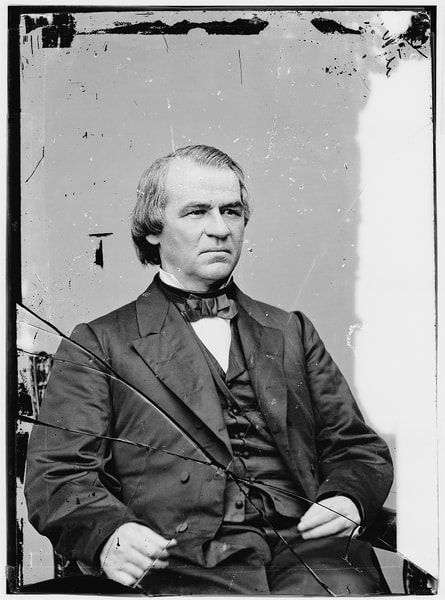
President Abraham Lincoln, in his final public address delivered just days after the Confederate surrender at Appomattox, had cautiously voiced support for extending suffrage to freedmen, particularly those who had served with valor in the Union armies. His vision, however incremental, offered a glimmer of hope for a more inclusive future. But Lincoln was tragically assassinated, and his successor, Andrew Johnson, inherited the "herculean task" of reuniting the nation, a burden he proved ill-equipped to bear.
President Johnson’s Lenient Approach
When Johnson assumed the presidency in April 1865, many abolitionists and freedpeople initially harbored hopes that he would vigorously enforce Reconstruction and uphold the ideals of his martyred predecessor. Johnson had, after all, once declared, "Treason must be made odious, and traitors must be punished and impoverished" (quoted in White, 35). This strong rhetoric, however, belied a deeply ingrained racism and a political agenda more focused on a swift reunification than on securing civil rights for African Americans or punishing former Confederates.
Despite maintaining a federal military presence in the former Confederate states, Johnson was remarkably lenient towards ex-Confederates, requiring little more than an oath of loyalty to the Union for their amnesty. He consistently undermined the Freedmen’s Bureau—a federal agency established to provide aid, education, and legal assistance to the newly emancipated—and vetoed a crucial policy of land distribution that would have provided freedpeople with "40 acres and a mule," a measure vital for their economic independence.
The former Confederate states keenly observed Johnson’s actions, interpreting his leniency as a tacit invitation to test the boundaries of federal Reconstruction policy. In August 1865, Governor William Sharkey of Mississippi audacious created a state militia composed exclusively of ex-Confederates. This provoked outrage among Unionists, but Johnson, demonstrating his consistent alignment with Southern white interests, sided with Mississippi, rationalizing that "the people must be trusted" (quoted in White, 53). That same month, Johnson further alienated freedpeople by ordering the removal of all Black regiments from the South, claiming their presence was "humiliating" to white Southerners and an "obstacle to peaceful Reconstruction." Thousands of Black soldiers, who had fought valiantly for their freedom, were subsequently mustered out of the army. Given Johnson’s consistent deference to the defeated rebel states, it was hardly surprising that Mississippi felt emboldened enough to enact the first Black Code in late 1865, setting a dangerous precedent for others to follow.
The Codes Unveiled: Systemic Re-Subjugation
The Black Codes were a brazen attempt to reconstruct the antebellum plantation economy by effectively re-enslaving freedpeople and appropriating their labor. These laws, though varying in specific details from state to state, shared common objectives: to control Black labor, restrict Black mobility, and deny Black people their fundamental civil and human rights.
Labor Control and Economic Disenfranchisement
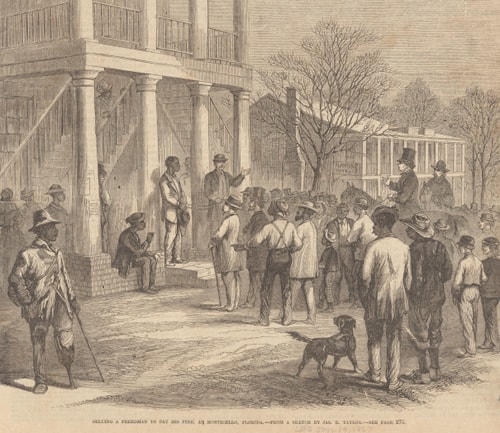
Mississippi’s infamous law, ironically titled "An Act to Confer Civil Rights on Freedmen," was anything but. It stipulated that Black people could only rent land within city limits, a measure designed to prevent them from becoming independent farmers and to force them back onto white-owned plantations. Furthermore, it mandated that all Black individuals provide annual proof of employment each January. Those who failed to do so would be deemed "vagrants," facing not only the forfeiture of all wages earned that year but also immediate imprisonment. This system created a pervasive cycle of debt and forced labor, reminiscent of peonage.
South Carolina quickly followed suit in November 1865 with its own law, "Domestic Relations of Persons of Color." This statute built upon Mississippi’s restrictions by imposing an annual tax of $10 to $100 on Black people working in jobs other than farmers or domestic servants. This disproportionately affected skilled Black artisans and laborers in cities like Charleston, forcing them into financial precarity and often back into agricultural labor.
By 1866, most of the other former slave states—including Maryland, North Carolina, Florida, Alabama, Texas, Louisiana, Kentucky, and Tennessee—had enacted their own versions of the Black Codes. Many incorporated variations of the "vagrancy" laws, specifically designed to limit Black freedom of movement and compel them into labor contracts. These laws often limited Black workers exclusively to agricultural and domestic jobs, defining work hours as "sunrise to sunset." White employers were granted explicit legal authority to physically punish their Black laborers; in Florida, for example, they could even whip Black workers for "impudence and disrespect" (quoted in White, 54). The language used in many of these codes was chillingly evocative of the past, frequently referring to white employers as the "masters" of their Black laborers, leaving no doubt as to the true intent behind the legislation.
Social Control and Legal Stripping of Rights
Beyond labor control, the Black Codes also sought to re-establish a comprehensive system of social control and racial hierarchy. Mississippi’s law, for instance, explicitly forbade interracial marriage between Black and white individuals, declaring that "any person who shall so intermarry, shall be deemed guilty of a felony" and would be "confined in the State penitentiary for life" (quoted in constitutioncenter.org). This provision underscored the determination to maintain racial purity and prevent social equality.
Perhaps one of the most insidious aspects of the Black Codes was their weaponization of traditional apprenticeship laws. Historically, apprenticeship served to provide children with vocational training under a "master" in a craft. Under the Black Codes, however, state legislatures twisted these laws into a pretext to forcibly remove Black children from their parents and bind them to white employers, often their former enslavers, as "apprentices" in agricultural fields. The codes disingenuously claimed that, with the exception of a few "industrious" and "honest" examples, freedpeople were "incapable of raising their own children." Thousands of Black children were ripped from their families, effectively becoming a new generation of forced laborers.
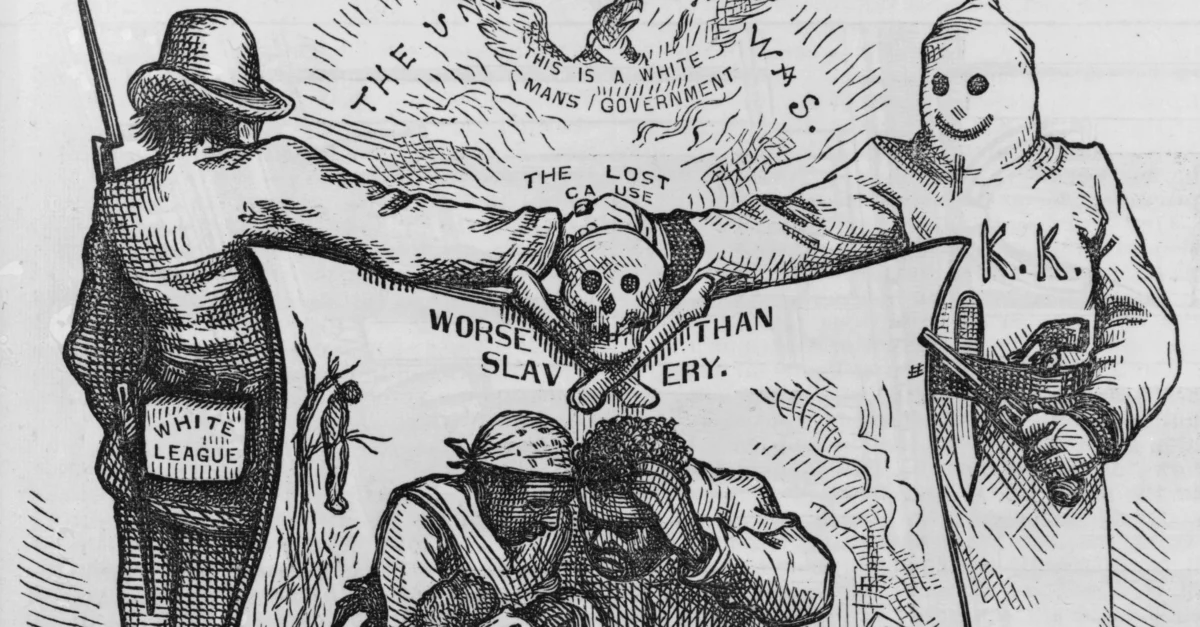
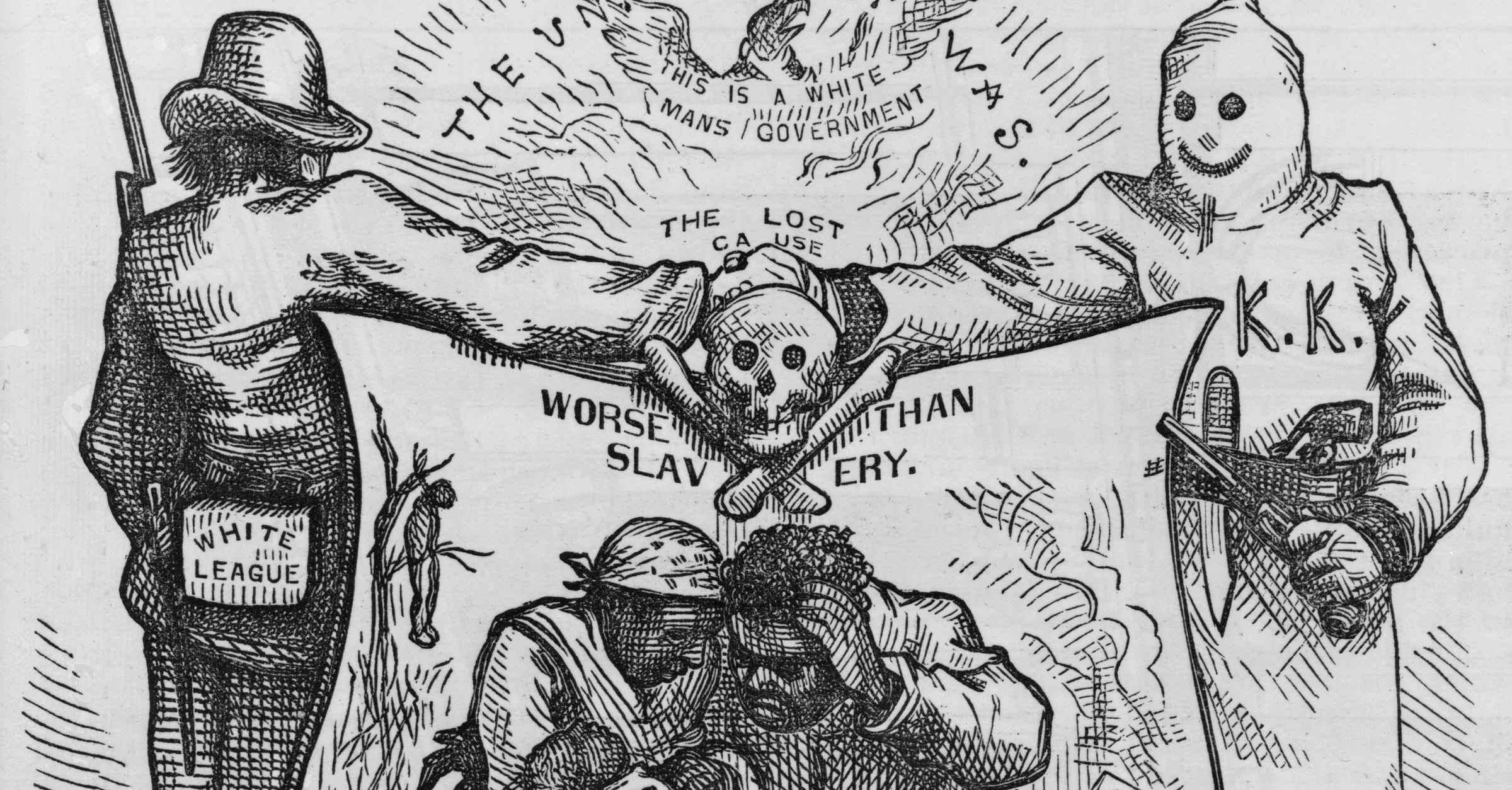
In essence, the Black Codes established legalized segregation across the South, denying Black people the right to own firearms, serve on juries, testify in cases involving white people, or assemble freely. As U.S. Supreme Court Justice Samuel Miller presciently observed, these laws "basically led to slavery under a different name." The implementation of the Black Codes in 1865-1866 was also tragically accompanied by a marked surge in violence against freedpeople, manifesting in widespread beatings, whippings, rapes, and murders, signaling a brutal effort to enforce the new-old racial order.
Northern Outrage and the Rise of Radical Reconstruction
The revelation of the Black Codes sparked a firestorm of outrage among Republicans and Northerners who had sacrificed so much to win the Civil War and abolish slavery. It became glaringly apparent that the ex-Confederate states were making a cynical and defiant attempt to resurrect the very specter of slavery under a new guise.
The Nation Reacts to Neo-Slavery
Abolitionists and Unionists across the North condemned the codes as an affront to liberty and justice. One abolitionist, bewildered by the South’s audacity, wondered how Southern lawmakers could possibly believe that "the triumphant North… would tolerate this new slave code" (quoted in Foner, 209). Southern leaders, however, defiantly protested that they were not undermining Reconstruction. Instead, they claimed that freedmen would never work voluntarily and therefore required coercion. A newspaper sympathetic to the Southern cause openly stated that lawmakers were simply doing "what was best for the State and for society; ever remembering that it was a white man’s State [they were] legislating for" (ibid.), unequivocally revealing the racial motivations behind the codes.
The implementation of the Black Codes intensified political tensions throughout the nation, especially as the country geared up for the critical 1866 midterm elections. The outcome of these elections would decisively determine the future course of Reconstruction, specifically whether the Radical Republicans could consolidate their control of Congress and challenge President Johnson’s lenient policies.
Escalating Violence and Political Backlash
As President Johnson embarked on his infamous "swing around the circle" national tour, railing against his "radical" opponents, two major incidents of racial violence erupted in the South, further fueling Northern outrage and strengthening the resolve of the Radical Republicans.
The first was the Memphis Riots of May 1-3, 1866. This massacre began as an altercation between white police officers and Black veterans, recently discharged from federal service, who were celebrating their freedom. The confrontation quickly escalated into a full-blown riot as white officers, bolstered by mobs of Irish immigrants, stormed through Black neighborhoods. Homes and schools were burned, and freedpeople were brutally assaulted. By the time federal troops finally arrived to restore order, a horrifying toll had been exacted: 46 Black people had been killed, and 75 injured, leaving a trail of destruction and terror.
Just two months later, on July 30, 1866, the New Orleans Massacre unfolded. A peaceful demonstration by freedpeople, primarily consisting of Black veterans and Unionists advocating for suffrage rights, was attacked by a white mob, many of whom were ex-Confederate soldiers and city officials. The mob, unchecked by local authorities, unleashed a wave of violence. At least 34 Black people were killed, and 119 wounded in the brutal assault.
These horrific incidents, occurring in rapid succession and directly linked to the climate fostered by the Black Codes, served as irrefutable evidence to Congress. They demonstrated beyond doubt that without decisive federal intervention, the South was determined to revert to its antebellum social and economic order, effectively nullifying the Union’s victory and the abolition of slavery.
Legislative Counter-Offensive and Lingering Shadows
The escalating violence and the defiant implementation of the Black Codes by Southern states left Congress with little choice but to act decisively. The Thirteenth Amendment, while abolishing slavery, had not guaranteed the civil rights of the freedpeople. The Radical Republican-led Congress, galvanized by public opinion and the sheer audacity of the Southern states, resolved to go further.
Federal Intervention and Constitutional Amendments
On April 9, 1866, Congress passed the Civil Rights Act of 1866. This landmark legislation was a direct response to the Black Codes, defining all persons born in the United States (excluding Native Americans) as citizens and guaranteeing them equal protection under the law, including the rights to make and enforce contracts, sue, be sued, give evidence in court, and own property. Critically, it invalidated many of the discriminatory provisions of the Black Codes. However, President Johnson, consistent with his stance, vetoed the bill, only to have Congress override his veto, marking a significant assertion of congressional power.
A few months later, to enshrine these protections permanently and beyond the reach of presidential vetoes or future legislative changes, Congress proposed the Fourteenth Amendment. Ratified in 1868, this amendment broadly defined national citizenship ("All persons born or naturalized in the United States…are citizens") and prohibited states from abridging the "privileges or immunities" of citizens, denying "due process of law," or denying "equal protection of the laws." It effectively provided a constitutional basis for the Civil Rights Act and directly countered the legal framework of the Black Codes.
Following a sweeping victory in the 1866 midterm elections, which solidified their control, the Radical Republicans doubled down on their efforts. They passed the Reconstruction Acts of 1867, which fundamentally restructured Reconstruction. These acts divided the former Confederate states (with the exception of Tennessee, which had ratified the Fourteenth Amendment) into five military districts, placing them under martial law. They disenfranchised many former Confederates and mandated that states draft new constitutions guaranteeing voting rights for Black men before they could be readmitted to the Union. Thus, the Black Codes, ironically, had spurred the most progressive and impactful era of Reconstruction, forcing the federal government to take unprecedented steps to protect civil rights.
The Enduring Legacy of Control
Despite these legislative triumphs and a brief period of significant progress for African Americans during Radical Reconstruction, the enthusiasm for federal intervention eventually waned. By 1877, through a series of political compromises and a resurgence of white Southern power, Reconstruction was effectively brought to an end. Federal troops were withdrawn, and Southern states regained control over their internal affairs.
The principles and practices of the Black Codes, though formally challenged and partially overturned, did not disappear. Instead, they provided a grim blueprint for the subsequent era of Jim Crow laws. Building on the foundations laid by the Black Codes, Jim Crow laws systematically institutionalized racial segregation in all aspects of public life—from schools and transportation to hospitals and housing. They also implemented elaborate schemes to disenfranchise Black voters through poll taxes, literacy tests, and grandfather clauses, and enforced a rigid social hierarchy through terror and violence, primarily at the hands of groups like the Ku Klux Klan. This new system of segregation, economic exploitation, and political oppression would endure for nearly a century, until the Civil Rights Movement of the mid-20th century.
The Black Codes represent a pivotal, yet often overlooked, chapter in American history. They stand as a stark reminder of the persistent and adaptable nature of racial discrimination, illustrating how legal frameworks can be manipulated to deny freedom and equality even after monumental social change. Their enduring legacy underscores the long and arduous struggle for civil rights in the United States, a struggle rooted in the deep soil of white supremacy that the Black Codes so brazenly sought to re-entrench.