The P-51 Mustang: A Legend Forged in the Skies of World War II
Main Facts
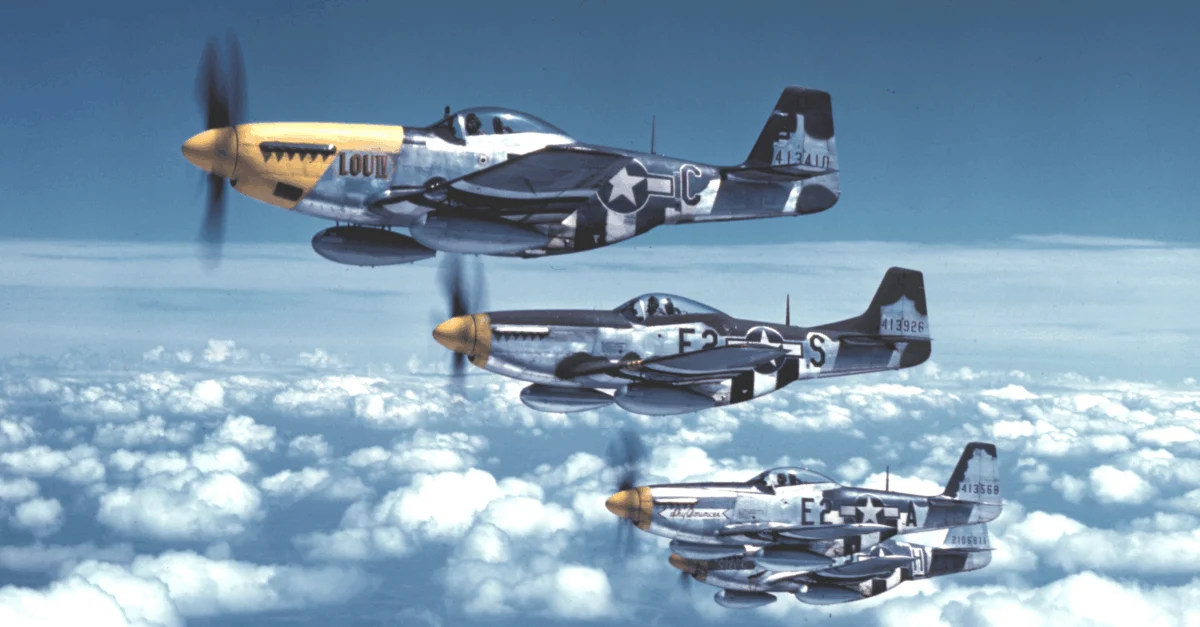
The North American P-51 Mustang stands as one of the most iconic and effective fighter aircraft of the Second World War (1939-45). Initially conceived under urgent British requirements, this single-seater marvel rapidly evolved from a promising but flawed design into a dominant force in aerial combat. Renowned for its exceptional speed, agility, and, crucially, its unprecedented long-range capabilities, the Mustang proved indispensable across virtually all major theatres of the conflict from 1944 onwards. It seamlessly performed a variety of roles, serving as a high-altitude interceptor, a formidable fighter-bomber, a dedicated tactical reconnaissance platform, and, most significantly, as the long-range escort fighter that profoundly shifted the balance of power in the strategic bombing campaigns over Europe and the Pacific. Its legendary status was cemented by its critical role in protecting Allied bombers, enabling devastating daylight raids deep into enemy territory, and securing air superiority. Though primarily a weapon of World War II, the P-51’s robust design and versatility ensured its continued service into the Korean War (1950-53) and beyond, leaving an indelible mark on aviation history.
Chronology: From British Urgency to Aerial Dominance
Genesis: A British Lifeline
The story of the P-51 Mustang begins not in the United States, but in Great Britain, amidst the darkening clouds of early World War II. By April 1940, with Nazi Germany rapidly consolidating its grip on Europe, the British Purchasing Commission urgently sought new fighter aircraft to bolster the Royal Air Force (RAF), which was already engaged in a desperate struggle. Despite British manufacturers being fully committed to domestic production, a critical gap remained. The North American Aviation Company was approached with a request to license-build Curtiss P-40 fighters for the RAF. However, North American’s president, James H. "Dutch" Kindelberger, made a bold counter-proposal: his company could design and build a superior fighter from scratch, and do it faster than it would take to set up P-40 production.
The British, desperate for any advantage, accepted this audacious offer, setting an astonishingly tight deadline of just four months for a prototype. Leading the design effort were Raymond Rice and Edgar Schmued, who meticulously studied contemporary fighter designs, incorporating lessons learned from the ongoing air war. Their team worked at a furious pace, pushing the boundaries of conventional aircraft development. The result was the NA-73X prototype, a sleek, revolutionary aircraft featuring a then-novel laminar-flow wing profile, designed to reduce drag and increase speed.
Initial Promise and a Critical Flaw
The NA-73X prototype, despite a slight delay caused by engine procurement, took to the skies for its maiden flight in October 1940, a mere 120 days after the contract was signed – an astounding achievement. The aircraft was initially powered by an Allison V-1710 engine, capable of generating an impressive 1,100 hp (820 kW). Early testing revealed a fighter with excellent low-altitude performance and superb manoeuvrability, earning praise from test pilots.
However, a significant drawback soon became apparent: the Allison engine, while powerful at lower altitudes, suffered from a critical performance degradation above 12,000 feet (3,660 m). Its single-stage, single-speed supercharger was simply inadequate for the high-altitude combat environments where many crucial air battles were being fought. This limitation severely hampered its effectiveness as a high-altitude interceptor or bomber escort, rendering it less competitive against German fighters like the Messerschmitt Bf 109 and Focke-Wulf Fw 190 at higher echelons. Nevertheless, the urgent demand for fighters meant the first production Mustangs, designated Mustang Mk I by the RAF, were delivered to Britain in November 1941, primarily for tactical reconnaissance and ground attack roles where low-altitude performance was paramount.
American Adoption and Early Evolution
The initial agreement with the British included a stipulation that two of the early production aircraft would be made available to the United States Army Air Forces (USAAF) for evaluation. These two fighters, designated XP-51, underwent minor design modifications, including the addition of self-sealing fuel tanks, a vital safety feature for combat aircraft. Impressed by the Mustang’s fundamental airframe design, the USAAF ordered an additional 150 aircraft. Of these, 93 were subsequently supplied to Britain under the vital Lend-Lease Act, a program that allowed the U.S. to provide military aid to its allies without direct payment. The remaining Mustangs entered service with the USAAF, albeit still limited by the Allison engine’s high-altitude performance.
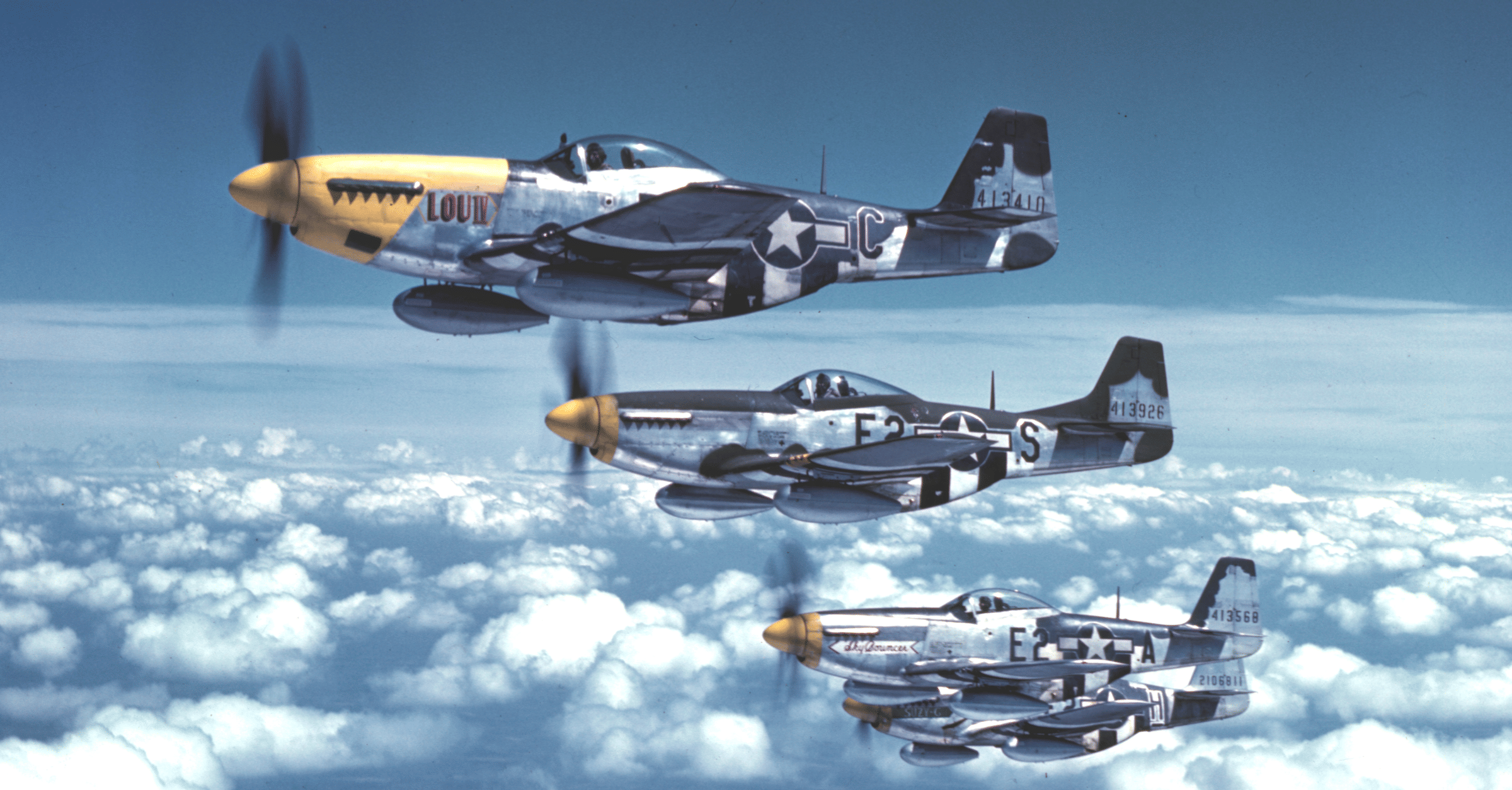
These early Mustangs, despite their engine limitations, showcased the robust and adaptable nature of the NA-73X design. They were built in increasing numbers, laying the groundwork for what would become one of the USAAF’s primary interceptor and escort fighters for the remainder of the war. In total, some 14,800 Mustangs would be produced during the conflict, a testament to its eventual success and the efficiency of North American Aviation’s production lines.
Continuous Improvement: The Quest for Perfection
Throughout its production run, the Mustang underwent continuous refinement and design improvements, reflecting the rapid technological advancements and combat lessons of the war. The airframe was progressively strengthened, and manufacturing techniques were honed, such as smoothing rivets to create a more aerodynamically efficient fuselage. Ailerons were improved for better roll rates, and the gun-loading mechanism was simplified to reduce jamming, a common issue in high-stress aerial combat.
A particularly innovative feature was the Mustang’s laminar-flow wing. Unlike conventional airfoils, which have their thickest point further forward, the laminar-flow wing’s maximum thickness was set further back. This design significantly reduced turbulent airflow and drag, contributing to the Mustang’s exceptional speed.
One persistent ergonomic challenge was the pilot’s rearward visibility, initially hampered by the early side-opening canopy. This issue was eventually resolved by transitioning to a sliding hood. The ultimate solution arrived with the P-51D variant, which featured a distinctive "bubble canopy." This teardrop-shaped plexiglass enclosure provided pilots with an unparalleled 360-degree panoramic view, a crucial advantage in the fast-paced environment of dogfighting. Furthermore, the introduction of new, lighter materials and a rethink of the internal structural layout led to a significant weight reduction in later Mustang models (approximately 40% in some cases), further enhancing their performance. These combined improvements allowed later Mustangs to achieve top speeds of up to 487 mph (784 km/h), making them among the fastest piston-engined fighters of their era.
Supporting Data: Specifications and Armament
Dimensions and Performance Envelope
The typical P-51 Mustang possessed a wingspan of approximately 37 feet (11.2 m) and a length of 32 feet 3 inches (9.83 m). These dimensions, combined with its aerodynamic design, contributed to its impressive performance envelope. The aircraft’s maximum range varied significantly depending on the specific model and the use of external drop tanks, but it generally exceeded 2,000 miles (3,350 km) with auxiliary fuel. This extended range would prove to be one of its most critical attributes. Its maximum operational ceiling was typically around 41,900 feet (12,770 m), though this also improved with engine upgrades. As aviation historian R. Neillands pointed out, the P-51D, the most common and arguably most capable variant, had a combat radius of 950 miles, enabling it to fly to Berlin and back from British bases, a feat unmatched by any other Allied fighter at the time.
Evolving Firepower
The Mustang’s armament evolved to meet changing combat requirements. The initial British-destined Mustang Mk I aircraft were heavily armed with eight machine guns: four potent 0.50-inch (12.7 mm) M2 Browning heavy machine guns mounted in the wings, complemented by four lighter 0.30-inch (7.62 mm) machine guns. This substantial firepower made the early Mustang an excellent platform for ground attacks, capable of saturating targets with a hail of bullets.
However, as the war progressed, the emphasis shifted towards larger calibre weapons for greater destructive power against hardened targets and heavily armoured enemy aircraft. The Lend-Lease Mustangs, for instance, were sometimes equipped with four 20-mm cannons in place of the eight machine guns, offering a significant increase in hitting power. Later and more common Mustang variants, particularly the P-51D, standardized on a formidable battery of six 0.50-inch machine guns, three in each wing. These were exceptionally reliable and effective weapons, capable of delivering devastating firepower against both air and ground targets.
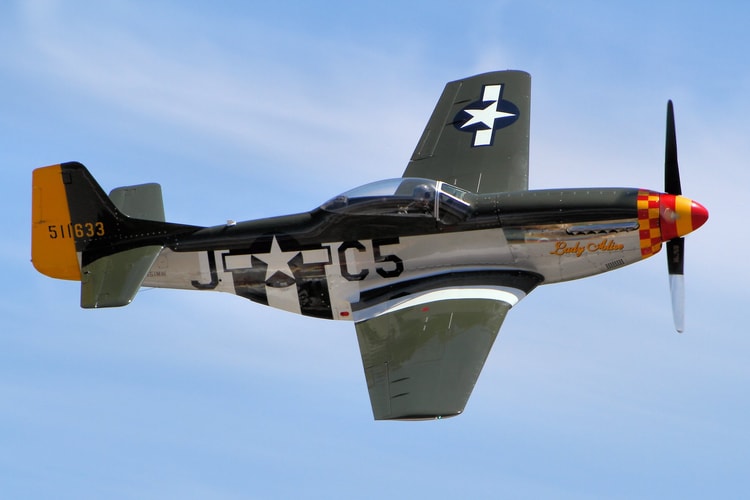
For ground attack and interdiction missions, the Mustang could also be adapted to carry external ordnance. It could be fitted with underwing pylons to carry either six or ten rockets, providing substantial punch against ground forces and fortifications. Furthermore, for dedicated bombing roles, the Mustang could be equipped with two 1,000-lb (454-kg) bombs, transforming it into a potent fighter-bomber capable of precision strikes. This versatility in armament underscored the Mustang’s multi-role design philosophy.
Official Responses: The Mustang’s Strategic Impact
Early Reconnaissance and Ground Attack Roles
The RAF was the first to deploy the Mustang operationally, with Mustang Mk I planes entering service for tactical reconnaissance from April 1942. Each aircraft was fitted with a camera behind the pilot, turning it into a valuable intelligence-gathering platform. Throughout 1942, the RAF rapidly expanded its Mustang fleet, forming 23 squadrons and operating over 600 aircraft, predominantly over occupied Europe. These reconnaissance missions were crucial for the Allied bombing campaign against Germany, providing vital photographic intelligence for identifying strategic targets such as factories, transport hubs, and dams, and assessing bomb damage.
The RAF also deployed Mustangs in the Mediterranean theatre, operating from bases like Souk-el-Khemis in Tunisia. Similarly, the USAAF initially utilized the Mustang as a reconnaissance aircraft, equipping each plane with two cameras. These reconnaissance Mustangs first saw action during the critical North Africa Campaign, providing invaluable intelligence for ground forces.
The Game-Changing Engine Upgrade
Impressed by the Mustang’s inherent design and performance at low altitudes, the USAAF ordered another 500 aircraft, specifically modified with dive brakes and underwing racks to carry bombs, enabling them to act as dive bombers. These new fighter-bombers saw action from September 1942 in the Middle East and played a significant role in the invasions of Sicily and mainland Italy. Their success in this new role further convinced the RAF to test additional aircraft in similar configurations.
However, the persistent weakness of the Allison engine at altitude remained a major strategic limitation. The breakthrough came from an unlikely source. Ron Harker, a test pilot for Rolls-Royce, suggested fitting a Mustang with Rolls-Royce’s powerful Merlin V-12 engine, the same engine that powered the legendary Supermarine Spitfire. The RAF designers successfully implemented this idea, creating a prototype that immediately demonstrated vastly improved high-altitude performance.
The USAAF, recognizing the profound potential, followed suit. They replaced their Allison engines with the American-built Packard V-1650 Merlin engines, produced under license from Rolls-Royce. This decision necessitated the construction of a new manufacturing plant in Dallas, Texas, to supplement North American’s existing facility in Inglewood, California. This engine transplant was nothing short of revolutionary. With the Packard-Merlin, both RAF and USAAF Mustangs were transformed, capable of performing exceptionally well up to 30,000 feet (9,144 m) and beyond, effectively eliminating their previous Achilles’ heel.
Turning the Tide of the Air War
The Merlin-powered Mustang was, as R. Neillands noted, transformed into "a new and highly effective fighter – the finest piston-engined fighter of the war." The debate over whether the P-51 Mustang was superior to the Supermarine Spitfire raged during and after the war. While pilots often praised the Spitfire for its superior manoeuvrability in a dogfight, they universally acknowledged the Mustang’s advantages: greater speed, significantly longer range, and a more comfortable, roomier cockpit – a crucial factor for pilots enduring long escort missions.
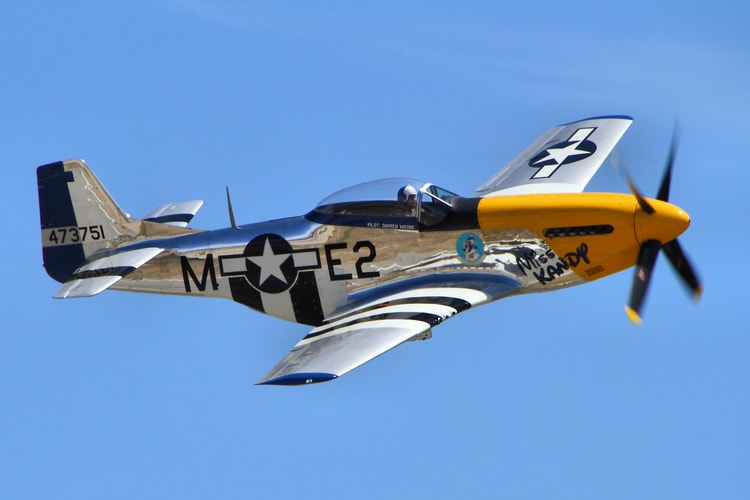
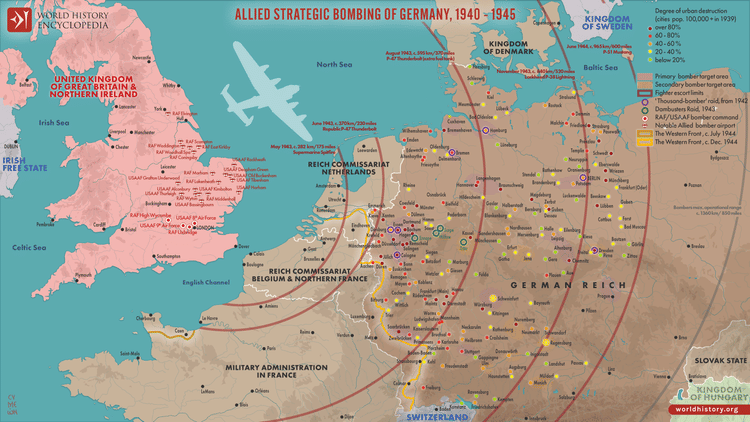
From late 1943, the Mustang’s range was further extended with the introduction of disposable external fuel tanks, typically carrying 55 gallons (208 litres) each. Additional fuel could also be carried in internal wing tanks and an auxiliary tank behind the cockpit. These extended-range capabilities were a game-changer. They allowed the Mustang to escort Allied heavy bombers, like the B-17 Flying Fortress and B-24 Liberator, all the way to their targets deep inside Germany and back. While the drop tanks slightly reduced speed (by about 14 mph or 22 km/h), the strategic benefit was immense.
For the first time, Allied bombers had fighter protection throughout their entire mission, far beyond the reach of any other Allied fighter. This had a profound impact on the "fighter gap" that had plagued the USAAF’s daylight strategic bombing campaign. Earlier in the war, American air marshals had insisted on daylight raids, believing their bombers could defend themselves and that visual targeting was essential. However, this strategy led to unsustainable losses against determined German fighters like the Messerschmitt Bf 109 and Focke-Wulf Fw 190, which savaged unescorted bomber formations. The RAF had learned this harsh lesson earlier in the war, abandoning daylight raids for nighttime operations.
The arrival of the long-range Mustang in large numbers throughout 1944 dramatically reversed this trend. Mustangs not only proved themselves superior to most German fighters in terms of speed, rate of climb, and operating height, but their very presence demoralized German pilots and forced them to fight at a disadvantage. Moreover, Mustangs consistently outperformed other Allied escort fighters, such as the USAAF’s P-38 Lightning, which, despite its twin-engine design, struggled to match the Mustang’s high-altitude performance and range. With Mustang escorts, bomber losses plummeted, allowing the strategic bombing campaign to inflict devastating and sustained damage on Germany’s war machine.
After protecting their charges, Mustangs with remaining ammunition frequently engaged in "target of opportunity" attacks on their return flights, strafing anything that moved on the ground – trains, trucks, canal boats, and staff cars – further disrupting enemy logistics and morale. The tide of the air war had decisively turned in the Allies’ favour, largely thanks to the P-51 Mustang.
Impact in the Pacific Theatre
The Mustang’s long-range capabilities also made it exceptionally valuable in the vast expanses of the Pacific War against Japan. Here, aircraft were required to cover immense distances to reach their targets. A pivotal moment came with the American victory in the Battle of Iwo Jima in March 1945. From newly secured airfields on Iwo Jima, Mustangs could now launch escort missions for B-29 Superfortress bombers on their raids against the Japanese home islands.
The Mustang’s presence not only shielded the B-29s from Japanese interceptors but also allowed the bombers to fly in looser, more evasive formations, further reducing their vulnerability. This fighter protection helped bring B-29 losses well below the 5% threshold that commanders considered acceptable for sustained operations. In addition to escort duty, Mustang fighter-bombers were also deployed to conduct their own ground attack missions against targets in Japan, contributing to the relentless pressure on the Japanese war effort.
By 1944 and 1945, Mustangs operated in virtually every major theatre of the war. Its combat record speaks volumes: according to the National Museum of the United States Air Force, by the end of World War II, Mustangs had destroyed 4,950 enemy aircraft in the air – a higher tally than any other USAAF fighter in Europe. This statistic alone underscores its profound impact on the outcome of the air war.
Implications: Legacy and Later Service
Post-War Transitions and Continued Relevance
Following the cessation of hostilities in World War II, the P-51 Mustang’s production continued for a limited period, including licensed manufacturing in Australia, where a factory had been established in 1944. Its proven capabilities led to its adoption by numerous air forces worldwide, including those of China, Australia, South Africa, the Netherlands, and many others.
In the United States, Mustangs continued to see service with the US Air Reserves and the newly formed Air National Guard, where they were redesignated F-51s. While rapidly being superseded by the advent of jet aircraft, the Mustang’s inherent strengths ensured it remained relevant in certain roles for years to come.
The Korean War and Final Flights
The P-51 Mustang’s operational career extended into the Korean War (1950-53). Despite the emergence of jet fighters like the F-86 Sabre and MiG-15, the Mustang’s long-range capabilities, robust construction, and ability to carry significant ordnance made it highly effective in the ground attack and close air support roles. Its piston engine allowed for longer loiter times over targets and better low-altitude manoeuvrability compared to early jets, making it invaluable for supporting ground troops and interdicting enemy supply lines. F-51s flew thousands of sorties during the conflict, demonstrating that piston-engined aircraft still had a vital part to play in a jet age.
As the Korean War concluded and jet technology advanced, the Mustang gradually transitioned out of front-line service in most major air forces. However, its longevity was remarkable. The very last operational Mustangs were flown by the Fuerza Aérea Dominicana (Dominican Air Force) in the early 1980s, marking an incredible four-decade career for an aircraft designed in just four months.
The P-51 Mustang’s legacy extends far beyond its combat record. It represents a pinnacle of piston-engined fighter design, a testament to rapid innovation under pressure, and a symbol of Allied air superiority. Its sleek lines and powerful performance continue to captivate aviation enthusiasts, making it a popular subject for airshows and restorations globally. The Mustang remains an enduring icon, a warbird that truly earned its place in the pantheon of aviation legends.